
Eating magnesium-rich foods like nuts, leafy greens, and whole grains helps your muscles relax and calms your nervous system for better sleep. Tryptophan-rich snacks, such as yogurt or bananas, boost serotonin and melatonin production. Incorporate melatonin-packed fruits like cherries and berries or enjoy herbal teas like chamomile to wind down. Planning your dinner with these sleep-supporting foods can make a real difference, and there’s more to discover to improve your restful night.
Key Takeaways
- Include magnesium-rich foods like nuts, leafy greens, and whole grains to promote muscle relaxation and better sleep quality.
- Consume tryptophan-rich snacks such as turkey, bananas, or yogurt to boost serotonin and melatonin production.
- Eat fruits and vegetables like cherries, berries, spinach, and kale to naturally increase melatonin levels.
- Drink herbal teas like chamomile or valerian to unwind and signal the body for rest.
- Plan evening meals with balanced nutrients, avoiding heavy foods, and incorporate sleep-supportive ingredients 2-3 hours before bed.
The Benefits of Magnesium-Rich Foods for Sleep
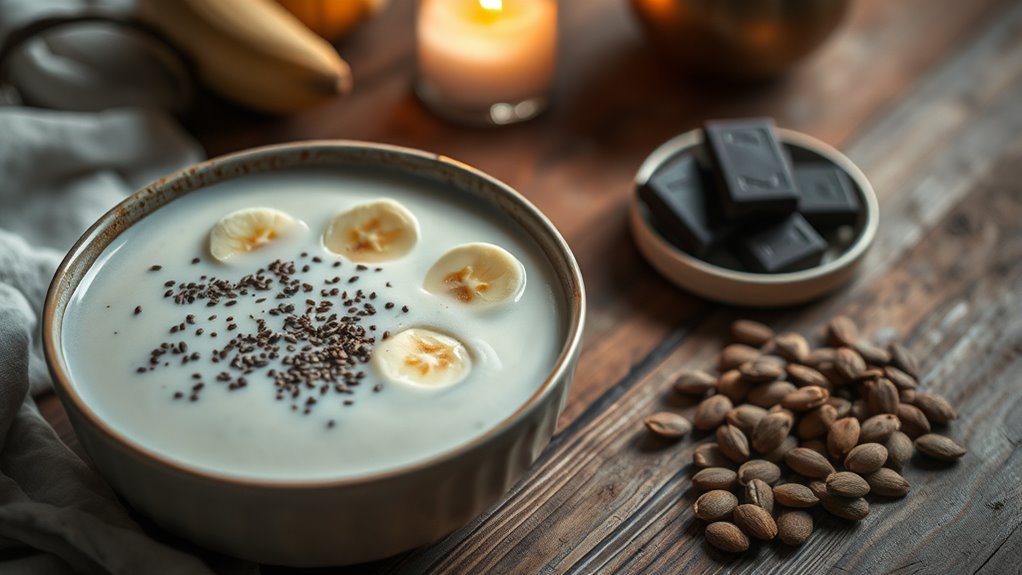
Magnesium plays a crucial role in promoting restful sleep by helping your muscles relax and calming your nervous system. If you have a magnesium deficiency, you might find it harder to fall asleep or stay asleep throughout the night. Consuming magnesium-rich foods enhances mineral absorption, guaranteeing your body gets enough of this essential mineral. Foods like nuts, seeds, leafy greens, and whole grains are excellent sources. When your magnesium levels are adequate, your muscles relax more easily, reducing tension that can interfere with sleep. Additionally, magnesium supports the production of sleep-regulating hormones, helping you achieve deeper, more restorative rest. Prioritizing magnesium-rich foods can be a simple, natural way to improve sleep quality and secure your body functions at their best overnight. Ensuring sufficient magnesium intake can also support essential mineral absorption, which is important for overall health.
Tryptophan-Loaded Snacks That Promote Relaxation

Tryptophan is an amino acid that can naturally enhance your relaxation and improve sleep quality. Including tryptophan-rich snacks in your evening routine can help you wind down. For example, a turkey sandwich provides a convenient source of tryptophan, which your body uses to produce serotonin and melatonin, supporting restful sleep. You might also enjoy a banana smoothie; bananas contain tryptophan and magnesium, both calming compounds that promote relaxation. Incorporating nutritional benefits like herbal teas or calming scents can further enhance your sleep environment. Additionally, sleep-promoting nutrients found in these snacks can help regulate your sleep cycle. Consuming these snacks in the evening can also aid in balancing your hormone levels, which are crucial for a restful night’s sleep. The presence of calming compounds in these foods can help ease your mind and prepare you for sleep. Combining these snacks in your evening meal or as a light snack before bed can help ease your mind and prepare you for sleep. By incorporating these tryptophan-loaded options, you’re giving your body the nutrients it needs to unwind naturally without relying on medication.
Melatonin-Boosting Fruits and Vegetables

Fruits and vegetables can play a significant role in enhancing your sleep by naturally increasing melatonin levels. Incorporate these into your evening routine with simple options like fruit salads or vegetable smoothies. Berries, cherries, and grapes are rich in melatonin, helping regulate your sleep cycle. Adding leafy greens like spinach or kale to smoothies boosts melatonin and magnesium intake, promoting relaxation. These foods are easy to prepare and digest, making them ideal evening choices. Including a variety of nutrient-rich foods can further support your body’s natural sleep processes without relying on supplements. For example, selecting foods high in magnesium and antioxidants can enhance sleep quality and reduce insomnia symptoms. Consuming these foods in the evening can be a simple way to support your sleep cycle naturally. Incorporating natural sleep aids like these foods into your diet can also promote overall restfulness. Simple fruit salads or veggie-packed smoothies can become your go-to nighttime snacks, enhancing melatonin production and encouraging a more restful, restorative sleep.
Whole Grains That Encourage Restful Sleep
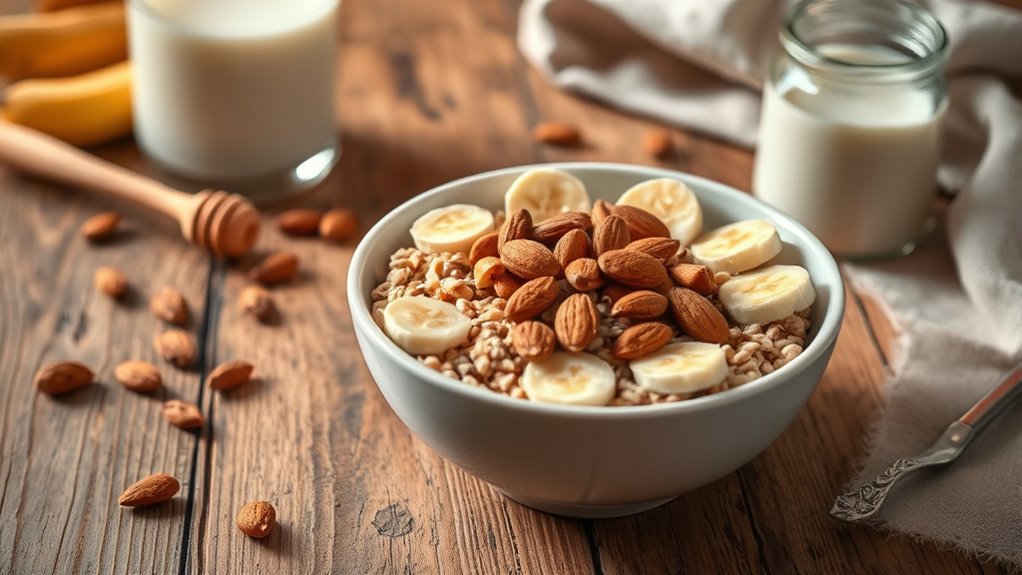
Have you ever considered how whole grains can support better sleep? Whole grains, like oats, brown rice, and barley, are rich in complex carbohydrates that promote sleep support by increasing serotonin production. These carbs help your body absorb tryptophan more effectively, which is essential for relaxation and rest. Eating a small serving of whole grains in the evening can stabilize blood sugar levels, preventing nighttime awakenings caused by dips in energy. Unlike refined grains, whole grains retain their fiber and nutrients, making them a healthier choice for sleep support. Incorporating them into your dinner can help you unwind, relax, and enjoy a more restful night. So, consider adding oats or brown rice to your evening meal for better sleep quality. Understanding nutrition can also enhance your sleep health by ensuring your diet meets your body’s needs. Additionally, choosing whole grains over processed options supports overall nutritional balance, which is crucial for restful sleep. Including whole grains in your diet is an effective way to promote better sleep and overall well-being.
Herbal Teas and Beverages for Better Sleep Quality

Herbal teas and beverages can be natural sleep aids that promote relaxation before bed. Choosing calming herbal infusions like chamomile or valerian may help you wind down more easily. Incorporating these drinks into your routine can improve your overall sleep quality. Using herbal infusions that are specifically known for their calming properties can enhance the effectiveness of your bedtime ritual.
Calming Herbal Infusions
If you’re looking to improve your sleep quality, sipping on calming herbal infusions can make a noticeable difference. Imagine yourself holding a warm mug filled with soothing herbal infusion blends, designed to relax your mind. These calming botanical teas often feature:
- Lavender’s gentle aroma, easing your nerves
- Chamomile’s floral notes, calming your thoughts
- Lemon balm’s subtle citrus scent, reducing anxiety
- Passionflower’s earthy flavor, promoting deep sleep
These herbal infusion blends work naturally to quiet your mind without side effects. Drinking a cup of these calming botanical teas before bed helps signal your body to unwind, making it easier to drift into restful sleep. Incorporating auditory processing techniques into your nightly routine can further support a peaceful, restorative night.
Natural Sleep Aids
Natural sleep aids like herbal teas and beverages can enhance your nightly routine by promoting relaxation and improving sleep quality. Incorporating these drinks into your bedtime routines supports good sleep hygiene, helping your body wind down naturally. Chamomile, valerian root, and lavender teas are popular choices that can calm your mind and reduce stress, making it easier to fall asleep. By establishing a consistent bedtime routine that includes these soothing beverages, you signal to your body that it’s time to rest. Avoid caffeine or sugary drinks before bed, as they can disrupt your sleep. Using natural sleep aids as part of a healthy sleep hygiene routine helps create an environment conducive to restful, restorative sleep every night.
Dairy Products and Their Sleep-Enhancing Properties

Dairy products are popular sleep aids because they contain nutrients that promote relaxation and help you fall asleep more easily. Yogurt benefits include magnesium and tryptophan, which support sleep quality. When you think of cheese varieties, imagine a rich, creamy brie or a sharp cheddar, both packed with calcium that aids melatonin production. Picture yourself enjoying:
Dairy helps you relax and sleep better with calcium, magnesium, and tryptophan-rich options like yogurt and cheese.
- A bowl of smooth yogurt topped with honey and nuts.
- A slice of soft gouda with your evening crackers.
- A serving of cottage cheese as a light snack.
- A piece of aged Parmesan for a savory, sleep-friendly treat.
These dairy choices are easy to incorporate into your night routine, providing calming nutrients that support restful sleep and help you wake refreshed. Including piercing care and hygiene in your routine can help ensure comfort and prevent irritation during your sleep.
Tips for Incorporating Sleep-Friendly Foods Into Your Evening Routine

To improve your sleep, start planning your evening meals around sleep-friendly foods. Incorporate these foods into your routine daily and aim to balance your nutrients for better results. Small, consistent changes can make a big difference in your sleep quality. Incorporating nutrient-dense options can further enhance your sleep benefits. For additional support, consider exploring comprehensive services that offer tailored advice for healthy living. Additionally, exploring local dining options that feature live music can create a relaxing and enjoyable atmosphere conducive to winding down after a busy day. Remember, implementing simple organizational strategies can also help reduce stress and promote better sleep hygiene.
Plan Your Evening Meals
Planning your evening meals with sleep-friendly foods can substantially improve your chances of a restful night. Start with simple evening meal planning by including dishes rich in magnesium and tryptophan. For bedtime snack ideas, consider options like a banana with almond butter, a small bowl of Greek yogurt with honey, or a handful of walnuts. To create a calming routine, incorporate these foods into your dinner or as a light snack an hour before bed. Visualize your plate with lean turkey, leafy greens, whole grains, or a warm herbal tea. These choices help relax your nervous system and promote better sleep. Incorporating nutrient-rich ingredients into your meals can further enhance your sleep quality. By thoughtfully planning your evening meals, you set the stage for deep, restful sleep and wake up feeling refreshed.
Incorporate Sleep-Enhancers Daily
Integrating sleep-friendly foods into your evening routine doesn’t have to be complicated. You can seamlessly enhance your sleep environment by making small adjustments, like adding calming snacks or beverages. Consistent bedtime routines help signal your body it’s time to wind down, so include foods that promote relaxation, such as a small handful of nuts or a warm herbal tea. Keep your lighting dim and avoid screens to support your efforts. Incorporate these sleep enhancers gradually, making them part of your nightly habit. Over time, your body will associate these foods with relaxation, improving your sleep quality. Additionally, understanding the science of sleep and how certain foods can influence circadian rhythms can help you make more informed choices about your diet and habits. Remember, consistency in routines is key—small daily changes can lead to significant improvements in your restful nights.
Balance Nutrients Effectively
Balancing nutrients in your evening meals is essential for maximizing the sleep-promoting effects of certain foods. Proper nutrient absorption depends on combining the right foods at ideal meal timing. To do this effectively, consider these tips:
- Include magnesium-rich foods like nuts or leafy greens to support relaxation.
- Pair complex carbs such as whole grains with protein to boost tryptophan absorption.
- Avoid heavy, greasy meals close to bedtime, which can disrupt digestion and sleep.
- Eat at least 2-3 hours before bed to give your body time to digest and optimize nutrient absorption.
Frequently Asked Questions
Can Certain Foods Cause Insomnia Despite Their Sleep Benefits?
Yes, certain foods can cause insomnia despite their sleep benefits. If you have food sensitivities, eating specific items might trigger immune responses or digestive issues, leading to sleep disruption. For example, spicy or greasy foods could upset your stomach or cause discomfort, making it harder to fall asleep. Always listen to your body and identify any foods that may negatively affect your sleep, even if they seem beneficial.
How Much of These Foods Should I Eat Before Bed?
You should aim for small serving sizes, like a handful of nuts or a banana, about 30 to 60 minutes before bed. Timing considerations are key—eating too late or in large amounts can disrupt sleep. Stick to moderate servings to avoid discomfort and maximize sleep benefits. Listening to your body helps, so adjust portions if you notice any digestive issues or trouble falling asleep.
Are There Any Foods to Avoid in the Evening for Better Sleep?
Think of your evening as a peaceful harbor; avoid stormy waters like late-night snacks high in sugar or salt that disrupt your calm. Steer clear of caffeine, the restless storm that keeps your mind awake. These foods can throw your sleep off course, making it harder to rest. Instead, choose calming options that gently guide you into sleep, ensuring your night remains tranquil and restorative.
Do Individual Dietary Restrictions Affect Sleep-Enhancing Food Choices?
Yes, your dietary restrictions do influence your sleep-enhancing food choices. You need personalized nutrition that considers allergies, intolerances, or medical conditions. For example, if you’re lactose intolerant, avoid dairy-rich sleep aids like warm milk. Tailoring your evening meals guarantees you receive the benefits without adverse effects. Focus on safe, nutrient-rich options compatible with your restrictions to promote better sleep and overall health.
How Long Does It Take to Notice Sleep Improvements After Eating These Foods?
Like planting a seed at dusk, you might notice sleep improvements within 30 minutes to an hour after eating sleep-friendly foods. However, the timing of effects varies due to individual response variability, much like how each garden blooms differently. Some may feel calmer quickly, while others need consistent consumption over days. Patience and regular intake help your body adapt, leading to more restful nights over time.
Conclusion
By filling your evening plate with magnesium-rich foods, tryptophan snacks, melatonin-packed fruits, whole grains, soothing herbal teas, and calming dairy, you’ll discover the secret to sleep so deep, you’ll feel like you’ve entered a whole new dimension of rest. Say goodbye to restless nights and hello to the most peaceful, rejuvenating sleep of your life—so good, it’ll feel like you’ve discovered the ultimate sleep hack. Sweet dreams await—embrace these foods and transform your nights forever!