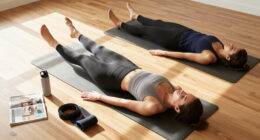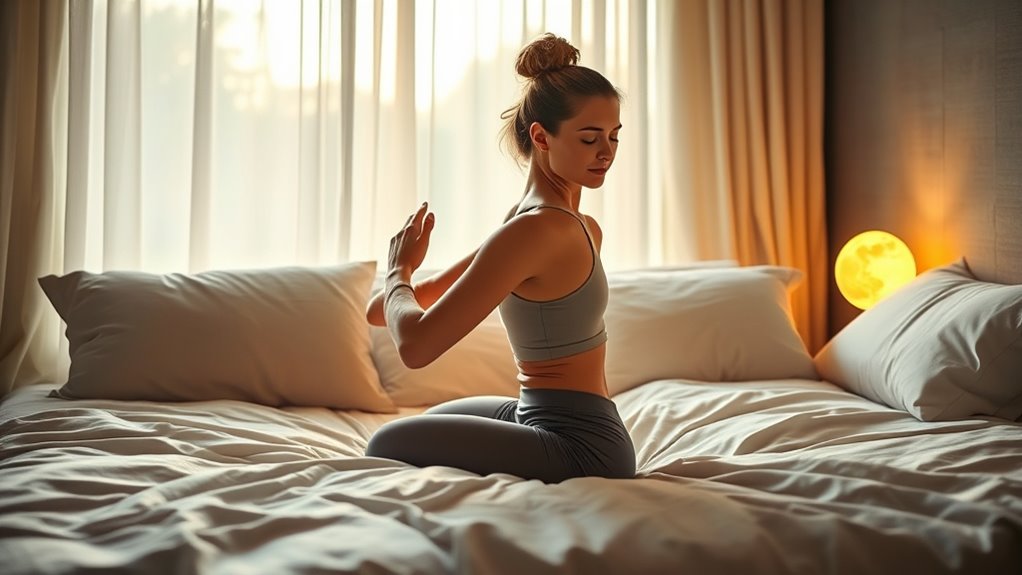

To unwind before bed, incorporate five calming yoga stretches: Child’s Pose helps relax your mind and body, easing tension in your back and hips. Reclining Twist releases spinal tension and promotes relaxation. Legs-Up-The-Wall calms your nervous system and reduces stress. Seated Forward Bend lengthens your spine and calms anxiety, while Gentle Spinal Twist decompresses your spine and clears mental clutter. Keep practicing these poses, and you’ll discover simple ways to prepare for restful sleep tonight.

Get health and wellness essentials delivered free — and shop member deals
- Fast, free delivery on millions of items
- Access to Prime Big Deal Days deals on October 6–7
- Prime Video, Amazon Music and more included
Key Takeaways
- Incorporate calming poses like Child’s Pose and Legs-Up-The-Wall to relax the nervous system before sleep.
- Focus on deep, mindful breathing during each stretch to enhance relaxation and reduce stress.
- Use gentle spinal twists to decompress the spine and release physical tension accumulated during the day.
- Engage in seated forward bends to stretch the back and promote mental calmness.
- Practice mindfulness and awareness of body sensations to deepen the relaxation response and prepare for restful sleep.
yoga bolster for bedtime stretches
As an affiliate, we earn on qualifying purchases.
As an affiliate, we earn on qualifying purchases.
Child’s Pose (Balasana)

Child’s Pose (Balasana) is a gentle yoga pose that helps calm your mind and relax your body before sleep. As you settle into this position, focus on your breathing techniques—inhale deeply through your nose, then exhale slowly through your mouth. This deep breathing encourages relaxation and reduces stress. Incorporate mindfulness practices by bringing your awareness to the present moment, noticing the sensation of your forehead resting on the mat and the rise and fall of your chest. Child’s Pose gently eases tension in your back, shoulders, and hips, creating a sense of calm. Practicing this pose consistently before bed can activate your parasympathetic nervous system, which promotes relaxation and prepares you for restful sleep through modern technology. Additionally, aligning your practice with biohacking techniques can enhance sleep quality and overall well-being. Utilizing contrast therapy techniques, such as alternating hot and cold exposure, can further deepen relaxation and improve sleep patterns. Incorporating breathing techniques can amplify the calming effects and support a more restful night. Incorporating mindful body awareness during this pose can also enhance its effectiveness in reducing sleep-related stress.
yoga meditation cushion for relaxation
As an affiliate, we earn on qualifying purchases.
As an affiliate, we earn on qualifying purchases.
Reclining Twist (Supta Matsyendrasana)

The Reclining Twist (Supta Matsyendrasana) is an effective pose for releasing tension and promoting relaxation before sleep. As you lie on your back, gently twist your knees to one side, allowing your spine to release built-up stress. Focus on deep breathing techniques, inhaling slowly through your nose and exhaling fully to calm your nervous system. Incorporate mindfulness meditation by bringing awareness to each breath, letting go of any lingering thoughts. This pose helps relax your lower back and hips, easing physical tension that might interfere with sleep. Maintaining a gentle, mindful focus on your breath and the sensation of the twist can deepen relaxation. Practicing this stretch regularly can set a peaceful tone for a restful night. Additionally, energy-efficient techniques can enhance your overall sleep routine. Incorporating calming yoga practices has been shown to improve sleep quality and reduce stress levels.
yoga blocks for gentle stretches
As an affiliate, we earn on qualifying purchases.
As an affiliate, we earn on qualifying purchases.
Legs-Up-The-Wall Pose (Viparita Karani)

Legs-Up-The-Wall Pose (Viparita Karani) offers a gentle way to soothe your nervous system and ease tension after a busy day. As an inversion, it promotes relaxation by encouraging blood flow away from your legs, reducing swelling and calming your mind. The wall support provides stability and makes it accessible for most people, even beginners. This pose helps release stress, calm anxiety, and relax your nervous system, making it ideal before bed. By holding the pose for several minutes, you allow your body to unwind naturally, preparing you for restful sleep. Incorporating mindfulness techniques during this pose can further enhance your sense of tranquility and deepen your relaxation. Understanding body positioning can help optimize the benefits of this pose and prevent strain. Knowing about net worth can motivate you to invest in your wellness journey and prioritize self-care routines. Additionally, practicing this pose regularly can contribute to overall mental health and emotional well-being, supporting a balanced lifestyle. Developing awareness of body alignment can further improve your practice and prevent discomfort.
As an affiliate, we earn on qualifying purchases.
Seated Forward Bend (Paschimottanasana)

After relaxing in Legs-Up-The-Wall Pose, gently shift your focus to a seated position and extend your legs straight out in front of you. As you fold forward into Paschimottanasana, focus on deep breathing techniques to deepen relaxation. Inhale slowly through your nose, lengthening your spine, then exhale with a gentle sigh, releasing tension. Use meditation practices to stay present, noticing sensations in your hamstrings and back. This pose calms your nervous system and prepares you for restful sleep. To make it more engaging, consider the following:
| Tip | Focus | Benefit |
|---|---|---|
| Breathe deeply | Inhalation and exhalation | Reduces stress |
| Keep your back straight | Spinal extension | Enhances relaxation |
| Stay present | Meditation | Clears your mind |
| Gentle fold | Relaxed stretch | Eases muscle tension |
Incorporating proper pose alignment can help maximize relaxation and prevent strain during the stretch. Also, ensuring safe practice by paying attention to your body’s signals will help you avoid discomfort and achieve better sleep.
Gentle Spinal Twist (Supta Jathara Parivartanasana)

Gentle Spinal Twist (Supta Jathara Parivartanasana) offers an effective way to release tension in your spine and improve flexibility. As you lie on your back, extend your arms out to the sides and bend your knees, then gently lower both legs to one side. This twist helps decompress your spine, enhancing spinal flexibility and easing tightness. The gentle movement stimulates circulation and promotes stress relief, calming your nervous system. Focus on breathing deeply and evenly as you hold the pose, allowing your muscles to relax further. This stretch not only relieves physical tension but also clears mental clutter, making it perfect for winding down before sleep. Incorporating this pose into your bedtime routine can also foster a sense of Free Floating relaxation, helping you achieve a peaceful, restful night. Practicing mindful breathing during this stretch can further enhance the air quality in your environment by reducing overall stress levels, contributing to a healthier sleep space.
Frequently Asked Questions
Can These Poses Help With Insomnia Caused by Anxiety?
Yes, these poses can help with insomnia caused by anxiety. They promote relaxation, offering anxiety relief by calming your nervous system. As you practice, you’ll notice improved sleep quality because gentle stretches release tension and soothe your mind. Incorporating these poses into your bedtime routine can create a calming shift from a busy day to restful sleep, helping you unwind and reduce anxiety’s impact on your sleep.
How Long Should I Hold Each Stretch for Optimal Sleep Benefits?
Holding each stretch for about 30 seconds is like giving your muscles a gentle hug, which helps relax your body for sleep. For ideal timing, aim for 2-3 rounds of each pose, focusing on deep, steady breaths. This duration allows your muscles to unwind without overdoing it, making your bedtime routine more effective. Consistency is key, so stick to this hold time to see the best sleep benefits.
Are There Specific Poses Recommended for Sleep Apnea?
For sleep apnea, certain poses like gentle neck stretches and chest openers can improve your sleep posture and ease breathing. Incorporate breathing techniques such as diaphragmatic breathing to help open airways. You should hold each pose for about 30 seconds to a minute, focusing on slow, deep breaths. Always consult with a healthcare professional before starting new exercises, especially if you have sleep apnea.
Can Pregnant Women Safely Perform These Stretches Before Bed?
You can safely perform these stretches before bed during pregnancy with proper modifications, but always prioritize prenatal safety. As you notice your body’s signals, adapt poses to avoid strain, especially in later pregnancy stages. Consult your healthcare provider before starting new stretches, ensuring they suit your pregnancy. Thoughtful pregnancy modifications help you unwind without risking discomfort or harm, making bedtime yoga a gentle, beneficial routine for you and your baby.
Do These Poses Aid in Reducing Nighttime Muscle Tension?
Yes, these poses promote muscle relaxation and tension relief, helping you unwind before bed. As you hold gentle stretches, your muscles loosen and your tension eases, making it easier to fall asleep. Regularly practicing these stretches can reduce nighttime muscle tension, leaving you feeling more relaxed and comfortable. Incorporate these yoga poses into your nightly routine to experience the calming benefits of tension relief and enhanced sleep quality.
Conclusion
So, next time you’re tossing and turning, forget the sleep aids—just try these stretches. Who needs a magic pill when a little yoga can supposedly calm your mind and body? Just a few minutes of child’s pose and a gentle twist, and you’re all set for a night of blissful, uninterrupted sleep. Because clearly, nothing says “sweet dreams” like pretending you’re a relaxed, bendy pretzel. Sleep tight, yogi!
Fall Picks
fall essentials
As an affiliate, we earn on qualifying purchases.