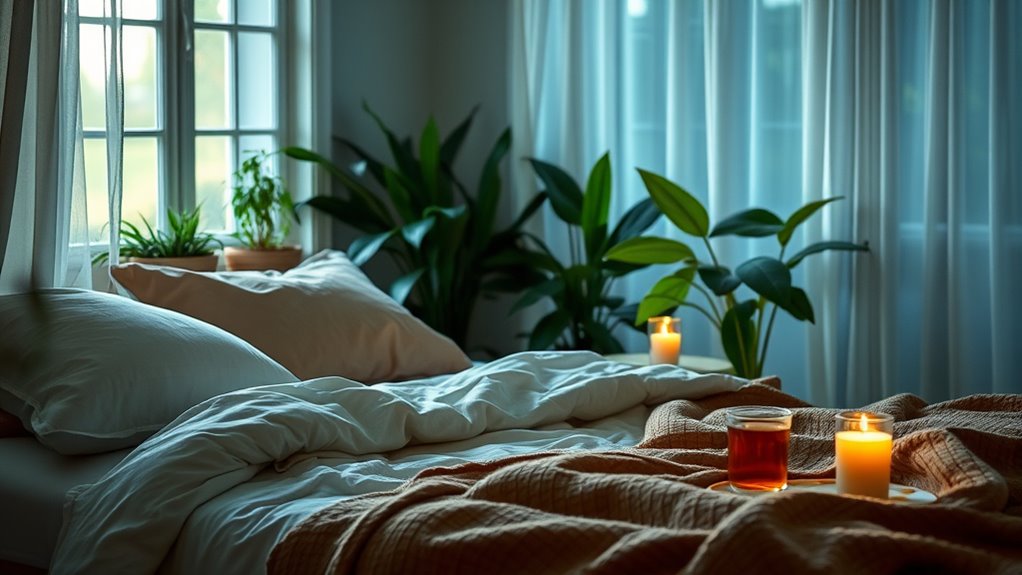

To sleep better naturally, stick to a consistent schedule by going to bed and waking up at the same time daily. Establish relaxing routines like gentle stretches or calming music before bed. Create a cool, dark, and clutter-free environment and limit screen time an hour before sleeping. Manage your diet by avoiding caffeine and alcohol in the evening, and include sleep-promoting foods. Incorporate mindfulness techniques and stay active during the day. Keep exploring for more tips to improve your sleep.

Get health and wellness essentials delivered free — and shop member deals
- Fast, free delivery on millions of items
- Access to Prime Big Deal Days deals on October 6–7
- Prime Video, Amazon Music and more included
Key Takeaways
- Maintain a consistent sleep schedule and calming bedtime routine to signal your body it’s time to rest.
- Create a sleep-friendly environment with dim lighting, cool temperature, and minimal clutter for optimal relaxation.
- Limit blue light exposure and screen time at least an hour before bed to support melatonin production.
- Practice mindfulness, deep breathing, or relaxation techniques to calm racing thoughts and reduce sleep onset time.
- Stay physically active during the day and avoid vigorous exercise close to bedtime to promote deeper, restorative sleep.
As an affiliate, we earn on qualifying purchases.
Establish a Consistent Sleep Schedule

To improve your sleep quality, establishing a consistent sleep schedule is essential. Start by going to bed and waking up at the same time every day, even on weekends. This helps regulate your body’s internal clock, making it easier to fall asleep and wake up refreshed. Incorporate bedtime rituals that signal your body it’s time to wind down, such as reading or gentle stretches, to reinforce this routine. Using sleep tracking devices or apps can help you monitor your sleep patterns, identify disruptions, and adjust your schedule accordingly. Circadian rhythms are influenced by consistent sleep timing, which reinforces your body’s natural sleep-wake cycle. Consistency is key; over time, your body will adapt, leading to better sleep quality and increased energy during the day. Establishing a sleep routine that aligns with your biological clock can further enhance your sleep benefits. Additionally, maintaining a healthy lifestyle with regular exercise and balanced nutrition supports your sleep schedule. Incorporating practices such as proper light exposure during the day can also help synchronize your internal clock. Stick with your schedule, and you’ll notice a positive change in how well you sleep.
aromatherapy diffuser lavender chamomile
As an affiliate, we earn on qualifying purchases.
As an affiliate, we earn on qualifying purchases.
Create a Relaxing Bedtime Routine

After setting a consistent sleep schedule, establishing a relaxing bedtime routine can signal to your body that it’s time to wind down. Start by winding down with calming activities like reading bedtime stories or listening to gentle music. Incorporate aromatherapy scents such as lavender or chamomile to create a soothing atmosphere. These scents can help ease your mind and relax your muscles. To make it easier, here’s a simple routine:
| Activity | Duration | Benefits |
|---|---|---|
| Reading bedtime stories | 10-15 minutes | Distracts your mind, promotes calmness |
| Aromatherapy | Continuous | Reduces stress, signals wind-down time |
| Gentle stretching | 5 minutes | Relieves tension, prepares your body |
Consistency is key—making these steps part of your nightly ritual helps improve sleep naturally. Incorporating sleep hygiene practices into your routine further enhances your chances of restful sleep. Establishing a consistent sleep schedule also reinforces these habits, helping your body recognize when it’s time to rest. Additionally, creating a relaxing environment free from distractions can significantly improve your ability to fall asleep peacefully. Using air purifiers to maintain optimal indoor air quality can also contribute to better sleep by creating a healthier sleeping environment.
As an affiliate, we earn on qualifying purchases.
Optimize Your Sleep Environment

You can improve your sleep by controlling light exposure—try dimming the lights before bed and blocking out streetlights or screens. Adjusting your bedroom temperature to a cool, comfortable level also helps you fall asleep faster and stay asleep. Small changes to your sleep environment make a significant difference in your overall rest quality. Incorporating Free Floating elements, such as calming natural colors and minimal clutter, can further enhance your sleep space. Additionally, using smart lighting that gradually dims can create a more conducive environment for restful sleep. To ensure your sleep setup is reliable and safe, consider implementing a backup power system to keep your environment consistent during outages. Incorporating ambient lighting options can help create a soothing atmosphere that encourages relaxation. Integrating connected devices like sleep trackers can also help you monitor and optimize your sleep patterns for better rest.
Control Light Exposure
Controlling light exposure is essential for creating an ideal sleep environment. Blue light from screens can disrupt your circadian rhythm, making it harder to fall asleep and wake refreshed. To optimize your environment, limit screen time at least an hour before bed. Use dim, warm lighting in the evening to signal to your body that it’s time to wind down. Consider wearing blue light blocking glasses if you need to use devices late at night. During the day, expose yourself to natural light to reinforce your circadian rhythm and promote alertness. By managing light exposure, you help your body produce melatonin naturally, improving sleep quality and duration without medications. This simple step can markedly enhance your overall sleep health.
Adjust Bedroom Temperature
Maintaining the right bedroom temperature is essential for a restful night’s sleep. Proper climate control helps your body regulate its internal temperature, making it easier to fall asleep and stay asleep. Experts recommend setting your thermostat between 60 and 67°F (15.5 to 19.5°C) for *ideal* sleep. Use a fan, space heater, or air conditioner to adjust the temperature as needed. Avoid overheating or getting too cold, as extreme temperatures can disrupt your sleep cycle. Consistent temperature regulation creates a comfortable environment that promotes deep, uninterrupted rest. Investing in a quality thermostat or a smart climate control device can help you maintain the *perfect* sleep environment effortlessly. Remember, a cooler room encourages melatonin production, supporting natural sleep patterns. Additionally, understanding the air quality in your bedroom can further enhance sleep comfort by reducing allergens and pollutants. Regularly monitoring and improving bedroom environment factors can make a significant difference in the quality of your sleep. Incorporating climate control strategies can further optimize your sleep environment and enhance overall sleep quality. Furthermore, maintaining optimal humidity levels can prevent dryness or excess moisture, contributing to more comfortable sleep conditions.
As an affiliate, we earn on qualifying purchases.
Mind Your Diet and Hydration Before Bed

What you eat and drink before bed can considerably affect your sleep quality. Avoid caffeine and alcohol, which can disrupt your rest, and opt for sleep-friendly foods instead. Also, limit fluids to prevent nighttime awakenings and wake up feeling more refreshed. Utilizing necessary cookies can ensure your browsing experience remains smooth while researching sleep tips. Incorporating healthy snack options that promote relaxation, such as bananas or almonds, may further enhance your sleep quality. Additionally, choosing products with glycolic acid for skincare routines can help improve your skin’s appearance, leaving you feeling more confident and relaxed before bedtime. Recognizing the importance of hydration management can also help prevent nighttime disruptions and support restful sleep.
Avoid Caffeine and Alcohol
To improve your sleep quality, it’s important to cut back on caffeine and alcohol before bed. Caffeine reduction is key because it’s a stimulant that can stay in your system for hours, making it harder to fall asleep. Avoid coffee, tea, and energy drinks in the late afternoon and evening. Alcohol moderation is equally important; while alcohol might initially make you feel sleepy, it disrupts your sleep cycle and leads to fragmented rest. Cutting back on alcohol in the hours before bed helps you achieve more restorative sleep. Additionally, understanding the benefits of sound healing science reveals how calming sounds can promote relaxation and better sleep. Research shows that ethnic background influences health habits, which can affect sleep patterns, so being mindful of personal and cultural factors can be beneficial. By minimizing both caffeine and alcohol intake, you’ll reduce sleep disturbances and create a more natural, calming bedtime routine. Incorporating techniques such as mindfulness meditation can further enhance your ability to fall asleep peacefully. This simple change can markedly improve how well you sleep at night.
Eat Sleep-Promoting Foods
Eating the right sleep-promoting foods and staying hydrated before bed can substantially enhance your rest. Incorporate superfoods for sleep, like almonds, cherries, and bananas, which contain natural melatonin, magnesium, or tryptophan to support relaxation. Snack on sleep-promoting snacks such as Greek yogurt with honey or a small handful of walnuts to help calm your mind and body. These foods can boost your melatonin levels, regulate blood sugar, and promote serotonin production, all essential for restful sleep. Avoid heavy or spicy foods close to bedtime, as they can cause discomfort and disrupt sleep. Instead, focus on light, nutrient-rich options that encourage relaxation and prepare your body for a good night’s sleep.
Limit Fluids Before Bed
Consuming sleep-promoting foods can set the stage for restful nights, but paying attention to your hydration habits is equally important. To improve sleep, practice hydration management by limiting fluids an hour or two before bed. This helps reduce the likelihood of waking up due to the need to use the bathroom. Keep in mind that certain nighttime diuretics like caffeine and alcohol can disrupt your sleep cycle, so it’s best to avoid them in the evening. Drinking too much fluid late at night can cause discomfort and frequent awakenings, making it harder to reach deep sleep stages. By controlling your fluid intake, you minimize disruptions and support a more restful, uninterrupted sleep. Small adjustments now can lead to better sleep quality over time.
Incorporate Relaxation Techniques and Mindfulness

When you’re struggling to fall asleep, incorporating relaxation techniques and mindfulness can make a significant difference. Practicing mindfulness meditation helps calm your mind by focusing on the present moment, reducing racing thoughts that keep you awake. Deep breathing exercises slow your heart rate and relax your muscles, easing tension before bed. To try this, sit comfortably, inhale slowly through your nose, hold for a few seconds, then exhale gently through your mouth. Repeat several times. These techniques activate your parasympathetic nervous system, promoting relaxation. Incorporating mindfulness meditation and deep breathing into your nightly routine can create a peaceful shift into sleep, helping you fall asleep faster and enjoy more restful nights naturally.
Limit Screen Time and Bright Light Exposure

After practicing relaxation techniques and mindfulness, it’s helpful to address how light exposure affects your sleep. Blue light from screens and bright light in the evening can suppress melatonin production, making it harder to fall asleep. Limiting screen time before bed minimizes blue light exposure and helps your body prepare for rest. You can also use dim, warm lighting in your evening routine to signal to your brain that it’s time to wind down.
| Light Exposure | Effect on Sleep |
|---|---|
| Blue Light | Suppresses melatonin |
| Bright Light | Delays sleep onset |
| Screen Time | Disrupts circadian rhythm |
Reducing screen time and dimming lights in the evening support natural sleep cycles and improve sleep quality.
Stay Active During the Day for Better Rest

Staying active during the day can considerably improve your sleep quality by helping your body burn off excess energy and regulate your internal clock. Exercise benefits your overall health and promotes deeper, more restful sleep at night. When you engage in physical activity, you’re less likely to feel restless or wake up frequently. Just be mindful not to overdo it close to bedtime, as vigorous exercise can interfere with falling asleep. If you need a quick rest during the day, a short, 20-minute nap can boost your energy without disrupting nighttime sleep. Regular daytime activity helps set a consistent sleep schedule, making it easier to fall asleep naturally and wake up feeling refreshed. Staying active is a simple, effective way to enhance your sleep quality.
Frequently Asked Questions
How Do Sleep Patterns Affect Overall Health and Well-Being?
Your sleep patterns directly impact your overall health and well-being. Consistent sleep helps regulate your mood, boost immunity, and improve memory. To support healthy patterns, keep a dream journal to track your sleep quality and identify disruptions. Create a sleep environment that’s cool, dark, and quiet, making it easier to fall asleep and stay asleep. When you prioritize these habits, you’ll notice better energy levels and improved mental clarity.
What Are Common Sleep Disorders and How Can They Be Identified?
You might have sleep disorders like sleep apnea, which causes pauses in breathing during sleep, or restless legs syndrome, leading to uncomfortable sensations and urges to move your legs. Look for signs such as loud snoring, choking sounds, or frequent leg movements. If you notice these, consult a healthcare professional for proper diagnosis and treatment options to improve your sleep quality and overall health.
Can Certain Foods Improve or Disrupt Sleep Quality?
Certain foods can notably impact your sleep quality through dietary choices. Consuming foods rich in magnesium, like nuts and leafy greens, can promote relaxation and improve sleep. On the other hand, foods high in sugar, caffeine, or spicy ingredients may disrupt your sleep by causing discomfort or alertness. Pay attention to your food impact, and opt for calming, nutrient-dense options before bed to enhance your sleep naturally.
How Does Stress Influence Sleep Quality and Duration?
Stress is like a relentless storm that disturbs your sleep, making it hard to find calm. When stress levels spike, your body releases cortisol, a hormone that keeps you alert and disrupts restful sleep. Practicing stress management techniques helps regulate cortisol, calming your mind and body. By managing stress effectively, you create a peaceful harbor where sleep can sail smoothly, ensuring you wake up refreshed and ready for the day ahead.
Are There Natural Supplements That Can Enhance Sleep Without Medication?
Yes, herbal remedies and dietary supplements can help you sleep better naturally. Valerian root, melatonin, and chamomile are popular options known for their calming effects. Taking these supplements about an hour before bed can promote relaxation and improve sleep quality. Just make sure to choose high-quality products and consult with a healthcare professional if you have any health concerns or take other medications.
Conclusion
By following these natural tips, you can turn your nights into peaceful, restorative journeys. Think of your sleep as a garden—you need to nurture it daily to see it bloom. Consistency, relaxation, and a mindful approach create the perfect environment for restful nights. So, take charge of your sleep habits and watch your nights become as calm as a still lake, leaving you refreshed and ready to conquer each new day.
Fall Picks
fall essentials
As an affiliate, we earn on qualifying purchases.