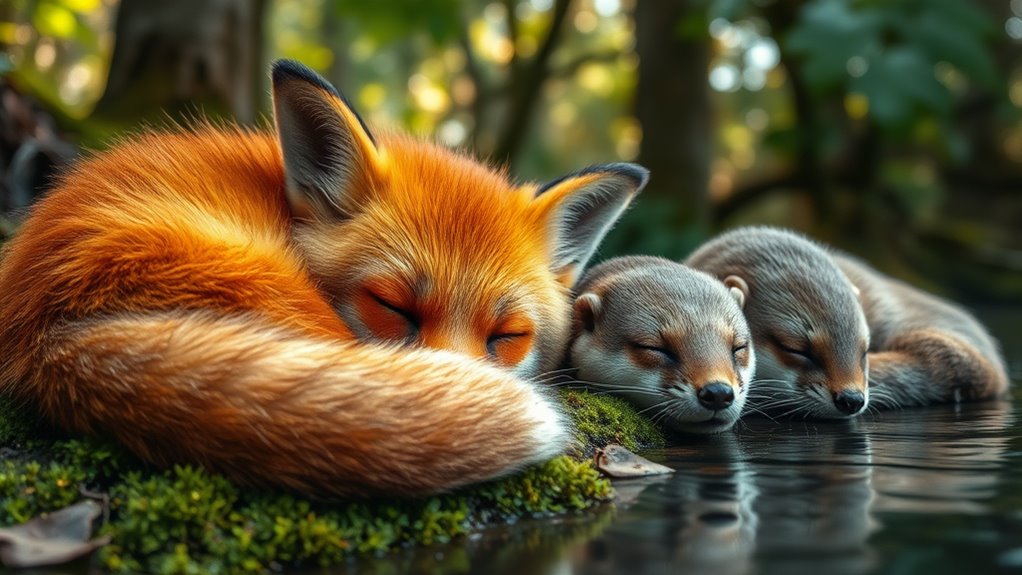

Many animals experience sleep stages similar to humans, including REM sleep, which is linked to dreaming. During this phase, you might notice animals twitching, paw movements, or making noises—signs they could be dreaming about their daily activities or memories. Evidence from various species like dogs, cats, and rodents suggests that animals not only dream but might relive adventures or experiences while they sleep. If you’re curious about how these sleep habits reveal their inner world, there’s more to discover.

Get health and wellness essentials delivered free with Prime
- Fast, free delivery on millions of items
- Prime Video, Amazon Music and more included
- Member-only deals all year
Key Takeaways
- Many animals experience sleep cycles similar to humans, including REM sleep, which is linked to dreaming.
- During REM sleep, animals show involuntary movements like twitching, suggesting active mental processes.
- Evidence from various species, such as dogs, cats, and rodents, indicates they may dream about daily activities or past events.
- Dreaming in animals likely helps process memories and experiences, implying a rich inner mental life.
- Observations of sleep behaviors support the idea that dreaming is common across many animal species.

Have you ever wondered if animals dream just like humans do? It’s a question that sparks curiosity because we often observe animals sleeping peacefully and wonder what’s happening in their minds. While we can’t ask them directly, scientific research suggests that many animals experience sleep cycles similar to ours, including REM sleep, which is closely linked to dreaming. During the sleep cycle, animals go through different stages, from light sleep to deep sleep, and then into REM (Rapid Eye Movement) sleep, a phase where dreaming is most likely to occur. This pattern isn’t unique to humans; many mammals and even some birds exhibit these same stages, hinting at the presence of dream behavior.
When animals enter REM sleep, their brain activity ramps up, resembling the brainwaves we see in humans when they dream. You might notice your pet twitch, move their paws, or even make small noises while they’re in this stage—these are signs of dream behavior. For example, a dog chasing something in its sleep or a cat purring while seemingly dreaming about a hunt. These physical movements are often gentle and involuntary, indicating that their brains are actively processing experiences or memories, much like how humans dream about daily events or past experiences. Studies on animals like rats, dogs, and primates have shown that their brain activity during REM sleep mirrors patterns seen during wakefulness, reinforcing the idea that they’re experiencing something akin to dreams.
It’s fascinating to contemplate that animals might relive their adventures or memories in their sleep, just as humans often do. Their sleep behavior during REM sleep suggests they’re not just resting but actively engaging in a form of mental replay. This not only helps them process information but could also play a role in learning and memory consolidation. The consistency of these sleep patterns across different species indicates that dreaming might be an essential part of animal life, just as it is for humans. So, next time you see your pet sleeping soundly, twitching or making tiny sounds, remember that they might be dreaming about chasing balls, running through fields, or maybe even recalling their favorite meals. Animals may not talk about their dreams, but their sleep behavior and the sleep cycle they go through tell us they’re experiencing a rich inner world.
As an affiliate, we earn on qualifying purchases.
Frequently Asked Questions
Do Marine Animals Experience REM Sleep Like Land Animals?
Yes, marine animals do experience REM sleep, but their REM patterns differ from land animals. You might find that some marine species, like dolphins, have unihemispheric sleep, where one brain hemisphere sleeps while the other stays alert. During marine sleep, they often show brief REM-like states, allowing them to rest without losing consciousness or sinking. This adaptation helps them balance sleep needs with the demands of their aquatic environment.
Can Animals Dream About Humans or Their Environment?
Animals can dream about humans or their environment, thanks to their animal cognition. During REM sleep, their brains process experiences, leading to dreams that may include familiar sights, sounds, or interactions. While we can’t know for sure, signs of dream symbolism suggest their dreams reflect daily life. So, just like us, animals likely replay memories or scenarios, including encounters with humans or aspects of their surroundings.
How Long Do Animals Typically Sleep Compared to Humans?
You might find it surprising, but animals typically sleep less than humans, with sleep duration varying by species. For example, lions sleep up to 20 hours a day, resembling a lazy Sunday, while elephants sleep only 2-4 hours, reflecting their active nature. These activity patterns are shaped by their survival needs. So, your pet’s sleep habits are just a small glimpse into how animals adapt differently to their environments.
Do Animals Remember Their Dreams Once They Wake Up?
You might wonder if animals remember their dreams after waking up. While some studies suggest animals have dream recall, it’s unclear how well they retain sleep memories like humans do. You can’t directly ask them, but behaviors like restlessness or twitching might hint at ongoing sleep memory processing. Ultimately, animals probably don’t remember dreams in detail, but their sleep habits indicate some form of sleep memory plays a role in their nightly rest.
Are There Any Animals That Do Not Dream at All?
Some animals may not experience dreams due to differences in animal consciousness or dream deprivation, especially those with less complex brains like fish and invertebrates. These creatures lack the neural structures necessary for dreaming, so you won’t see evidence of dreams in them. While many animals with advanced brains do dream, species with simpler nervous systems likely do not, highlighting the diversity in sleep and consciousness across the animal kingdom.
As an affiliate, we earn on qualifying purchases.
Conclusion
As you imagine animals curled up in quiet slumber, their paws twitching or whiskers flickering, you realize that dreaming is a universal secret shared across species. In those gentle moments of sleep, they drift through vivid, unseen worlds—chasing shadows or reliving moments from the day. Just like you, their dreams weave a silent tapestry of their deepest instincts and memories, reminding you that even in sleep, animals live vividly, beautifully, and truly.
As an affiliate, we earn on qualifying purchases.
As an affiliate, we earn on qualifying purchases.
Halloween Picks
halloween
As an affiliate, we earn on qualifying purchases.