When you can’t sleep, start by limiting stimulants like caffeine and electronic screens before bed. Create a calming routine, such as gentle stretches or deep breathing, and optimize your sleep environment with blackout curtains, a cool room, and minimal noise. Practice mindfulness or relaxation techniques to ease stress, and manage anxiety throughout the day. If these tips don’t help, taking further steps can lead to better sleep—more useful strategies await if you keep exploring.

Get health and wellness essentials delivered free — and shop member deals
- Fast, free delivery on millions of items
- Access to Prime Big Deal Days deals on October 6–7
- Prime Video, Amazon Music and more included
Key Takeaways
- Establish a consistent bedtime routine and create a relaxing sleep environment to signal your body it’s time to rest.
- Practice stress-reduction techniques like deep breathing, meditation, or gentle stretching to calm your mind and body.
- Avoid screens, caffeine, and strong odors before bed to reduce sleep disruptions and promote melatonin production.
- Keep your bedroom cool, dark, and quiet, free from electronic devices, to enhance sleep quality.
- If sleep persists to be elusive, consult a healthcare professional to identify underlying issues and explore targeted treatments.
lavender essential oil for sleep
As an affiliate, we earn on qualifying purchases.
As an affiliate, we earn on qualifying purchases.
Identify and Limit Disruptive Stimulants Before Bed

To improve your chances of falling asleep, it’s essential to identify and limit disruptive stimulants before bed. Caffeine intake is a major factor that can keep you awake longer than you’d like. Be mindful of how much caffeine you consume throughout the day, especially in the afternoon and evening. Energy drinks are particularly problematic because they often contain high levels of caffeine and other stimulants, which can interfere with your ability to wind down. Even if you feel alert, avoid drinking energy drinks close to bedtime. Reducing or eliminating these stimulants helps your body naturally prepare for sleep. Incorporating soothing essential oils for sleep such as lavender or frankincense can create a calming environment that promotes relaxation and helps ease you into rest. Additionally, understanding credit card terms can help you manage financial stress that might otherwise contribute to sleepless nights. Being aware of proper air purifier maintenance and selecting the right filters can also contribute to a healthier sleeping environment by reducing indoor pollutants. Staying informed about sleep hygiene strategies can further enhance your ability to fall asleep. By taking control of your caffeine consumption, you give yourself a better chance at falling asleep faster and enjoying more restful sleep.
As an affiliate, we earn on qualifying purchases.
Create a Relaxing Bedtime Routine

Establishing a consistent bedtime schedule helps signal to your body that it’s time to wind down. Incorporate calming activities like reading or gentle stretches to relax your mind and muscles. Make sure your sleep environment is comfortable, quiet, and dark to enhance your chances of falling asleep easily. Additionally, minimizing screen time before bed can prevent disruptions to your natural sleep-wake cycle. Using modern kitchen technology such as smart lighting or automated blackout curtains can optimize your sleep environment and promote better rest. Employing sleep-friendly devices that monitor and adjust room conditions can further support restful sleep. Incorporating innovative cloud solutions into your smart home setup can also provide seamless control over your sleep environment through reliable and energy-efficient connections. Exploring integrated smart home systems can simplify managing these technologies, making it easier to create an ideal sleep space.
Consistent Bedtime Schedule
Creating a consistent bedtime schedule is key to improving your sleep. When you go to bed and wake up at the same times every day, your body learns to expect rest, promoting better sleep consistency. Establishing regular bedtime routines helps signal to your brain that it’s time to wind down, making it easier to fall asleep quickly. Avoid shifting your sleep times, even on weekends, to maintain this rhythm. Consistency reinforces your body’s internal clock, leading to more restful nights. Stick to your chosen schedule and prioritize a relaxing pre-sleep routine to strengthen your sleep habits. Incorporating sleep-friendly habits can further enhance your ability to fall asleep and stay asleep throughout the night. Maintaining a consistent sleep schedule also supports your circadian rhythm, which is crucial for restorative sleep. Additionally, limiting exposure to blue light before bedtime can help your body produce melatonin naturally, making it easier to fall asleep. Engaging in relaxation techniques before bed can also promote quicker sleep onset and improve sleep quality. Using light therapy in the morning may help reset your internal clock if your sleep pattern is irregular.
Calm Pre-Sleep Activities
A calming pre-sleep routine signals to your body that it’s time to wind down, making it easier to fall asleep. Incorporate activities like gentle breathing exercises or aromatherapy techniques to relax your mind and body. Establishing a consistent routine helps cue your brain that bedtime is near. Consider dimming lights, reading a book, or listening to soothing music. To deepen your relaxation, try this table for inspiration:
| Activity | Technique | Benefit |
|---|---|---|
| Breathing exercises | Deep, slow breaths | Reduces stress, calms mind |
| Aromatherapy | Lavender or chamomile scents | Promotes relaxation |
| Gentle stretching | Light stretches before bed | Eases muscle tension |
Additionally, practicing sleep hygiene can enhance the effectiveness of your calming activities. Engaging in consistent bedtime routines can further improve your sleep quality over time.
Create a Comfortable Environment
A comfortable environment is essential for a restful night’s sleep. Start by choosing a sleeping position that feels natural and supports your body, whether on your back, side, or stomach. Your bedroom lighting plays a pivotal role too; dim lights or blackout curtains help signal to your brain that it’s time to wind down. Keep the room cool and quiet, minimizing distractions that could disturb your sleep. Remove electronic devices or turn them off to reduce blue light exposure, which can interfere with melatonin production. Creating a cozy, inviting space helps your mind relax and prepares you for restful sleep. Incorporating air quality improvements such as using an air purifier can further enhance your sleep environment by reducing allergens and pollutants. Ensuring proper bedroom ventilation can also help regulate temperature and humidity, further supporting restful sleep. By adjusting your sleeping position and controlling bedroom lighting, you set the stage for a peaceful, uninterrupted night. Paying attention to sleep environment factors can further enhance your sleep quality.
As an affiliate, we earn on qualifying purchases.
Optimize Your Sleep Environment
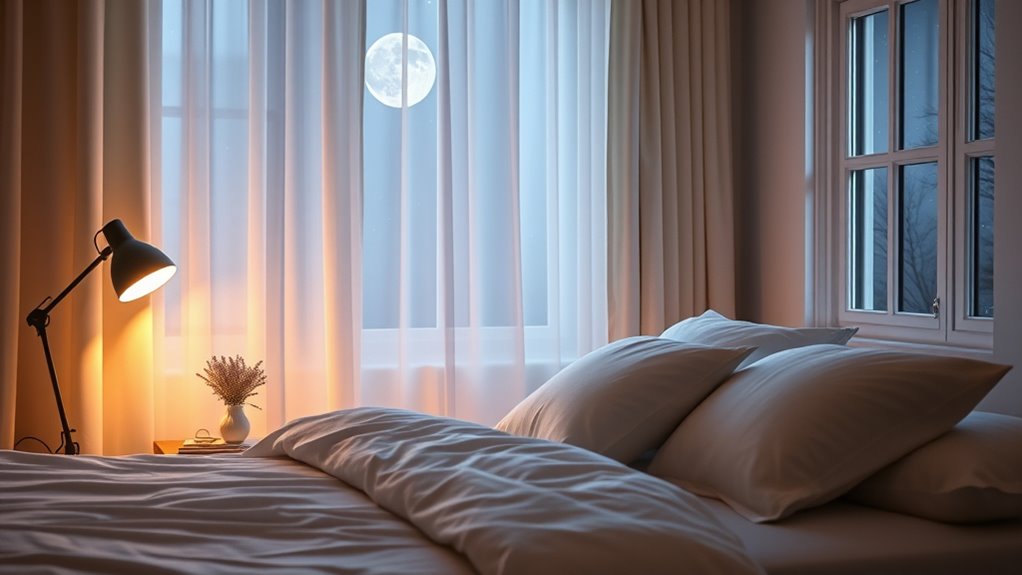
When your sleep environment is uncomfortable or distracting, it can be nearly impossible to fall asleep. To create a true sleep sanctuary, focus on optimizing your bedroom ergonomics. Confirm your mattress and pillows support your body comfortably, reducing strain and discomfort. Keep the room cool, ideally between 60-67°F, to promote deeper sleep. Eliminate noise with earplugs or white noise machines, and block out light with blackout curtains or an eye mask. Remove clutter and electronic devices that can cause distractions. A well-designed sleep sanctuary minimizes disturbances, helping you relax quickly and fall asleep faster. Ensuring your sleep environment is free of distractions or disturbances can significantly improve sleep quality. Additionally, incorporating comfortable bedding can significantly enhance your sleep experience. For added comfort, consider using sustainable materials that promote a healthier sleeping environment and reduce exposure to harmful chemicals. Creating a peaceful atmosphere by eliminating strong odors can also contribute to more restful nights. Using reliable blackout curtains can further improve light control and create a more consistent sleep setting.
As an affiliate, we earn on qualifying purchases.
Practice Mindfulness and Relaxation Techniques

Practicing mindfulness and relaxation techniques can considerably ease your mind and prepare your body for sleep. Start with breathing exercises, focusing on slow, deep breaths to calm your nervous system. Inhale deeply through your nose, hold for a few seconds, then exhale slowly through your mouth. A body scan is another effective method: lie comfortably and systematically bring awareness to each part of your body, releasing tension as you go. Concentrate on sensations without judgment, helping you shift your focus away from worries. These techniques reduce stress and promote relaxation, making it easier to drift off. Incorporate them into your bedtime routine to create a calming transition / shift / passage from wakefulness to sleep, setting the stage for restful nights.
Manage Stress and Anxiety During the Day
Managing stress and anxiety during the day is essential for improving your sleep at night. When you practice stress reduction techniques like deep breathing, exercise, or journaling, you lower your overall anxiety levels. Managing anxiety effectively helps prevent it from spilling over into your bedtime routine. When your mind is calmer during the day, you’re less likely to lie awake worrying. Incorporate daily activities that promote relaxation, such as taking short breaks or engaging in hobbies you enjoy. Avoid caffeine and excessive screen time, which can heighten anxiety. By actively managing stress and practicing anxiety management strategies, you set a foundation for a more restful night’s sleep. The goal is to keep your daytime stressors in check so they don’t interfere with your sleep tonight.
Adjust Your Daily Habits and Sleep Schedule

To improve your sleep, start by setting a consistent bedtime and sticking to it every night. Limiting screen time before bed and avoiding caffeine late in the day can make a big difference. Small changes to your daily habits can help reset your sleep schedule and make falling asleep easier.
Establish Consistent Bedtimes
Setting a consistent bedtime each night helps regulate your body’s internal clock, making it easier to fall asleep and wake up feeling refreshed. To improve sleep consistency, focus on establishing reliable bedtime rituals that signal your body it’s time to wind down. Here are three ways to do that:
- Stick to the same sleep and wake times daily, even on weekends.
- Develop calming bedtime rituals, like reading or gentle stretching, to cue relaxation.
- Avoid caffeine or heavy meals close to bedtime, supporting smoother progressions into sleep.
Consistency in your sleep schedule reinforces your body’s natural rhythms, making sleepless nights less frequent. Prioritizing regular bedtimes helps your body anticipate rest, leading to better sleep quality and overall well-being.
Limit Screen Time Before Sleep
Reducing screen time before bed is essential for improving sleep quality because the blue light emitted by phones, tablets, and computers can suppress melatonin production, making it harder to fall asleep. To create a more sleep-friendly environment, consider a digital detox at least an hour before bedtime. Put away devices and switch to relaxing activities like reading a book or listening to calming music. Limiting screen time helps your body naturally prepare for sleep by boosting melatonin levels and reducing mental stimulation. Making this simple change can markedly improve your ability to fall asleep faster and enjoy more restful nights. Remember, establishing a routine that minimizes exposure to screens before bed is a vital step toward better sleep health.
Avoid Caffeine Late Night
Caffeine is a stimulant that can interfere with your ability to fall asleep, especially when consumed later in the day. To improve your sleep, avoid caffeine consumption after a certain hour. This includes late night beverages like coffee, tea, or energy drinks, which can stay in your system and disrupt your sleep cycle.
Here are three steps to cut back on caffeine late night beverages:
- Set a cut-off time, such as 2 p.m., for all caffeine intake.
- Replace late night beverages with herbal teas or water.
- Be mindful of hidden sources of caffeine, like chocolate or certain medications.
Seek Professional Help if Sleep Issues Persist
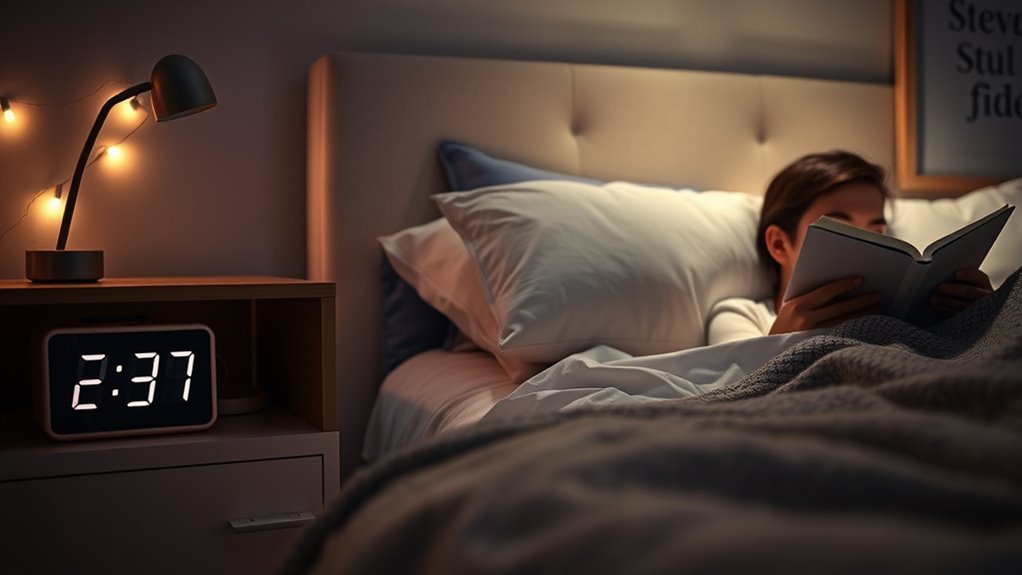
If your sleep problems continue despite trying home remedies and lifestyle changes, it’s important to seek professional help. A healthcare provider can perform a thorough sleep disorder diagnosis to identify underlying issues. They may recommend sleep medication if appropriate, but these are often a short-term solution. Consulting a sleep specialist can also help uncover conditions like insomnia, sleep apnea, or restless leg syndrome that may be disrupting your rest. Don’t ignore persistent sleep difficulties; professional assessment ensures you get targeted treatment tailored to your needs. Addressing the root cause can markedly improve your sleep quality and overall health. Remember, seeking help is a proactive step toward restful nights and better daytime functioning.
Frequently Asked Questions
How Long Should I Stay in Bed if I Can’t Fall Asleep?
If you can’t fall asleep, stay in bed for about 20 minutes, then get up and leave your sleep environment. Avoid stimulating activities and stick to calming bedtime routines like reading or listening to soft music. This helps your mind associate your bed with sleep, not frustration. When you feel sleepy again, return to bed, and keep your sleep environment cool, dark, and quiet to improve your chances of falling asleep faster.
Can Certain Foods Help or Hinder Sleep Quality?
Think of your diet as the engine that drives your sleep. Certain foods can fuel restful nights, like cherries and almonds, thanks to their melatonin and magnesium content. Conversely, heavy, spicy, or caffeine-laden foods act like roadblocks, hindering sleep quality. Your food choices directly impact your sleep, so opt for balanced, sleep-friendly options that promote relaxation and help you drift into peaceful slumber.
What Are Quick Relief Methods for Sudden Sleepless Nights?
When sleepless nights strike, try relaxation techniques like deep breathing or progressive muscle relaxation to calm your mind. Adjust your sleep environment by dimming the lights, lowering noise, and ensuring a comfortable temperature. Avoid screens and caffeine, and focus on creating a peaceful space. If you’re still awake after 20 minutes, get up and do a relaxing activity until you feel sleepy again. These quick methods can help you find relief fast.
How Does Screen Time Before Bed Affect Sleep?
Screen time before bed impacts your sleep by exposing you to blue light effects, which can suppress melatonin production. This makes it harder for you to fall asleep and reduces sleep quality. To improve your sleep, limit screen use at least an hour before bedtime, or use blue light filters. Reducing screen time helps your body naturally wind down, promoting quicker sleep onset and better rest throughout the night.
Are Naps During the Day Helpful or Disruptive?
Like Icarus flying too close to the sun, napping can lift you briefly but risk disrupting your nighttime sleep. Napping benefits include improved alertness and mood, especially if you’re sleep-deprived. However, napping drawbacks are lingering fatigue or difficulty falling asleep at night. Short power naps of 20-30 minutes are usually helpful, but long or late naps may make your sleep cycle more chaotic. Balance is key.
Conclusion
Even if sleepless nights feel endless, following these steps can make a difference. You might worry that changing routines is too hard or won’t work, but small, consistent efforts build better sleep habits over time. Remember, it’s okay to ask for help if sleep problems persist—you’re not alone. With patience and persistence, you can break the cycle of sleeplessness and enjoy restful nights ahead.
Fall Picks
fall essentials
As an affiliate, we earn on qualifying purchases.