
Indoor plants like snake plants and lavender can considerably improve your sleep by purifying the air, reducing stress, and creating a calming environment. Snake plants convert CO₂ to oxygen overnight, making breathing easier, while lavender’s soothing scent helps lower your heart rate and promote relaxation. These plants are easy to care for and can transform your bedroom into a peaceful retreat. Keep exploring to learn how to maximize their sleep benefits even further.

Get health and wellness essentials delivered free — and shop member deals
- Fast, free delivery on millions of items
- Access to Prime Big Deal Days deals on October 6–7
- Prime Video, Amazon Music and more included
Key Takeaways
- Snake plants convert CO₂ to oxygen at night, enhancing breathing and sleep quality.
- Lavender’s soothing aroma lowers heart rate and blood pressure, promoting relaxation before sleep.
- Both plants purify indoor air, reducing allergens and pollutants that can disrupt sleep.
- Proper care ensures plants maintain their air-purifying and calming benefits in the sleep environment.
- Incorporating these plants creates a tranquil, inviting space that supports better overall sleep quality.
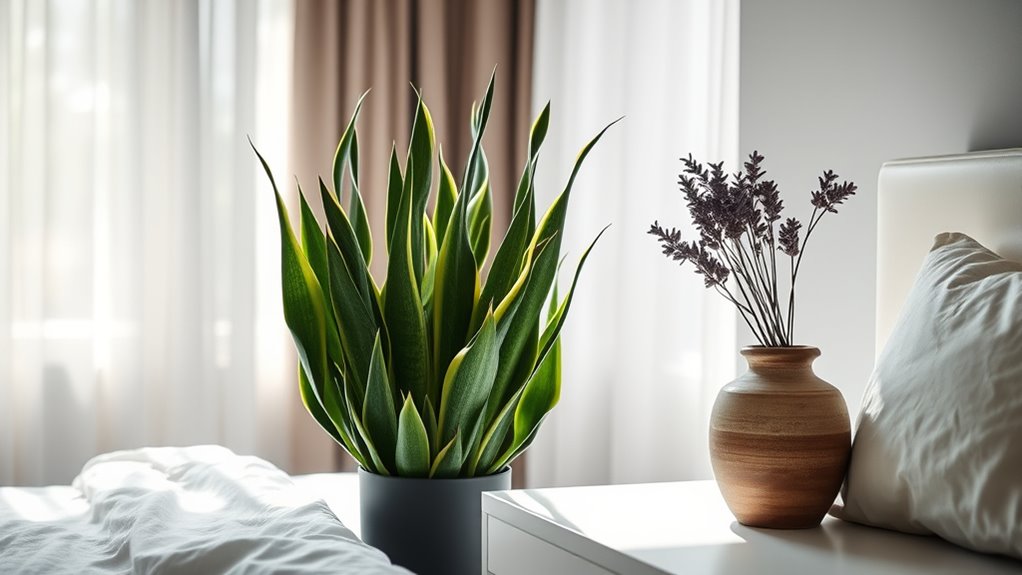
Ever wonder how indoor plants can improve your sleep? Incorporating plants like snake plants and lavender into your home can markedly enhance your sleep environment. These plants are not just decorative; they contribute to a healthier, more relaxing atmosphere that primes your body for rest. When you focus on plant care, you’re ensuring these plants thrive, which in turn maximizes their benefits for your sleep quality. Proper watering, lighting, and occasional pruning keep your plants healthy, so they continue to purify the air and create a calming ambiance. A well-maintained sleep environment filled with thriving plants can reduce stress and promote relaxation, making it easier to drift off and stay asleep through the night. Additionally, understanding Free Floating concepts of plant care can help you optimize the health and benefits of your indoor greenery. Snake plants, also known as sansevieria, are especially popular for bedrooms because they require minimal care and are excellent air purifiers. They convert carbon dioxide into oxygen at night, improving air quality while you sleep. This natural oxygen boost can help you breathe more easily and deeply, fostering better rest. With their low-maintenance nature, snake plants are forgiving if you forget to water them occasionally, making them ideal for busy or novice plant owners. By integrating these resilient plants into your sleep environment, you’re actively creating a space that encourages tranquility and health. Lavender, on the other hand, is renowned for its soothing scent, which has been used for centuries to promote relaxation and reduce anxiety. Placing a lavender plant in your bedroom can fill the space with a calming aroma that signals your body to wind down. When you practice plant care by ensuring the lavender gets enough sunlight and proper watering, the plant remains vibrant and fragrant. The aroma can help lower your heart rate and blood pressure, easing you into sleep more naturally. Combining lavender’s scent with the visual comfort of a lush, green plant intensifies the calming effect, making your sleep environment more inviting and restful. Ultimately, caring for indoor plants like snake plants and lavender is a simple yet effective way to improve your sleep environment. These plants serve dual purposes: they purify the air and add a peaceful aesthetic that encourages relaxation. When you pay attention to plant care, you’re not only nurturing your plants but also cultivating a space that supports your sleep health. It’s a small change that can lead to considerable improvements in your sleep quality, helping you wake up feeling more refreshed and energized each morning.
snake plant air purifier for bedroom
As an affiliate, we earn on qualifying purchases.
As an affiliate, we earn on qualifying purchases.
Frequently Asked Questions
Can Indoor Plants Help Reduce Nighttime Allergies?
Indoor plants can help reduce nighttime allergies by improving air purification and filtering out airborne allergens. When you choose plants like snake plants or peace lilies, they actively remove toxins and increase humidity, which can mitigate allergy symptoms. By improving your home’s air quality, these plants create a healthier environment, potentially easing your allergy symptoms during sleep and helping you breathe easier through the night.
How Much Light Do Snake Plants Need Indoors?
Snake plants thrive in low to bright indirect light, making up about 70% of indoor lighting tips. They need roughly 8-10 hours of light weekly but can tolerate less, perfect for shaded spots. As you arrange your space, keep in mind their adaptable plant light requirements—avoid direct sunlight, which can scorch leaves. This flexibility makes snake plants an easy, stylish addition to nearly any room.
Are Lavender Plants Safe for Pets?
Lavender plants are generally safe for pets, but you should still exercise caution. While they’re not classified as toxic plants, some animals might have sensitive reactions or allergies. To guarantee pet safety, keep lavender out of reach and monitor your pets when they’re around your indoor plants. It’s always best to consult your veterinarian if you notice any unusual behavior or signs of distress after exposure.
Do Certain Indoor Plants Improve Sleep Hygiene?
Imagine walking into a room filled with lush, vibrant plants that gently purify the air and reduce your stress. Certain indoor plants, like snake plants and lavender, do improve sleep hygiene by enhancing air purification and creating a calming environment. You’ll breathe easier and feel more relaxed, making it easier to fall asleep and stay asleep. Incorporating these plants helps you cultivate a peaceful space for restorative rest.
How Often Should I Water My Indoor Sleep Plants?
You should water your indoor sleep plants about once every 2-3 weeks, adjusting based on their hydration needs. Follow a consistent watering schedule to prevent overwatering or underwatering. Check the soil moisture regularly—if it feels dry a few inches down, it’s time to water. Proper plant hydration supports their health and can help create a calming environment, enhancing your sleep quality.
lavender indoor plant for relaxation
As an affiliate, we earn on qualifying purchases.
As an affiliate, we earn on qualifying purchases.
Conclusion
Adding indoor plants like snake plants and lavender can truly enhance your sleep environment. While scientific evidence varies, many people find that these plants promote relaxation and better air quality, helping them fall asleep faster and enjoy deeper rest. Incorporate them into your bedroom to create a calming atmosphere. Give it a try—you might discover that these green companions make a noticeable difference in your sleep quality and overall well-being.
As an affiliate, we earn on qualifying purchases.
air-purifying indoor plants for sleep
As an affiliate, we earn on qualifying purchases.
As an affiliate, we earn on qualifying purchases.
Fall Picks
fall essentials
As an affiliate, we earn on qualifying purchases.