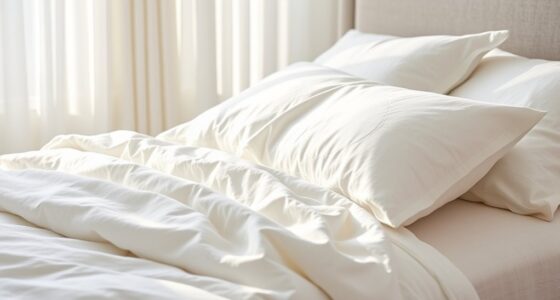
A weighted blanket eases anxiety better than a regular comforter because it provides gentle, consistent pressure that mimics a comforting hug, signaling safety to your nervous system. This sensory stimulation helps lower cortisol and boosts calming chemicals like serotonin and melatonin, making you feel more relaxed and sleep better. Comforters mainly offer warmth and softness without this calming effect. If you want to discover how this pressure works to relax your mind, keep exploring the details.

Get health and wellness essentials delivered free — and shop member deals
- Fast, free delivery on millions of items
- Access to Prime Big Deal Days deals on October 6–7
- Prime Video, Amazon Music and more included
Key Takeaways
- Weighted blankets provide deep touch pressure that signals safety, reducing cortisol and easing anxiety more effectively than regular comforters.
- The sensory stimulation from weighted blankets promotes relaxation and decreases hyperactivity, aiding in anxiety relief.
- Weighted blankets help individuals fall asleep faster and stay asleep longer, improving overall sleep quality and reducing anxiety symptoms.
- Regular comforters mainly offer warmth without sensory input, making them less effective in actively calming the nervous system.
- The biochemical effects of weighted blankets, like increased serotonin and melatonin, contribute to greater anxiety reduction than traditional comforters.

Have you ever wondered how a weighted blanket compares to a regular comforter? If you’re exploring options to improve your sleep or reduce anxiety, understanding the differences can make a big difference. Weighted blankets are designed to provide gentle, consistent pressure across your body, which enhances sensory stimulation. This pressure, often called deep touch pressure, simulates the calming sensation of a comforting hug or massage. As a result, many people find that using a weighted blanket helps them feel more grounded and secure, especially during stressful times. This sensory stimulation can lead to notable improvements in sleep quality, helping you fall asleep faster and stay asleep longer. Unlike traditional comforters that offer warmth without pressure, weighted blankets actively engage your nervous system in a way that promotes relaxation and reduces hyperactivity that often leads to tossing and turning. Additionally, some individuals find that the weight of these blankets can help decrease general restlessness throughout the night.
When you use a regular comforter, you’re mainly relying on warmth and softness to create a cozy environment. While that can be comforting, it doesn’t provide the same level of sensory input that a weighted blanket does. If your goal is to ease anxiety, the added sensory stimulation from a weighted blanket can be more effective. The gentle pressure signals to your brain that it’s safe to relax, which decreases cortisol levels and increases serotonin and melatonin production. This biochemical response can make a noticeable difference in your overall sleep quality, leaving you feeling more refreshed and less anxious in the mornings. Regular comforters might keep you warm, but they don’t actively influence your nervous system in the same way, which limits their ability to soothe anxiety. Recognizing the importance of sensory stimulation can help you make more informed choices for your sleep environment.
Another factor to contemplate is how each option interacts with your body’s natural responses. The weight of a weighted blanket can help reduce restless movements and promote a sense of calm, making it easier to switch into deep sleep stages. A comforter, on the other hand, mainly provides insulation and comfort but doesn’t offer the same calming effect. If anxiety is a major hurdle for your sleep, the sensory stimulation from a weighted blanket may be just what you need. It’s not just about warmth; it’s about creating a physical sensation that signals safety and relaxation to your brain. As you experiment with your sleep setup, you’ll likely notice that a weighted blanket fosters a more tranquil sleeping environment, profoundly enhancing your sleep quality and easing anxiety more effectively than a regular comforter.
weighted blanket for anxiety relief
As an affiliate, we earn on qualifying purchases.
As an affiliate, we earn on qualifying purchases.
Frequently Asked Questions
How Long Does a Weighted Blanket Typically Last?
A weighted blanket typically lasts about 3 to 5 years, depending on its durability comparison and material longevity. You can prolong its lifespan by following care instructions, like gentle washing and avoiding excessive wear. High-quality materials, such as durable fabrics and sturdy fillings, tend to last longer. Regularly inspecting your blanket for tears or thinning helps ensure you get the most out of your investment and maintain its calming benefits.
Are Weighted Blankets Suitable for Children?
Yes, weighted blankets can be suitable for children, but you should prioritize child safety and follow age recommendations. Generally, they’re recommended for kids over 3 or 5 years old, depending on weight and size. Always choose a blanket that’s about 10% of your child’s body weight and make certain it has a secure, breathable cover. Consult with your child’s healthcare provider to confirm it’s safe for their specific needs.
Can Weighted Blankets Cause Overheating During Sleep?
Yes, weighted blankets can cause overheating during sleep, especially if they lack proper thermal regulation or are made from non-breathable materials. To prevent this, choose blankets with breathable fabrics like cotton or bamboo. These materials promote better thermal regulation, helping you stay cool and comfortable throughout the night. Always check the weight and material details to make certain your blanket supports restful, temperature-controlled sleep.
What Are the Cleaning Instructions for Weighted Blankets?
To keep your weighted blanket clean, follow the care instructions provided by the manufacturer. Typically, you can spot clean stains with a gentle cloth and mild detergent, but most weighted blankets are machine washable on a gentle cycle with cold water. Make sure you remove the inner weights before washing and tumble dry on low heat or air dry. Always check stain removal tips to avoid damaging the fabric or filling.
Do Weighted Blankets Have Any FDA Approval or Certifications?
Right now, weighted blankets don’t have FDA approval or widespread safety certifications, but manufacturers often adhere to strict safety standards like OEKO-TEX or UL listings. Did you know that over 60% of users find weighted blankets markedly reduce anxiety? While they’re generally safe, it’s essential to choose certified products and follow proper usage instructions. Always check for safety certifications to ensure your comfort and peace of mind.
As an affiliate, we earn on qualifying purchases.
Conclusion
So, as you consider which to choose, it’s interesting how sometimes, the simple weight of a blanket can unexpectedly ease your mind, just like life’s little coincidences that bring comfort when you least expect it. Whether you opt for a weighted blanket or a regular comforter, remember that the right choice might just be the one that feels like it was meant to find you. Sometimes, it’s the small details that make all the difference in easing anxiety.
weighted throw blanket for stress reduction
As an affiliate, we earn on qualifying purchases.
As an affiliate, we earn on qualifying purchases.
weighted blanket with calming effects
As an affiliate, we earn on qualifying purchases.
As an affiliate, we earn on qualifying purchases.
Evergreen bestsellers Picks
bestsellers
As an affiliate, we earn on qualifying purchases.