
Creating a better sleep environment helps you fall asleep faster and stay asleep longer, boosting your body’s recovery. Using calming scents like lavender or chamomile signals relaxation and reduces stress, supporting tissue repair and immune function. Keeping your room cool and comfortable prevents disruptions and helps your body cool down naturally. When your sleep space is thoughtfully designed, it promotes uninterrupted rest, strengthens your recovery processes, and leaves you feeling refreshed. To discover more ways to optimize your sleep environment, keep exploring the strategies ahead.

Get health and wellness essentials delivered free — and shop member deals
- Fast, free delivery on millions of items
- Access to Prime Big Deal Days deals on October 6–7
- Prime Video, Amazon Music and more included
Key Takeaways
- A calming sleep environment reduces stress and anxiety, facilitating quicker physical and mental recovery.
- Maintaining optimal room temperature promotes natural body cooling, enhancing sleep quality and tissue repair.
- Incorporating soothing scents like lavender signals relaxation, supporting hormonal balance and immune function.
- A thoughtfully designed space minimizes disruptions, allowing uninterrupted sleep essential for recovery processes.
- Improved sleep quality from a supportive environment boosts cognitive function, mood, and overall well-being.
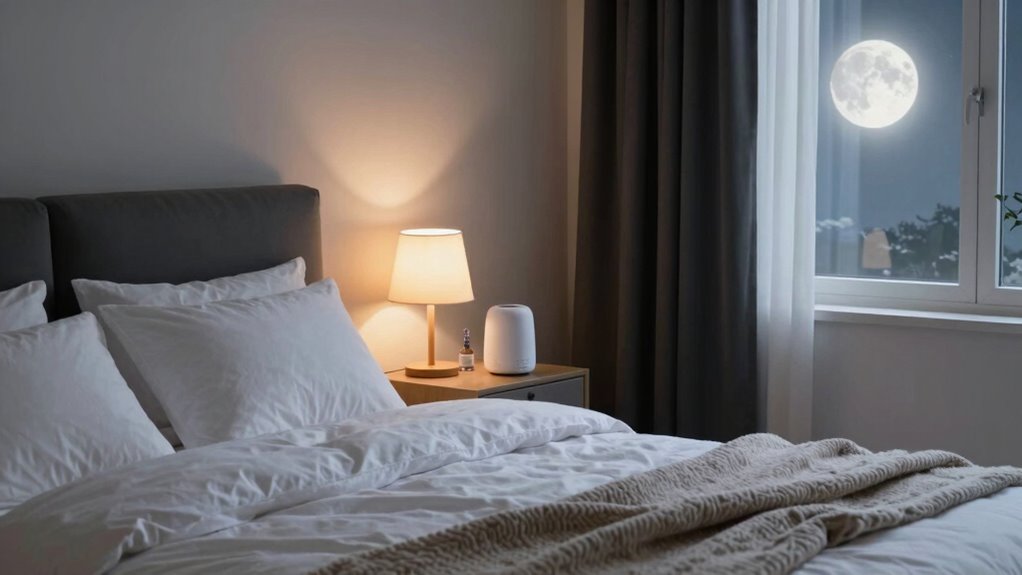
A good night’s sleep begins with creating a better sleep environment. When your surroundings are enhanced, your body can relax more fully, leading to deeper, more restorative sleep. One effective way to improve your sleep environment is by incorporating sleep inducing scents—think lavender, chamomile, or vanilla—into your bedtime routine. These scents can trigger a calming response in your brain, reducing stress and anxiety, which often interfere with falling asleep. Using essential oils in a diffuser or applying a few drops to your pillow can create a soothing atmosphere that signals to your body that it’s time to wind down. Combining these scents with other calming practices can considerably improve sleep quality, making it easier for your body to recover overnight. Incorporating aromatherapy into your nightly routine is a simple yet powerful tool to enhance your sleep environment.
Alongside scents, maintaining an ideal room temperature is crucial for better sleep. Your body naturally cools down during sleep, so a room that’s too warm or too cold can disrupt this process. Ideally, you want your sleeping space to be between 60 and 67 degrees Fahrenheit. When the temperature is just right, your body can regulate its temperature more efficiently, helping you fall asleep faster and stay asleep longer. If your room is too warm, you might wake up sweaty or restless, which hampers your recovery. Conversely, if it’s too cold, you might struggle to stay comfortable, causing frequent awakenings. Investing in a good thermostat or using breathable bedding can help you achieve and maintain this perfect temperature throughout the night. Creating a comfortable sleep environment can also support your body’s natural circadian rhythms, promoting more consistent sleep patterns.
Creating a sleep-friendly environment isn’t just about comfort; it directly supports your body’s recovery processes. During sleep, your body repairs tissues, consolidates memory, and balances hormones—processes that require a peaceful setting free of disruptions. Sleep inducing scents help calm your nervous system, reducing cortisol levels and stress, which in turn promotes more profound restorative sleep. An ideal room temperature ensures your body doesn’t expend extra energy trying to regulate its core temperature, allowing more resources to go toward healing and regeneration. When your environment encourages uninterrupted, high-quality sleep, your body can perform these essential functions more efficiently, leading to faster recovery from physical activity, better immune function, and improved mental clarity. In short, investing in a thoughtfully designed sleep environment supports your overall health and well-being, helping you wake up feeling refreshed and ready to face the day.
As an affiliate, we earn on qualifying purchases.
Frequently Asked Questions
How Does Temperature Affect Sleep Quality?
Temperature affects sleep quality through temperature regulation and sleep comfort. When your room is too hot or cold, your body struggles to maintain an ideal core temperature, disrupting your sleep cycle. A cooler, comfortable environment helps you fall asleep faster and stay asleep longer. Maintaining a consistent, perfect temperature enhances sleep comfort, which ultimately promotes better recovery by allowing your body to rest and repair efficiently during the night.
What Are the Best Materials for Sleep-Friendly Bedding?
You’re only as comfortable as your bedding fabrics, so choose wisely. Opt for natural materials like cotton, linen, or bamboo because they’re breathable and gentle on your skin. Look for bedding with a smooth sleep texture to prevent irritation. These materials help regulate temperature and wick away moisture, creating an inviting sleep environment. When your bedding feels right, it’s easier to drift off and enjoy restorative rest.
How Does Noise Impact Sleep Recovery?
Noise disrupts your sleep recovery by causing micro-awakenings that prevent deep, restorative sleep stages. Using sound masking or noise cancellation helps reduce these interruptions, creating a calmer environment. When you minimize noise, your body can focus on repairing tissues and consolidating memories. This way, you wake up feeling more refreshed and energized, ensuring your sleep quality supports overall recovery and well-being.
Can Lighting Influence Sleep Stages and Recovery?
Lighting substantially influences your sleep stages and recovery by affecting your circadian rhythms. Exposure to natural light during the day, or using light therapy, helps regulate these rhythms, promoting better sleep at night. Dim, warm lighting in the evening signals your body to wind down, enhancing REM sleep and overall recovery. By managing your lighting, you support healthier sleep cycles, which are essential for ideal physical and mental restoration.
What Are Quick Tips to Optimize My Sleep Environment?
To optimize your sleep environment, focus on your sleep position and maintain good sleep hygiene. Choose a comfortable mattress and pillows that support your preferred sleep position. Keep your room cool, dark, and quiet to promote better sleep. Avoid screens before bed and establish a calming routine. These simple steps create an ideal setting, helping you fall asleep faster and improve your overall recovery.
As an affiliate, we earn on qualifying purchases.
Conclusion
Imagine drifting into sleep, your environment perfectly tuned—dim lights, cool air, a quiet hum. As you settle in, your body begins to repair and rejuvenate, but the true power lies in what you can’t see. A better sleep environment isn’t just about comfort; it’s about revealing deeper recovery. So, what’s waiting for you behind that closed door tonight? The secret to waking up refreshed might be just a small change away—if you dare to create it.
As an affiliate, we earn on qualifying purchases.
sleep environment blackout curtains
As an affiliate, we earn on qualifying purchases.
As an affiliate, we earn on qualifying purchases.
Fall Picks
fall essentials
As an affiliate, we earn on qualifying purchases.