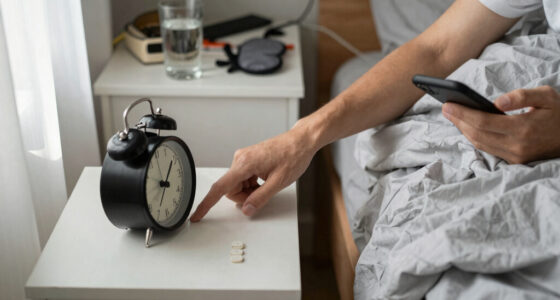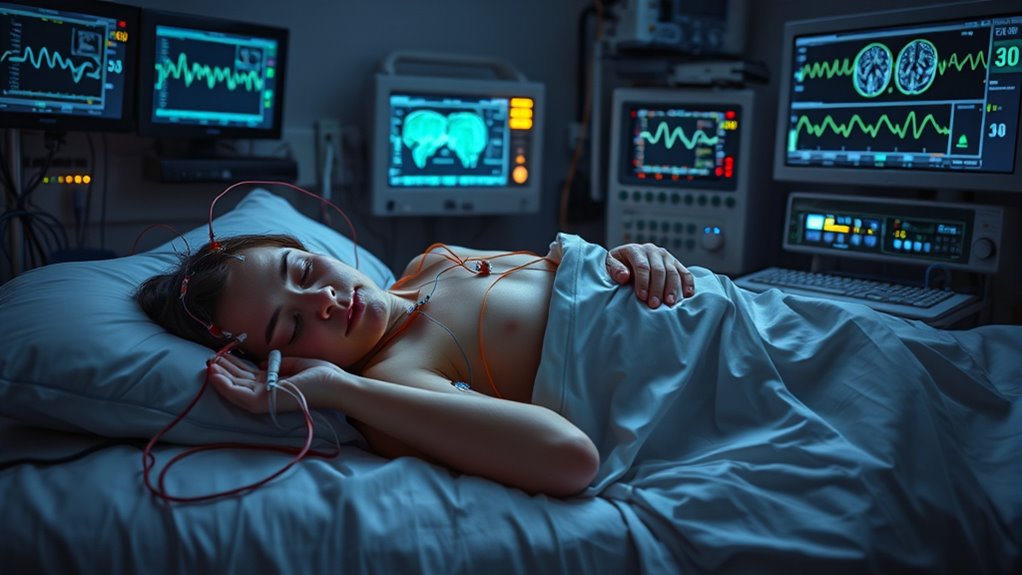

Polysomnography, or sleep testing, records your brain activity, eye movements, muscle activity, heart rate, breathing, and oxygen levels overnight. This detailed data helps identify irregular sleep patterns, disruptions, or abnormalities that may indicate sleep disorders like sleep apnea, narcolepsy, or restless leg syndrome. By analyzing these signals, specialists can pinpoint specific issues and develop targeted treatment plans. If you’d like to understand more about how this technology works and what to expect, there’s plenty more to explore.

Get health and wellness essentials delivered free — and shop member deals
- Fast, free delivery on millions of items
- Access to Prime Big Deal Days deals on October 6–7
- Prime Video, Amazon Music and more included
Key Takeaways
- Polysomnography records brain activity, eye movements, muscle activity, heart rate, breathing, and oxygen levels overnight.
- It identifies irregular sleep patterns and disruptions that indicate sleep disorders like sleep apnea or narcolepsy.
- The test analyzes sleep stages to detect abnormalities in sleep architecture and continuity.
- Data from the sleep environment and physiological signals help pinpoint specific causes of sleep disturbances.
- Accurate polysomnography enables tailored diagnoses and treatment plans to improve sleep quality and overall health.
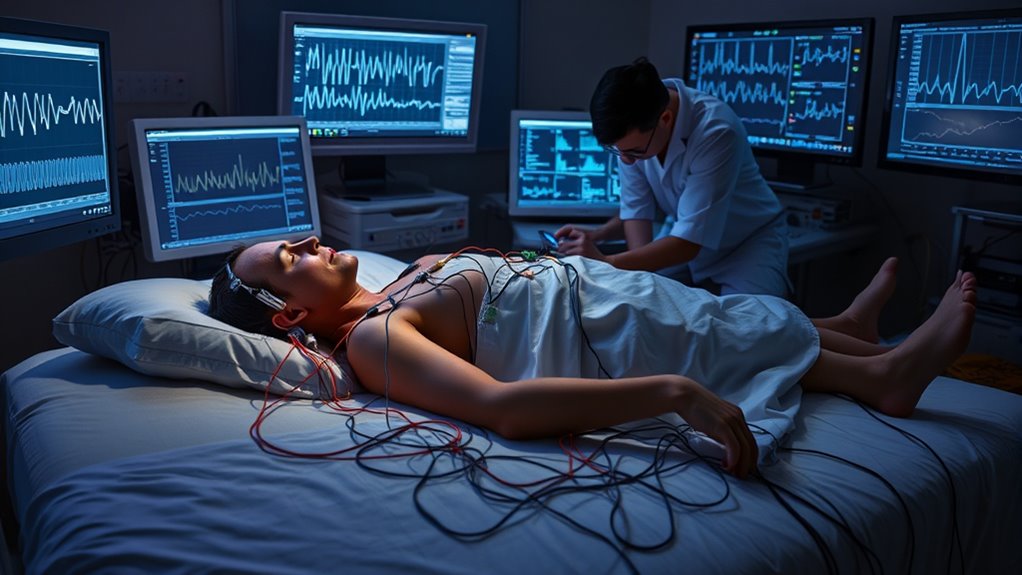
Have you ever wondered how doctors diagnose sleep disorders? The answer often lies in a technique called polysomnography, a comprehensive sleep test that monitors your sleep patterns overnight. During this test, various sensors are attached to your body to record brain activity, eye movements, muscle activity, heart rate, breathing, and oxygen levels. But understanding what happens during the test can help demystify the process and show you why it’s so effective in pinpointing sleep issues.
One critical aspect of a sleep study is sleep stage analysis. Your sleep isn’t just a passive state; it cycles through different stages—light sleep, deep sleep, and REM sleep. Each stage plays a vital role in your overall health and well-being. When your sleep is disrupted or abnormal, it can signal underlying disorders such as sleep apnea, restless leg syndrome, or narcolepsy. By analyzing these sleep stages, your healthcare team can identify irregularities, such as frequent awakenings or abnormal sleep architecture. This detailed insight helps them determine the root cause of your sleep problems and tailor treatment plans accordingly.
Equally important are sleep environment considerations. Your surroundings during the test can significantly influence your sleep quality. Sleep labs are designed to mimic your natural sleeping environment as closely as possible, with comfortable beds, controlled lighting, and ambient noise levels. Still, the unfamiliar setting can sometimes make it challenging to fall asleep or stay asleep, which is why technicians monitor and adjust environmental factors to help you relax. They may also provide tips on how to prepare for the test at home, such as maintaining a consistent sleep schedule and avoiding stimulants before bedtime. These considerations ensure that the data collected accurately reflects your typical sleep patterns, making the diagnosis more reliable. Additionally, understanding sleep monitoring technology can help you appreciate the precision involved in capturing accurate data.
Throughout the night, the combination of sleep stage analysis and careful attention to sleep environment considerations allows your medical team to gather comprehensive data. This data offers a window into your sleep health, revealing patterns and abnormalities that aren’t obvious during daytime hours. By understanding these components of a sleep test, you can better appreciate how your sleep disorders are diagnosed and treated. The goal is to improve your sleep quality, which impacts your overall physical and mental health. Knowing what to expect and how the test works can reduce anxiety and encourage you to approach it with confidence, knowing that it’s a crucial step toward better sleep and a healthier life.
As an affiliate, we earn on qualifying purchases.
Frequently Asked Questions
How Long Does a Typical Sleep Study Last?
A typical sleep study lasts about 7 to 8 hours, usually aligning with your normal sleep schedule. During the test, you’ll sleep in a comfortable sleep environment designed to mimic your usual bedroom setting. Proper test preparation, like avoiding caffeine and following your doctor’s instructions, helps guarantee accurate results. Remember, the goal is to capture a full night’s sleep to diagnose any potential sleep disorders effectively.
Can I Sleep Normally During the Test?
You can sleep normally during the test, but sleep comfort varies for everyone. Some people find the equipment uncomfortable, which can cause test anxiety and make it harder to fall asleep. Remarkably, studies show that most patients adapt quickly, and technicians are there to help. To improve your experience, communicate your concerns beforehand. With a little patience, you’ll likely sleep well enough to provide accurate results.
Are Sleep Tests Suitable for Children?
Yes, sleep tests are suitable for children, but pediatric considerations are essential. Sleep study adaptations include a kid-friendly environment, shorter testing durations, and gentle equipment placement to minimize discomfort. You should prepare your child by explaining the process simply and reassuring them. Trained staff monitor the child closely during the test, ensuring safety and comfort, so you can trust that the results will accurately reflect their sleep patterns and potential issues.
What Should I Avoid Before a Sleep Study?
You should avoid caffeine intake and alcohol consumption before a sleep study because they can interfere with your sleep patterns and skew results. It’s tempting to indulge, but doing so may lead to inaccurate diagnoses. Additionally, skip heavy meals and limit screen time to help you relax. Follow your doctor’s instructions carefully to guarantee the test provides the most accurate picture of your sleep health.
How Accurate Are Sleep Study Results?
Sleep study results are generally quite accurate, but you should be aware of some limitations. Sleep study limitations can affect diagnostic accuracy, especially if your sleep patterns vary or if technical issues occur during testing. While most tests reliably identify sleep disorders like sleep apnea, factors like first-time anxiety or incomplete data can impact results. Discuss any concerns with your doctor to ensure the most precise diagnosis and appropriate treatment plan.
sleep monitoring device with sensors
As an affiliate, we earn on qualifying purchases.
As an affiliate, we earn on qualifying purchases.
Conclusion
Now that you know how polysomnography works, you’re better equipped to understand your sleep health. These tests can uncover issues you might not even realize you have, leading to better treatment options. Isn’t it worth taking that step toward more restful nights? Remember, good sleep isn’t just about comfort — it’s about your overall well-being. So, don’t hesitate to ask your doctor about sleep studies if you suspect a problem; your health deserves it.
As an affiliate, we earn on qualifying purchases.
As an affiliate, we earn on qualifying purchases.
Fall Picks
fall essentials
As an affiliate, we earn on qualifying purchases.