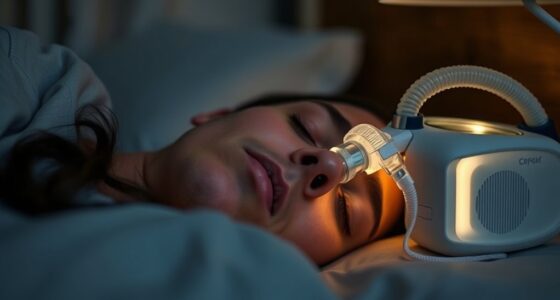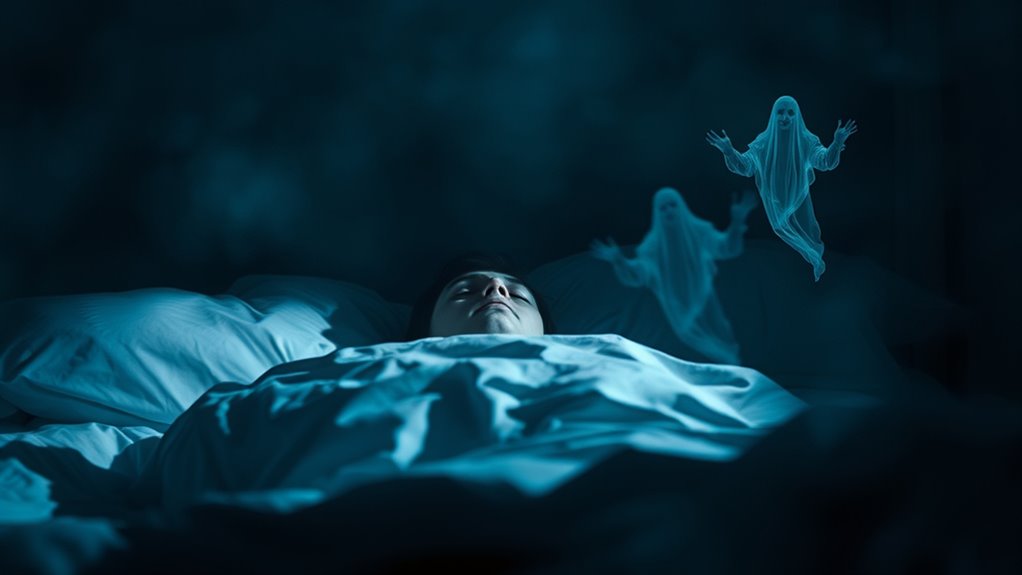

As you fall asleep, you might experience vivid hallucinations where you see or hear things that aren’t really there. These often happen during the shift from wakefulness to sleep, and can feel incredibly real or startling. Such experiences are usually harmless and part of normal sleep phenomena, though they might be linked to conditions like REM sleep behavior disorder. To understand what causes these sensations and how common they are, keep exploring these intriguing sleep moments.

Get health and wellness essentials delivered free — and shop member deals
- Fast, free delivery on millions of items
- Access to Prime Big Deal Days deals on October 6–7
- Prime Video, Amazon Music and more included
Key Takeaways
- Sleep hallucinations are vivid sensory experiences, like seeing or hearing things, occurring during the transitional phase between wakefulness and sleep.
- They often happen during sleep onset or awakening and can involve visual, auditory, or tactile sensations.
- These hallucinations are linked to normal sleep phenomena, including REM sleep processes and their occasional disruption.
- Conditions like REM Sleep Behavior Disorder may cause similar hallucination-like episodes involving dream imagery and physical movements.
- Understanding these phenomena helps differentiate harmless sleep experiences from underlying sleep disorders or psychiatric conditions.
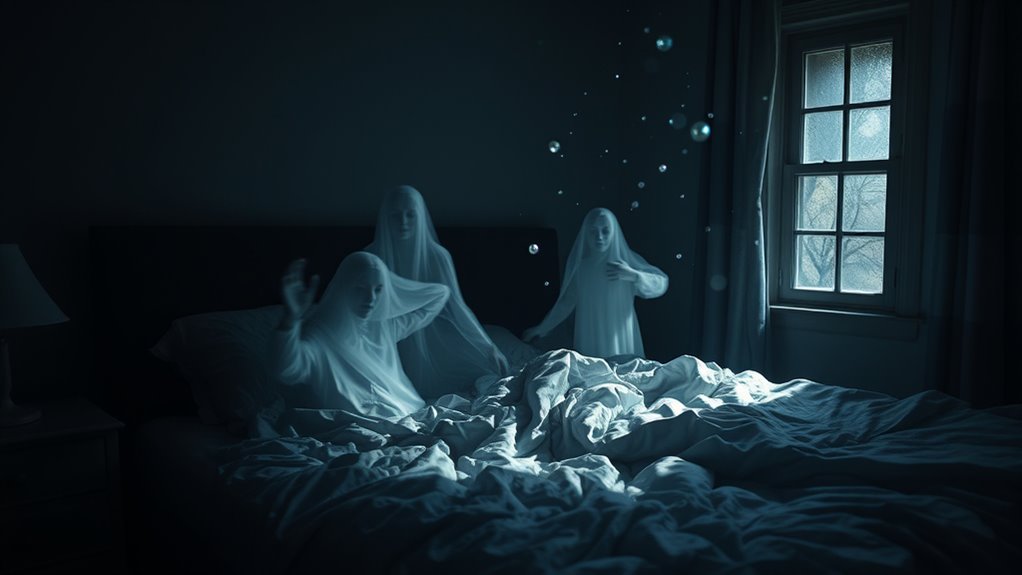
Sleep hallucinations are vivid, sometimes frightening experiences that occur as you shift between wakefulness and sleep. These hallucinations often feel incredibly real, making you see, hear, or feel things that aren’t actually there. During this transitional phase, your brain can create intense sensory experiences that leave you confused or startled. Two phenomena closely linked to these vivid experiences are REM sleep behavior disorder and lucid dreaming. Understanding how these relate to sleep hallucinations can help you better grasp what’s happening during these unsettling episodes. For instance, energy-efficient cloud servers demonstrate how complex systems can operate seamlessly in the background, much like the subconscious processes during sleep. REM sleep behavior disorder (RBD) is a condition where your normal muscle atonia during REM sleep is absent or incomplete. Usually, during REM sleep, your body becomes temporarily paralyzed to prevent you from acting out your dreams. But in RBD, this paralysis doesn’t happen properly. As a result, you might physically move, shout, or even act out vivid dreams. These movements and actions can sometimes be mistaken for hallucinations, especially if they occur as you’re drifting into or out of sleep. For example, you might wake up feeling like you saw a shadowy figure or heard strange noises, which are actually your own muscle movements or dream imagery spilling over into consciousness. This disorder highlights how REM sleep’s typical paralysis plays a role in preventing hallucinations, and when it’s disrupted, the boundary between dreaming and waking can blur. Lucid dreaming is another fascinating aspect of sleep that can influence hallucinations. When you experience lucid dreams, you’re aware that you’re dreaming while it’s happening, and you might even control the story or environment of your dream. Sometimes, the line between lucid dreaming and hallucinations becomes thin, especially during the transition phases of sleep. During these moments, you might experience hallucination-like visuals or sounds that feel as vivid as your waking perceptions. These experiences can sometimes be mistaken for sleep hallucinations, but they’re actually a result of your conscious mind interacting with the dream state. Lucid dreaming shows how your brain can generate highly realistic sensory experiences, blurring the boundaries between sleep and wakefulness. Both REM sleep behavior disorder and lucid dreaming demonstrate how complex your sleep states are and how they can produce intense, realistic hallucinations. Whether it’s your muscles moving involuntarily or your mind creating vivid dreamscapes, these phenomena reveal that your brain remains active and receptive to sensory input even as your body rests. Recognizing these connections can help you understand why you might see or hear things as you fall asleep, and reassure you that these experiences, while startling, are often harmless and part of the natural spectrum of sleep phenomena.
sleep hallucination relief pillow
As an affiliate, we earn on qualifying purchases.
As an affiliate, we earn on qualifying purchases.
Frequently Asked Questions
Can Sleep Hallucinations Indicate a Serious Medical Condition?
Sleep hallucinations can sometimes signal a serious medical condition, but often they’re linked to sleep disorders like narcolepsy or sleep paralysis. If you experience frequent or intense hallucinations, it’s important to seek a medical diagnosis to rule out underlying issues. These symptoms shouldn’t be ignored, especially if they disrupt your sleep or cause distress. Consulting a healthcare professional helps determine the cause and guides appropriate treatment.
Are Sleep Hallucinations More Common in Certain Age Groups?
You might notice sleep hallucinations more often during adolescence and later in older age due to age-related prevalence and developmental factors. During these times, your brain undergoes changes that can trigger vivid, sometimes unsettling, imagery as you drift into sleep. Young adults and seniors are more susceptible, as their sleep cycles and brain chemistry fluctuate, making hallucinations more common. Understanding these patterns can help you feel less alarmed when they occur.
How Can I Differentiate Between Hallucinations and Dreams?
You can differentiate hallucinations from dreams by paying attention to your dream recall and hallucination types. Hallucinations often occur when you’re semi-conscious, with vivid, intrusive images or sounds that feel real, unlike dreams which happen during REM sleep and are often less immediate. Hallucinations tend to be more distressing and less forgettable, whereas dreams are usually remembered as stories. Recognizing these differences helps you identify whether you’re experiencing a hallucination or just a vivid dream.
Do Sleep Hallucinations Occur During Naps or Only at Night?
Think of your mind as a movie projector; during naps, it still runs, so sleep hallucinations can occur. These hallucinations happen during both naps and nighttime sleep, especially when your awareness drifts between wakefulness and sleep stages. Your napping experiences might include vivid sights or sounds, just like during nighttime episodes. So, if you feel a sudden, strange perception during a nap, it’s likely a sleep hallucination, not just a dream.
Are There Effective Treatments for Reducing Sleep Hallucinations?
You can reduce sleep hallucinations by improving your sleep hygiene, such as maintaining a consistent schedule and avoiding caffeine before bed. Medication options like low-dose antidepressants or antipsychotics may help if hallucinations are severe. Always consult a healthcare professional before starting any medication. Combining good sleep habits with medical guidance offers the best chance to lessen these experiences and improve your sleep quality.
As an affiliate, we earn on qualifying purchases.
Conclusion
Understanding sleep hallucinations can feel unsettling, but remember, they’re more common than you think. They’re like fleeting shadows—brief, harmless, and passing—reminding us that our minds are powerful mysteries. Knowing they’re nothing to fear can help you face your nights with confidence. So, the next time dreams and reality blur, embrace the mystery—because sometimes, the most extraordinary things happen right in the quiet moments between sleep and wakefulness.
As an affiliate, we earn on qualifying purchases.
As an affiliate, we earn on qualifying purchases.
Fall Picks
fall essentials
As an affiliate, we earn on qualifying purchases.