
If you wake up at 3 a.m. and can’t get back to sleep, several factors might be at play, like stress, anxiety, hormonal changes, or environmental disruptions such as noise or light. Poor sleep habits and lifestyle choices, like caffeine or screen time before bed, can also interfere. Your body’s internal clock and health conditions like sleep apnea or restless leg syndrome can cause early awakenings. To improve your sleep, discover effective tips and strategies that could help you stay asleep longer.
Key Takeaways
- Medical conditions like sleep apnea or restless leg syndrome can cause early awakenings around 3 a.m. and require medical diagnosis.
- Stress, anxiety, and hormonal fluctuations, especially cortisol and melatonin levels, disrupt sleep cycles, leading to wakefulness at 3 a.m.
- Poor sleep hygiene, such as irregular routines, excessive screen time, and environmental noise, contribute to waking up early.
- Maintaining a consistent sleep schedule, optimizing bedroom conditions, and practicing relaxation techniques can help prevent early awakenings.
- Addressing underlying health issues and adopting healthy lifestyle habits are essential for stopping wake-ups at 3 a.m.

Magicteam Sound White Noise Machine with 20 Non Looping Natural Soothing Sounds and Memory Function 32 Levels of Volume Powered by AC or USB and Sleep Sound Timer Therapy for Baby Kids Adults
- 20 Non-Looping Soothing Sounds: Includes white, brown, pink, blue noise, and nature sounds
- Adjustable Volume & Timer: 32 volume levels and multiple timer options
- Portable & Compact Design: Small size for home, office, or travel use
As an affiliate, we earn on qualifying purchases.
As an affiliate, we earn on qualifying purchases.
Common Causes of Early Morning Wake-Ups
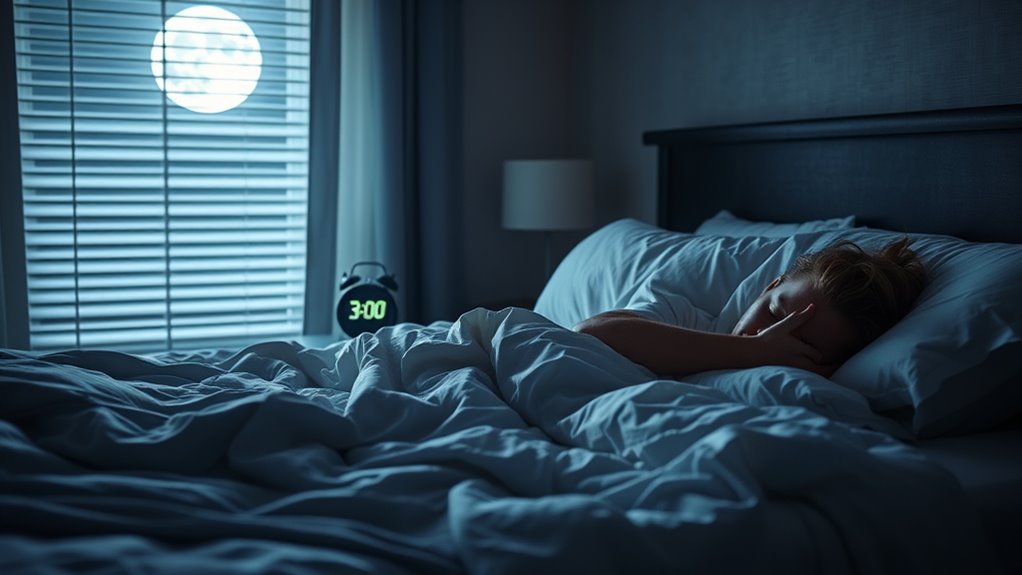
Many factors can cause you to wake up early in the morning, and understanding these common causes can help you address the issue effectively. Poor sleep hygiene, such as irregular sleep schedules or excessive screen time before bed, disrupts your sleep cycle and can lead to early awakenings. Additionally, subconscious thoughts or unresolved dreams may trigger wake-ups, making dream analysis useful for identifying underlying issues. Environmental factors like noise or light also play a role, disturbing your sleep. Addressing these causes involves improving your sleep hygiene—keeping a consistent schedule, creating a dark, quiet environment—and exploring your dreams to uncover hidden stressors. Recognizing these factors and the impact of essential oils for sleep can also help establish healthier sleep patterns and reduce early morning wake-ups. Moreover, understanding the role of sleep cycles can guide you in timing your sleep to minimize disruptions. Pay attention to sleep environment factors, such as air quality, which can influence your sleep quality and wakefulness.

MZOO Luxury Sleep Mask for Women Men Patented Light Blocking Design
- Zero Eye Pressure: Deep 13mm arc-shaped eye cups
- Ideal for Side Sleepers: 15° curved thin sides for comfort
- Complete Light Blocking: Contoured cups and 22mm nose padding
As an affiliate, we earn on qualifying purchases.
As an affiliate, we earn on qualifying purchases.
The Role of Stress and Anxiety in Sleep Disruptions
Stress and anxiety can profoundly disrupt your sleep, often causing you to wake up in the early hours feeling restless or overwhelmed. When your mind races, it’s hard to relax enough to stay asleep. Managing stress and reducing anxiety are key to breaking this cycle. Incorporate nightly routines that promote calm, like deep breathing or meditation. Prioritize stress management techniques to lower your overall tension. The table below highlights common triggers and simple strategies to ease anxiety:
| Trigger | Effect on Sleep | Strategy |
|---|---|---|
| Work-related pressure | Increased alertness | Practice relaxation exercises |
| Financial worries | Racing thoughts | Establish a calming bedtime |
| Personal conflicts | Elevated stress levels | Use mindfulness techniques |
| Health concerns | Sleep disturbances | Seek support or counseling |
| Poor sleep habits | Heightened anxiety | Create a consistent sleep schedule |
Additionally, understanding sleep cycles can help you better manage wakefulness during the night. Recognizing how home theater projectors can influence your environment might also support creating a more relaxing space conducive to restful sleep.

Sleep Essential Oil Blend for Diffuser – Dream Essential Oils for Diffusers Aromatherapy and Relaxation with Clary Sage Ylang-Ylang Roman Chamomile and Lavender for Sleep Time Support (1 Fl Oz)
- Aromatherapy Diffuser Oils: Lavender, chamomile, clary sage, ylang-ylang
- Supports Better Sleep: Promotes relaxation and restful nights
- Premium Essential Oil Blend: Handpicked for optimal sleep support
As an affiliate, we earn on qualifying purchases.
As an affiliate, we earn on qualifying purchases.
How Hormones Affect Your Sleep Patterns

Hormones play a powerful role in regulating your sleep patterns, often influencing how easily you fall asleep and how soundly you stay asleep. When your hormonal balance is off, it can disturb your sleep cycles, causing frequent awakenings or difficulty staying asleep. For example, cortisol, the stress hormone, peaks in the early morning, which can wake you up unexpectedly. Melatonin, the sleep hormone, signals your body that it’s time to rest, but its production can be affected by light exposure or stress, throwing off your sleep rhythm. Maintaining a healthy hormonal balance helps ensure your sleep cycles stay consistent, allowing you to fall asleep faster and stay asleep longer. Disruptions in hormones are a common cause of waking up at 3 AM and struggling to return to sleep. Hormonal fluctuations can also be influenced by lifestyle factors such as diet, exercise, and sleep habits.

ganopterygon Smart Bracelet for Men Women,24/7 Heart Rate Monitor, Sleep Tracking, 120+ Sport Modes, Built-in GPS, IP68 Waterproof, 30-Day Battery Life, Includes 2 Replacement Bands(Black)
- All-Day Heart Rate Monitoring: Continuous heart rate tracking and sleep analysis
- 120+ Sport Modes & GPS: Multiple sports tracking with real-time route mapping
- Smart Notifications: Vibration alerts for calls, messages, and apps
As an affiliate, we earn on qualifying purchases.
As an affiliate, we earn on qualifying purchases.
The Impact of Lifestyle Habits on Restfulness
Your daily habits can considerably affect how well you sleep, especially when it comes to caffeine intake and screen time. Consuming caffeine late in the day can make it harder to stay asleep, while excessive evening screen use can disrupt your natural sleep signals. Being mindful of these habits can help improve your restfulness and reduce early awakenings. Additionally, engaging in relaxation techniques before bed can further promote restful sleep. Reducing exposure to blue light from screens can help maintain your melatonin production, which is crucial for a good night’s sleep. Incorporating sleep-friendly routines into your evening can also support better sleep quality. Understanding affiliate disclosure policies can help you make informed choices about products that may aid your sleep environment. Recognizing how lifestyle habits influence sleep can empower you to make healthier choices for better rest.
Caffeine and Sleep Disruption
Caffeine is a common culprit behind disrupted sleep patterns, especially when consumed later in the day. Your caffeine consumption can interfere with your sleep cycle, making it harder to fall asleep or stay asleep through the night. Caffeine blocks adenosine receptors, which normally promote sleep, leading to increased alertness. When you consume caffeine in the afternoon or evening, it can linger in your system and cause sleep cycle disruption, waking you up around 3 AM or earlier. To improve your sleep quality, try limiting caffeine intake after lunch and opt for herbal teas or water instead. Reducing caffeine helps your body restore a natural sleep rhythm, so you can stay asleep longer and wake feeling refreshed. Additionally, understanding how Gold IRA Markets operate can offer insights into financial stability and planning, which may indirectly influence your overall well-being and stress levels related to financial concerns. Being aware of sleep hygiene practices can further enhance your chances of restful sleep. Incorporating lifestyle adjustments like regular exercise and a consistent bedtime can also support better sleep quality and reduce nighttime awakenings. Consistent sleep routines and managing stress effectively are essential components of sleep health. Maintaining a calm and relaxing pre-sleep routine can further help in minimizing sleep disruptions, promoting more continuous rest throughout the night.
Evening Screen Time Effects
Evening screen time can considerably impact your ability to rest peacefully. The exposure to evening blue light from screens suppresses melatonin production, making it harder to fall asleep and stay asleep. If you’re struggling with sleep, consider how screen addiction might be affecting your routines. The more you scroll, the more your sleep quality suffers. Here’s a quick look at the effects:
| Effect | Cause | Solution |
|---|---|---|
| Delayed sleep onset | Evening blue light | Use blue light filters or glasses |
| Poor sleep quality | Screen addiction | Limit screen time before bed |
| Increased wakefulness | Excessive evening screen use | Establish screen-free routines |
| Reduced REM sleep | Disrupted circadian rhythm | Set a consistent sleep schedule |
Additionally, adopting energy-efficient cloud servers can help reduce the environmental impact of digital habits, promoting more sustainable technology use. Being aware of how content relevance influences your engagement can further improve your sleep patterns by reducing unnecessary screen exposure. Incorporating mindful digital habits can also help reset your circadian rhythms and improve overall sleep quality. Moreover, understanding auditory processing can help identify underlying issues that might contribute to sleep disturbances related to sensory sensitivities.
Environmental Factors That Interfere With Sleep
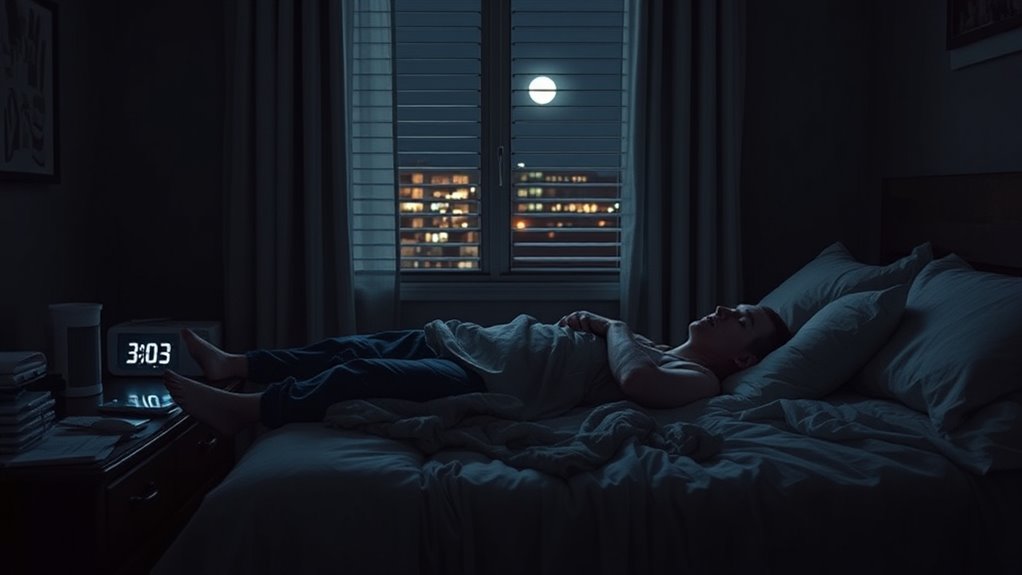
Environmental factors can considerably disrupt your sleep, making it harder to stay asleep through the night. Noise pollution is a common culprit; sudden sounds or persistent background noise can wake you up. Using earplugs or white noise machines can help block out disturbances. Additionally, bedroom temperature plays an essential role. If it’s too hot or too cold, your body struggles to maintain a comfortable state, often leading to awakenings. Aim for a temperature between 60-67°F (15-19°C) for ideal sleep. Keep your room well-ventilated and free of distracting noises, as these environmental factors can quietly undermine your efforts to stay asleep. Proper sleep environment adjustments, such as optimizing room temperature, can greatly improve your sleep quality and help prevent those midnight awakenings.
Medical Conditions That May Wake You at 3 AM
Medical conditions can silently disrupt your sleep, causing you to wake up at 3 a.m. despite feeling tired. Sleep apnea is a common culprit, as it causes brief breathing pauses that jolt you awake. You might not even realize you stop breathing, but your body reacts, disrupting your rest. Restless leg syndrome also plays a role, creating uncomfortable sensations in your legs that make you shift and wake up repeatedly. These conditions can lead to fragmented sleep and early morning awakenings. If you notice persistent wakefulness at 3 a.m., it’s essential to consult a healthcare professional. Proper diagnosis and treatment can help manage these issues, restore your sleep quality, and prevent these medical conditions from sabotaging your nights. Proper diagnosis and treatment are crucial steps in addressing sleep disturbances caused by medical conditions, especially when linked to underlying health issues like sleep disorders or other health problems.
The Significance of Your Body’s Internal Clock
Your body’s internal clock, known as your circadian rhythm, influences when you feel alert or sleepy. It also controls hormonal fluctuations that impact your sleep quality and wakefulness. Understanding how these processes work can help you better manage sleep disruptions like waking at 3 AM.
Circadian Rhythm Regulation
The body’s internal clock, known as the circadian rhythm, plays a crucial role in regulating your sleep-wake cycle. When your circadian alignment is on point, melatonin production ramps up in the evening, helping you feel sleepy, and decreases in the morning, promoting wakefulness. Disruptions to this rhythm—like irregular sleep schedules or light exposure at night—can throw off melatonin levels, making it harder to stay asleep. To support healthy circadian rhythm regulation, focus on consistent sleep times, natural light during the day, and limiting artificial light at night. Here’s a quick overview:
| Factor | Effect on Circadian Rhythm | Tips |
|---|---|---|
| Light exposure | Regulates melatonin production | Get morning sunlight |
| Sleep schedule | Maintains circadian alignment | Sleep same time daily |
| Evening light | Suppresses melatonin | Reduce screen time before bed |
| Meal timing | Influences internal clock | Eat dinner early |
| Physical activity | Supports rhythm regulation | Exercise regularly |
Hormonal Fluctuation Patterns
Hormonal fluctuations are closely tied to your body’s internal clock, influencing sleep quality and timing. Your hormonal cycles follow specific fluctuation patterns that align with your circadian rhythm, helping regulate when you feel alert or sleepy. During the night, hormones like melatonin increase to promote sleep, while cortisol levels drop, keeping you restful. However, disruptions in these fluctuation patterns—due to stress, poor diet, or stress—can cause awakenings around 3 AM. Your body’s internal clock signals these hormonal shifts, and when they become irregular, sleep becomes fragmented. Understanding how your hormonal cycles naturally fluctuate helps you identify causes of wakefulness and develop strategies to maintain stable hormone levels, supporting uninterrupted sleep through the night.
Tips for Creating a Sleep-Friendly Environment

Creating a sleep-friendly environment is essential for reducing nighttime awakenings and improving overall rest. Good sleep hygiene starts with your bedroom setup—keep it dark, cool, and quiet. Use blackout curtains or an eye mask to block out light, and set the thermostat between 60-67°F for ideal comfort. Noise control is vital; consider using earplugs or a white noise machine to drown out disruptive sounds. Avoid screens before bed, as blue light can interfere with melatonin production. Organize your space to minimize clutter, creating a calming atmosphere that signals your brain it’s time to sleep. Consistently maintaining these habits helps your body associate your environment with restful sleep, making nighttime awakenings less frequent.
Effective Strategies to Extend Your Sleep Duration

To sleep longer, you need to create a space that encourages rest and stick to a regular schedule. Making your bedroom more comfortable and going to bed at the same time each night can make a big difference. These simple steps help signal to your body that it’s time to rest, so you can stay asleep longer.
Optimize Sleep Environment
Your sleep environment plays a essential role in how long and how well you sleep. Creating a calm, dark, and comfortable space can help you stay asleep longer. Use blackout curtains to block out light and reduce disruptions. Consider sleep aromatherapy with calming scents like lavender to promote relaxation. Keep your room cool, ideally between 60-67°F, to support deep sleep. Minimize noise with earplugs or white noise machines. Here’s a quick overview:
| Element | Tip | Benefit |
|---|---|---|
| Light | Use blackout curtains | Prevent early awakening |
| Scents | Incorporate sleep aromatherapy | Enhance relaxation |
| Temperature | Keep room cool | Improve sleep quality |
Optimizing your environment makes it easier to extend restful sleep.
Establish Consistent Routine
Establishing a consistent sleep routine is one of the most effective ways to extend your sleep duration and improve overall sleep quality. Creating regular bedtime routines signals to your body that it’s time to wind down, promoting sleep consistency. Aim to go to bed and wake up at the same times every day, even on weekends. This consistency helps regulate your internal clock, reducing nighttime awakenings. Incorporate relaxing activities into your bedtime routines, like reading or gentle stretches, to reinforce your sleep habits. Avoid screens and caffeine close to bedtime, as they can disrupt your routine. Over time, these habits will help stabilize your sleep pattern, making it easier to stay asleep longer and wake feeling refreshed.
When to Seek Professional Help for Sleep Issues
Knowing when to seek professional help for sleep issues is crucial, especially if your sleep problems persist despite trying self-help strategies. If you regularly wake up at 3 AM and struggle to return to sleep, consider consulting a specialist. They can perform sleep tracking and dream analysis to uncover underlying causes. Seek help if you notice symptoms like daytime fatigue, irritability, or memory issues. Addressing these concerns early can prevent long-term health impacts. A sleep professional can recommend treatments, such as behavioral therapy or medication, tailored to your needs. Recognizing when your sleep problems are beyond simple fixes ensures you get the appropriate support to improve your overall well-being.
| Symptom | When to Seek Help |
|---|---|
| Persistent wakefulness | After 2-3 weeks of trouble sleeping |
| Daytime fatigue | If affecting daily activities |
| Anxiety or depression | Accompanying sleep disturbances |
| Unusual dreams or nightmares | Disrupting sleep quality |
| Sudden sleep changes | Rapid or unexplained shifts |
Frequently Asked Questions
Can Medications Cause Me to Wake up at 3 AM Frequently?
Yes, medications can cause you to wake up at 3 am frequently due to their side effects. Some drugs may disrupt your sleep patterns, leading to frequent awakenings or difficulty staying asleep. If you’re experiencing this, check with your doctor about potential medication side effects and possible alternatives. Adjusting dosage or timing might help reduce sleep disruption, allowing you to enjoy more restful, uninterrupted sleep.
Does Diet Influence My Sleep Interruptions Around 3 AM?
Your diet impact can definitely influence your sleep interruptions around 3 am. Nutrient influence plays a role, especially if you consume heavy or sugary foods close to bedtime, which can disrupt your sleep cycle. Caffeine and alcohol also affect sleep quality, causing awakenings. To improve your sleep, try eating lighter meals earlier and focus on foods rich in magnesium or tryptophan, which promote relaxation and help you stay asleep longer.
How Does Age Affect Waking up During the Night?
As you age, your sleep can become a fragile house of cards, easily disturbed. Age-related changes and hormonal fluctuations cause your sleep cycles to become shorter and lighter, making you more prone to waking up during the night. You might notice these awakenings, especially around 3 AM, are more frequent. To improve your sleep, establish a relaxing bedtime routine and manage stress, helping your body stay peacefully asleep longer.
Are There Specific Sleep Disorders Linked to Waking at 3 AM?
Yes, certain sleep disorders are linked to waking at 3 AM. For example, sleep apnea causes breathing interruptions that often wake you during the night, while restless leg syndrome results in uncomfortable sensations that disrupt your sleep. If you notice frequent awakenings at this time, it’s important to consult a healthcare professional. They can diagnose these conditions and recommend treatments to help you stay asleep through the night.
Can Sleep Tracking Devices Accurately Identify Causes of Early Awakenings?
Think of sleep tracking devices as detectives peering into your night, but they’re not perfect crystal balls. They can spot disruptions in your sleep cycle and reveal patterns linked to early awakenings, especially if your bedtime routines stay consistent. However, they might miss subtle causes like stress or internal clocks. Use them as helpful clues, but don’t rely solely on them—consult a sleep specialist for a complete picture.
Conclusion
If waking up at 3 am feels like a never-ending nightmare, don’t despair—you have the power to reclaim your sleep. By understanding the causes and making simple changes, you can turn your nights from a battlefield into a peaceful paradise. Remember, your sleep is more precious than gold, so prioritize it and take action today. With patience and persistence, you’ll soon enjoy restful, uninterrupted nights and wake up ready to conquer the world.