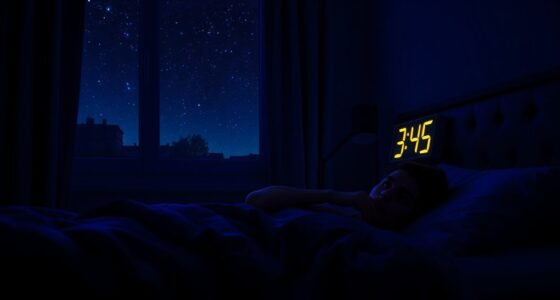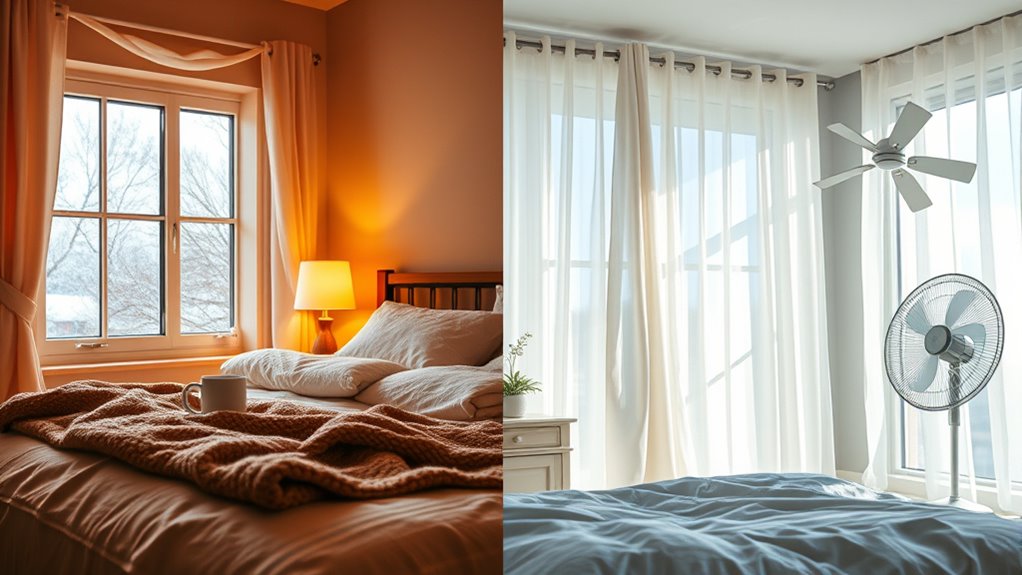

To manage seasonal sleeplessness, adapt your routines to seasonal changes; use a light therapy box in winter to help reset your internal clock and boost mood. In summer, block out excess sunlight with blackout curtains and keep your room cool. Maintaining a consistent sleep schedule and relaxing bedtime routines also help. Understanding how daylight affects your sleep can make a big difference—keep exploring how to optimize your sleep year-round.

Get health and wellness essentials delivered free — and shop member deals
- Fast, free delivery on millions of items
- Access to Prime Big Deal Days deals on October 6–7
- Prime Video, Amazon Music and more included
Key Takeaways
- Use light therapy in winter mornings to reset circadian rhythms and counteract increased melatonin production.
- Block excess summer daylight with blackout curtains or sleep masks to prevent delayed sleep onset.
- Maintain consistent sleep schedules year-round to stabilize your internal clock despite seasonal changes.
- Keep your sleeping environment cool and well-ventilated, especially during summer, to promote better sleep quality.
- Incorporate relaxing bedtime routines and adjust sleep timing to adapt to seasonal variations in daylight and temperature.
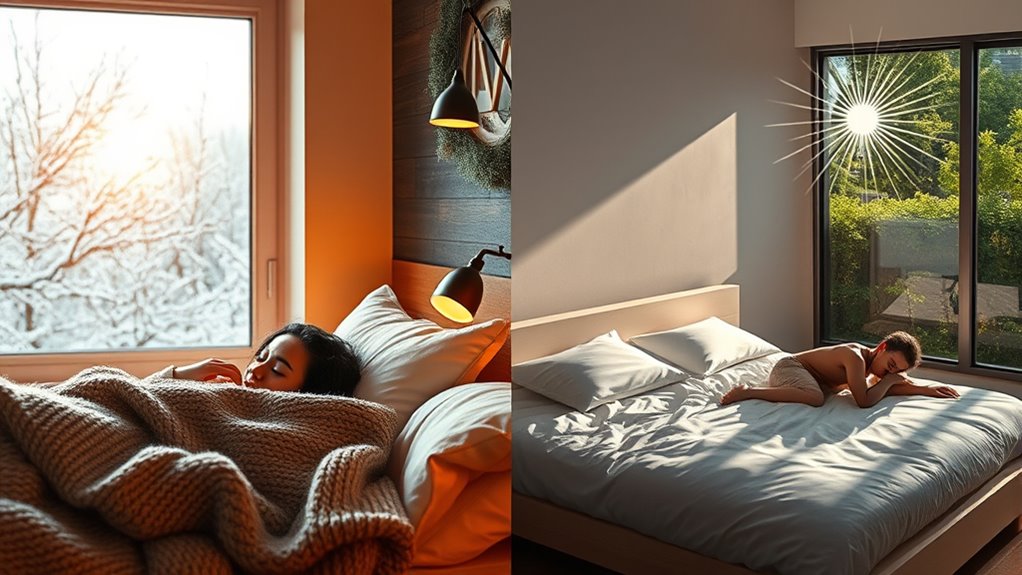
Have you ever noticed your sleep patterns shifting with the seasons? During winter, you might find it harder to fall asleep or wake up feeling tired, while in summer, you could be sleeping more deeply or experiencing fewer issues. These changes are common and often linked to variations in daylight and temperature that affect your body’s internal clock. To manage these seasonal disruptions, you can start by paying attention to your sleep environment. Making your bedroom conducive to sleep involves controlling light, noise, and temperature. In winter, as nights grow longer and darker, your body produces more melatonin, making you feel sleepy earlier. However, early darkness can also lead to feelings of sluggishness or a desire to sleep more than usual. To counteract this, using a light therapy box in the morning can help reset your circadian rhythm. Light therapy exposes you to bright, artificial light that mimics natural sunlight, signaling to your brain that it’s time to be awake. This can help improve your mood, boost alertness, and regulate your sleep-wake cycle during the darker months. Understanding your body’s internal clock is key to managing these seasonal sleep changes effectively.
Conversely, in summer, extended daylight hours can delay your sleep onset, causing you to stay awake later than intended. To optimize your sleep environment during these months, consider blackout curtains or sleep masks to block out excess sunlight in the evening. Keeping your room cool and well-ventilated also promotes better sleep, as higher temperatures can interfere with your ability to fall asleep and stay asleep. If you find yourself naturally sleeping less or waking up earlier during summer, adjusting your bedtime and maintaining a consistent schedule can help your body adapt better. Incorporate relaxing routines before bed, such as reading or gentle stretching, to cue your body that it’s time to unwind, regardless of the season.
Ultimately, managing seasonal sleep issues involves understanding how your environment influences your body’s internal clock. Light therapy is a powerful tool to combat the effects of shorter winter days, while controlling your sleep environment during summer helps mitigate the impact of longer daylight hours. By aligning your habits and environment with seasonal changes, you can keep your sleep on track all year round. Recognizing these patterns and taking simple steps can make a significant difference in how rested and energized you feel, no matter the season.
light therapy box for seasonal affective disorder
As an affiliate, we earn on qualifying purchases.
As an affiliate, we earn on qualifying purchases.
Frequently Asked Questions
How Does Seasonal Affective Disorder Influence Sleep Patterns?
Seasonal affective disorder influences your sleep patterns by causing mood fluctuations and altering your light exposure. During darker months, you might find it harder to fall asleep or wake up feeling unrefreshed, while increased light in summer can improve your mood and regulate sleep. These mood swings and changes in light exposure disrupt your circadian rhythm, leading to irregular sleep schedules and difficulty maintaining restful sleep throughout the year.
Are There Specific Winter or Summer Activities That Improve Sleep Quality?
Engage in winter activities like outdoor walks, skiing, or snowshoeing to boost your sleep quality, as they increase physical activity and expose you to natural light. During summer, stick to routines like early morning runs, swimming, or evening strolls to regulate your circadian rhythm. Both seasonal routines help you wind down more easily, improve sleep patterns, and counteract seasonal affective disorder effects. Consistency in these activities supports better rest year-round.
Can Diet Changes Help Mitigate Seasonal Sleep Disruptions?
Yes, diet changes can help reduce seasonal sleep disruptions. You should focus on nutritional strategies like consuming foods rich in magnesium, tryptophan, and melatonin, which promote better sleep. Incorporate dietary adjustments such as reducing caffeine and sugar intake, especially in the evening. Eating a balanced diet with plenty of fruits, vegetables, and lean proteins supports your sleep cycle year-round, helping you feel more rested during seasonal changes.
How Do Travel and Daylight Saving Time Affect Seasonal Sleep Issues?
You feel the impact of travel fatigue and time zone shifts as your sleep patterns are thrown off, disrupting your seasonal sleep cycle. Traveling across time zones can cause jet lag, making it harder to fall asleep and wake up refreshed. Daylight saving time intensifies this effect, shifting your internal clock abruptly. To manage these issues, adapt gradually, seek sunlight, and maintain consistent sleep routines, helping your body adjust more smoothly.
What Are the Long-Term Health Impacts of Seasonal Sleeplessness?
Long-term seasonal sleeplessness can lead to chronic fatigue and hormonal imbalance, affecting your overall health. When you don’t get consistent, restorative sleep, your immune system weakens, and your mood and concentration suffer. Over time, hormonal disruptions may increase risks for weight gain, depression, and heart problems. To protect your well-being, prioritize good sleep habits year-round, and seek help if seasonal sleep issues persist.
As an affiliate, we earn on qualifying purchases.
Conclusion
As the seasons shift like the tides, so do your sleep patterns—sometimes a gentle lullaby, other times a restless storm. Embrace the rhythm of winter’s quiet hush and summer’s vibrant buzz, tuning into your body’s signals. By adjusting your routines and creating cozy, calming spaces, you can navigate these seasonal symphonies with ease. Remember, your sleep is the moon guiding your night’s journey—resilient, luminous, and always worth tending to.
As an affiliate, we earn on qualifying purchases.
As an affiliate, we earn on qualifying purchases.
Fall Picks
fall essentials
As an affiliate, we earn on qualifying purchases.