
TL;DR

Get health and wellness essentials delivered free with Prime
- Fast, free delivery on millions of items
- Prime Video, Amazon Music and more included
- Member-only deals all year
A Mayo Clinic Q&A by Dr. Kenton Kaufman describes balance as a product of several body systems that can change with age, and says balance practice may help. It lists potential causes of unsteadiness and suggests consulting a health professional for serious problems before beginning exercises.
A Mayo Clinic Q&A by Dr. Kenton Kaufman describes balance as a measure of how muscles and the nervous system work together as people age, and outlines possible causes of unsteadiness and ways to practice balance. The guidance matters because falls are a leading cause of injuries among adults aged 65 and older, according to the report; it is educational information, not a substitute for medical care.
Kaufman, who works in orthopedic surgery, physiology and bioengineering at Mayo Clinic in Rochester, Minnesota, says maintaining balance depends on several systems, including the muscles, eyes, inner ear, nerves, heart and blood vessels. Changes in those systems can affect steadiness, walking and independence. The Q&A cites Mayo Clinic Motion Analysis Laboratory research describing the ability to stand on one leg as a potential measure of coordination between the nervous system and muscles.
The report lists symptoms that may accompany balance problems, including spinning or motion sensations, lightheadedness, unsteadiness, falls, dizziness and blurred vision. It also identifies possible causes such as inner-ear disorders, nerve damage in the legs, vision problems, neurological conditions and medication side effects. These are examples, not a diagnosis of any individual’s symptoms.
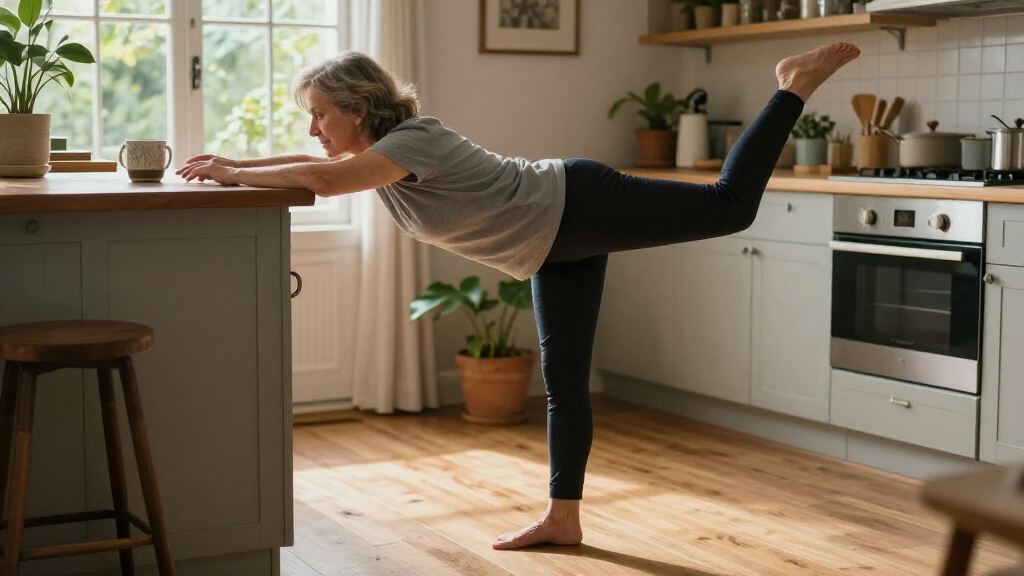
For people seeking to practice, Kaufman suggests working with a physical therapist trained in balance issues or taking classes such as tai chi, yoga or Pilates. At-home practice can include shifting weight between legs, standing heel-to-toe or rising from a chair without using the hands. The report advises using a stable support, such as a counter, when needed and checking with a health professional before exercises if balance problems are serious.
Balance and Fall Injury Risk
The report links balance to more than the ability to stand steadily: it can affect walking, independence and well-being. Falls are described as the leading cause of injuries among adults aged 65 and older, making unsteadiness a practical safety concern for older people and those who support them.
The article also frames balance as involving multiple body systems, so a change in steadiness may have different possible explanations. Its suggestions are general; persistent or serious symptoms call for individualized assessment rather than relying on a home test or exercise routine alone.
balance training equipment for seniors
As an affiliate, we earn on qualifying purchases.
As an affiliate, we earn on qualifying purchases.
How Aging Can Affect Steadiness
The source is a Mayo Clinic Q&A republished by Seniors Guide and distributed by Tribune Content Agency. It responds to a reader in their early 60s who noticed their balance felt less steady with age. Kaufman explains that balance relies on coordinated input from several parts of the body and that these systems can deteriorate with age.
The Q&A mentions standing on one foot as one way to observe balance, but it does not present this as a clinical diagnosis. It says the ability to hold the position for 30 seconds indicates good balance, while being unable to do so for five seconds may signal fall risk and a reason to work on balance. Readers should interpret those thresholds within the source’s general educational guidance, not as a replacement for professional evaluation.
“In many ways, aging is a balancing act.”
— Dr. Kenton Kaufman, Mayo Clinic
As an affiliate, we earn on qualifying purchases.
When Unsteadiness Needs Assessment
The Q&A does not identify the cause of any one person’s balance symptoms or provide evidence that a particular exercise will prevent falls for every reader. The conditions and medication effects it lists are possible causes, not conclusions about an individual. It also does not give a detailed clinical protocol for evaluating balance or specify how often exercises should be done.
Anyone with serious balance problems is advised by the report to check with a health care professional before starting exercises. The source is educational and explicitly says it does not replace regular medical care; symptoms such as dizziness, falls or changes in vision need to be considered in the person’s own health circumstances.
As an affiliate, we earn on qualifying purchases.
Safe Steps for Balance Practice
The report recommends choosing a practice approach suited to the person, including a balance-trained physical therapist who can design an individualized program. For home exercises, it advises using a stable object for support if needed and beginning with simple movements before trying more challenging positions or surfaces.
No follow-up study, new clinical guideline or specific next publication is announced in the source. The immediate next step for readers with significant symptoms is to seek advice from a qualified health professional; those considering general practice can discuss suitable activities with a clinician or physical therapist.
elderly balance improvement products
As an affiliate, we earn on qualifying purchases.
As an affiliate, we earn on qualifying purchases.
Key Questions
What body systems contribute to balance?
The Mayo Clinic Q&A says balance depends on coordinated function of the muscles, eyes, inner ear, nerves, heart and blood vessels.
What are possible signs of a balance problem?
The report lists unsteadiness, falls or a feeling of falling, spinning sensations, lightheadedness, dizziness and blurred vision. These symptoms can have different causes and do not establish a diagnosis on their own.
What activities does the report suggest?
It mentions working with a balance-trained physical therapist and trying activities such as tai chi, yoga or Pilates. It also describes basic home exercises, with stable support available when needed.
Should someone with serious balance problems exercise without advice?
No. The report says people with serious balance problems may want to check with a health care professional before doing balance exercises. Its guidance is educational and does not replace regular medical care.
Source: rss
Halloween Picks
halloween
As an affiliate, we earn on qualifying purchases.