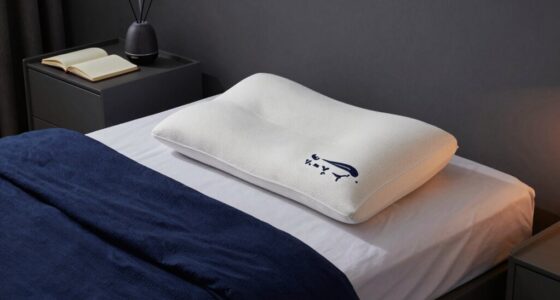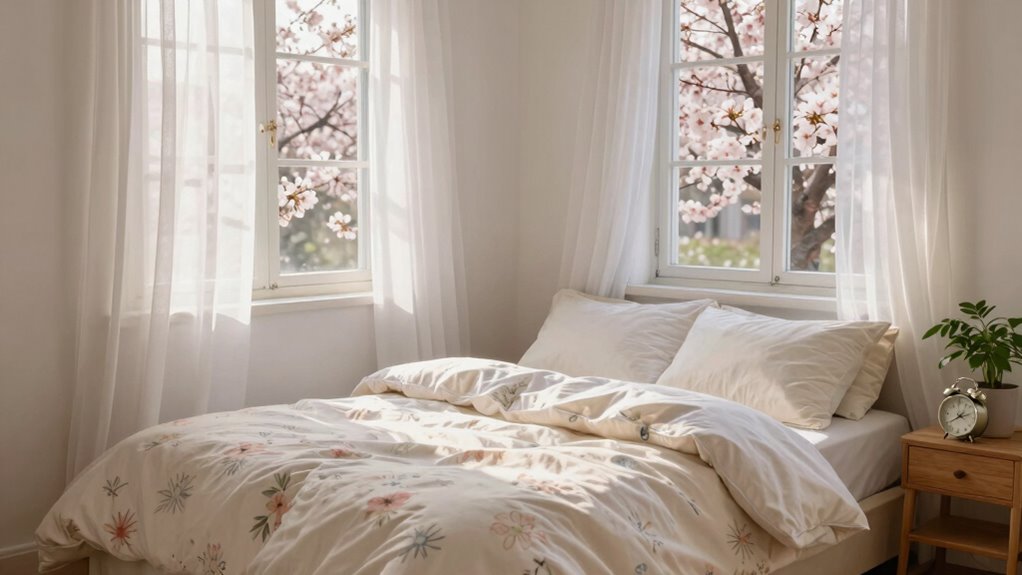
To improve sleep by June, start by managing spring allergens—keep windows closed in the evening, use HEPA filters, and shower after outdoor activities. Schedule outdoor plans earlier in the day and avoid late-night exercise to help your circadian rhythm. Adjust your bedroom environment by keeping it cool and ventilated, while limiting outdoor light exposure at night. Maintaining good indoor air quality and controlling pollen entry will support better sleep—continue exploring these tips for more insights.

Get health and wellness essentials delivered free — and shop member deals
- Fast, free delivery on millions of items
- Access to Prime Big Deal Days deals on October 6–7
- Prime Video, Amazon Music and more included
Key Takeaways
- Keep windows closed in the evening and use HEPA filters to reduce pollen and outdoor allergens indoors.
- Schedule outdoor activities earlier in the day to minimize late-night pollen exposure and promote winding down.
- Manage outdoor light exposure by limiting evening light to support healthy circadian rhythms.
- Adjust bedroom temperature to around 65°F with breathable bedding to prevent overheating and improve sleep comfort.
- Ensure proper indoor ventilation while preventing outdoor pollutants from entering, maintaining a clean, allergen-free environment.
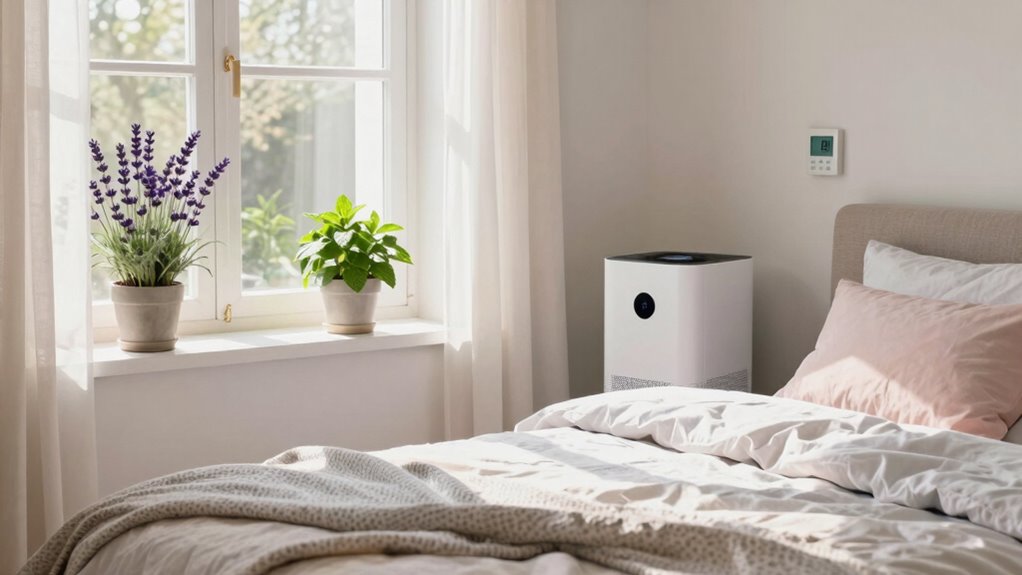
As spring arrives and temperatures rise, your sleep can suffer if you don’t make a few simple adjustments. The warmer weather means longer days and more opportunities for outdoor activities, but it also brings seasonal allergies that can interfere with restful sleep. To combat this, start by keeping windows closed in the evening, preventing pollen from drifting into your bedroom. Use a high-efficiency particulate air (HEPA) filter in your bedroom to trap airborne allergens. Shower and change clothes after outdoor activities to wash away pollen from your skin and hair. Over-the-counter antihistamines can also help, but check with your doctor to find the right one for your needs. Keeping your bedroom clean and dust-free minimizes triggers that can worsen allergy symptoms and disturb your sleep.
Spring also encourages outdoor activities like hiking, biking, or gardening, which are great for your physical and mental health. However, these activities can sometimes disrupt your sleep schedule if not managed properly. To stay on track, try to schedule outdoor pursuits earlier in the day rather than close to bedtime. This gives your body enough time to wind down and reduces the risk of late-night alertness caused by exercise. Plus, moderate activity during daylight helps regulate your circadian rhythm, making it easier for you to fall asleep when night falls. Incorporating seasonal activity adjustments can further enhance your sleep quality during spring. Additionally, managing your exposure to outdoor light in the evening can help maintain your natural sleep-wake cycle. Proper light management is essential for supporting your circadian health, especially as daylight hours increase.
Another key fix is adjusting your bedroom environment to suit the season. As outdoor temperatures increase, you might need to lower your thermostat or switch to lighter bedding to keep your room comfortably cool. Overheating can interfere with REM sleep, so aim for a room temperature around 65 degrees Fahrenheit. Use breathable fabrics for sheets and pajamas to promote airflow. Additionally, open windows early in the morning to let in fresh air, which can improve overall sleep quality, but close them before evening to prevent pollen and outdoor pollutants from creeping inside. Ensuring proper ventilation can significantly boost indoor air quality and support healthier sleep. Proper airflow and ventilation are crucial for maintaining a comfortable and allergen-free sleep environment during spring.
As an affiliate, we earn on qualifying purchases.
Frequently Asked Questions
How Does Spring Allergy Affect Sleep Quality?
Spring allergies can markedly affect your sleep quality by increasing nasal congestion and sneezing, making it hard to breathe comfortably at night. High pollen levels worsen allergy symptoms, leading to disrupted sleep. Taking allergy medications can help manage these symptoms, but if you don’t, your sleep may suffer from restless nights and fatigue. To improve sleep, monitor pollen forecasts and use allergy medications as recommended to minimize allergy-related disruptions.
Can Changing Spring Routines Improve Sleep Naturally?
Yes, changing your spring routines can improve sleep naturally. Did you know that 65% of people see better sleep after decluttering their homes? Incorporate spring cleaning to reduce dust and allergens, helping you breathe easier at night. Also, outdoor activities like walking or gardening boost your mood and physical tiredness, making it easier to fall asleep. Small changes in your routines can lead to significant sleep improvements this season.
What Foods Help Enhance Sleep During Spring?
To enhance sleep during spring, you should incorporate seasonal fruits like cherries and kiwis, which are rich in sleep-promoting nutrients. Herbal teas such as chamomile or valerian root can also help relax your mind and body before bed. Eating these foods and drinking calming teas creates a natural sleep aid, making it easier to fall asleep and stay asleep throughout the spring nights.
Are There Specific Spring Sleep Disorders to Watch For?
During spring, you should watch for seasonal affective disorder and spring fatigue, which can disrupt your sleep. These conditions might cause you to feel unusually tired or have trouble sleeping despite enough rest. Keep an eye on your mood and energy levels, and consider spending more time outdoors or maintaining a consistent sleep schedule. If symptoms persist, consult a healthcare professional to manage spring-specific sleep issues effectively.
How Does Spring Daylight Saving Time Impact Sleep Patterns?
Daylight saving time disrupts your sleep patterns by shifting your clock forward, reducing sleep duration, and increasing fatigue. It impacts your seasonal mood by decreasing morning daylight exposure and delaying circadian rhythms, making mornings darker and harder to wake up. You might feel groggier, less alert, and more irritable. To adapt, prioritize consistent sleep schedules, seek morning sunlight, and establish calming pre-sleep routines to ease the shift and restore balance.
bedding breathable cotton sheets
As an affiliate, we earn on qualifying purchases.
As an affiliate, we earn on qualifying purchases.
Conclusion
By spring’s end, fixing your sleep habits is like tending a garden—you nurture it now, and by June, you’ll reap the sweet fruits of restful nights. Clear your evenings of screens, keep a consistent schedule, and create a cozy sleep environment. These simple tweaks are the seeds that’ll blossom into better sleep. Don’t wait for summer’s heat—start now, and watch your sleep flourish like a springtime flower in full bloom.
As an affiliate, we earn on qualifying purchases.
As an affiliate, we earn on qualifying purchases.
Fall Picks
fall essentials
As an affiliate, we earn on qualifying purchases.