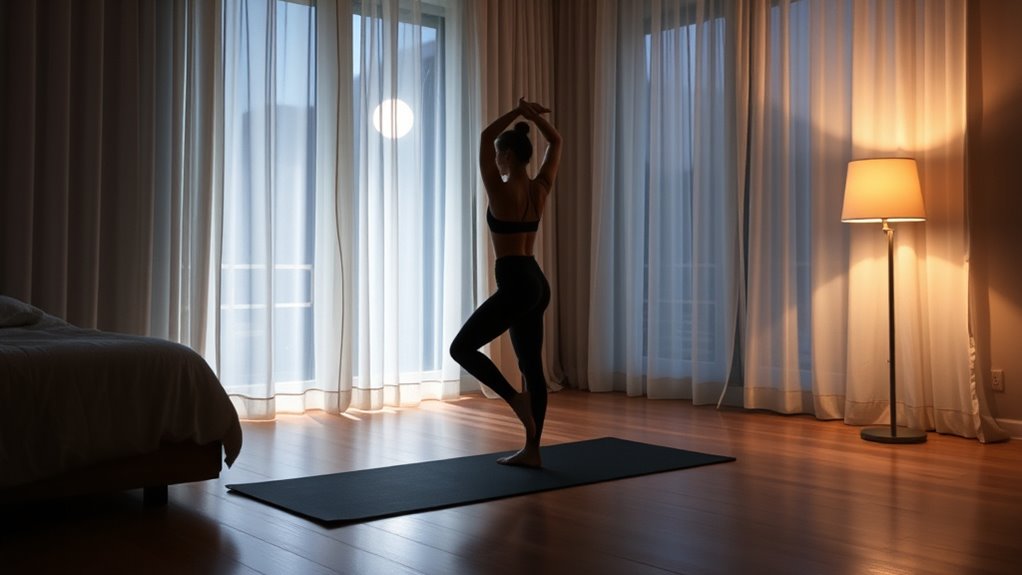

Exercising at night can be a good fit if it suits your schedule and energy levels, and moderate activities like yoga or walking are less likely to disrupt your sleep. However, intense workouts late in the day may increase adrenaline and body temperature, making it harder to fall asleep. The impact varies for each person, so it’s worth experimenting to see what helps you sleep best. Keep going to uncover tips on optimizing evening workouts for restful nights.

Get health and wellness essentials delivered free — and shop member deals
- Fast, free delivery on millions of items
- Access to Prime Big Deal Days deals on October 6–7
- Prime Video, Amazon Music and more included
Key Takeaways
- Evening workouts can improve sleep quality if they are light to moderate and do not elevate adrenaline excessively.
- High-intensity evening exercises may delay sleep onset due to increased heart rate and body temperature.
- Personal schedule, energy levels, and body response determine whether night exercise benefits or disrupts sleep.
- Consistent timing and mindful activity choices help balance fitness goals with restorative sleep.
- Listening to your body and adjusting workout intensity and timing can optimize both exercise benefits and sleep quality.

Whether you should work out at night depends on your personal schedule and how your body responds to evening exercise. The decision often hinges on factors like your daily routine, energy levels, and, importantly, how workout timing impacts your sleep quality. Some people find that evening workouts help them unwind after a busy day, while others notice that exercising too late can interfere with falling asleep or reduce sleep quality. Understanding your body’s signals is key to determining if night exercise suits you.
One of the main concerns with evening workouts revolves around sleep quality. There’s a common misconception that exercising close to bedtime will always disrupt sleep, but research shows that this isn’t universally true. For some, vigorous activity late in the day can increase adrenaline and core body temperature, making it harder to relax and fall asleep. For others, moderate exercise acts as a stress reliever, helping them sleep more soundly. It’s essential to pay attention to how your body responds to workout timing. If you notice difficulty falling asleep or restless nights after evening sessions, you might want to shift your workout earlier or opt for less intense exercises at night.
In terms of workout timing, the ideal approach varies from person to person. If you’re a night owl or tend to have more energy after work, exercising later might fit seamlessly into your schedule. Just keep in mind that intensity matters. Light to moderate activities like yoga, stretching, or a brisk walk generally have minimal impact on sleep quality and can even promote better rest. Conversely, high-intensity workouts, such as sprinting or heavy lifting, tend to raise your heart rate and adrenaline levels, which can delay sleep onset if done too close to bedtime.
You also need to contemplate how exercise affects your body’s circadian rhythm. Some studies suggest that morning workouts can help reinforce your natural sleep-wake cycle, leading to improved sleep quality over time. However, if you’re more alert and awake at night, working out later might be more beneficial for your overall performance and mood. The key is consistency and listening to your body’s cues. Experiment with different workout times and intensities to discover what makes you feel best and allows you to get restorative sleep.
Ultimately, whether night exercise benefits or hinders your sleep depends on your individual response and how well you manage your workout timing. You can still enjoy evening workouts without sacrificing sleep quality by choosing appropriate activities and paying attention to how your body feels afterward. Adjusting the timing and intensity based on your personal needs will help you balance fitness goals with restful, rejuvenating sleep.
Frequently Asked Questions
Can Evening Workouts Improve My Overall Fitness Faster?
Yes, evening workouts can boost your overall fitness faster. By adjusting your workout timing, you may increase your metabolic rate later in the day, helping you burn more calories even after exercising. Consistent evening exercise can also improve your strength and endurance over time. Just make sure to finish workouts a few hours before bed to avoid disrupting your sleep, maximizing the benefits of your fitness routine.
Does Nighttime Exercise Cause More Muscle Soreness Than Daytime Workouts?
Nighttime exercise doesn’t cause more muscle soreness than daytime workouts, but it can feel like a giant, relentless monster if your recovery time and hydration needs aren’t met. When you hit the gym at night, your muscles might ache more if you skip rehydrating and stretching properly. Make sure you hydrate well and give your body enough time to recover—otherwise, soreness could turn into a long, painful saga.
Are There Specific Types of Exercise Better Suited for Nighttime?
You should choose low to moderate cardio intensity or gentle strength training for nighttime workouts. Activities like walking, yoga, or light resistance exercises help you unwind without overstimulating your nervous system. Avoid high-intensity cardio or heavy lifting close to bedtime, as they can increase adrenaline and make falling asleep harder. Opt for calming exercises that promote relaxation, so you can enjoy the benefits of evening activity without disrupting your sleep quality.
How Does Late-Night Exercise Impact Stress Levels Before Bed?
Ever wonder if late-night exercise helps or hinders your stress levels? It can actually boost stress reduction by releasing endorphins, making you feel calmer. However, intense workouts might increase adrenaline, making it harder to relax. To unwind effectively, try relaxation techniques like deep breathing after your workout. This combo can help you manage stress better before bed, ensuring you sleep more peacefully and wake up refreshed.
Is It Okay to Do High-Intensity Workouts at Night?
Doing high-intensity workouts at night is okay, but keep in mind that it can lead to muscle fatigue and make falling asleep harder. Your workout timing matters; if you push yourself too late, your adrenaline may stay elevated, disrupting sleep. To avoid this, consider finishing high-intensity exercises at least an hour before bed. This way, your body has time to recover and wind down naturally.
Conclusion
As you wind down and settle into the quiet of the night, remember that evening workouts can energize or relax you, depending on what your body needs. Imagine the glow of satisfaction after a good sweat or the calm that prepares you for restful sleep. Trust your body’s signals and find a balance that feels right. With each night’s effort, you craft a peaceful exit to your day, embracing both strength and serenity in your journey.
Fall Picks
fall essentials
As an affiliate, we earn on qualifying purchases.