
To sleep well on long flights, arrive well-rested and stay comfortable by bringing essentials like eye masks, noise-canceling headphones, and neck pillows. Recline your seat, wear loose clothes, and select a window seat for support and fewer disturbances. Keep hydrated, avoid caffeine and alcohol, and consider natural sleep aids like melatonin. Darken the cabin and block noise to create a cozy environment. Tips like these can help you rest better—discover more ways to maximize your sleep during your flight.

Get health and wellness essentials delivered free — and shop member deals
- Fast, free delivery on millions of items
- Access to Prime Big Deal Days deals on October 6–7
- Prime Video, Amazon Music and more included
Key Takeaways
- Bring sleep aids like eye masks, noise-canceling headphones, and neck pillows to create a comfortable environment.
- Recline your seat and use pillows to support your neck, maintaining a good sleeping posture.
- Block out light with window shades and minimize noise with earplugs or noise-canceling headphones.
- Stay hydrated, avoid caffeine and alcohol, and consider natural sleep aids like melatonin for better rest.
- Develop a pre-sleep routine similar to your normal bedtime, including calming music and environmental cues.

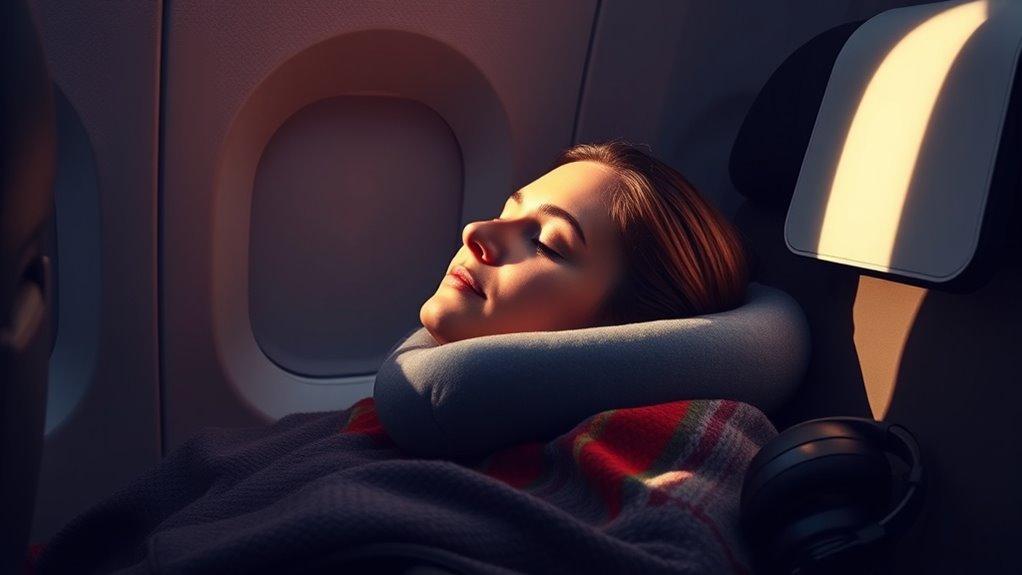
Flying can make it tough to get a good night’s sleep, especially with the noise, uncomfortable seats, and cabin pressure. To improve your chances of resting during a long flight, focusing on in-flight comfort is essential. Before you board, bring along some sleep aids—like an eye mask, noise-canceling headphones, or a neck pillow—to block out distractions. These small items can make a significant difference in creating a more restful environment. Adjust your seating position as much as possible, reclining your seat and using your pillow to support your neck. If you can, choose a window seat so you can lean against the wall and avoid disturbances from fellow passengers. Wearing loose, comfortable clothing also helps, as tight clothes can restrict circulation and make relaxing more challenging.
Enhance in-flight comfort with sleep aids, comfy clothing, and strategic seating for better rest during flights.
Hydration plays a crucial role in sleep quality, so drink plenty of water before and during the flight. Avoid caffeine and alcohol, as they can dehydrate you and disrupt your sleep cycle. If you’re worried about falling asleep, consider using natural sleep aids such as melatonin tablets or herbal teas that promote relaxation. These can help regulate your internal clock and signal to your body that it’s time to rest. However, use sleep aids sparingly and test them before your trip to ensure they won’t cause adverse reactions.
Creating a sleep-conducive environment on the plane involves more than just external aids. Close the window shade to darken the cabin and minimize light exposure, which can interfere with your circadian rhythm. Use your blanket or shawl to keep warm, as colder temperatures can make it harder to sleep. Noise-canceling headphones or earplugs are invaluable for blocking out ambient sounds, from engine noise to conversations. If you’re prone to motion sickness, taking a mild motion sickness tablet can also help you relax enough to doze off. Additionally, understanding sleep cycles and how they are affected by travel can help you better plan your rest periods.
Finally, develop a pre-sleep routine similar to what you’d do at home. Brush your teeth, wash your face, and listen to calming music or white noise to signal your brain that it’s time to sleep. Consistent routines, combined with in-flight comfort strategies and sleep aids, create a more inviting environment for rest. The goal is to make the experience as close to your normal bedtime as possible, so you arrive at your destination feeling refreshed rather than exhausted.
As an affiliate, we earn on qualifying purchases.
Frequently Asked Questions
What Are the Best Travel Pillows for Sleeping on Planes?
You should choose a travel pillow that offers excellent neck support, like one with memory foam. Memory foam pillows contour to your neck and head, helping you stay comfortable and aligned during long flights. Look for a design that’s lightweight and portable, so you can easily carry it with you. A good travel pillow with memory foam guarantees you get better sleep, reducing discomfort and jet lag.
How Can I Reduce Jet Lag After a Long Flight?
To reduce jet lag, focus on good sleep hygiene by sticking to your regular sleep schedule before and after your flight. Get plenty of daylight exposure upon arrival to help reset your internal clock, and avoid caffeine or alcohol close to bedtime. Staying hydrated and taking short naps can also ease your body’s adjustment. These strategies help you recover faster and feel more alert in your new time zone.
Are Noise-Canceling Headphones Effective for Sleeping on Planes?
Noise-canceling headphones considerably boost your sleep quality on planes, with studies showing they can reduce ambient noise by up to 20 decibels. You’ll find them highly effective for blocking out engine sounds and chatter, helping you relax and drift off faster. By reducing distractions, noise cancellation creates a calmer environment, making it easier to fall asleep and stay asleep during long flights. Invest in a good pair for better rest in the sky.
What Clothing Should I Wear for Comfortable Sleep During Flights?
For comfortable sleep during flights, you should wear breathable loungewear that offers maximum comfort. Opt for soft, stretchable fabrics like cotton or modal, and consider layering strategies with a cozy cardigan or scarf to adjust to temperature changes. Loose-fitting clothing helps prevent pressure points and keeps you relaxed, making it easier to fall asleep and stay comfortable during the entire flight.
How Do I Avoid Dehydration While Sleeping Mid-Flight?
Imagine your body’s a delicate garden, thirsty for nourishment even in slumber. To avoid dehydration, sip water regularly—think of it as watering your garden—using hydration tips like carrying a refillable bottle and setting reminders. Keep water intake strategies in mind and avoid alcohol or caffeine, which can sap your moisture. Staying hydrated guarantees you wake feeling refreshed, ready to enjoy your destination rather than battling dry, parched discomfort.
noise cancelling headphones for flying
As an affiliate, we earn on qualifying purchases.
As an affiliate, we earn on qualifying purchases.
Conclusion
By implementing these tips, you’ll turn your long flight into a smooth sailing voyage instead of a turbulent ride. Think of your sleep as a delicate seed — with the right environment and care, it can flourish even in the sky. So, lay back, stay comfortable, and trust these strategies to help you catch quality rest. Before you know it, you’ll arrive refreshed and ready to take on your destination, as refreshed as a flower blooming after a storm.
As an affiliate, we earn on qualifying purchases.
As an affiliate, we earn on qualifying purchases.
Fall Picks
fall essentials
As an affiliate, we earn on qualifying purchases.