
Smart beds can be very helpful for back pain and posture at night because they automatically adjust support to keep your spine aligned and reduce pressure points. Their sensors and motorized features respond in real time to your body’s needs, helping you avoid tossing and turning. With features like data tracking and automatic adjustments, these beds promote healthier sleep habits. Keep exploring to discover how smart beds can transform your sleep and ease your back pain.
Listen free for 30 days with Audible
Thousands of audiobooks and originals — cancel anytime.
As an affiliate, we earn on qualifying purchases.
Key Takeaways
- Smart beds provide real-time adjustments to support proper spinal alignment, reducing back strain during sleep.
- They adapt to body changes, minimizing pressure points and tossing, which helps maintain better posture throughout the night.
- Embedded sleep technology tracks posture and sleep quality, enabling personalized improvements for back health.
- Automatic support modifications help alleviate worsening back pain and promote consistent, healthy sleep positions.
- Advanced features offer customized comfort and continuous support, contributing to reduced back discomfort and improved sleep quality.
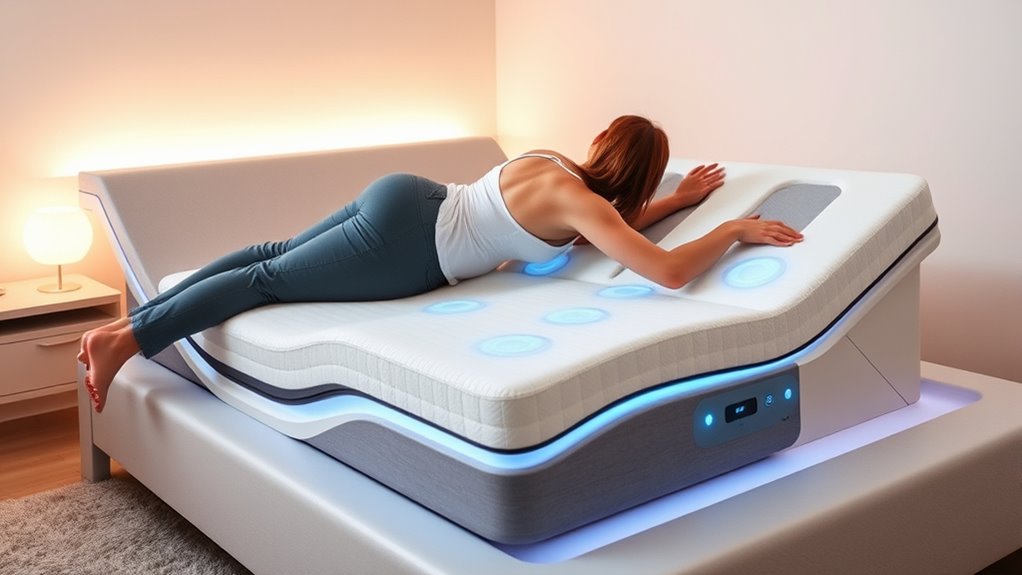
If you suffer from back pain or struggle to maintain good posture while sleeping, smart beds offer an innovative solution. These beds harness advanced sleep technology and ergonomic design to adapt to your body’s needs, providing personalized support that traditional mattresses often can’t match. When considering a smart bed, you’ll notice how the integration of sleep technology allows for real-time adjustments, ensuring your spine stays aligned throughout the night. This constant adaptation helps reduce pressure points and prevents you from tossing and turning, which are common issues that worsen back pain.
Smart beds use technology and ergonomic design to support healthy sleep posture and reduce back pain.
The ergonomic design of smart beds plays a vital role in promoting healthy posture. Unlike standard mattresses, which may only offer a one-size-fits-all approach, smart beds use sensors and motorized components to respond to your movements and sleeping position. They can elevate your head, legs, or hips automatically or via app controls, creating the ideal sleeping posture for your specific needs. This dynamic support helps maintain the natural curve of your spine, alleviating strain on your back muscles and discs. As a result, you wake up feeling more refreshed, with less stiffness or soreness.
With sleep technology embedded in these beds, you gain more than just comfort—you get actionable data about your sleep patterns. Some smart beds track your sleep stages, heart rate, and breathing, providing insights that can help you optimize your nightly routine. By understanding how your body responds during sleep, you can make informed adjustments to your posture or bedtime habits. Many models even sync with health apps, offering tailored suggestions for improving your sleep quality and reducing back discomfort over time.
Another benefit of smart beds is their ability to respond to your changing needs. If your back pain worsens or you switch positions, the bed can automatically adjust support levels or angles to keep you comfortable. This responsiveness minimizes disruptions, so you don’t have to manually reposition yourself or wake up feeling uncomfortable. Over time, this consistent support can greatly improve your posture, helping you develop better sleeping habits and reduce the likelihood of pain recurring.
Additionally, smart beds can incorporate connected sleep technology, enabling you to customize your sleeping experience and track progress over time. In essence, smart beds combine sophisticated sleep technology with ergonomic design to create a tailored sleeping experience. By continuously monitoring and adjusting to your body, they offer a proactive approach to managing back pain and improving posture at night. If you’re tired of waking up with aches or struggling to find a comfortable position, investing in a smart bed could be the solution that transforms your sleep and your overall health.
Frequently Asked Questions
Can Smart Beds Accommodate Specific Medical Conditions?
Yes, smart beds can accommodate specific medical conditions through medical customization and adaptive therapy. You can personalize the bed’s settings to support conditions like sleep apnea, arthritis, or back pain by adjusting firmness, elevation, or support zones. These features help target your unique needs, promoting better sleep and relief. With adaptive therapy, your smart bed automatically adjusts throughout the night, ensuring peak comfort and posture support tailored to your medical requirements.
How Do Smart Beds Compare to Traditional Ergonomic Mattresses?
Like Cinderella’s slipper, smart beds mold perfectly to your needs, offering customizable comfort that traditional ergonomic mattresses can’t match. They often enhance sleep quality by adjusting firmness, temperature, and support on command. While classic mattresses rely on static materials, smart beds adapt in real-time, helping you find ideal alignment. This personalized approach can lead to better back health and posture, making each night’s sleep truly fit for royalty.
Are Smart Beds Suitable for Children or Only Adults?
Smart beds are suitable for children, especially when you prioritize children’s comfort and look for kid-specific features. These beds often include adjustable firmness, temperature control, and safety options tailored for young users. You can customize settings to support healthy posture and guarantee a comfortable sleep environment. Just make certain the smart bed has features designed for kids, so your child benefits from ideal support and safety throughout the night.
What Is the Lifespan of a Smart Bed’s Technology Components?
Smart beds typically last around 5 to 10 years, depending on usage and maintenance. The bed frame durability plays a key role, as sturdy frames support technology longevity. Sensor lifespan varies but usually spans 3 to 7 years before needing replacement. Proper care, like avoiding excessive weight and keeping components clean, can extend the lifespan of your smart bed’s technology, ensuring you enjoy its benefits longer.
Do Smart Beds Require Professional Installation or Setup?
Like a symphony needing a conductor, your smart bed needs proper setup. You typically don’t require professional installation; most smart beds allow easy bed height adjustment and are compatible with a variety of mattresses. Just read the instructions and follow the steps for connecting your device. Make sure your mattress fits well and the bed’s features are properly calibrated, so you can enjoy ideal comfort and support without hassle.
Conclusion
Smart beds can be like a gentle guardian for your back, guiding you toward better posture and relief from pain. When you invest in one, you’re planting a seed of comfort that grows into restful, restorative nights. While they’re not a magic fix, they serve as a supportive partner on your journey to healthier sleep. Embrace the change, and watch your nights transform from restless storms into peaceful, calming seas.
NFL season / tailgating Picks
team gear
As an affiliate, we earn on qualifying purchases.