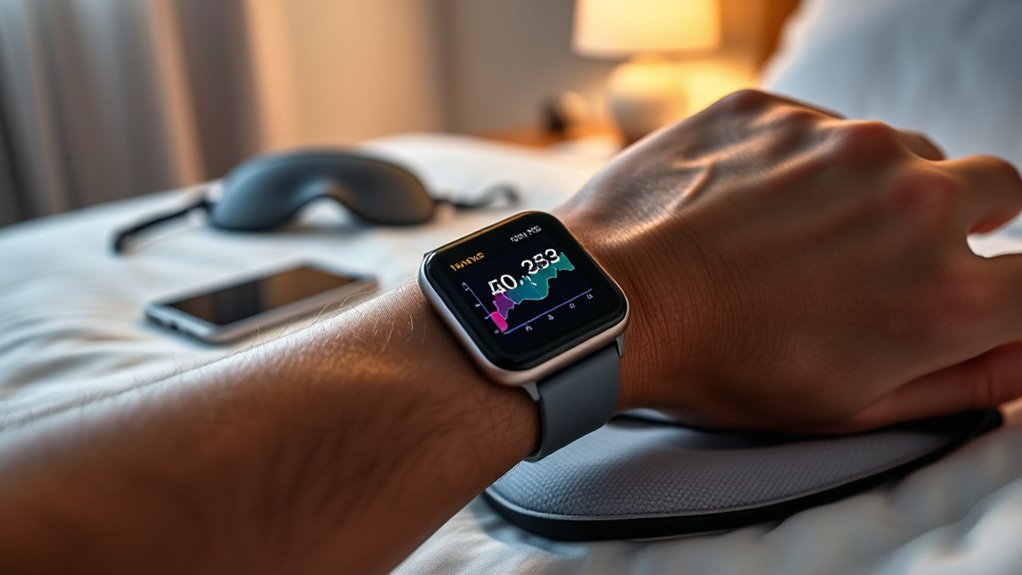

Smartwatches can monitor indicators like heart rate variability and breathing patterns that may hint at sleep apnea or other sleep issues. They offer a convenient way to track your sleep quality and spot irregularities without needing a visit to the doctor. But remember, they don’t diagnose sleep disorders—they only alert you to possible concerns. To understand what your data means and what steps to take next, keep exploring how these devices work and their limitations.
Listen free for 30 days with Audible
Thousands of audiobooks and originals — cancel anytime.
As an affiliate, we earn on qualifying purchases.
Key Takeaways
- Smartwatches can monitor heart rate variability and breathing patterns that may suggest sleep issues but cannot diagnose sleep apnea.
- They serve as screening tools, alerting users to irregularities like breathing disruptions or oxygen drops during sleep.
- Data from smartwatches should be combined with other symptoms and medical advice for a comprehensive assessment.
- They do not replace polysomnography, the clinical standard for diagnosing sleep disorders like sleep apnea.
- Persistent irregularities in smartwatch data should prompt consultation with healthcare professionals for proper diagnosis.
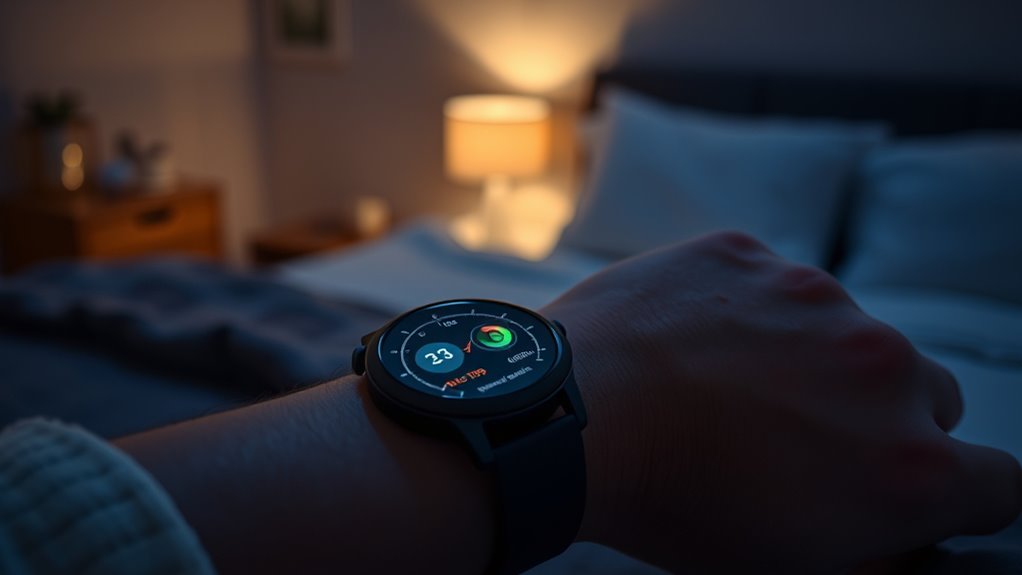
Smartwatches have become popular tools for tracking health, especially sleep patterns. They offer an easy way to monitor your nightly rest without needing bulky equipment or visits to healthcare providers. While they can’t diagnose sleep disorders definitively, many models now include features that can alert you to potential issues, such as irregular heart rate variability and respiratory monitoring. These indicators are vital because they can reveal abnormalities linked to sleep problems like sleep apnea.
Heart rate variability (HRV) is a measure of the variation in time between your heartbeats. During sleep, your HRV provides insights into your autonomic nervous system’s activity, which fluctuates when your body experiences stress or disturbances. A smartwatch tracking HRV can detect unusual patterns—such as sudden drops or irregularities—that might suggest breathing disruptions or oxygen desaturation episodes common in sleep apnea. If your watch notices consistent anomalies in HRV, it could be a sign that your sleep quality is compromised, prompting you to seek further medical evaluation.
Respiratory monitoring is another feature increasingly integrated into advanced smartwatches. These devices analyze breathing patterns by tracking chest movement, airflow, or changes in blood oxygen levels. In sleep apnea, breathing repeatedly stops and starts, often leading to oxygen deprivation and fragmented sleep. Smartwatches equipped with respiratory monitoring can identify irregular breathing patterns or prolonged pauses during sleep. While they don’t replace polysomnography—the gold standard for diagnosing sleep apnea—they can serve as an initial screening tool. If your smartwatch detects persistent irregularities, it might recommend consulting a healthcare professional for thorough testing.
It’s important to understand that smartwatches provide useful insights but aren’t definitive diagnostic devices. They can highlight potential concerns, especially when combined with other symptoms like loud snoring, daytime fatigue, or morning headaches. Regularly reviewing the data your watch collects can help you recognize patterns and discuss them intelligently with your doctor. If your smartwatch indicates irregular heart rate variability or respiratory issues over multiple nights, don’t ignore these alerts. They could be your first sign of a sleep disorder that may require medical intervention. Additionally, understanding sleep disorder indicators is crucial for interpreting smartwatch data accurately.
smartwatch sleep apnea detection
As an affiliate, we earn on qualifying purchases.
As an affiliate, we earn on qualifying purchases.
Frequently Asked Questions
How Accurate Are Smartwatch Sleep Apnea Detections Compared to Medical Tests?
Smartwatch detections of sleep apnea are generally less accurate than medical tests, but they can offer useful insights. You can track your sleep pattern and heart rate variability overnight, which might indicate potential issues. However, these devices often miss subtle signs and are not substitutes for clinical diagnoses. For reliable results, you’ll need exhaustive sleep studies, but smartwatches can help you monitor trends and alert you to possible concerns.
Can Smartwatches Differentiate Between Various Sleep Disorders?
Smartwatches can’t fully differentiate between various sleep disorders yet, but they’re improving. Did you know that wearable sensors track sleep quality by monitoring heart rate and movement? While they can flag issues like restless sleep or potential apnea, they lack the precision to diagnose specific conditions like narcolepsy or REM sleep behavior disorder. You’ll get useful insights, but for detailed diagnosis, consulting a healthcare professional remains essential.
Do All Smartwatches Have the Capability to Monitor Sleep Apnea?
Not all smartwatches can monitor sleep apnea, as smartwatch limitations vary widely. Many models lack the sensors needed to detect breathing interruptions accurately. However, some advanced smartwatches offer user customization options to track sleep patterns more closely. If sleep apnea detection is important to you, choose a smartwatch with specialized health features and verify it’s compatible with your needs, rather than relying on basic models that may not have this capability.
How Does Smartwatch Technology Detect Signs of Sleep Apnea?
Imagine your smartwatch as a vigilant guardian, sensing your body’s signals like heart rate variability and oxygen saturation. It detects sleep apnea signs by monitoring irregular breathing patterns and drops in oxygen levels, much like a detective piecing together clues. When your heart rate fluctuates unexpectedly or oxygen dips below normal, your watch flags potential issues, helping you catch sleep problems early and take action for better rest.
Are There Any Privacy Concerns With Sleep Data Collected by Smartwatches?
Yes, there are privacy concerns with sleep data collected by smartwatches. You should be aware of data privacy issues, as your sleep patterns and health information are stored and potentially shared. Always check if the device asks for user consent before collecting data, and review privacy policies to understand how your information is utilized. Protecting your sleep data helps ensure your personal health details stay secure.
heart rate variability monitor smartwatch
As an affiliate, we earn on qualifying purchases.
As an affiliate, we earn on qualifying purchases.
Conclusion
While smartwatches might not perfectly pinpoint sleep problems, they can provide promising, preliminary data. If you notice noticeable nocturnal nuisances, don’t delay—discuss discreet device data with your doctor. Remember, diligent detection depends on diligent devices, but ultimate understanding requires expert evaluation. So, stay vigilant, utilize your smartwatch wisely, and venture into valuable insights. Your vigilant vigilance can verify crucial signs, voice concerns, and venture closer to healthier, happier sleep.
respiratory monitoring smartwatch
As an affiliate, we earn on qualifying purchases.
As an affiliate, we earn on qualifying purchases.
sleep tracking smartwatch with oxygen level
As an affiliate, we earn on qualifying purchases.
As an affiliate, we earn on qualifying purchases.
Flea & tick season Picks
flea and tick prevention
As an affiliate, we earn on qualifying purchases.