
Using a steady rhythmic sound like a metronome at a gentle pace can help calm your mind and make it easier to fall asleep. The consistent beat provides a predictable focus, reducing racing thoughts and anxiety that often interfere with sleep. Rhythmic sounds synchronize your breathing and heart rate, signaling your body it’s time to rest. Keep exploring to discover how integrating this simple technique into your routine can improve your sleep experience.

Get health and wellness essentials delivered free — and shop member deals
- Fast, free delivery on millions of items
- Access to Prime Big Deal Days deals on October 6–7
- Prime Video, Amazon Music and more included
Key Takeaways
- Steady rhythmic sounds can calm the mind and promote relaxation, aiding in falling asleep more easily.
- A metronome or rhythmic beat helps synchronize breathing and heart rate, facilitating sleep onset.
- Consistent beats act as an anchor for racing thoughts, reducing anxiety and mental wandering at bedtime.
- Regular use conditions the brain to associate steady rhythms with sleep readiness, improving sleep quality over time.
- No special equipment is needed; smartphone apps with gentle beats are effective tools for incorporating rhythmic sounds into bedtime routines.
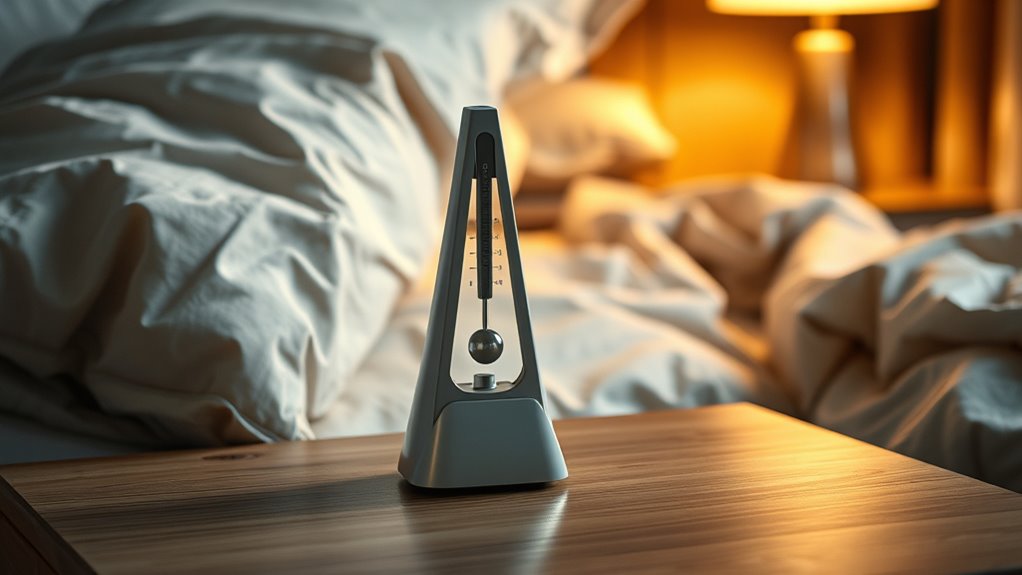
If you struggle to fall asleep, using a metronome or rhythmic sounds can be a simple yet effective technique to help calm your mind. Many people turn to sleep aids, like medication or white noise machines, but rhythmic therapy offers a natural, drug-free alternative. By incorporating steady beats or consistent sounds into your bedtime routine, you can create an environment that encourages relaxation and drowsiness. This approach works because our brains are naturally drawn to rhythm, and a steady beat can help synchronize your breathing and heart rate, making it easier to drift off.
Using rhythmic sounds at bedtime can naturally relax your mind and promote sleep.
When you use a metronome or rhythmic sounds for sleep, you’re fundamentally tapping into your body’s innate response to rhythm. This can be particularly beneficial if racing thoughts or anxiety keep you awake. The consistent beat acts as an anchor, giving your mind something predictable to focus on instead of wandering thoughts. Over time, this form of rhythmic therapy can condition your brain to associate the steady beat with sleep, making it easier to transition into rest each night. Rhythmic therapy leverages your body’s natural tendencies, making it a gentle yet powerful sleep aid.
You don’t need fancy equipment to get started. Many smartphones and apps offer simple metronome functions or rhythmic sound generators that you can set to a comfortable tempo—typically between 60 and 80 beats per minute. This range mimics the resting heart rate and promotes relaxation. Playing these sounds softly in the background can drown out distractions and create a calming environment. Some people find that gentle rain, ocean waves, or binaural beats serve as effective rhythmic therapy, further enhancing the sleep-inducing effects.
Consistency is key when using rhythmic therapy. Incorporate it into your nightly routine, perhaps 15 to 30 minutes before bed, to signal to your brain that it’s time to wind down. Over time, your mind begins to associate the steady rhythm with sleep readiness, making it easier to fall asleep even without the sounds. This technique is especially helpful for those who prefer a natural approach over medication or who have trouble with traditional sleep aids.
As an affiliate, we earn on qualifying purchases.
Frequently Asked Questions
Can Rhythmic Sounds Improve Sleep Quality for Insomniacs?
Yes, rhythmic sounds like binaural beats and musical therapy can improve your sleep quality if you’re an insomniac. These sounds help slow your brainwaves, promoting relaxation and easing you into sleep. By focusing on a steady rhythm, you can reduce anxiety and racing thoughts. Incorporate calming binaural beats or gentle music into your bedtime routine to enhance your sleep experience and wake up feeling more refreshed.
Are There Specific Beats or Tempos Best for Falling Asleep?
You might find that slow, steady beats around 60-80 BPM work best for sleep training and music therapy. This gentle tempo mimics a resting heartbeat, easing your mind into relaxation. The right rhythm can create a calming environment that lulls you into sleep faster. Experiment with these tempos and see if a consistent beat helps you drift off, unfastening a simple yet effective sleep aid you never expected.
How Does Using a Metronome Compare to White Noise for Sleep?
You might find that using a metronome offers a more structured sound therapy, helping you focus and relax with its steady beat. Compared to white noise, which masks other sounds, the metronome provides a rhythmic cue that can enhance your musical preferences for sleep. If you prefer predictable, calming sounds, a metronome may be more effective, but it ultimately depends on what works best for your individual sound preference and sleep needs.
Is It Safe to Use Rhythmic Devices Regularly for Sleep Aid?
It’s generally safe to use rhythmic devices regularly for sleep, but be mindful of habit formation and sensory overload. If you rely on a steady beat every night, your brain might associate it with sleep cues, which is helpful. However, too much exposure could lead to sensory overload, making it harder to fall asleep without the device. Use it moderately and monitor how it affects your sleep quality.
Can Rhythm-Based Sleep Aids Cause Dependence or Disrupt Natural Sleep?
Rhythm-based sleep aids can lead to habit formation, but they rarely cause psychological dependence if used responsibly. If you rely on the steady beat every night, you might find it harder to fall asleep without it over time, disrupting your natural sleep cycle. To avoid this, use these tools intermittently and focus on developing other relaxing bedtime routines. This way, you enjoy their benefits without risking dependence.
As an affiliate, we earn on qualifying purchases.
Conclusion
Imagine your mind as a busy train station, with thoughts rushing like trains. Using a steady beat, like a metronome, is like a conductor guiding those trains smoothly onto a quiet track. Studies show rhythmic sounds can help slow your brain waves, making it easier to drift off. So, next time your mind races, try syncing your breathing to a gentle rhythm—it might just be the lullaby you need to sleep peacefully.
As an affiliate, we earn on qualifying purchases.
white noise machine with rhythmic sounds
As an affiliate, we earn on qualifying purchases.
As an affiliate, we earn on qualifying purchases.
Fall Picks
fall essentials
As an affiliate, we earn on qualifying purchases.