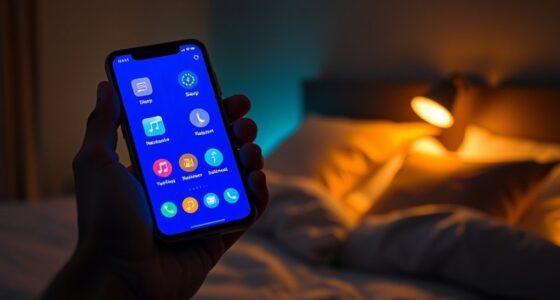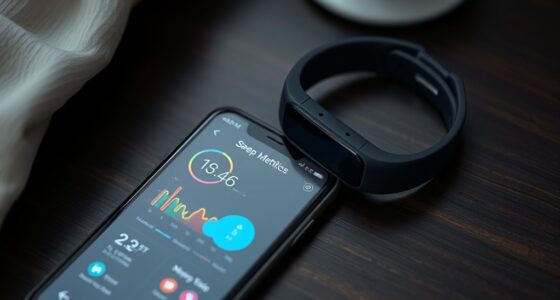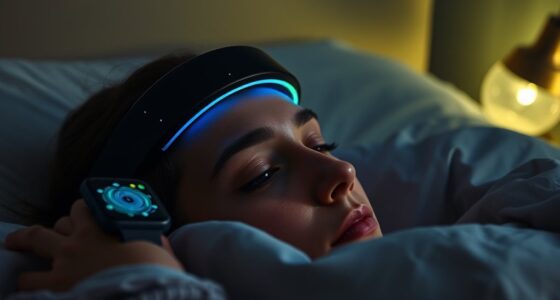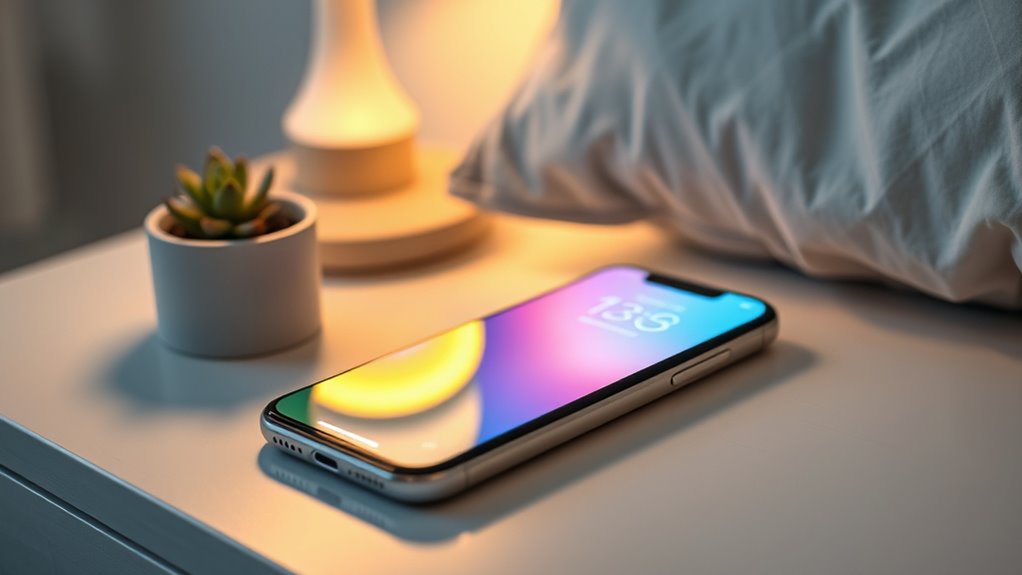

Smart alarm clock apps can be effective for waking you gently by tracking your sleep cycles and using soothing sounds to help you wake during lighter sleep stages. They avoid sudden jolts and coordinate alarms with your body’s natural rhythms, making mornings less stressful. Many users feel more alert and less groggy with this approach. Want to discover how these features work together for better mornings? There’s more to explore about making waking easier and kinder.

Get health and wellness essentials delivered free — and shop member deals
- Fast, free delivery on millions of items
- Access to Prime Big Deal Days deals on October 6–7
- Prime Video, Amazon Music and more included
Key Takeaways
- Smart alarm apps monitor sleep stages to wake you during lighter sleep for gentler mornings.
- They use gradual, soothing tones that increase in volume, promoting a more natural wake-up process.
- Combining sleep tracking with personalized sounds improves sleep quality and reduces grogginess upon waking.
- Users often experience increased alertness and less irritability compared to traditional alarm clocks.
- Overall, these apps effectively support gentle, respectful waking aligned with your body’s rhythms.

Have you ever struggled to wake up on time despite multiple alarms? If so, you’re not alone. Many people find traditional alarms jarring and disruptive, often leaving them groggy or irritated. That’s where smart alarm clock apps come into play. These apps use features like sleep cycle monitoring and custom wake-up tones to make waking up a more natural and gentle process. Instead of forcing yourself awake with a sudden loud noise, a smart alarm aims to align with your body’s internal rhythms, making mornings less stressful.
Sleep cycle monitoring is a key feature that sets these apps apart. By tracking your movements or heart rate during sleep, they can determine when you’re in a lighter sleep stage—closer to waking—rather than deep REM sleep. The alarm then sounds at the ideal moment, helping you wake up feeling more refreshed and alert. This approach reduces that sluggish, foggy feeling that often accompanies abrupt awakenings. Over time, consistent use of sleep cycle monitoring can improve your overall sleep quality because your body becomes accustomed to waking during lighter sleep phases. It’s a smarter way to start your day, one that respects your natural sleep patterns rather than ignoring them. Sleep cycle monitoring is especially effective when paired with consistent sleep schedules, enhancing the benefits further.
Another powerful feature is the use of custom wake-up tones. Instead of the harsh beeping of a standard alarm, these apps allow you to select gentle sounds, like soft melodies or nature noises, that gradually increase in volume. This gentle buildup mimics sunrise or a calming environment, easing you out of sleep without startling you awake. Some apps even let you record your favorite sounds or choose from a library of soothing options. When combined with sleep cycle monitoring, custom wake-up tones create a personalized wake-up experience tailored to your preferences and biological rhythms. This means you’re less likely to hit snooze repeatedly or feel groggy throughout the morning.
Using these features together can markedly improve how you wake up. The idea is to make mornings less abrupt and more aligned with your body’s natural tendencies. The combination of sleep cycle monitoring and custom wake-up tones encourages a smoother transition from sleep to wakefulness, reducing stress and energy drain. Many users report feeling more alert and less cranky after switching to these apps. They’re not just about waking you up; they’re about waking you up better, with respect for your body’s needs. If you’re tired of feeling exhausted every morning, it might be time to give a smart alarm clock app a try.
smart alarm clock app with sleep cycle tracking
As an affiliate, we earn on qualifying purchases.
As an affiliate, we earn on qualifying purchases.
Frequently Asked Questions
Do Smart Alarm Apps Work Equally Well for Heavy Sleepers?
Smart alarm apps may not work equally well for heavy sleepers, as they rely on light sleep detection or gentle sounds, which might not be sufficient to wake you fully. Your sleep quality impacts alarm accuracy; if you’re deeply asleep, these apps might not rouse you effectively. To improve waking, try customizing the alarm settings or combining app features with other waking strategies to ensure you wake up promptly.
Can Smart Alarms Replace Traditional Alarm Clocks Entirely?
Smart alarm clocks can replace traditional ones if you prioritize sleep quality and user customization. They adapt to your sleep patterns, waking you gently at ideal times, which can improve your rest. However, if you need a loud, reliable wake-up, they might fall short. Ultimately, it depends on your preferences and sleep needs. With their personalized features, smart alarms offer a modern, customizable way to start your day.
Are Smart Alarm Apps Safe for Children or Elderly Users?
Like a gentle guardian, smart alarm apps can be safe for children and elderly users if you set them up properly. They support child safety by allowing customizable volume and alerts, while fostering elderly independence through easy-to-use interfaces. Just make certain you choose apps with reliable security features and supervise younger users. When used thoughtfully, these apps can provide a gentle, effective wake-up that respects your loved ones’ needs.
How Do Smart Alarm Apps Handle Different Sleep Cycles?
Smart alarm apps handle different sleep cycles by using sleep cycle tracking, which monitors your movements and breathing to identify light sleep phases. They then set your alarm to go off during these lighter stages, helping you wake up more naturally. Additionally, alarm snooze features give you a gentle nudge without abrupt awakenings, ensuring you feel more refreshed and less groggy when you start your day.
Are There Privacy Concerns With Sensor Data in Smart Alarm Apps?
Yes, there are privacy concerns with sensor data in smart alarm apps. You need to be cautious about sensor data privacy, app permission concerns, and how your personal sleep information is stored or shared. These apps collect sensitive data about your sleep patterns, so always review permissions, understand privacy policies, and choose reputable apps to safeguard your privacy. Being vigilant helps ensure your sleep data stays secure and private.
gentle wake-up alarm clock with soothing sounds
As an affiliate, we earn on qualifying purchases.
As an affiliate, we earn on qualifying purchases.
Conclusion
While smart alarm clock apps can help you wake more gently, their effectiveness depends on your habits. For example, Sarah set her app to wake her during a light sleep phase, and she felt more refreshed. But if you ignore the app’s recommendations, you might not see the benefits. Ultimately, these apps work best when you use them consistently and follow their guidance, making your mornings less stressful and more energizing.
sleep cycle monitor and alarm app
As an affiliate, we earn on qualifying purchases.
As an affiliate, we earn on qualifying purchases.
personalized wake-up tone alarm clock
As an affiliate, we earn on qualifying purchases.
As an affiliate, we earn on qualifying purchases.
Fall Picks
fall essentials
As an affiliate, we earn on qualifying purchases.