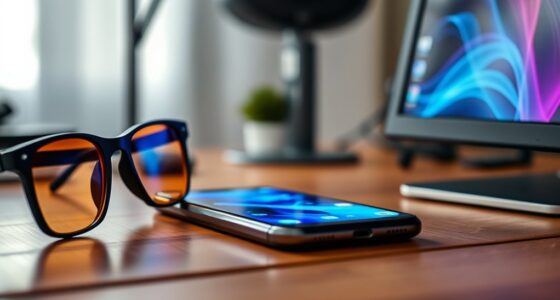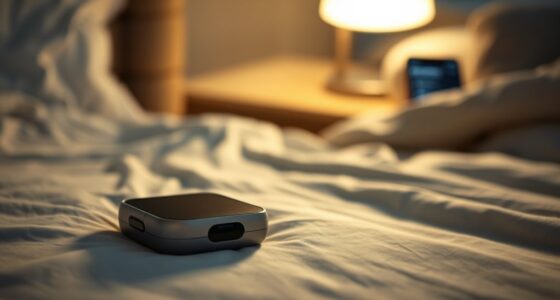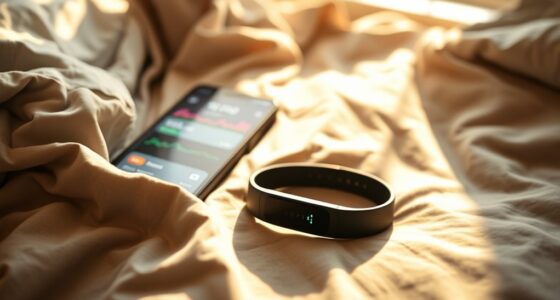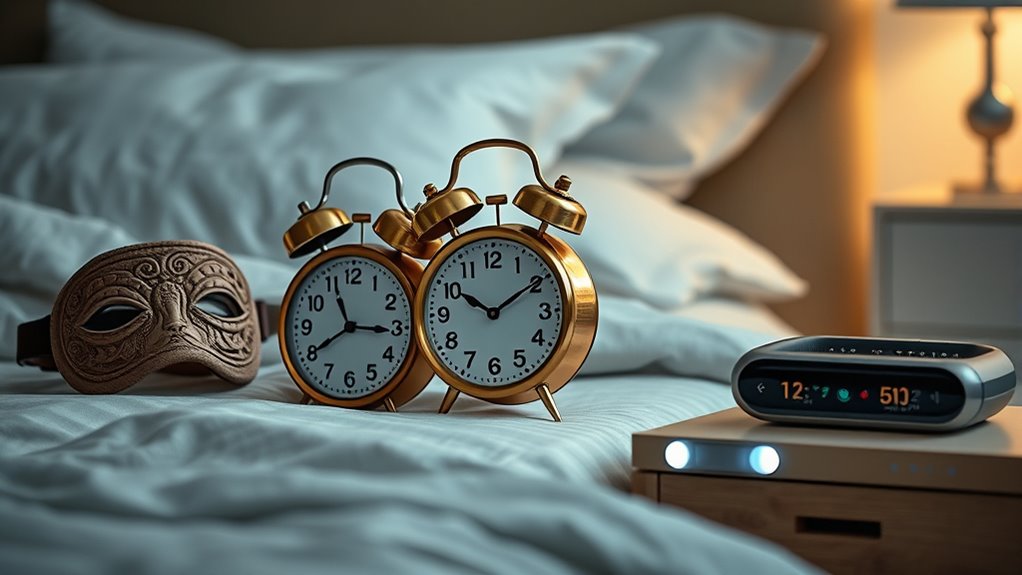
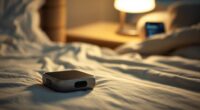
The evolution of sleep tech has come a long way, from ancient remedies and simple observations to advanced gadgets that monitor your sleep stages, heart rate, and environment. Modern devices use sensors and algorithms to give you detailed insights into your sleep patterns, helping you make informed adjustments. With ongoing innovations, sleep tech now emphasizes personalized insights and active health management. Keep exploring to discover how these tools continue to transform your sleep experience.

Get health and wellness essentials delivered free — and shop member deals
- Fast, free delivery on millions of items
- Access to Prime Big Deal Days deals on October 6–7
- Prime Video, Amazon Music and more included
Key Takeaways
- Ancient sleep assessments relied on guesswork and simple observations, lacking technological tools.
- Modern devices analyze sleep stages, heart rate, and breathing using sensors and advanced algorithms.
- Wearables like smartwatches automatically detect sleep patterns, offering detailed insights.
- Complementary tools such as apps and bedside gadgets track sleep through motion and sound analysis without wearables.
- Future innovations incorporate AI and machine learning for personalized sleep advice and enhanced health management.

Have you ever wondered how technology has transformed the way we sleep? It’s incredible to think about how far we’ve come from ancient remedies to modern gadgets designed to improve sleep quality. Today, sleep tracking devices are a common part of many people’s routines, giving insights that were once impossible to obtain. These innovations help you understand your sleep patterns, durations, and disturbances, making it easier to identify issues and improve your overall sleep quality. In the past, sleep was often a mystery—people relied on guesswork or simple observations to determine if they were getting enough rest. Now, with advanced sleep tracking technology, you can monitor your sleep stages, heart rate, and even breathing patterns, all from the comfort of your bed. These devices use sensors and algorithms to analyze your sleep, providing detailed reports that help you make informed decisions about your habits.
Technology has revolutionized sleep tracking, offering detailed insights into sleep patterns and health from the comfort of home.
The evolution of sleep tech has made it possible for you to pinpoint exactly what affects your rest—be it stress, diet, or environmental factors. Wearable devices like smartwatches and fitness bands can automatically detect when you fall asleep and wake up, giving you a clear picture of your sleep duration. Some go a step further by tracking your sleep quality, analyzing how much time you spend in deep sleep versus light sleep, or REM stages. This data empowers you to adjust your bedtime routines or sleep environment for better rest. For example, if your device indicates frequent awakenings, you might consider reducing noise or light, or establishing a more relaxing pre-sleep routine. Additionally, the accuracy of these devices is often enhanced by high-quality sensors, which improve data collection and analysis.
In addition to wearables, there are apps and bedside gadgets designed to enhance sleep tracking. These tools often use motion sensors or sound analysis to monitor your sleep, offering insights without requiring you to wear anything. They can even identify patterns over time, showing trends that help you understand what’s working and what isn’t. This constant stream of data shifts the focus from guesswork to precision, allowing you to optimize your sleep hygiene more effectively.
As technology continues to advance, so does the accuracy and usefulness of sleep tracking tools. Now, you’re not just passively sleeping—you’re actively engaging with your sleep health. The integration of artificial intelligence and machine learning helps these devices provide personalized advice, guiding you toward better habits. From early sleep monitors to sophisticated wearables, the journey of sleep tech has transformed how you approach rest, making it a essential part of maintaining your overall well-being.
As an affiliate, we earn on qualifying purchases.
Frequently Asked Questions
How Do Sleep Trackers Improve Sleep Quality?
Sleep trackers improve your sleep quality by monitoring your sleep cycle and providing insights into your rest patterns. They help you identify when you’re in deep or REM sleep, allowing you to optimize your schedule. Additionally, some advanced trackers offer dream analysis, giving you a better understanding of your dreams and emotional health. With this data, you can make adjustments to improve overall sleep quality and wake up feeling more refreshed.
Are Sleep Gadgets Safe for Long-Term Use?
Sleep gadgets are generally safe for long-term use when you maintain good bedtime routines and optimize your sleep environment. They can help you develop healthier habits and improve sleep quality without adverse effects. However, it’s important to avoid over-reliance on devices, guarantee they don’t interfere with your natural sleep cycle, and consult a healthcare professional if you experience persistent sleep issues. Balance and moderation are key for safe, long-term benefits.
Can Ancient Sleep Aids Be Effective Today?
Ancient remedies can still work today, like whispers from the past offering gentle guidance. Your cultural practices—such as herbal teas or meditation—remain effective sleep aids, blending tradition with modern needs. These age-old techniques act as a bridge, calming your mind and body. While they may not suit everyone, embracing them can enrich your sleep routine, proving that sometimes, the simplest roots yield the sweetest fruits.
What Future Advancements Are Expected in Sleep Technology?
You can expect future sleep tech to focus on advanced sleep cycle analysis and dream recording, helping you understand your sleep patterns better. Devices may become more personalized, offering tailored insights and interventions to improve sleep quality. Innovations like real-time monitoring and AI-driven recommendations will likely become mainstream, enabling you to optimize your rest and even explore your dreams, making sleep tech more immersive and effective than ever before.
How Personalized Are Modern Sleep Solutions?
Imagine slipping into a sleep cocoon perfectly crafted for you—that’s what modern sleep solutions aim for. They’re increasingly personalized, adapting to your unique rhythms and needs. Yet, personalization challenges, like ensuring accurate data collection and respecting data privacy, remain hurdles. You benefit from tailored insights, but you must also stay vigilant about protecting your personal sleep data in this evolving landscape of tech-enhanced rest.
As an affiliate, we earn on qualifying purchases.
Conclusion
As you’ve seen, sleep tech has come a long way, transforming how you rest and recover. From ancient remedies to today’s smart gadgets, each innovation aims to improve your sleep quality. So, are you ready to embrace these modern tools and unlock the best sleep of your life? With technology continually advancing, there’s never been a better time to prioritize your rest and wake up feeling refreshed every day. Why not start tonight?
sleep analysis app for smartphones
As an affiliate, we earn on qualifying purchases.
As an affiliate, we earn on qualifying purchases.
As an affiliate, we earn on qualifying purchases.
Fall Picks
fall essentials
As an affiliate, we earn on qualifying purchases.