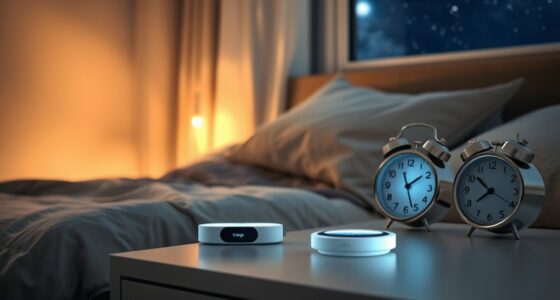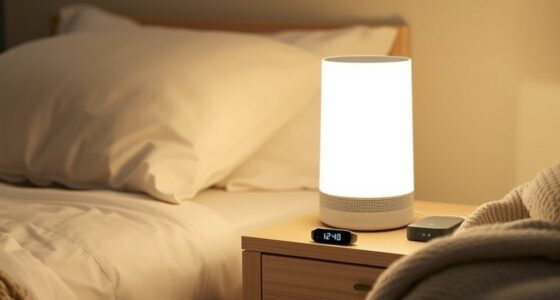
When choosing a sleep tracker, focus on accurate sleep monitoring that details your sleep stages and disruptions. Make sure it has long battery life to avoid frequent recharges that interrupt tracking. Comfort is key, so pick a device that’s easy to wear all night. Seamless syncing and clear reports help you understand your patterns over time. For deeper insights, explore the additional features that can enhance your sleep routine—all the essentials to support better rest are worth considering.
Key Takeaways
- Accurate sleep stage detection and comprehensive sleep analysis for better insights.
- Long battery life (at least one week) to ensure continuous monitoring without frequent charging.
- Comfortable and user-friendly design for effortless daily wear and easy data access.
- Seamless device integration with smartphones, smart home systems, and additional health features.
- Reliable performance that balances detailed insights with ease of use to support healthier sleep habits.
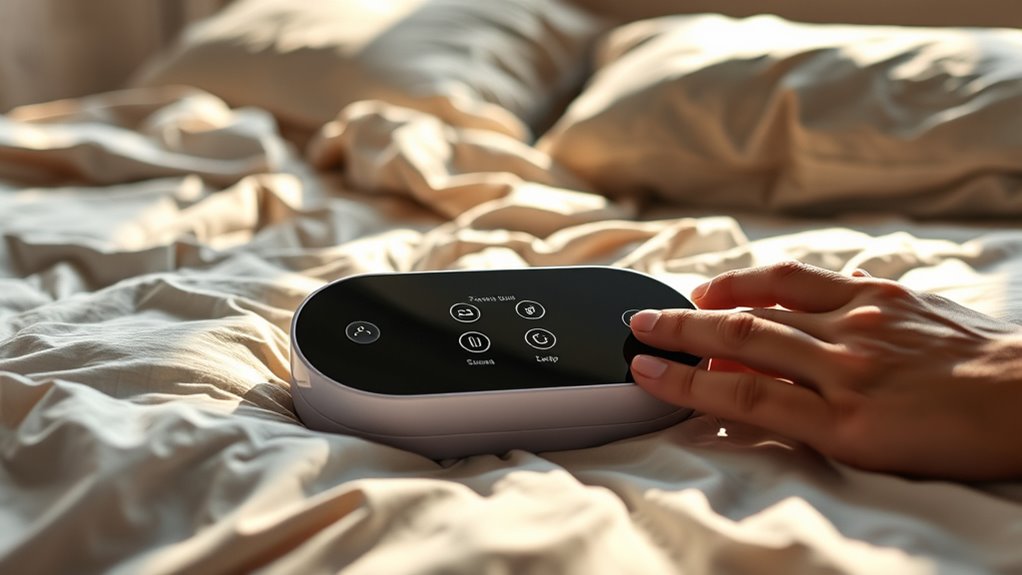
Sleep trackers have become indispensable tools for anyone looking to improve their rest, offering a variety of features designed to monitor and analyze your sleep patterns. When choosing one, two of the most significant aspects to consider are how well it can assess your sleep quality and its battery life. Your sleep quality is the core focus, so you want a device that provides accurate data on how long you sleep, how often you wake up during the night, and the overall restfulness of your sleep cycles. Many trackers use motion sensors or heart rate monitors to determine when you’re in light, deep, or REM sleep stages, giving you a clearer picture of your sleep health. Accurate sleep quality tracking helps you identify patterns, recognize disruptions, and make informed adjustments to your routine. Additionally, look for features that integrate with connected home fitness, allowing you to optimize your sleep environment and routines for better rest.
Sleep trackers provide vital insights into sleep quality, helping identify patterns and disruptions for better rest.
Battery life is equally essential because a sleep tracker is most useful when it can operate seamlessly over extended periods. If your device needs frequent recharging—say, every day or every few days—it might interrupt your tracking or discourage consistent use. Look for a tracker with a long battery life that can last at least a week on a single charge, especially if you prefer to wear it overnight without worry. Some models feature quick charging options or low power consumption modes, which can be handy. A device with a reliable battery ensures you don’t miss out on vital sleep data because of a dead battery, streamlining the entire tracking process.
Beyond sleep quality and battery life, it’s worth considering how easy the device is to wear and operate. Comfort matters because you’re more likely to wear a tracker consistently if it feels comfortable on your wrist or body. The user interface should be intuitive, offering clear insights without requiring a steep learning curve. Look for a device that syncs effortlessly with your smartphone or computer, so you can review detailed reports and track trends over time. Some trackers also include features like sleep coaching, snore detection, or ambient noise monitoring, but these should complement the primary functions of accurate sleep quality assessment and dependable battery life.
Ultimately, choosing a sleep tracker that balances detailed, accurate insights with reliable performance ensures you get the most out of your sleep data. It’s about finding a device that fits your lifestyle, provides trustworthy information, and keeps up with your nightly routines without any fuss. When you prioritize these features, you’re more likely to see real improvements in your sleep health and feel more energized during the day.
Frequently Asked Questions
How Accurate Are Sleep Trackers Compared to Professional Sleep Studies?
Sleep trackers can provide decent sleep data accuracy for general trends, but they’re not as precise as professional sleep studies. Your device’s calibration impacts accuracy, and factors like movement or placement can cause discrepancies. While trackers are useful for monitoring sleep patterns over time, they might not detect detailed issues like sleep apnea. For diagnosis, always consult a healthcare professional and rely on extensive sleep studies.
Can Sleep Trackers Monitor Sleep Disorders Effectively?
Sleep trackers can help with sleep disorder detection, but they aren’t a substitute for medical validation. They may identify irregular patterns or symptoms that suggest a problem, prompting you to see a healthcare professional. However, for accurate diagnosis and effective treatment, a professional sleep study remains essential. Use sleep trackers as a helpful tool, but always consult a doctor for thorough assessment and medical validation of sleep disorders.
Do Sleep Trackers Work With All Smartphone Types?
Like the fabled Labyrinth, not all sleep trackers fit every smartphone. You’ll find many options support popular devices, but some may lack compatibility with certain Android or iOS versions. Check smartphone compatibility before buying, and guarantee seamless app integration. This way, your sleep data syncs effortlessly, giving you clear insights. Remember, the right tracker should work smoothly with your device, making your sleep journey as straightforward as following a well-lit path.
How Long Does the Battery Last on Most Sleep Trackers?
Most sleep trackers offer a battery life that lasts between 4 to 7 days, depending on usage and features. You won’t need to charge them daily, but you should check the device’s charging frequency to avoid interruptions. Some models have quick-charging capabilities, so you can top up the battery quickly if needed. Keep in mind that frequent use of advanced features may slightly reduce overall battery life.
Are Sleep Trackers Suitable for Children or Only Adults?
Sleep trackers can be suitable for children, especially for pediatric monitoring, but you should choose models designed specifically for kids. Child suitability depends on features like comfort, safety, and accurate tracking tailored to their age group. Always check the manufacturer’s recommendations to guarantee it’s appropriate for your child’s age. Using a device meant for children helps you monitor sleep patterns effectively while ensuring comfort and safety.

Pulsetto FIT (V2) Wellness Wearable – Relaxation, Sleep & Daily Wellness Support Device
- Short, Easy Relaxation Sessions: 4–10 minute calming routines
- Lightweight, Ergonomic Design: Comfortable wearable for daily use
- Customizable Wellness App: Personalized sessions and tracking
As an affiliate, we earn on qualifying purchases.
Conclusion
So, when selecting a sleep tracker, focus on features that truly matter—like accuracy, insights, and ease of use. Don’t get distracted by flashy features that don’t serve your sleep goals. Prioritize performance over pixels, and you’ll find a device that delivers real results. Remember, a thoughtful tool can transform your nights and boost your days. Make mindful choices, measure meaningfully, and enjoy restful, rejuvenating sleep every single night.