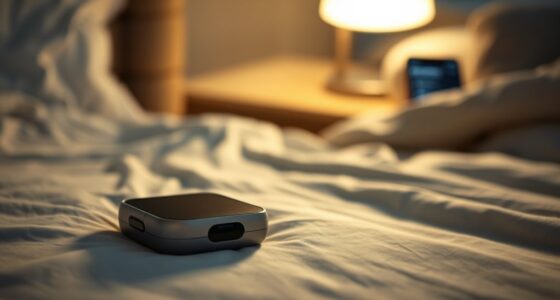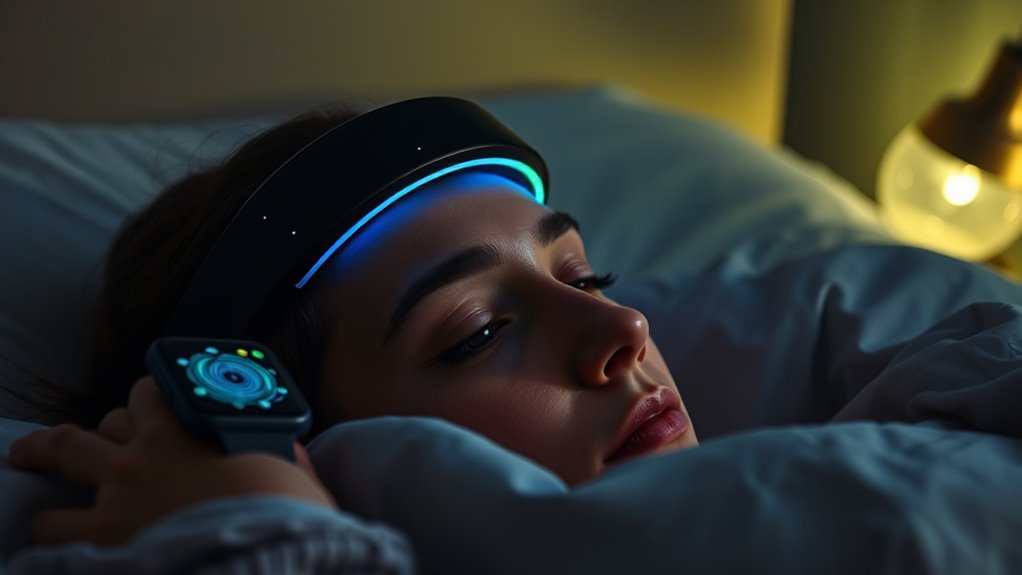
Devices for lucid dreaming use sleep cycle monitoring, gentle cues like lights or sounds, and brainwave technology to help you recognize when you’re dreaming. They analyze your sleep patterns, suggest ideal schedules, and deliver stimuli during REM sleep to boost your chances of controlling dreams. Cloud-based systems support these devices, making them more reliable and scalable. If you want to discover how these innovations can enhance your dream experiences, keep exploring the options available.

Get health and wellness essentials delivered free — and shop member deals
- Fast, free delivery on millions of items
- Access to Prime Big Deal Days deals on October 6–7
- Prime Video, Amazon Music and more included
Key Takeaways
- Devices monitor sleep patterns using sensors and deliver subtle cues like lights or sounds to trigger lucidity.
- They optimize sleep schedules to increase REM sleep duration, boosting chances of lucid dreaming.
- External stimuli such as binaural beats and visual prompts influence brainwaves to promote lucid states.
- Real-time sleep tracking ensures cues are delivered during REM phases for maximum effectiveness.
- Cloud-based platforms support device connectivity, data analysis, and continuous improvements in lucid dreaming tech.
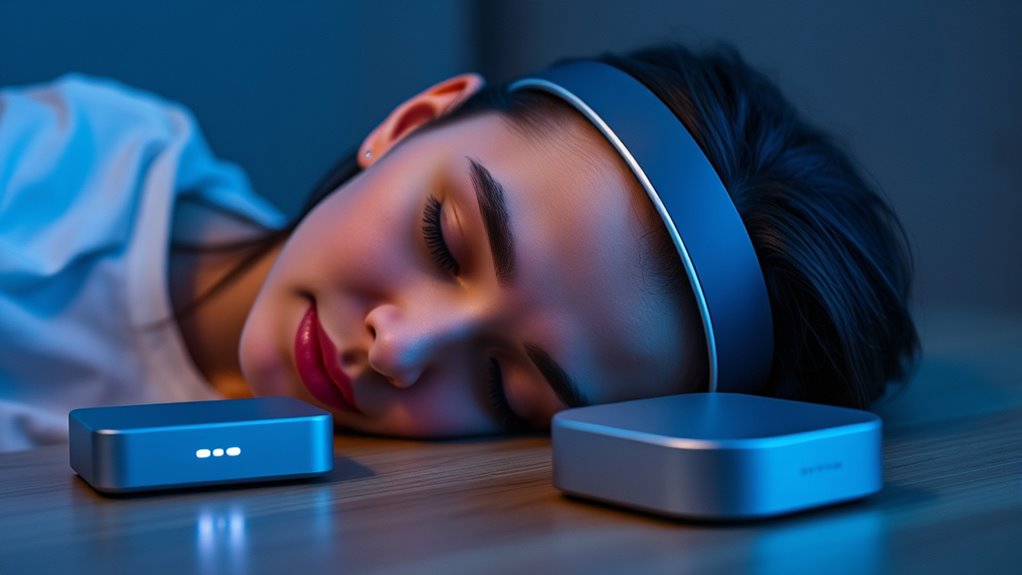
Lucid dreaming has become more accessible thanks to innovative technology designed to enhance your awareness within dreams. As you explore these devices, you’ll notice they often target aspects of your sleep cycle to boost your chances of experiencing lucid dreams. Your sleep cycle, which includes REM (Rapid Eye Movement) and non-REM stages, plays a vital role in dream frequency. During REM sleep, your brain activity is heightened, and vivid dreams are most likely to occur. By understanding and influencing your sleep cycle, these devices aim to increase your REM periods or improve your transition into them, making lucid dreams more attainable.
Many of these gadgets work by monitoring your sleep patterns through sensors that track your movements, heart rate, or brain activity. Once they identify when you’re in REM sleep, they may deliver subtle cues—like gentle lights, sounds, or vibrations—intended to alert you that you’re dreaming without waking you up. These cues serve as signals to help you realize you’re in a dream state, encouraging you to take control. The idea is to seamlessly integrate into your natural sleep rhythm, so your dream frequency remains consistent while your chances of becoming lucid increase.
Some devices focus specifically on optimizing your sleep cycle to create more opportunities for lucid dreaming. For example, sleep trackers can analyze your sleep quality and suggest adjustments—like ideal bedtimes or wake-up times—that help you enter REM sleep more predictably. By aligning your sleep schedule with your natural rhythms, you may experience longer or more frequent REM phases, thereby raising the likelihood of lucid dreams. This approach highlights the importance of understanding your body’s unique sleep architecture and working with it to enhance your dream experiences.
Other technologies incorporate auditory or visual stimuli designed to trigger lucidity. These often involve binaural beats or specific sound patterns that influence brainwaves, nudging your mind toward a state conducive to lucid dreaming. When combined with real-time sleep monitoring, these stimuli can be timed precisely during REM sleep, further increasing your dream frequency and the chances of becoming aware within your dreams. Essentially, these devices serve as external prompts that help you recognize the dream state more quickly, making your lucid dreaming practice more consistent and reliable. Additionally, advancements in energy-efficient cloud servers support the development and deployment of these innovative sleep and dream-tracking technologies through secure and sustainable cloud solutions.
As an affiliate, we earn on qualifying purchases.
Frequently Asked Questions
Are These Devices Scientifically Proven to Induce Lucid Dreaming?
These devices aren’t scientifically proven to reliably induce lucid dreaming. While some users report positive results, scientific validity remains limited, and placebo effects could play a significant role. You might experience some success, but it’s crucial to approach these devices with skepticism. Current research hasn’t confirmed their effectiveness, so you shouldn’t rely solely on them for lucid dreaming. Instead, combine them with proven techniques like reality checks and dream journals.
How Safe Are These Devices for Long-Term Use?
These devices are generally safe for long-term use, but you should consider device durability and user comfort. Check if the device is well-made and comfortable to wear, especially if you plan to use it nightly. Some users might experience skin irritation or discomfort over time. Always follow manufacturer guidelines, and consult a healthcare professional if you notice any adverse effects. Regular breaks can also help guarantee safe, continued use.
Can These Devices Cause Any Negative Side Effects?
You might experience some negative side effects from these devices, but it’s rare. Device reliability varies, so some users report minor issues like disrupted sleep or headaches, while others see no problems. Reading user testimonials can help you gauge potential risks. Always start with short sessions to see how your body reacts, and consult a healthcare professional if you notice persistent discomfort or adverse effects.
Do These Devices Work for Everyone Equally?
These devices don’t work equally for everyone due to effectiveness variability and individual user experience. Some people might notice significant improvements in their ability to lucid dream, while others may see little to no benefit. Factors like sleep patterns, sensitivity to cues, and personal response influence their success. So, don’t expect consistent results across all users—you might need to try different devices or techniques to find what works best for you.
What Is the Cost Range of Most Lucid Dreaming Devices?
Imagine stepping into a dream shop with prices like a rolling river—some devices are pocket-friendly, while others resemble a treasure chest. Most lucid dreaming devices have a cost variability, ranging from around $50 for basic models to over $300 for advanced tech. Device affordability depends on features, but you can find options that fit different budgets, helping you explore your dreams without sinking your wallet.
brainwave entrainment device for lucid dreaming
As an affiliate, we earn on qualifying purchases.
As an affiliate, we earn on qualifying purchases.
Conclusion
If you’re curious about using tech to enhance your lucid dreaming, you’re not alone. Studies show that nearly 55% of people interested in lucid dreaming have tried devices to help control their dreams. While these gadgets can be promising, remember that results vary, and some techniques might work better for you than others. With ongoing advancements, you could soon find yourself mastering your dreams more easily—so why not give it a try and see where your mind takes you?
As an affiliate, we earn on qualifying purchases.
binaural beats for lucid dreaming
As an affiliate, we earn on qualifying purchases.
As an affiliate, we earn on qualifying purchases.
Fall Picks
fall essentials
As an affiliate, we earn on qualifying purchases.