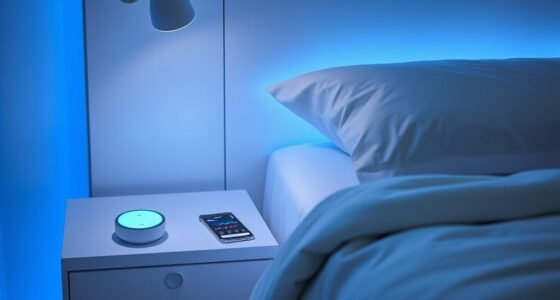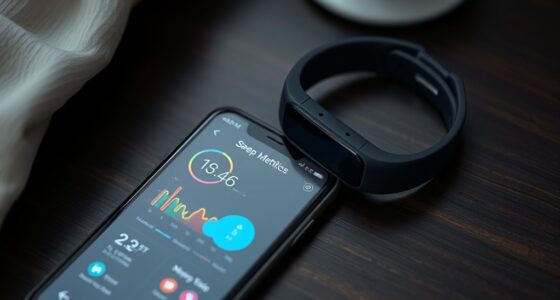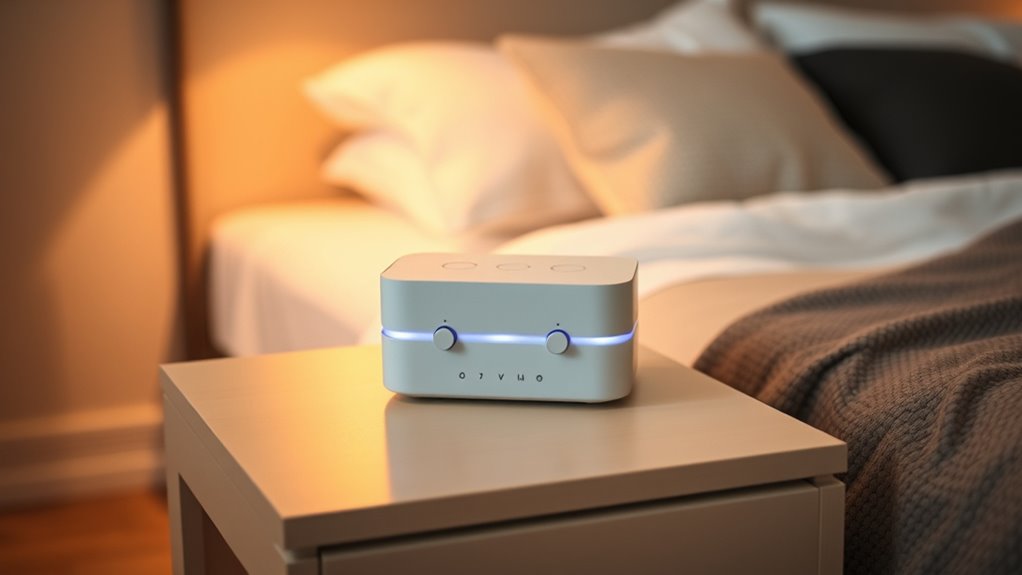

To use your white noise machine effectively, place it a few feet away from your bed or workspace on a stable, unobstructed surface at ear level. Guarantee the volume is loud enough to mask disruptive sounds but not overwhelming or distracting. Experiment with different positions and sound settings to find what works best for you. If you want to discover more tips for creating a truly relaxing environment, keep exploring for helpful advice.

Get health and wellness essentials delivered free — and shop member deals
- Fast, free delivery on millions of items
- Access to Prime Big Deal Days deals on October 6–7
- Prime Video, Amazon Music and more included
Key Takeaways
- Place the device a few feet away from your bed or workspace for even sound distribution.
- Keep the volume at a moderate level to mask noises without becoming overwhelming or distracting.
- Position the machine on a stable, unobstructed surface at ear level to prevent muffling and distortion.
- Choose a location away from walls, corners, or furniture to ensure clear, crisp sound quality.
- Test different settings and sounds to find the most soothing, effective configuration for your environment.
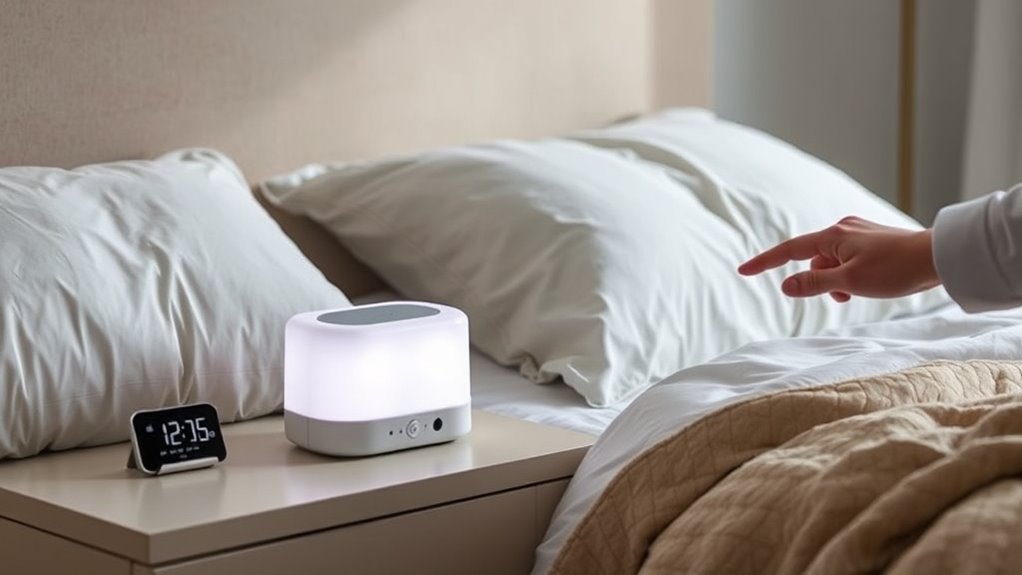
Using a white noise machine can substantially improve your sleep and focus, but only if you use it correctly. One of the most important factors is ensuring the device is placed properly. Position your white noise machine in a location where the sound can evenly fill your space without being obstructed. Ideally, keep it a few feet away from your bed or workspace, on a stable surface at ear level. This helps maximize the sound’s effectiveness without making it overwhelming. Avoid placing it directly next to your head or too close to walls, as this can distort sound quality and create uneven sound distribution. Also, steer clear of corners or behind furniture, as these spots can muffle the noise and reduce its calming effect. Proper placement also helps prevent sound distortion, ensuring the noise remains soothing and consistent.
Next, consider the volume. Setting the right sound level is essential; it should be loud enough to mask disruptive noises but not so loud that it becomes a distraction. Start with a low to moderate volume and gradually adjust until you find a balance that feels soothing. Many white noise machines include a volume control, so take advantage of this feature to customize your experience. Keep in mind that your comfort level might change depending on the environment, so don’t hesitate to tweak the volume throughout the night or during different work sessions. The goal is to create a consistent, gentle background sound that helps you concentrate or fall asleep without becoming a source of annoyance.
Sound quality is another critical aspect. Not all white noise machines produce the same audio clarity. Look for a device that offers crisp, smooth sound without static or hissing, as poor sound quality can disrupt your focus or sleep. If possible, test the machine before purchasing or try different settings if your device has multiple sound options. Many models allow you to select various noise types, such as pure white noise, nature sounds, or ambient hums, so choose what best suits your preferences. Adjust the device settings to optimize sound clarity—this might mean tweaking equalizer settings if available or selecting the most natural-sounding noise. When the sound quality is high, it’s easier to relax or concentrate without feeling like the noise is a distraction.
white noise machine with adjustable volume
As an affiliate, we earn on qualifying purchases.
As an affiliate, we earn on qualifying purchases.
Frequently Asked Questions
Can White Noise Machines Cause Hearing Damage?
White noise machines can cause hearing damage if you expose yourself to loud noise levels for extended periods. To protect your hearing safety, keep the volume at a comfortable level and avoid placing the device too close to your ears. Limited noise exposure at moderate volumes is safe, but consistently high volumes may lead to hearing loss over time. Always monitor your noise exposure to maintain healthy hearing.
How Long Should I Run the Machine Each Night?
You should run your white noise machine for about 8 hours each night, aligning with your sleep schedule. To keep it effective, perform regular machine maintenance, like cleaning and checking for issues. Customize the noise to a comfortable volume—louder can disrupt sleep, while too soft may be ineffective. Adjust the placement to prevent direct sound in your ears, ensuring a restful sleep environment.
Are There Specific Placements to Avoid for Safety?
To guarantee safety, avoid placing your white noise machine near water sources or on unstable surfaces. Follow placement guidelines by keeping it at a safe distance from your bed or crib, ideally on a sturdy surface. Don’t cover vents or fans, and make sure cords are secured to prevent tripping. Staying mindful of these safety concerns helps prevent accidents and ensures the machine functions properly, creating a safe, calming environment for sleep.
Does White Noise Machine Use Affect Sleep Quality?
Using a white noise machine can positively affect your sleep quality by providing sound masking and creating a consistent auditory environment. When you use it at an appropriate volume, it helps block out disruptive noises, promoting better sleep and sleep enhancement. Make sure to place the device safely and at a comfortable distance, so the sound is soothing rather than overwhelming, ensuring you wake up refreshed.
Can White Noise Help With Concentration During the Day?
Think of white noise as a personal concentration shield; it blocks out distractions like a busy street muffling car horns. White noise benefits include improved focus, helping you stay on task and boost productivity. Many find that using a white noise machine during work or study enhances concentration improvement, especially in noisy environments. If you struggle with interruptions, white noise can be your secret weapon for a calmer, more focused day.
best white noise machine for sleep
As an affiliate, we earn on qualifying purchases.
As an affiliate, we earn on qualifying purchases.
Conclusion
Remember, “a good start is half the battle,” so take time to find the perfect spot and volume for your white noise machine. Proper placement and settings can make a big difference in your sleep quality or focus. Trust your instincts and adjust as needed—what works for someone else might not be best for you. With a little experimentation, you’ll create a calming environment where you can rest easy and wake refreshed.
white noise machine for focus and relaxation
As an affiliate, we earn on qualifying purchases.
As an affiliate, we earn on qualifying purchases.
white noise machine placement tips
As an affiliate, we earn on qualifying purchases.
As an affiliate, we earn on qualifying purchases.
Fall Picks
fall essentials
As an affiliate, we earn on qualifying purchases.