
To get quality sleep, aim to keep your bedroom between 60 and 67°F, as this range supports your body’s natural circadian rhythms and promotes restorative slumber. Maintaining a consistent, cool environment helps regulate your body temperature and reduces awakenings caused by heat or cold. Use fans, thermostats, or breathable bedding to stay within this ideal range. If you want to discover more tips on achieving and maintaining the perfect sleep climate, keep exploring the details below.
Prime for Young Adults — start your free trial
Fast free delivery, streaming and member deals for eligible 18–24 year olds.
As an affiliate, we earn on qualifying purchases.
Key Takeaways
- Keep your bedroom temperature between 60-67°F (15.5-19.5°C) for optimal sleep quality.
- Use climate control devices like thermostats, fans, or heaters to maintain consistent temperatures.
- Block external heat sources with blackout curtains and ensure proper ventilation for fresh air.
- Adjust bedding and sleepwear seasonally to match room temperature and enhance thermal comfort.
- Create a calming environment with soft lighting and clutter-free space to support relaxation and restful sleep.
As an affiliate, we earn on qualifying purchases.
Understanding the Science Behind Sleep and Temperature

Understanding how temperature affects sleep starts with recognizing that your body’s internal clock, or circadian rhythm, regulates temperature fluctuations throughout the night. During sleep, your body actively manages thermal regulation to support different sleep cycles. In the early stages, your core temperature drops slightly, signaling your body to shift into deeper sleep. As you progress through sleep stages, this temperature fluctuation helps maintain restful sleep and promotes recovery. If your environment is too hot or cold, it can disrupt these natural thermal regulation processes, making it harder to stay in restorative sleep stages. By understanding the link between temperature and sleep cycles, you can better support your body’s natural rhythm and improve sleep quality. Additionally, thermal regulation plays a crucial role in how your body responds to environmental changes and can be optimized through proper sleep environment management. Maintaining an optimal sleep temperature supports natural sleep processes, ensuring your body can efficiently cycle through sleep stages without interruption. Proper temperature management can also help reduce sleep disruptions caused by external factors, making it easier to fall asleep and stay asleep throughout the night. Recognizing the importance of core body temperature regulation can help you implement more effective sleep strategies.
As an affiliate, we earn on qualifying purchases.
The Optimal Temperature Range for Restorative Sleep
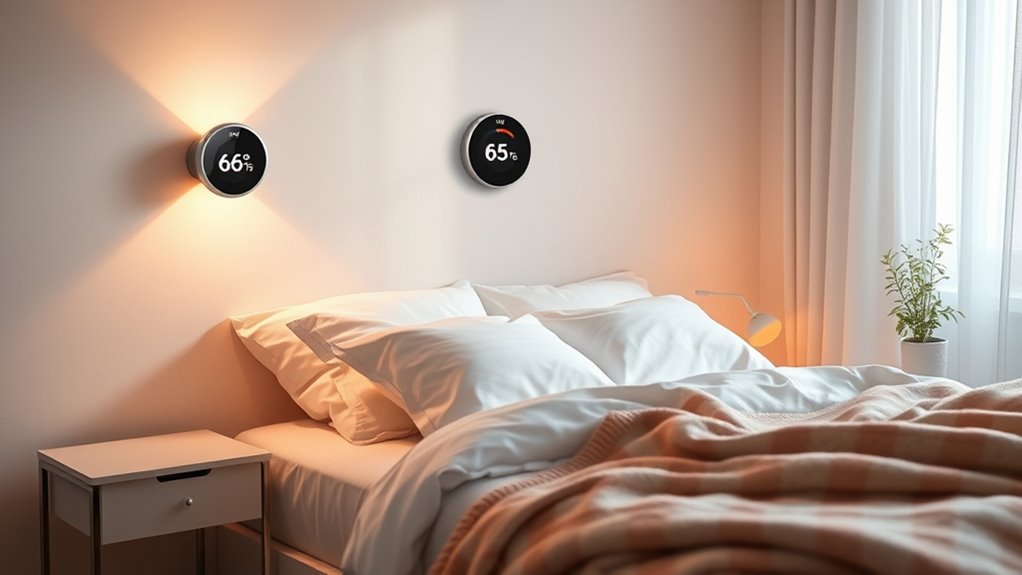
Finding the right temperature can substantially improve your sleep quality. The optimal nighttime climate range usually falls between 60 and 67°F, helping your body relax and recover. You can enhance your sleep by adjusting your bedroom conditions to stay within this ideal temperature range. Maintaining a comfortable sleep environment is essential for restful, restorative sleep. Additionally, incorporating climate control devices like thermostats or fans can help you maintain consistent temperatures throughout the night, which is especially useful given the increasing availability of smart home technology designed for precise climate management. Properly managing your indoor climate can also prevent temperature fluctuations that disrupt sleep cycles. Understanding thermal comfort and how it affects sleep can further optimize your bedroom conditions for better rest.
Temperature and Sleep Quality
Maintaining the right temperature in your bedroom is essential for achieving restful sleep, as your body naturally cools down during the night. When the temperature falls within the ideal range, you’ll experience deeper, more restorative sleep—like the comfort of a hotel or the tranquility of a well-kept dorm room. If it’s too hot or cold, your sleep quality drops, leaving you tired and unrested. Creating the perfect climate can evoke feelings of calm and security, making it easier to drift off. Incorporating energy-efficient cooling solutions can help maintain this optimal temperature while reducing energy consumption. Additionally, performing seasonal home maintenance checks ensures your heating and cooling systems operate efficiently and reliably. Waking up feeling refreshed and ready to face the day becomes much more achievable when your environment is properly optimized.
Optimal Nighttime Climate Range
To enjoy truly restorative sleep, keeping your bedroom temperature within the ideal range is essential. The perfect nighttime climate range for sleep typically falls between 60 and 67°F (15.5 to 19.5°C). Staying within this range helps create a sleep environment that promotes body temperature regulation and reduces disruptions. When your bedroom is too warm or too cold, your sleep quality can suffer, leading to restlessness or difficulty falling asleep. Maintaining consistent bedroom comfort supports your body’s natural circadian rhythms, allowing for deeper, more restorative sleep cycles. Additionally, using a high-quality projector can help create a soothing visual environment that complements your ideal sleep setting. Proper ventilation and sauna systems can also aid in regulating indoor climate, contributing to optimal sleep conditions. Incorporating climate control devices can further fine-tune your bedroom environment to maintain this ideal temperature range throughout the night. Ensuring proper air circulation can also improve overall sleep quality by preventing stale air and maintaining a stable temperature.
Adjusting Bedroom Conditions
Adjusting your bedroom conditions to stay within the ideal temperature range can considerably improve your sleep quality. Small changes can make a big difference in how restful your nights are. Consider dimming or switching off nighttime lighting to create a calming environment that signals your body it’s time to wind down. Focus on bedroom aesthetics by choosing soothing colors and clutter-free spaces, which promote relaxation. Keep your room cool and comfortable, and adjust the lighting to avoid harsh brightness. You’ll wake up feeling more refreshed and energized. Remember, your environment plays an essential role in sleep quality, and temperature regulation can significantly impact your rest. Creating a cozy, inviting space fosters tranquility, making it easier to fall asleep and stay asleep throughout the night. Your sleep environment is an important factor in achieving restorative sleep, and designing it thoughtfully can make a meaningful difference in your overall well-being. Additionally, maintaining a consistent sleep temperature helps reinforce your body’s natural circadian rhythms, leading to better sleep patterns. Proper heat pump installation and maintenance can ensure your bedroom remains within the optimal temperature range, and understanding thermal comfort principles can help optimize your sleep environment for maximum restfulness.
As an affiliate, we earn on qualifying purchases.
Factors That Influence Your Ideal Bedroom Climate
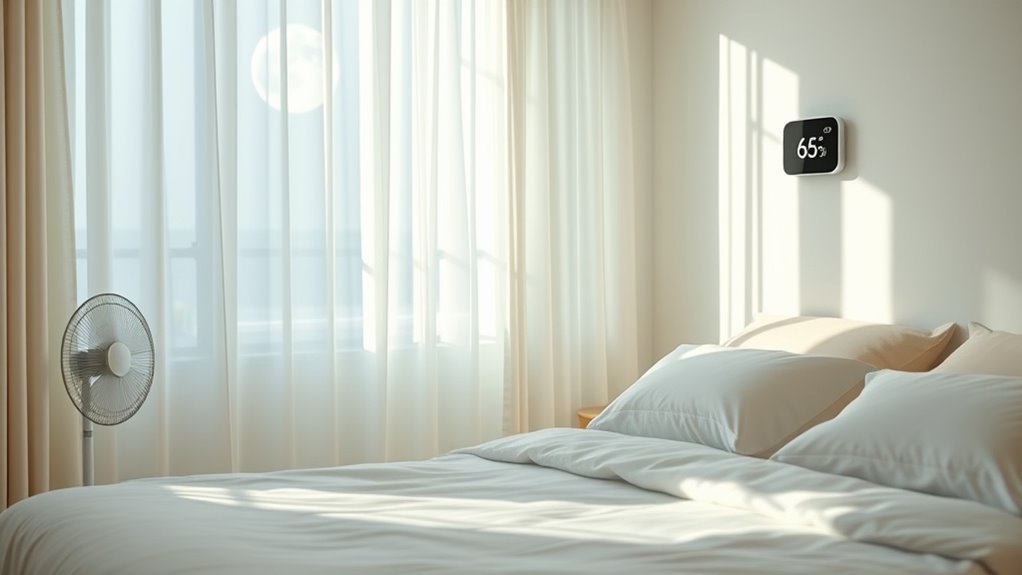
Several factors can influence what your ideal bedroom climate feels like, making it a highly personal choice. Humidity levels play a key role; too much moisture can make you feel sticky and restless, while too little can cause dryness and discomfort. Maintaining balanced humidity helps you breathe easier and sleep more soundly. Additionally, outdoor kitchen plans and pizza‑oven guides can inspire you to create a cozy outdoor space to relax in before bedtime, enhancing your overall sleep environment. Ambient noise also impacts your sleep environment — loud or sudden sounds can disrupt your rest, so controlling noise levels or using white noise machines can create a calmer setting. Furthermore, climate control devices like humidifiers or dehumidifiers can help you fine-tune your bedroom atmosphere for optimal comfort. Being aware of sleep environment factors such as light, temperature, and air quality allows you to make targeted adjustments for better rest. Additionally, your personal preferences, bedding materials, and health conditions shape what feels most comfortable. Understanding how these factors interact allows you to tailor your bedroom climate to promote better sleep. Adjusting humidity and minimizing noise are simple steps to help you find your ideal sleep environment.
sleep environment climate control devices
As an affiliate, we earn on qualifying purchases.
As an affiliate, we earn on qualifying purchases.
Signs That Your Bedroom Temperature Is Disrupting Sleep
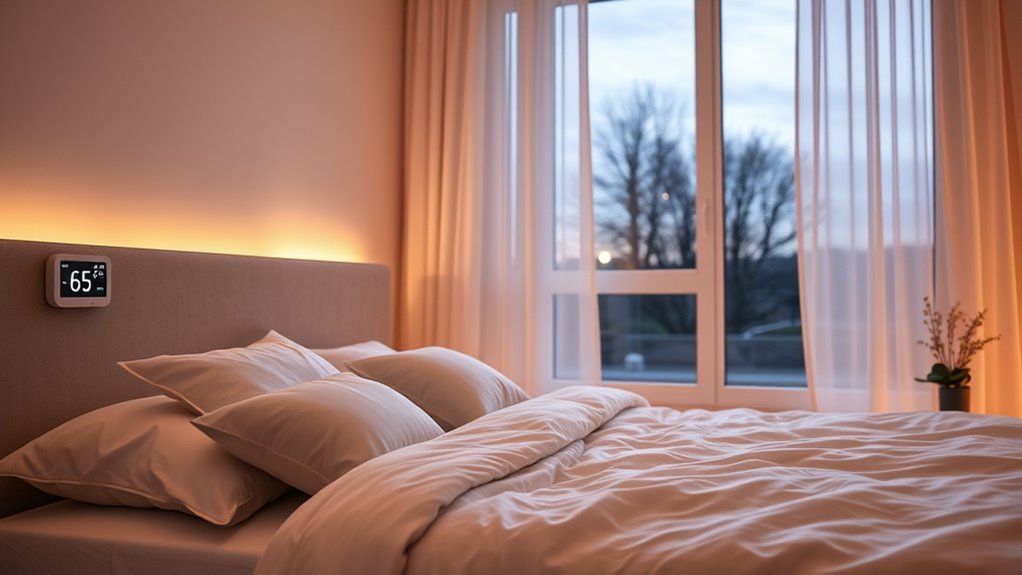
When your bedroom temperature isn’t right, you’ll notice it through your sleep quality. Poor thermal comfort can cause frequent awakenings, making you feel exhausted upon waking. You might find yourself tossing and turning, unable to settle into deep sleep. If the room is too hot, you could wake up drenched in sweat, feeling restless and dehydrated. Conversely, a too-cold room can lead to chills, preventing you from relaxing fully. These signs point to sleep disruption caused by an unsuitable environment. You may also experience headaches or dry mouth, further indicating your body’s struggle to maintain balance. Recognizing these signals helps you identify when your bedroom temperature is interfering with restful sleep and take steps to restore comfort.
Tips for Creating a Comfortable and Consistent Sleep Environment

Creating a consistent sleep environment can substantially improve your sleep quality, especially if you’ve noticed signs that your bedroom temperature is disrupting rest. Maintaining a cool, stable temperature supports your sleep cycle and helps you fall asleep faster. Focus on your bedroom decor by choosing calming colors and minimizing clutter, which promotes relaxation. Use blackout curtains and soft lighting to create a cozy atmosphere that signals your body it’s time to wind down. Keep your bedding breathable and comfortable, ensuring it aligns with your preferred temperature. Here’s a visual to inspire your setup:
| Tip | Effect |
|---|---|
| Adjust bedroom decor for calmness | Enhances relaxation and sleep readiness |
| Use blackout curtains | Blocks light, stabilizes environment |
| Select breathable bedding | Maintains comfortable temperature |
How to Adjust Your Bedroom Temperature Using Different Methods

Adjusting your bedroom temperature effectively involves using various methods tailored to your preferences and living situation. One powerful tool is a smart thermostat, which allows precise control over your room’s climate, ensuring you stay comfortable all night. Installing blackout curtains can block out external heat sources, helping maintain a consistent temperature. You might also consider fans or portable heaters for quick adjustments and better airflow. Additionally, layering your bedding and choosing breathable sleepwear can help regulate your body temperature naturally.
- Feel the relief as your room cools to the perfect sleeping temperature
- Experience peace of mind knowing your thermostat adapts to your schedule
- Enjoy a cooler, darker room with blackout curtains that invite restful sleep
- Feel the comfort of a room that adjusts effortlessly to your needs
The Role of Bedding and Sleepwear in Temperature Regulation

Your choice of bedding and sleepwear markedly impacts how well you regulate your body temperature overnight. Opt for breathable fabrics and layer your sleepwear to stay comfortable without overheating. Selecting the right materials can make a noticeable difference in your sleep quality.
Breathable Fabric Choices
Choosing breathable fabrics for bedding and sleepwear is essential for maintaining a comfortable body temperature throughout the night. High fabric breathability allows heat and moisture to escape, preventing overheating and sweating. When you select bedding made from breathable fabrics, you create a cooler, more comfortable sleep environment that promotes restful sleep. Look for natural fibers like cotton, linen, or bamboo, known for their excellent fabric breathability. These materials help regulate temperature by wicking away moisture and allowing air circulation.
- Wake up feeling refreshed, not drenched in sweat
- Enjoy a cooler, more restful night’s sleep
- Reduce night sweats and overheating
- Feel more comfortable and relaxed as you sleep
Appropriate Sleepwear Layers
Have you ever wondered how your sleepwear layers influence your comfort throughout the night? Your sleepwear layers play an essential role in maintaining your ideal body temperature. Choosing the right fabric choices, like breathable cotton or moisture-wicking blends, helps prevent overheating or chills. Layering appropriately allows your body to regulate heat naturally, adapting to changing temperatures during sleep. Avoid heavy or non-breathable fabrics that trap heat and moisture, which can disrupt your rest. Instead, opt for lightweight, breathable materials that wick away sweat and keep you comfortable. Adjusting your sleepwear layers based on room temperature ensures you stay neither too hot nor too cold, supporting better sleep quality and waking refreshed.
Maintaining Your Ideal Sleep Climate Throughout the Year

Maintaining a consistent sleep environment year-round can be challenging, especially as temperatures fluctuate with the seasons. To keep your ideal sleep climate, focus on climate control strategies and bedding materials that adapt to changing conditions. Use a programmable thermostat to regulate room temperature and prevent overheating or chilling. Adjust your bedding materials—lighter linens in summer, warmer blankets in winter—to stay comfortable. Proper ventilation also plays an essential role in maintaining fresh, breathable air. When you prioritize climate control and select versatile bedding, you create a sleep sanctuary that promotes restful nights regardless of outside weather.
- Feel confident that your sleep environment is always optimized, no matter the season
- Say goodbye to restless nights caused by temperature swings
- Experience the soothing consistency of a perfectly regulated bedroom
- Wake up refreshed, ready to face each new day
Frequently Asked Questions
How Does Humidity Affect Sleep Quality?
Humidity impact plays a significant role in your sleep quality. Too much moisture can make your room feel sticky and uncomfortable, disrupting your rest. Conversely, low humidity causes dry skin and throat irritation. You can improve moisture regulation by using a humidifier or dehumidifier, maintaining a balanced level around 40-60%. Proper humidity helps your body stay comfortable, allowing you to fall asleep faster and enjoy deeper, more restful sleep.
Can Temperature Swings During the Night Disrupt Sleep?
Imagine a rollercoaster ride—sudden temperature swings during the night can jostle your sleep like sharp dips and climbs. These fluctuations disturb temperature stability, making it harder for your body to settle into restful sleep. As a result, you may experience sleep disruption, waking frequently or feeling unrested. To avoid this, keep your bedroom temperature consistent, creating a calm, steady environment that encourages deep, uninterrupted sleep.
What Are the Best Sleep Aids for Temperature Regulation?
You can improve your sleep temperature regulation with sleep aids like cooling pillows and sleep masks. Cooling pillows help dissipate heat, keeping your head and neck cool throughout the night. Sleep masks block out light and can also provide gentle cooling to your eyes, promoting better rest. Combining these aids creates a more comfortable sleep environment, helping you stay cool, fall asleep faster, and enjoy deeper, uninterrupted sleep all night long.
How Do Age and Health Conditions Influence Ideal Sleep Temperature?
Your age and health conditions greatly influence your ideal sleep temperature. Age-related thermoregulation may make it harder for you to maintain body heat, so you might need a slightly warmer environment. Health condition impacts, like circulatory issues or chronic illnesses, can also alter your comfort needs, requiring adjustments in room temperature. Pay attention to these factors and modify your bedroom environment to guarantee restful, quality sleep tailored to your unique needs.
Are There Differences in Ideal Temperatures for Couples Sharing a Bed?
You and your partner might have different temperature preferences that affect sleep comfort. To guarantee both of you rest well, consider setting the thermostat around 65°F (18°C) and using adjustable bedding or individual blankets. You can also try sleeping closer or further apart to accommodate personal comfort levels. Communicating openly about temperature preferences helps find a balance, making your shared sleep environment more comfortable and conducive to quality rest.
Conclusion
Creating the perfect sleep environment isn’t just about luck — it’s about understanding your body’s needs. By maintaining an ideal bedroom temperature and adjusting your bedding and clothing, you set yourself up for restorative sleep each night. Are you ready to make these simple changes and wake up refreshed? Remember, a comfortable sleep climate isn’t a luxury; it’s essential for your overall well-being. Don’t settle for restless nights — prioritize your sleep environment today.
Fall yard work Picks
leaf blowers
As an affiliate, we earn on qualifying purchases.