
Spring allergies can quietly damage your sleep because pollen triggers symptoms like nasal congestion, itchy eyes, and post-nasal drip that make falling and staying asleep difficult. These symptoms worsen when you lie down, causing frequent awakenings and reducing restorative sleep stages. The immune response releases histamine, increasing inflammation and discomfort. Poor indoor air quality can also worsen symptoms, further disturbing your rest. Want to discover how to better protect your sleep during allergy season? Keep exploring to find out more.
Play games included with Prime
Start a Prime free trial and play with Amazon Luna on your devices.
As an affiliate, we earn on qualifying purchases.
Key Takeaways
- Pollen triggers allergy symptoms like congestion and itching, which disrupt sleep and prevent restorative rest.
- Nasal blockage from inflammation increases difficulty breathing, causing frequent awakenings during sleep.
- Immune responses release histamine, worsening inflammation and intensifying symptoms that interfere with sleep cycles.
- Poor indoor air quality during pollen season exacerbates allergy symptoms, further disrupting sleep patterns.
- Persistent allergy discomfort leads to fatigue and irritability, subtly impairing overall sleep quality over time.
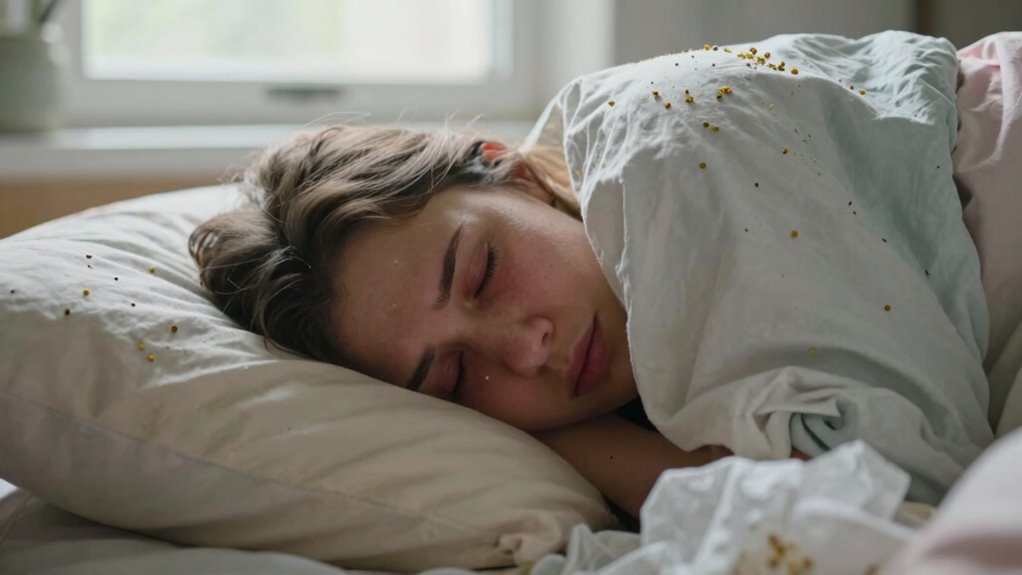
Spring allergies can profoundly disrupt your sleep, making it hard to rest peacefully even when you’re tired. During pollen season, the air becomes filled with tiny particles that trigger your allergy symptoms and interfere with your nightly rest. As the pollen count rises, you might notice your allergy symptoms—like sneezing, nasal congestion, and itchy eyes—intensify, and these symptoms don’t just stay in the daytime. They carry over into the night, making it difficult to fall asleep or stay asleep through the night.
Spring allergies can disrupt sleep, causing nighttime congestion and discomfort that interfere with restful, uninterrupted sleep.
When your nasal passages are blocked or inflamed, breathing becomes more effortful, which can lead to frequent awakenings. Even if you manage to fall asleep initially, you may find yourself tossing and turning because your body is working overtime to clear your airways. This disruption can prevent you from reaching the deeper, more restorative stages of sleep your body needs. As a result, you wake up feeling exhausted, unrefreshed, and less alert during the day.
Allergy symptoms don’t only make breathing difficult; they can also cause discomfort that interrupts your sleep cycle. Itchy eyes and throat, post-nasal drip, and coughing can all keep you awake or rouse you from sleep multiple times throughout the night. These symptoms often worsen at night because lying down increases blood flow to your nasal passages, heightening congestion and making breathing even more difficult. This cycle can leave you feeling drained and irritable, decreasing your overall quality of life during the spring months.
Another factor is the way pollen season affects your immune system, which can lead to heightened sensitivity and more severe allergy reactions. Your body reacts to the pollen as a threat, releasing chemicals like histamine that cause inflammation and swelling in your nasal passages. This immune response not only worsens allergy symptoms but also impacts your sleep by causing discomfort and waking you up unexpectedly. The more intense your allergy symptoms, the more likely your sleep will be interrupted, creating a vicious cycle of fatigue and allergy flare-ups. Additionally, poor indoor air quality during allergy season can further exacerbate sleep disturbances, especially if your living environment isn’t optimized for allergy relief.
Furthermore, airborne pollen can also impact your overall health by increasing stress on your immune system, which may make you more vulnerable to other illnesses. Studies have shown that air quality directly influences how well your body can recover during sleep, so poor indoor air quality during allergy season can exacerbate sleep difficulties. It is also important to consider the role of allergy-proofing your home, which can significantly reduce pollen exposure and improve sleep quality. In essence, the combination of increased pollen in the air and your body’s immune response can quietly chip away at your sleep quality during spring. Even if you don’t realize it, persistent allergy symptoms from pollen season can leave you feeling less rested and more tired than you should be. Recognizing how allergy symptoms interfere with sleep is the first step toward managing them better, so you can enjoy the season without sacrificing your sleep.
As an affiliate, we earn on qualifying purchases.
Frequently Asked Questions
Can Spring Allergies Cause Long-Term Sleep Issues?
Yes, spring allergies caused by seasonal rhinitis and pollen sensitivity can lead to long-term sleep issues. When you’re exposed to pollen, your immune system reacts, causing nasal congestion, sneezing, and discomfort. These symptoms can disrupt your sleep patterns over time, leading to chronic fatigue and poor overall rest. If untreated, the ongoing disturbance from pollen sensitivity can gradually affect your sleep quality and contribute to long-term health problems.
Do Allergy Medications Impact Sleep Quality?
A stitch in time saves nine, and that applies to allergy medications too. They can impact your sleep quality due to medication side effects like drowsiness or insomnia, depending on the type. It’s essential to take into account dosage considerations and consult your doctor to find the right balance. Proper use minimizes sleep disruptions, ensuring allergy relief doesn’t come at the expense of restful nights.
How Can I Tell if Allergies Are Disrupting My Sleep?
You can tell if allergies are disrupting your sleep by noticing symptoms like nasal congestion, sneezing, or itchy eyes that worsen at night. Pollen triggers, especially during spring, often cause sleep disruptions, making it hard to fall asleep or stay asleep. If you wake up feeling unrefreshed or experience frequent nighttime awakenings, allergies might be the culprit. Tracking symptoms and pollen levels can help you identify the connection.
Are Children’s Sleep Patterns Affected by Spring Allergens?
Like a whisper of Puck’s mischief, spring allergens can subtly disrupt children’s sleep patterns. The pollen impact triggers sneezing, congestion, and itchy eyes, leading to sleep disturbances. Children, with their developing immune systems, are especially vulnerable, making it harder for them to settle and stay asleep. This quiet disruption can affect their mood, focus, and growth, highlighting the importance of managing allergy symptoms for healthier sleep during spring.
Do Outdoor Allergy Levels Correlate With Sleep Disturbances?
Yes, outdoor allergy levels do correlate with sleep disturbances. During pollen peaks, allergy triggers like pollen become more prevalent, increasing symptoms such as congestion and sneezing. These symptoms can disrupt your sleep, making it harder to fall asleep or stay asleep through the night. When pollen counts are high, you’re more likely to experience allergy-related discomfort, which directly impacts your sleep quality. Staying aware of pollen peaks helps you manage symptoms better.
As an affiliate, we earn on qualifying purchases.
Conclusion
So, if you ignore spring allergies, you’re risking more than just sneezes—you could be releasing a sleep disaster of epic proportions! Imagine tossing and turning through endless nights, your body begging for rest while allergy symptoms wage war inside. Don’t let these sneaky allergens turn your spring into a sleep apocalypse. Take action now—fight back with allergy management, or suffer the sleepless, allergy-ravaged chaos that could haunt your nights forever!
As an affiliate, we earn on qualifying purchases.
As an affiliate, we earn on qualifying purchases.
Fall yard work Picks
leaf blowers
As an affiliate, we earn on qualifying purchases.