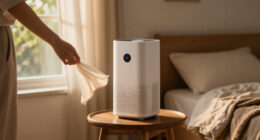
To allergy-proof your bedroom and improve sleep, keep windows closed during high pollen seasons and use an air purifier with a HEPA filter to trap airborne allergens. Encase your mattress and pillows in allergen-proof covers, wash bedding weekly in hot water, and maintain low humidity levels with a dehumidifier. Regularly clean with a vacuum equipped with a HEPA filter and reduce clutter to limit dust. Continue exploring for more tips to create a healthier, allergy-friendly space.

Get health and wellness essentials delivered free — and shop member deals
- Fast, free delivery on millions of items
- Access to Prime Big Deal Days deals on October 6–7
- Prime Video, Amazon Music and more included
Key Takeaways
- Use air purifiers with HEPA filters to efficiently remove dust, pollen, and pet dander from the bedroom air.
- Encase mattresses and pillows in allergen-proof covers to block dust mites and reduce allergens.
- Keep windows closed during high pollen seasons and use air purifiers to limit outdoor allergen entry.
- Wash bedding weekly in hot water (at least 130°F) and reduce clutter to minimize dust accumulation.
- Maintain low humidity (30-50%) with a dehumidifier to inhibit dust mite growth and improve air quality.

Creating an allergy-proof bedroom starts with understanding what triggers your allergic reactions and taking targeted steps to eliminate them. One of the most effective ways to do this is by using an air purifier, which offers numerous benefits for allergy sufferers. An air purifier can markedly reduce airborne allergens like pollen, pet dander, and dust particles, creating a cleaner environment that promotes better sleep. When you run an air purifier consistently, you’ll notice fewer allergy symptoms such as sneezing, congestion, and itchy eyes. The benefits of air purifiers extend beyond simply filtering out allergens; they also improve overall air quality, making your bedroom a healthier space.
Dust mites are among the most common indoor allergens, and preventing their presence is essential for allergy-proofing your room. Dust mite prevention starts with reducing clutter and minimizing textiles that trap dust, such as heavy curtains, plush bedding, and stuffed animals. Encase your mattress and pillows in allergen-proof covers, which act as barriers against dust mites. Washing bedding weekly in hot water (at least 130°F) helps eliminate these tiny pests and their waste, which can trigger allergic reactions. Maintaining a low humidity level—ideally between 30-50%—also plays a critical role, since dust mites thrive in humid environments. Using a dehumidifier can help keep moisture levels in check, discouraging dust mite populations from thriving in your bedding and upholstery.
Vacuuming regularly with a vacuum cleaner equipped with a HEPA filter is another key step. HEPA filters trap small particles, including dust mites and pollen, preventing them from recirculating into the air. Make sure to vacuum carpets, rugs, and upholstery thoroughly and frequently, especially in areas where dust tends to accumulate. Additionally, keeping windows closed during high pollen seasons minimizes outdoor allergens from entering your space. When you do open windows, do so during times when pollen counts are low, like after a rain or in the late evening.
As an affiliate, we earn on qualifying purchases.
Frequently Asked Questions
Can Air Purifiers Completely Eliminate Indoor Allergens?
Air purifiers can’t completely eliminate indoor allergens due to their limitations, but they considerably improve allergen removal efficiency. You should choose models with HEPA filters and run them consistently to reduce dust, pollen, and pet dander. Keep in mind, they work best when paired with proper cleaning and ventilation. While they won’t remove every allergen, a good air purifier makes a noticeable difference for cleaner, healthier indoor air.
Are There Specific Bedding Materials Best for Allergy Sufferers?
Want to sleep better and breathe easier? Hypoallergenic bedding made from natural fabric options like cotton, bamboo, or silk can make a difference. These materials resist dust mites and pollen better than synthetic options, reducing allergy triggers. Switching to these specific bedding choices creates a cleaner, healthier sleep environment. Don’t wait—your allergy relief could be just a bedding upgrade away, transforming your nights into truly restful, allergen-free experiences.
How Often Should I Replace My Mattress and Pillows?
You should replace your mattress every 7 to 10 years, considering its lifespan and how well it supports your sleep. Pillows need replacing more often, ideally every 1 to 2 years, to prevent dust mites and allergens from accumulating. Regularly updating your bedding helps reduce allergens and improves sleep quality. Keep an eye on wear and comfort, and don’t hesitate to change them sooner if they show signs of deterioration.
Do Houseplants Help or Worsen Indoor Allergy Issues?
Did you know that houseplants can improve indoor air quality, but they also pose allergen risks? Plant benefits include filtering toxins and increasing humidity, which comforts allergy sufferers. However, some plants trap dust and mold, worsening allergy issues. If you’re sensitive, choose hypoallergenic plants like succulents or orchids, and keep them clean. This way, you enjoy plant benefits without increasing your allergen risks.
What Are Non-Chemical Methods to Reduce Dust Mites?
You can reduce dust mites by using dust mite barriers on your pillows and mattress, which create a physical barrier to prevent mites from settling. Wash bedding weekly in hot water to eliminate allergens. Keep humidity low, ideally below 50%, to make the environment less hospitable for dust mites. Regularly vacuum with a HEPA filter, and remove clutter to minimize allergen buildup, enhancing your allergen reduction techniques.
allergen-proof mattress encasement
As an affiliate, we earn on qualifying purchases.
As an affiliate, we earn on qualifying purchases.
Conclusion
By allergy-proofing your bedroom, you create a sanctuary free from dust and pollen, a space where clean air breathes life into your sleep. You clear away allergens, calm your breathing, and invite restful nights. You open the door to freshness, close out irritants, and embrace comfort. In your allergy-proofed bedroom, you foster peace, promote health, and nurture well-being—turning your space into a haven of serenity, where restful sleep becomes your daily reward.
bedroom dehumidifier for dust mites
As an affiliate, we earn on qualifying purchases.
As an affiliate, we earn on qualifying purchases.
As an affiliate, we earn on qualifying purchases.
Cold & flu season Picks
humidifiers
As an affiliate, we earn on qualifying purchases.