
If you’re concerned about sleep quality, it’s worth thinking about EMF exposure from electronics in your bedroom. Wireless chargers, Wi-Fi, and devices emit low-level EMFs that can disrupt melatonin production and alter brain activity, potentially causing fragmented sleep. While research is ongoing, taking steps like turning off devices and increasing distance can help. To discover simple ways to protect your rest, explore further and learn how to create a sleep-friendly environment.
Listen free for 30 days with Audible
Thousands of audiobooks and originals — cancel anytime.
As an affiliate, we earn on qualifying purchases.
Key Takeaways
- EMFs from electronics can disrupt melatonin production and brain activity, potentially impairing sleep quality.
- Keeping devices away from the bed and turning them off can reduce EMF exposure during sleep.
- Using wired connections and shielding materials helps create a sleep-friendly, low-EMF environment.
- Managing screen time before bed and establishing tech-free zones promote better sleep hygiene.
- While evidence suggests EMFs may affect sleep, practical precautions can minimize potential risks.
As an affiliate, we earn on qualifying purchases.
Understanding Electromagnetic Fields and Their Sources
Electromagnetic fields (EMFs) are invisible areas of energy produced by electrical devices and natural sources. You encounter EMFs daily from sources like wireless chargers, which transfer power wirelessly to your devices, emitting low-level EMFs during operation. Power lines, especially high-voltage ones, are another significant source; they generate stronger EMFs that extend over long distances. These fields are present whether you’re actively using your devices or simply nearby. Wireless chargers are convenient but emit a steady EMF while charging, and proximity to power lines can increase your exposure. Understanding these sources helps you become aware of potential EMF exposure in your environment, especially in spaces where electronics are frequently used or stored. Recognizing these sources is the first step in evaluating your overall EMF exposure.
As an affiliate, we earn on qualifying purchases.
How EMF Might Influence Sleep Patterns

Electromagnetic fields can interfere with your sleep by disrupting melatonin production, making it harder to fall asleep. They also alter brain wave activity, which can affect your sleep quality, and may lead to frequent awakenings or fragmented rest. Understanding these effects helps you see how EMF exposure might be quietly impacting your nightly sleep patterns. Additionally, outdoor wisdom suggests that reducing electronic device use before bed can promote better rest. Limiting exposure to electromagnetic interference in your sleeping environment can further support healthier sleep cycles. Being aware of the technological influences in your bedroom can help you create a more restful environment. Recognizing the biological impacts of EMF can empower you to make informed decisions about your sleep space. Incorporating sleep-friendly practices can further enhance your overall sleep quality and well-being.
Disrupts Melatonin Production
Since melatonin is essential for regulating your sleep-wake cycle, any disruption to its production can considerably impact sleep quality. EMF exposure, especially from electronic devices, can lead to melatonin suppression, reducing your sleep hormone levels. This interference makes it harder for you to fall asleep and stay asleep. Imagine your night like this:
| Time of Night | Melatonin Levels | Sleep Quality |
|---|---|---|
| Early Evening | High | Restful |
| Midnight | Declining | Light Sleep |
| Early Morning | Low | Wakefulness |
| Bright Screens | Suppressed | Restlessness |
| Sleep Cycles | Disrupted | Poor Restorative Sleep |
This table illustrates how EMF can diminish melatonin, disrupting your natural sleep rhythm and leaving you tired. Additionally, natural light exposure during the day can help regulate melatonin production and support healthier sleep patterns. Recognizing the sensitivity of melatonin to electromagnetic fields emphasizes the importance of minimizing EMF exposure in your sleep environment to promote better rest. It is also beneficial to understand how power tools and heavy-duty equipment might contribute to ambient EMF levels, especially if used frequently near your sleeping area. Being aware of electromagnetic field sources in your home can further help you reduce unnecessary exposure during sleep hours.
Alters Brain Waves
When your brain is preparing for sleep, it relies on specific electrical patterns called brain waves to signal relaxation and shift into rest. EMF exposure can interfere with this process by causing brain wave modulation, which may prevent your brain from shifting smoothly into deeper sleep stages. Disrupting these normal electrical patterns can lead to sleep cycle disruption, making it harder to achieve restorative sleep. Instead of following natural rhythms, your brain might remain in a heightened or disorganized state, reducing sleep quality. Over time, this interference could contribute to feeling tired and less refreshed, even after a full night’s rest. Being mindful of EMF in your environment might help maintain healthy brain wave activity and support better sleep patterns. Additionally, electromagnetic field exposure from electronic devices is a growing concern for sleep health and overall well-being.
Causes Sleep Fragmentation
Exposure to EMF can cause your sleep to become fragmented, disrupting the continuity of your rest. This interference may lead to frequent awakenings and lighter sleep stages, making it harder to achieve restorative sleep. Poor sleep hygiene, like using electronics right before bed or placing devices close to your bed, can worsen these effects. To minimize sleep fragmentation, consider adjusting your electronics placement, such as keeping devices away from your sleeping area. Establishing a consistent sleep routine and reducing screen time before bed can also help. By limiting EMF exposure and improving sleep hygiene, you can promote more stable sleep patterns and enjoy deeper, more restful sleep each night.
As an affiliate, we earn on qualifying purchases.
Scientific Evidence Linking EMF Exposure to Sleep Disruptions
Research indicates that electromagnetic fields (EMF) can interfere with sleep patterns, raising concerns about their impact on health. Several studies suggest that exposure to EMF from electronic devices may disrupt your circadian rhythm and reduce sleep quality. While radiation safety guidelines aim to limit harmful exposure, they don’t always address subtle effects on sleep hygiene. Some research shows that even low-level EMF exposure can increase arousal during sleep, leading to fragmented or lighter rest. Additionally, sleep hygiene practices are essential for maintaining quality sleep, but EMF exposure can undermine these efforts. Although evidence varies, these findings highlight the importance of understanding EMF’s potential influence on sleep health. Staying mindful of your exposure, especially before bedtime, can help you maintain better sleep quality and promote overall well-being. Electromagnetic fields are pervasive in modern environments, making it essential to consider their potential effects on sleep and health. Additionally, ongoing research continues to explore how long-term exposure might impact overall sleep quality and circadian regulation, emphasizing the need for further investigation into environmental influences on sleep patterns.
wired internet adapter for bedroom
As an affiliate, we earn on qualifying purchases.
As an affiliate, we earn on qualifying purchases.
Recommendations for Reducing EMF Exposure in Your Bedroom
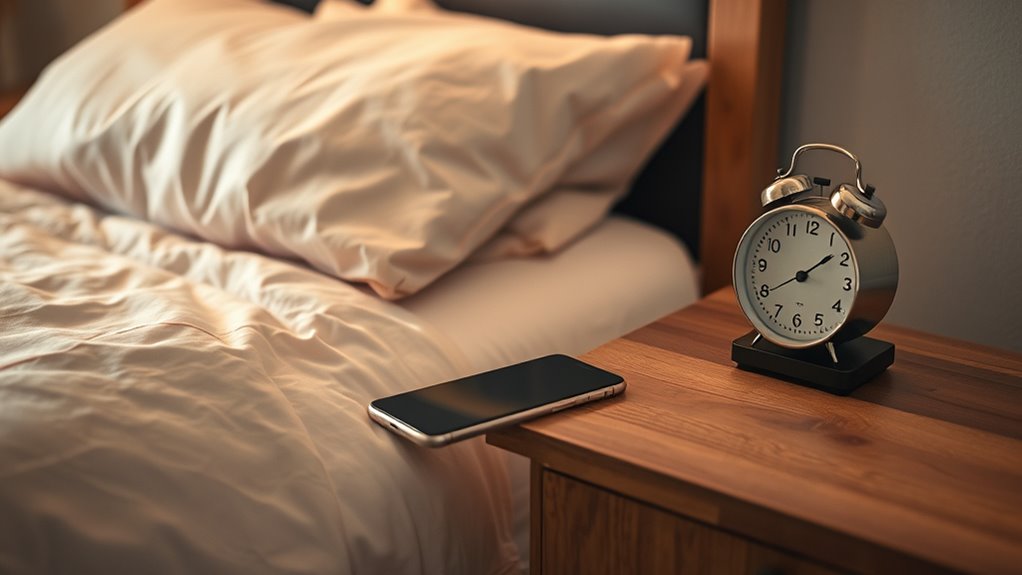
You can start by limiting the electronic devices in your bedroom, especially those that emit EMF like smartphones and tablets. Rearranging your room to keep beds away from sources of EMF, such as Wi-Fi routers, can make a difference. Small changes like these can markedly reduce your exposure and improve your sleep quality. Considering home energy integration strategies, such as turning off Wi-Fi when not in use, can further lower EMF levels in your sleeping environment. Implementing proper load management can also help minimize unnecessary EMF exposure from electrical systems. Additionally, using EMF shielding products or materials may provide extra protection against electromagnetic radiation during sleep. Understanding electromagnetic field sources in your home can help you identify additional areas for reduction. Awareness of nanotechnology advancements in EMF shielding materials might also enhance your protection strategies.
Limit Electronic Devices
Reducing the number of electronic devices in your bedroom can substantially lower your EMF exposure during sleep. Start by limiting devices that emit electromagnetic fields, especially those near your bed. Proper device placement is key—keep phones, tablets, and Wi-Fi routers at least three feet away from your sleeping area. Consider turning off or unplugging devices when not in use to improve sleep hygiene and minimize unnecessary EMF exposure. Here are three practical steps:
- Remove or disable Wi-Fi routers overnight.
- Store devices like phones and tablets away from your bed.
- Use wired connections instead of wireless whenever possible.
Additionally, understanding ventilation considerations can help reduce EMF buildup in your space, creating a healthier sleeping environment. Ensuring good air circulation can help disperse any residual electromagnetic fields, further enhancing sleep quality. Maintaining proper room insulation can also prevent EMF interference from external sources, and incorporating EMF shielding techniques may provide additional protection for sensitive individuals. Incorporating EMF mitigation strategies can further optimize your sleep environment and reduce potential health risks.
Optimize Bedroom Layout
To effectively lower EMF exposure in your bedroom, arranging your furniture and electronic devices thoughtfully is essential. Keep electronic devices away from your sleeping area, placing them at a distance or turning them off at night. Choose bedroom lighting that uses low-EMF bulbs or is dimmable to reduce unnecessary EMF exposure. When selecting a mattress, opt for materials that are free from metallic or conductive components, as these can attract and amplify EMFs. Position your bed away from Wi-Fi routers, smart meters, and other EMF sources. By strategically organizing your bedroom layout, you minimize EMF exposure during sleep, promoting better rest and overall health. Small changes can make a significant difference in creating a safer, more restful environment.
Practical Tips for Creating a Sleep-Friendly Environment

Creating a sleep-friendly environment starts with optimizing your bedroom to minimize electromagnetic interference and promote relaxation. Focus on your sleep environment by making simple adjustments.
Enhance your sleep by reducing electromagnetic interference and creating a calming, relaxing bedroom environment.
- Use blackout curtains and dim lighting to create a calming bedroom lighting setup that signals your body it’s time to rest.
- Keep electronic devices away from your bed or turn them off to reduce EMF exposure.
- Choose low-EMF or wired alternatives for essential electronics, and avoid charging devices near your pillow.
Balancing Technology Use and Restful Sleep
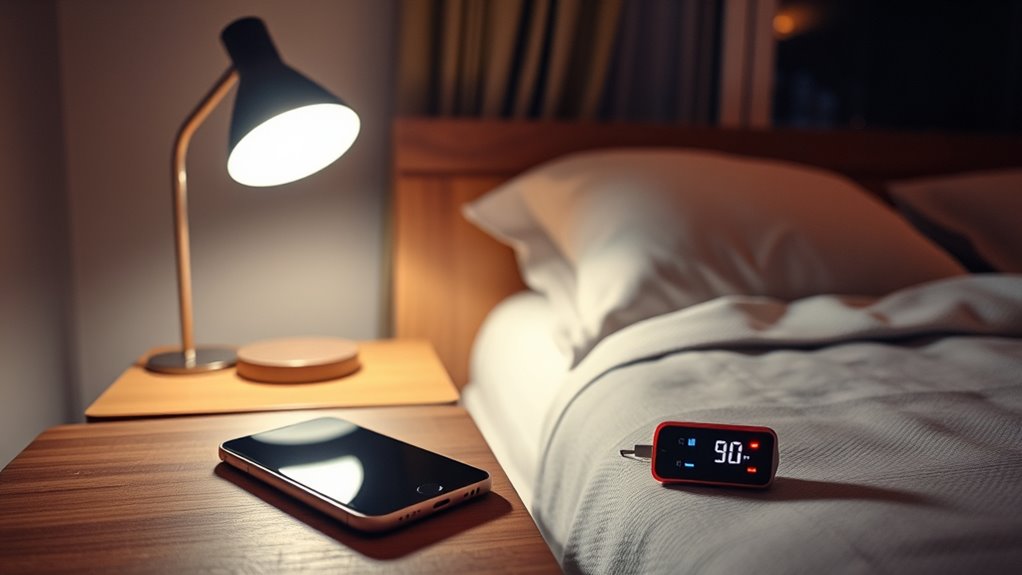
Balancing technology use and restful sleep requires mindful habits to prevent electronic devices from disrupting your natural sleep cycle. Blue light emitted by screens can interfere with melatonin production, making it harder to fall asleep. To reduce the impact, set a digital curfew an hour before bed and switch to devices with blue light filters. Digital distractions, like notifications and social media, can also keep your mind active, delaying relaxation. Designate a tech-free zone in your bedroom to minimize temptation. Instead, opt for calming activities such as reading a book or practicing relaxation techniques. By consciously managing your device use, you help protect your sleep quality, ensuring you wake up refreshed and ready for the day.
Making Informed Decisions About Electronics and Sleep Health
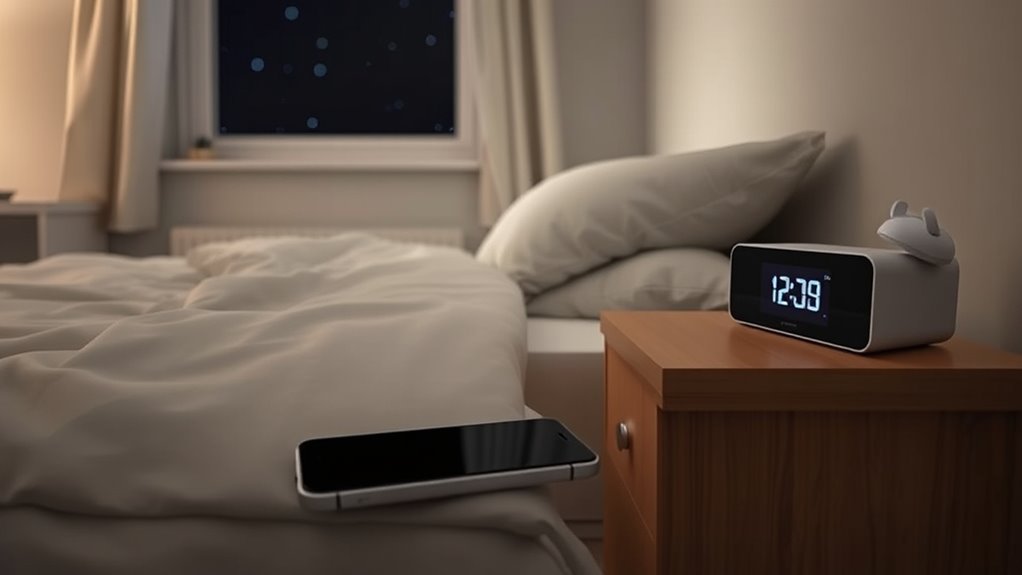
Making informed decisions about electronics and sleep health empowers you to protect your rest amid technological demands. To do this effectively, consider these key steps:
- Limit blue light exposure by avoiding screens at least an hour before bed or using blue light filters on devices. This helps regulate melatonin production and improves sleep quality.
- Be cautious with wireless charging stations placed near your bed, as they emit EMF. Opt for wired charging when possible or keep chargers farther away from your sleeping area.
- Establish a tech-free zone in your bedroom, reducing overall EMF exposure and creating an environment conducive to restful sleep.
Frequently Asked Questions
Are There Specific Types of Electronics More Harmful Than Others?
Some electronics are more harmful than others, especially those emitting higher EMF levels like Wi-Fi routers, tablets, and smartphones. You can use emf measurement devices to identify these sources and consider device shielding to reduce exposure. Smaller, low-EMF devices are generally less risky. Prioritize turning off devices when not in use, and limit their presence in your bedroom to promote better sleep and reduce potential health risks.
How Long Does EMF Exposure Take to Impact Sleep Quality?
EMF exposure can impact your sleep quality within minutes to hours, especially if you’re emf sensitive. Sleep disruption may occur after just a short period of exposure, making it essential to limit electronics before bed. If you notice trouble falling asleep or restless nights, reducing EMF exposure might help. Being proactive about emf sensitivity can improve your sleep, so consider unplugging devices at least 30 minutes before bed.
Can EMF Exposure Cause Long-Term Health Problems?
When it comes to electromagnetic fields and health effects, you shouldn’t dismiss the potential long-term risks. While definitive evidence remains elusive, some studies suggest prolonged EMF exposure could contribute to health problems over time. It’s wise to play it safe and limit exposure, especially in your bedroom. Think of it as an ounce of prevention—reducing EMF contact now might help prevent bigger issues down the line.
Is There a Safe Distance to Keep Electronics From the Bed?
To guarantee emf safety tips, keep your electronics at least 3-6 feet away from your bed. Maintaining a proper bedside distance reduces your exposure to EMF radiation while sleeping. It’s a simple step to help protect your health and improve sleep quality. You should also turn devices off or switch them to airplane mode when not in use, further lowering EMF exposure and supporting a healthier sleep environment.
Do Sleep Aids or Supplements Mitigate Emf-Related Sleep Issues?
Did you know that over 60% of people report better sleep with the use of sleep aids? Sleep supplements may help you relax and fall asleep faster, but they don’t directly mitigate emf-related sleep issues. To truly protect yourself, focus on emf mitigation strategies like reducing electronic use before bed. Combining sleep aids with emf mitigation can improve your sleep quality and minimize potential disruptions caused by electromagnetic fields.
Conclusion
Think of your bedroom as a peaceful garden. Just as you’d tend to plants, you can nurture restful sleep by managing EMF exposure. By creating boundaries with electronics, you clear away the weeds of disruption and allow your sleep to flourish. Striking this balance isn’t about eliminating technology but about cultivating a space where relaxation and rest grow strong. With mindful choices, you can enjoy both the benefits of tech and the rejuvenation of quality sleep.
Flea & tick season Picks
flea and tick prevention
As an affiliate, we earn on qualifying purchases.