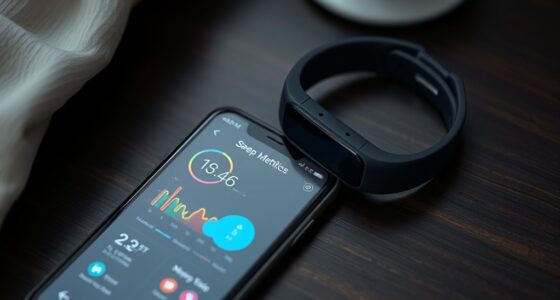
Blue light from screens affects your sleep more than green light because it strongly suppresses melatonin and delays your circadian rhythm. It penetrates your eyes deeply and signals your brain to stay alert, making it harder to fall asleep. Green light also influences your internal clock but has a milder effect. If you want to learn how to protect your sleep, there’s more that can help you manage your light exposure effectively.
Listen free for 30 days with Audible
Thousands of audiobooks and originals — cancel anytime.
As an affiliate, we earn on qualifying purchases.
Key Takeaways
- Blue light more effectively suppresses melatonin and delays sleep than green light.
- Blue light causes greater circadian rhythm disruption compared to green light.
- Exposure to blue light before bed has a stronger negative impact on sleep quality.
- Green light influences alertness but has a lesser effect on sleep disruption than blue light.
- Managing blue light exposure after sunset improves sleep onset and overall sleep health.
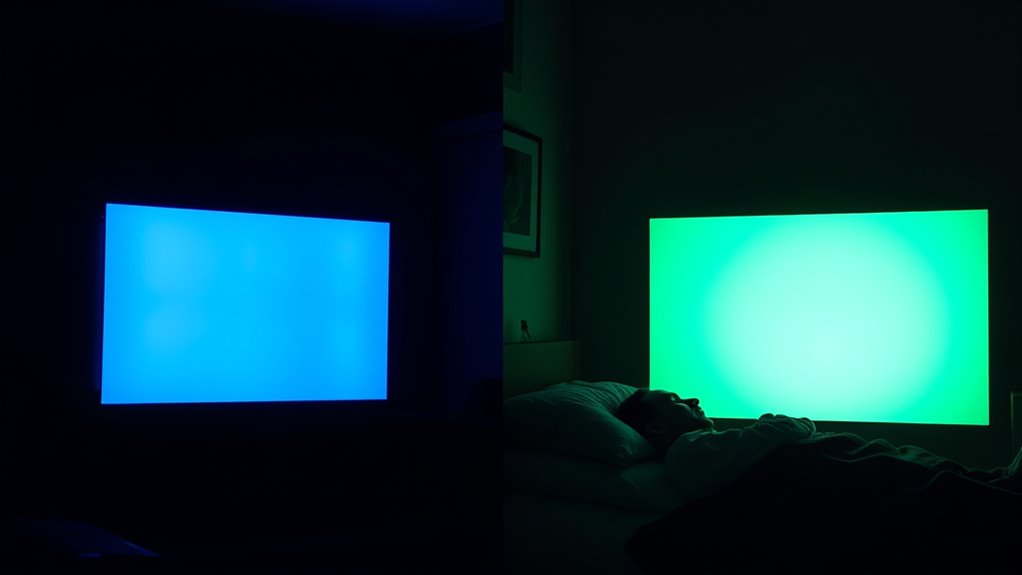
When it comes to light exposure, blue and green lights are often compared because of their distinct effects on your eyes and circadian rhythm. You might not realize it, but the type of light you’re exposed to before bed can profoundly influence your sleep quality. Blue light, in particular, has been shown to cause more circadian rhythm disruption than green light. Your circadian rhythm is your body’s internal clock that regulates sleep-wake cycles, and when this rhythm gets out of sync, it can be hard to fall asleep or stay asleep. Blue light’s ability to suppress melatonin, the hormone responsible for signaling sleep, is a key reason for this disruption. When you’re exposed to blue light in the evening—whether from screens, LED bulbs, or other sources—it can considerably delay melatonin production, making you feel alert when you should be winding down. This suppression of melatonin can shift your sleep phase, leading to difficulty falling asleep and feeling less rested in the morning.
Green light, on the other hand, has a different impact. Although it also affects your eyes and circadian system, it tends to be less potent in suppressing melatonin compared to blue light. Some studies suggest that green light can influence your alertness levels without causing as much circadian disruption. This means that if you’re exposed to green light in the evening, you might not experience the same level of sleep delay as you would with blue light. However, prolonged exposure to any bright light, including green, can still interfere with your sleep patterns to some extent. The key difference is that blue light’s high energy and wavelength make it particularly effective at penetrating your eyes and impacting the cells in your retina that send signals to your brain’s circadian clock.
Understanding these effects helps you make smarter choices about your evening light environment. If you want to minimize circadian rhythm disruption and melatonin suppression, reducing blue light exposure after sunset is advisable. Using screen filters, switching to warmer lighting, or wearing blue light blocking glasses can help. While green light may be less disruptive, it’s still wise to limit bright, colorful lights close to bedtime. Your body’s natural sleep signals rely heavily on melatonin, so managing your light exposure—especially blue light—can make a noticeable difference in how quickly you fall asleep and how restful your sleep is. Recognizing the distinct impacts of these lights empowers you to take control of your evening routines and protect your sleep health. Proper light management is essential for maintaining optimal sleep quality and overall health.
blue light blocking glasses for sleep
As an affiliate, we earn on qualifying purchases.
As an affiliate, we earn on qualifying purchases.
Frequently Asked Questions
How Do Blue and Green Lights Impact Melatonin Production?
Blue light suppresses melatonin production more than green light, leading to circadian disruption and hormonal imbalance. When you’re exposed to blue light, especially before bed, it tricks your body into thinking it’s daytime, delaying sleep onset. Green light has less impact, so it’s less likely to disturb your circadian rhythm. To protect your sleep, limit blue light exposure in the evening and opt for green or dimmer lights.
Are There Long-Term Health Effects From Exposure to These Lights?
Chronic exposure to blue and green lights may have long-term health implications, especially affecting your vision and sleep quality over time. Prolonged exposure can lead to digital eye strain, increased risk of retinal damage, and disrupted circadian rhythms, which might contribute to sleep disorders. To protect your health, limit screen time, use blue light filters, and take regular breaks, reducing the potential effects of long-term exposure.
Can Green Light Be as Disruptive to Sleep as Blue Light?
Think of your sleep as a delicate garden, easily disturbed by harsh lights. Green light can be just as disruptive as blue light, especially if your screen brightness is high. It can interfere with melatonin production, making it harder to fall asleep. Plus, prolonged exposure causes eye strain, leaving your eyes tired and uncomfortable. So, whether it’s blue or green, managing screen brightness and limiting exposure before bed helps protect your sleep and eye health.
What Are the Best Ways to Reduce Blue and Green Light Exposure?
To reduce blue and green light exposure, you can use blue light benefits like screen filters or glasses that block these wavelengths. Limit screen time before bed and consider green light therapy during the day to promote alertness without disrupting sleep. You might also adjust device settings to reduce brightness or enable night mode, helping your eyes and sleep cycle stay healthier while still benefiting from light exposure.
Do Screen Filters Effectively Block Blue and Green Light?
Did you know that screen filters can block up to 90% of blue light? Screen filter technology is quite effective at reducing exposure, making it a popular choice for eye protection gear. When you apply a quality screen filter, you substantially minimize blue and green light reaching your eyes, helping you sleep better. So, yes, investing in a good screen filter is a smart move for safeguarding your eye health and sleep quality.
blue light screen filter for smartphones
As an affiliate, we earn on qualifying purchases.
As an affiliate, we earn on qualifying purchases.
Conclusion
So, it’s no coincidence that blue light, often linked to screens, tends to disrupt your sleep more than green light. As you spend evenings scrolling or working, that exposure might be quietly messing with your rest, just as nature intended. Next time you wind down, consider switching to green light or dimming your screen. Sometimes, the smallest changes can make the biggest difference—it’s almost like your body was waiting for you to notice.
As an affiliate, we earn on qualifying purchases.
As an affiliate, we earn on qualifying purchases.
NFL season / tailgating Picks
team gear
As an affiliate, we earn on qualifying purchases.