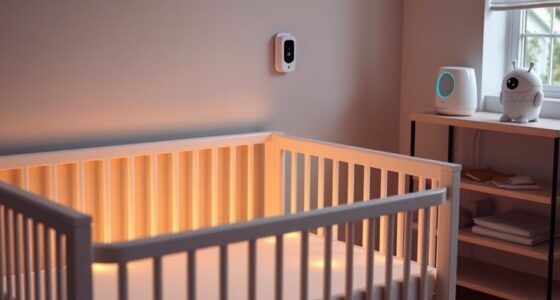
If you’re choosing between wearable and non-wearable sleep trackers, consider what matters most to you. Wearables offer detailed sleep stage data but require daily recharging and might feel uncomfortable overnight. Non-wearables provide a set-it-and-forget-it option with longer battery life and less intrusion, though they may be less precise. Understanding these pros and cons can help you pick the best for your needs—continue exploring to find out more.
Listen free for 30 days with Audible
Thousands of audiobooks and originals — cancel anytime.
As an affiliate, we earn on qualifying purchases.
Key Takeaways
- Wearables offer detailed sleep stage data but require daily charging, which may impact convenience.
- Non-wearables provide longer battery life and continuous monitoring without user intervention.
- Wearables can be less comfortable and intrusive, affecting sleep quality and data accuracy.
- Non-wearables are generally more affordable, easier to use, and less disruptive during sleep.
- Choice depends on the need for detailed insights versus comfort and ease of use.
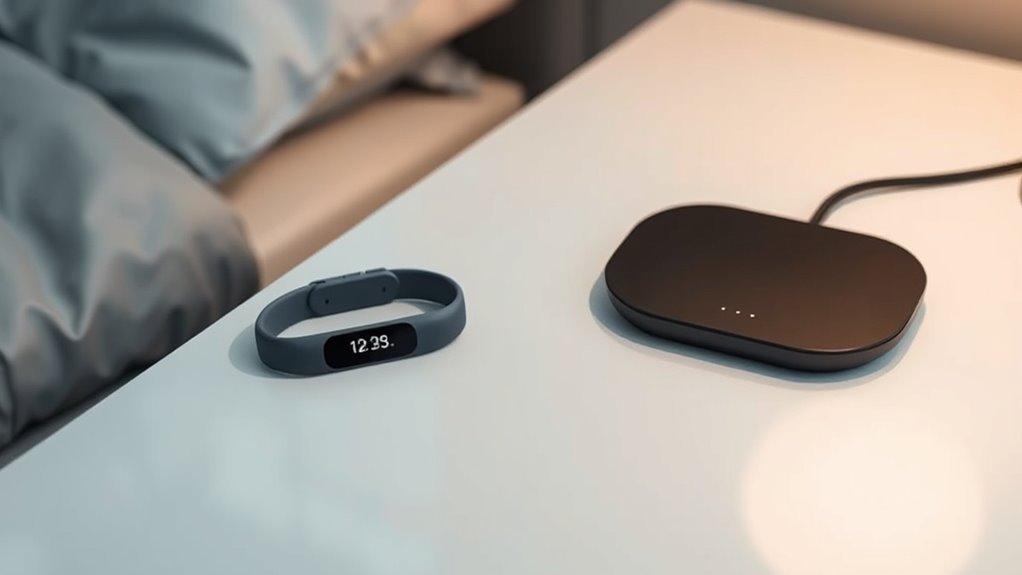
When choosing a sleep tracker, understanding the differences between wearable and non-wearable devices can help you find the best option for your needs. One of the key considerations is battery life. Wearable devices, like smartwatches and fitness bands, often require daily charging, which can be inconvenient if you forget or don’t want to deal with regular recharging. Non-wearable trackers, such as bedside sleep monitors or under-mattress sensors, usually have longer battery life or are plugged in, allowing them to operate continuously without daily intervention. This makes non-wearables ideal if you prefer a set-it-and-forget-it approach. Additionally, some wearable devices incorporate antioxidants and other health metrics to provide a more comprehensive view of your wellness, beyond just sleep. Data accuracy is another critical factor. Wearable trackers tend to use a combination of accelerometers and heart rate sensors, providing detailed insights into sleep stages, including REM and deep sleep. However, their accuracy can sometimes be affected by how tightly you wear them or if they shift during the night. Non-wearable devices, on the other hand, often rely on movement detection or sound analysis, which can be less precise for distinguishing sleep stages but generally provide a good overall picture of sleep duration and interruptions. If you’re seeking detailed data, wearables might be more suitable, but if you want a straightforward overview, non-wearables can suffice. Comfort and convenience also play a role in your choice. Wearables require you to remember to put them on before bed and take them off in the morning. Some people find wearing a device all night uncomfortable or disruptive to their sleep. Non-wearables eliminate this issue since they stay in place throughout the night without direct contact with your body. They’re often less intrusive, which can help you get more natural sleep data. Cost is another consideration. Wearable devices can be more expensive upfront, especially if you opt for models with advanced sensors. Non-wearable options tend to be more affordable and don’t require frequent upgrades or replacements. Additionally, wearables often sync with smartphones or health apps for detailed analysis, which can add to the overall cost but provides more holistic insights. Ultimately, your choice depends on what you prioritize most: if you want detailed, precise sleep data and don’t mind charging daily, a wearable might be right for you. If you prefer a hands-off, longer-lasting device that provides a general overview, a non-wearable sleep tracker could be a better fit. Both options have their pros and cons, so weigh your needs carefully to find the best match for your sleep monitoring journey.
As an affiliate, we earn on qualifying purchases.
Frequently Asked Questions
How Accurate Are Non-Wearable Sleep Trackers Compared to Professional Sleep Studies?
Non-wearable sleep trackers generally have lower sleep study accuracy compared to professional sleep studies, but they can still provide useful insights. Your device’s calibration impacts accuracy, so verify it’s properly set up. While these trackers capture movement and heart rate data well, they might miss subtle sleep issues. For precise diagnosis, a professional sleep study remains the gold standard, but non-wearables are helpful for ongoing monitoring and trend tracking.
Can Wearable Sleep Trackers Be Worn Comfortably During Intense Physical Activities?
Yes, wearable sleep trackers can be worn comfortably during intense physical activities. Many are designed with fitness comfort in mind, featuring lightweight materials and adjustable straps. They offer good activity compatibility, so you won’t feel weighed down or distracted during your workouts. Just make certain you choose a device that fits well and is specifically built for active use, helping you track your sleep and fitness without sacrificing comfort or performance.
Do Non-Wearable Sleep Trackers Require Internet Connectivity to Function Properly?
They say “trust, but verify,” and that’s true for non-wearable sleep trackers. These devices often depend on internet connectivity for syncing data, so if your connection drops, functionality might suffer. You should also consider data privacy concerns, as some rely on cloud storage. While many work offline for basic features, ideal use usually requires internet access, making you cautious about your data security and privacy.
Are Wearable Sleep Trackers Suitable for Children or Elderly Users?
Wearable sleep trackers can be suitable for children and elderly users if you prioritize safety and comfort. They help monitor sleep patterns, supporting child safety and elderly monitoring. However, choose lightweight, comfortable designs to avoid discomfort or skin irritation. Make certain the device is age-appropriate, easy to use, and that you consider potential concerns like skin sensitivity or mobility issues. Always supervise children’s use and ensure the device fits securely without causing harm.
What Are the Long-Term Battery Life Differences Between Wearable and Non-Wearable Devices?
You’ll find that non-wearable sleep trackers generally have better battery longevity, often lasting weeks or even months on a single charge, reducing device maintenance. Wearable devices typically require daily or weekly charging, which can be inconvenient over the long term. This difference means non-wearables are more suitable if you want a set-it-and-forget-it solution, while wearables need regular attention to guarantee consistent tracking.
As an affiliate, we earn on qualifying purchases.
Conclusion
Choosing between wearable and non-wearable sleep trackers depends on your needs. Wearables offer detailed insights, but you might feel like you’re carrying a mini computer on your wrist—think of it as your personal oracle. Non-wearables are simpler, like consulting an old parchment for wisdom. Whichever you pick, remember, it’s all about improving your sleep. So, don’t be like a caveman, blindly guessing—embrace the tech and sleep better tonight!
sleep tracking device with long battery life
As an affiliate, we earn on qualifying purchases.
As an affiliate, we earn on qualifying purchases.
As an affiliate, we earn on qualifying purchases.
Fall Picks
fall essentials
As an affiliate, we earn on qualifying purchases.