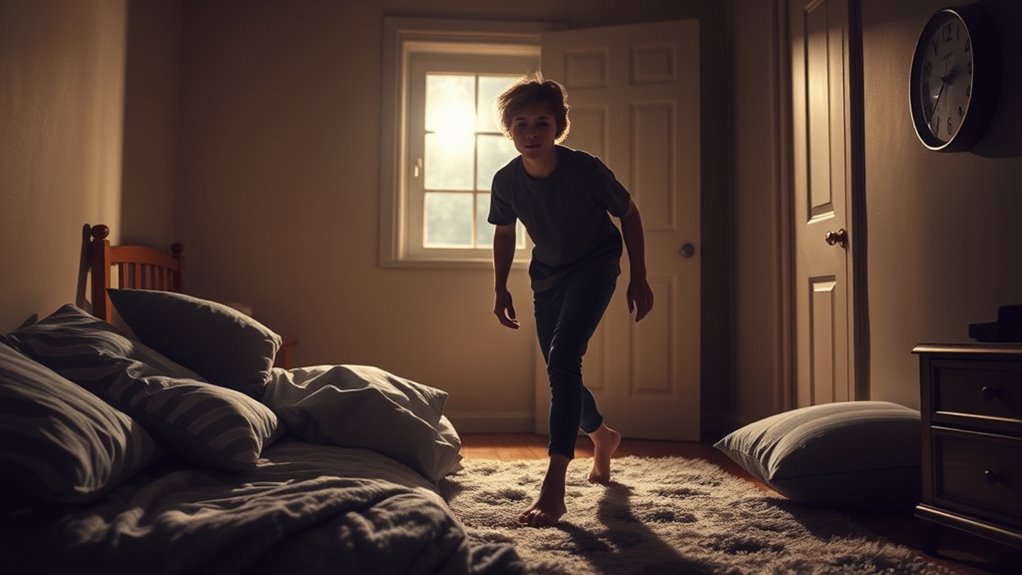

Sleepwalking can be triggered by stress, irregular sleep routines, environmental factors like loud noises or bright lights, or sleep disorders such as sleep apnea. You might notice your loved one sitting up or moving with blank eyes, often unaware. To keep them safe, lock doors, remove sharp objects, and ensure a clutter-free space. Small safety steps can greatly reduce risks—continue exploring ways to protect sleepwalkers effectively.

Get health and wellness essentials delivered free — and shop member deals
- Fast, free delivery on millions of items
- Access to Prime Big Deal Days deals on October 6–7
- Prime Video, Amazon Music and more included
Key Takeaways
- Irregular sleep schedules, stress, and environmental factors like noise or light can trigger sleepwalking episodes.
- Recognizing signs such as glassy eyes, wandering, and confusion helps assess sleepwalking risks.
- Creating a safe sleep environment by removing hazards and securing doors and windows reduces injury risks.
- Implementing consistent sleep routines and proper ventilation supports better sleep quality and reduces episodes.
- Using alarms, sensors, and safety devices alert caregivers and prevent sleepwalkers from leaving the home or encountering dangers.
As an affiliate, we earn on qualifying purchases.
Common Factors That May Spark Sleepwalking Episodes

Several factors can trigger sleepwalking episodes, often acting as stressors or disruptors to your sleep cycle. One common factor is irregular or poor nighttime routines, which can throw off your body’s internal clock and increase the likelihood of sleepwalking. Changes in sleep schedules, late-night screen time, or inconsistent bedtimes can all contribute. Environmental triggers also play a significant role; loud noises, bright lights, or temperature fluctuations in your sleeping environment can disturb your sleep and provoke episodes. Stress and anxiety are additional factors that may interfere with your sleep quality, making you more prone to sleepwalking. Maintaining a consistent routine and creating a calm, comfortable sleep environment can help promote better sleep quality, and reduce the chances of triggering these episodes. Additionally, understanding how sleep disorders impact sleep patterns can provide further insight into prevention strategies. For example, sleep apnea can cause fragmented sleep that increases the risk of sleepwalking. Recognizing these trigger factors can help you develop effective strategies to minimize episodes and enhance overall safety.
sleeping environment safety sensors
As an affiliate, we earn on qualifying purchases.
As an affiliate, we earn on qualifying purchases.
Recognizing Signs and Assessing Risks

Recognizing signs of sleepwalking is essential for identifying episodes early and ensuring safety. You might notice a person sitting up in bed, performing routine activities with blank eyes, or leaving the sleep environment without awareness. Dream analysis can help reveal if distressing or vivid dreams trigger episodes, aiding in risk evaluation. Evaluating the sleep environment involves checking for hazards, such as sharp furniture or unlocked doors, that could cause injury during an episode. Look for signs like glassy eyes, slow movements, or confusion upon waking. Implementing smart home safety devices such as locks and sensors can further help monitor and prevent risky situations during sleepwalking episodes. Additionally, understanding ventilation considerations can improve overall sleep quality and safety, especially if environmental factors influence sleep patterns. Proper sleep hygiene practices and environmental adjustments are important for reducing the frequency of episodes. Maintaining an optimal sleep environment can significantly decrease the likelihood of sleepwalking incidents by promoting restful and uninterrupted sleep. Being aware of environmental factors that influence sleepwalking can help in making targeted adjustments to reduce episodes. By understanding these signs and examining risks, you can better prepare to keep sleepwalkers safe and minimize potential dangers associated with sleepwalking episodes.
alarm system for sleepwalking prevention
As an affiliate, we earn on qualifying purchases.
As an affiliate, we earn on qualifying purchases.
Practical Strategies to Ensure Safety During Sleepwalking

To effectively keep sleepwalkers safe, implementing practical safety measures in their environment is essential. Focus on creating a secure sleep environment by removing hazards and installing barriers like bed alarms or door locks. Good sleep hygiene also helps reduce sleepwalking episodes, so establish consistent bedtimes and avoid stimulants before sleep. Consider the following safety strategies:
| Safety Measure | Explanation |
|---|---|
| Lock bedroom doors and windows | Prevents accidental exit during episodes |
| Remove sharp objects | Eliminates injury risks |
| Use alarms or sensors | Alerts you when sleepwalking occurs |
| Clear pathways | Keeps walkways free of obstacles |
| Install door alarms or sensors | To alert caregivers immediately during episodes |
Implementing environmental modifications can further enhance safety and reduce the risk of injury during episodes. These steps help minimize risks and promote a safer, more controlled environment for sleepwalkers. Additionally, ensuring proper ventilation can contribute to overall sleep quality and safety. Maintaining a safe sleep environment is crucial for preventing injuries and providing peace of mind for caregivers. Proper sleep hygiene practices can also reduce the frequency of episodes, ensuring a safer sleeping environment overall.
As an affiliate, we earn on qualifying purchases.
Frequently Asked Questions
Can Sleepwalking Be Inherited From Family Members?
Yes, sleepwalking can be inherited from family members. If you have a family history of sleepwalking, there’s a genetic predisposition that increases your chances. You might notice relatives who also experience sleepwalking episodes. While genetics play a role, environmental factors matter too. Being aware of your family’s sleep habits helps you recognize risks and take precautions to keep yourself safe during episodes.
Are There Specific Foods That Can Trigger Sleepwalking Episodes?
Certain food triggers and dietary influences can impact your sleepwalking episodes. Caffeine, alcohol, and foods high in sugar or additives might increase the likelihood of sleep disturbances, including sleepwalking. To reduce your risk, avoid consuming these items close to bedtime. Maintaining a balanced diet, staying hydrated, and eating regular, nutritious meals can promote better sleep quality and help keep sleepwalkers safe by minimizing triggers.
Is Sleepwalking More Common in Adults or Children?
Sleepwalking is more common in children, like a fleeting breeze passing through a quiet room. You might notice it during changes in sleep patterns or disrupted bedtime routines. Kids often outgrow it as their sleep becomes more stable. While adults can experience sleepwalking, it’s usually less frequent. Maintaining consistent sleep schedules and calming bedtime routines helps prevent episodes and keeps both children and adults safer during the night.
Do Sleep Aids Increase or Decrease Sleepwalking Incidents?
Sleep aids can increase sleepwalking incidents due to medication effects that alter sleep patterns. If you’re taking these medications, it’s essential to follow safety precautions, like removing hazards from your environment and avoiding activities that could cause injury during episodes. Always discuss your concerns with a healthcare professional to ensure proper management and minimize risks associated with sleepwalking while using sleep aids.
How Does Stress Influence the Likelihood of Sleepwalking?
Stress increases your likelihood of sleepwalking because it raises cortisol levels, which can disrupt your sleep cycle. When you don’t manage stress effectively, your body produces more cortisol, making sleep less restful and more prone to disturbances like sleepwalking. To reduce this risk, practice stress management techniques such as meditation, deep breathing, or regular exercise, helping to lower cortisol levels and promote healthier, more stable sleep patterns.
Conclusion
So, now that you know what sparks sleepwalking and how to spot it, you’re practically a sleep superhero. Just remember, if your loved one starts moonwalking out of bed, don’t pretend it’s a dance move—it’s a potential escape plan. Stay vigilant, keep hazards locked away, and maybe invest in some night-vision goggles just in case. After all, it’s a wild world out there, even while you’re sleeping. Sleep tight, and stay safe!
Fall Picks
fall essentials
As an affiliate, we earn on qualifying purchases.