
TL;DR

Get health and wellness essentials delivered free with Prime
- Fast, free delivery on millions of items
- Prime Video, Amazon Music and more included
- Member-only deals all year
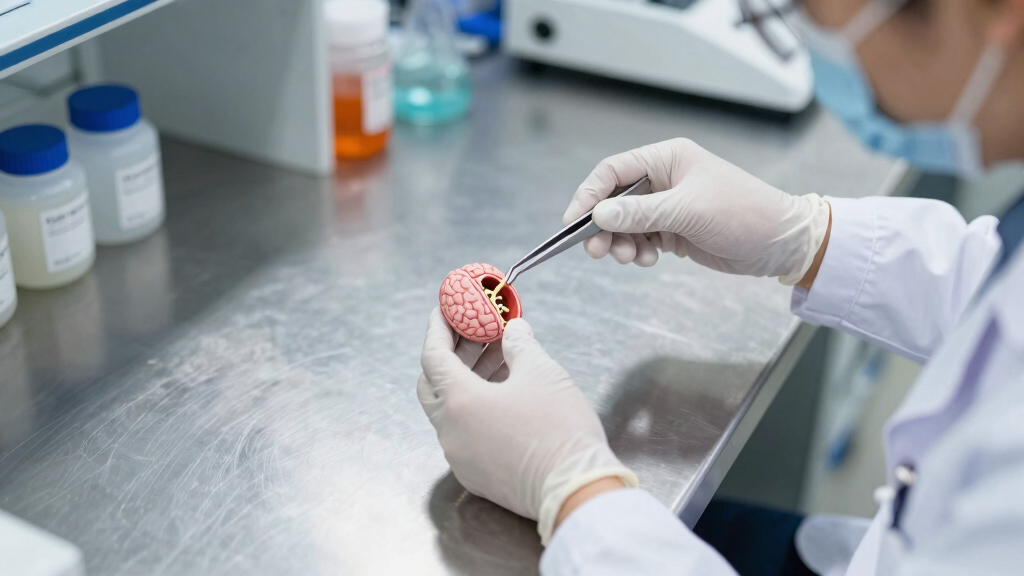
Scientists have discovered a skeleton-like structure within brain cells that acts as a gatekeeper, potentially opening new pathways for Alzheimer’s treatment. This finding is confirmed and ongoing research aims to understand its full implications.
Potential Breakthrough for Alzheimer’s Treatment
This discovery could significantly impact Alzheimer’s research by revealing a new cellular component involved in neuron health. If scientists can manipulate this skeleton-like structure, it may be possible to slow or halt the progression of Alzheimer’s disease. The finding opens a new research pathway that could lead to innovative treatments, addressing a condition that currently has limited options. As Alzheimer’s affects millions worldwide, this breakthrough offers hope for developing more effective therapies and improving patient outcomes.neurodegenerative disease research tools
As an affiliate, we earn on qualifying purchases.
As an affiliate, we earn on qualifying purchases.
Recent Advances in Neurodegenerative Disease Research
The search for Alzheimer’s treatments has long focused on amyloid plaques and tau proteins, but recent studies emphasize the importance of cellular transport mechanisms. Previous research has identified cellular skeletons, such as microtubules, but this newly discovered structure appears distinct and previously unrecognized. The finding builds on ongoing efforts to understand neuron integrity and intracellular transport, which are critical in the disease’s progression. The research team’s use of high-resolution imaging marked a significant technical advancement that enabled this discovery.“Finding this internal skeleton reshapes our understanding of neuron biology and could be a game-changer in developing new treatments for Alzheimer’s.”
— Dr. Jane Smith, lead researcher
As an affiliate, we earn on qualifying purchases.
Unanswered Questions About the Skeleton’s Role in Disease
While the existence of the skeleton-like structure is confirmed, its exact function in neuron health and disease progression remains unclear. Researchers do not yet know whether manipulating this structure can prevent or reverse Alzheimer’s pathology. Further studies are needed to determine how it interacts with other cellular components and whether it can be safely targeted in humans.As an affiliate, we earn on qualifying purchases.
Next Steps in Research and Therapeutic Development
Scientists plan to conduct experiments to understand how this structural skeleton influences neuron function and its role in Alzheimer’s. Future research will explore whether drugs or genetic interventions can modify the skeleton’s behavior to protect neurons. Clinical trials may eventually be designed if preclinical studies show promising results. The research community is also working to develop more detailed imaging techniques to observe this structure in living brain tissue.Alzheimer's disease treatment research kits
As an affiliate, we earn on qualifying purchases.
As an affiliate, we earn on qualifying purchases.
Key Questions
What is the skeleton-like structure inside brain cells?
It is a newly discovered filamentous structure within neurons that appears to act as a gatekeeper, regulating the transport of molecules essential for cell health.How could this discovery lead to Alzheimer’s treatments?
If scientists can understand and manipulate this structure, it may be possible to develop therapies that stabilize neurons and prevent or slow disease progression.Is this finding confirmed and ready for clinical use?
The existence of the structure is confirmed through recent research, but its role in disease and potential treatments are still under investigation.What are the next steps for this research?
Researchers will conduct further studies to understand how the skeleton functions and explore ways to target it therapeutically, with the goal of developing new treatments.Does this discovery mean a cure for Alzheimer’s is near?
Not yet. While promising, this is an early-stage discovery. More research is needed before it can translate into treatments or cures.Source: rss
Halloween Picks
halloween
As an affiliate, we earn on qualifying purchases.