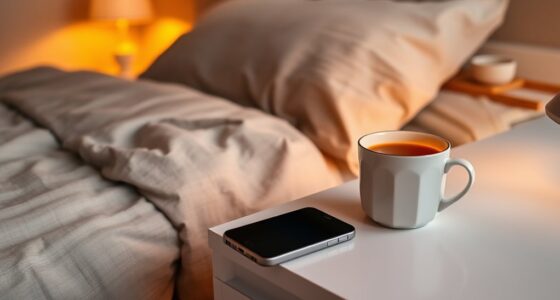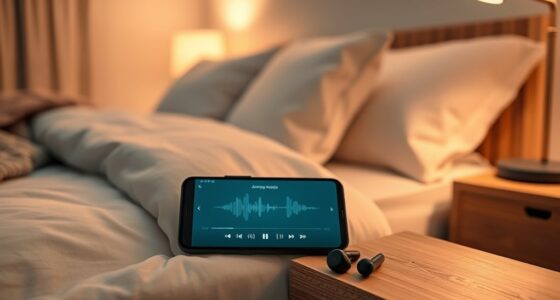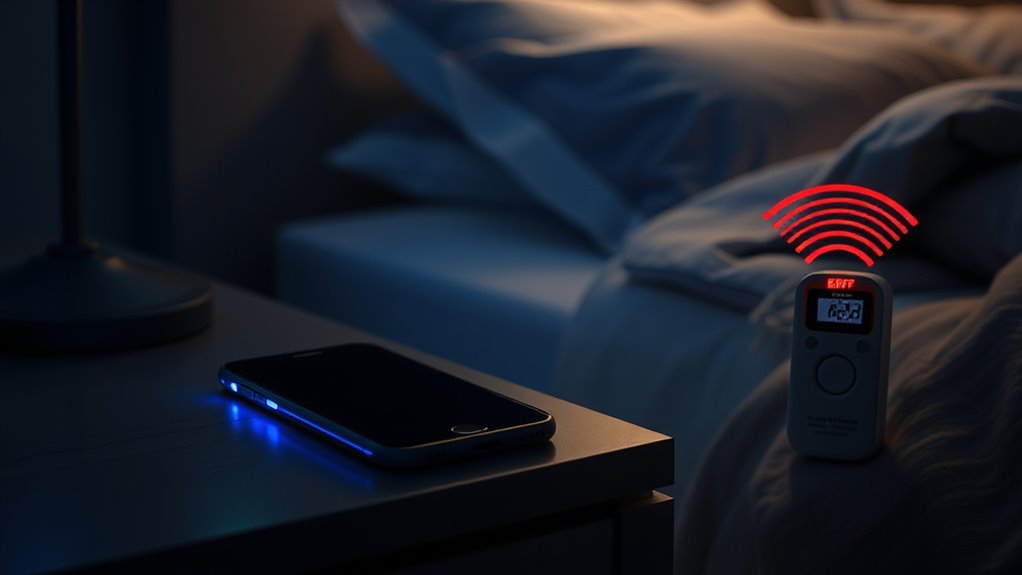

Sleeping with your phone near your bed exposes you to EMFs and blue light, which can disrupt your sleep and possibly affect your health over time. EMFs from wireless signals and proximity can interfere with melatonin production, making it harder to fall and stay asleep. Blue light masks sleep cues, while notifications can cause distractions. Keeping your phone away or turning it off supports better rest—if you want to learn some simple ways to improve your sleep environment, keep going.
Key Takeaways
- Sleeping with your phone nearby increases exposure to EMFs, which may interfere with melatonin production and sleep quality.
- Proximity to your phone can cause frequent awakenings and sleep fragmentation due to EMF and notification distractions.
- Blue light emitted from phones suppresses melatonin, making it harder to fall asleep and disrupting sleep cycles.
- Keeping your phone away or on airplane mode reduces electromagnetic exposure and minimizes temptations to check notifications.
- Creating a device-free bedtime environment promotes better relaxation, reduces distractions, and supports healthier, more restful sleep.
Understanding Electromagnetic Fields (EMFs) and Their Sources

Electromagnetic fields (EMFs) are invisible areas of energy produced by electronic devices, including your phone. When your phone communicates wirelessly, it uses wireless transmission to send and receive data, generating EMFs in the process. These fields extend around your device, contributing to magnetic exposure even when you’re not actively using it. EMFs from wireless transmission involve radiofrequency radiation, which is a type of non-ionizing radiation. While these fields are invisible, they’re constantly present when your phone is nearby or turned on. Understanding this magnetic exposure helps you recognize how electronic devices emit EMFs. Although they’re generally considered safe at low levels, many people worry about prolonged exposure, especially during sleep, because it keeps you constantly within the field’s reach. wireless transmission is a key source of EMFs in modern devices, making awareness of their presence important for health considerations.
The Science Behind EMFs and Human Health

Although concerns about EMFs and health are common, scientific research shows that the effects of low-level exposure from everyday devices like phones are still being studied. Radiofrequency exposure from your phone emits electromagnetic fields that penetrate your body, but current evidence doesn’t conclusively link this exposure to serious health risks. Some studies suggest that prolonged exposure might influence cellular processes, but results are inconclusive. Additionally, EMFs can cause behavioral distractions, making it harder for you to focus or fall asleep. While the immediate health effects remain uncertain, reducing your phone’s EMF exposure and minimizing distractions before bed can promote better sleep quality. Understanding the contrast ratio of your devices can also help optimize your environment for restful sleep. Ongoing research continues to explore how these fields impact human health over the long term.
How Close Are Your Phone’s EMFs When It’s Near Your Bed?
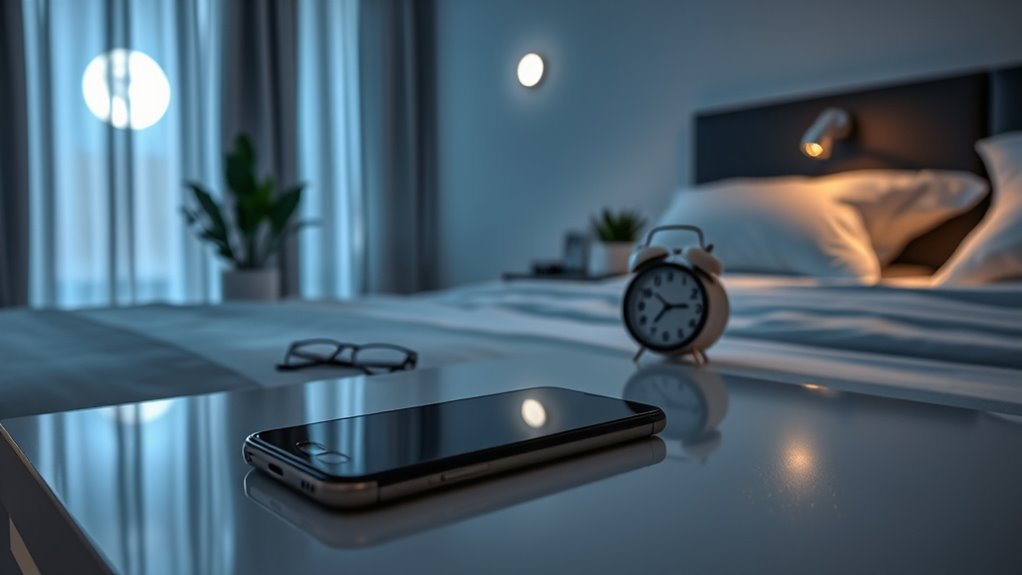
Your phone’s proximity during sleep determines how much electromagnetic field (EMF) exposure you get. When your phone is close, its EMFs are stronger, especially if you’re using features like wireless charging, which increases EMF emissions. Even if you’re not actively using your phone, its signals—like Wi-Fi, Bluetooth, and cellular—emit constant electromagnetic waves. Keeping your phone near your bed also exposes you to blue light, which can disrupt melatonin production and affect sleep. The closer your phone is, the higher the intensity of EMFs and blue light exposure. This proximity can intensify potential health concerns and sleep disturbances. Additionally, electromagnetic exposure from nearby devices can contribute to overall health risks. Employing smart home solutions, such as automation to keep devices at a safe distance, can help reduce exposure. Moving your phone farther away or turning it off can considerably reduce your exposure during the night.
Potential Effects of EMFs on Sleep Quality
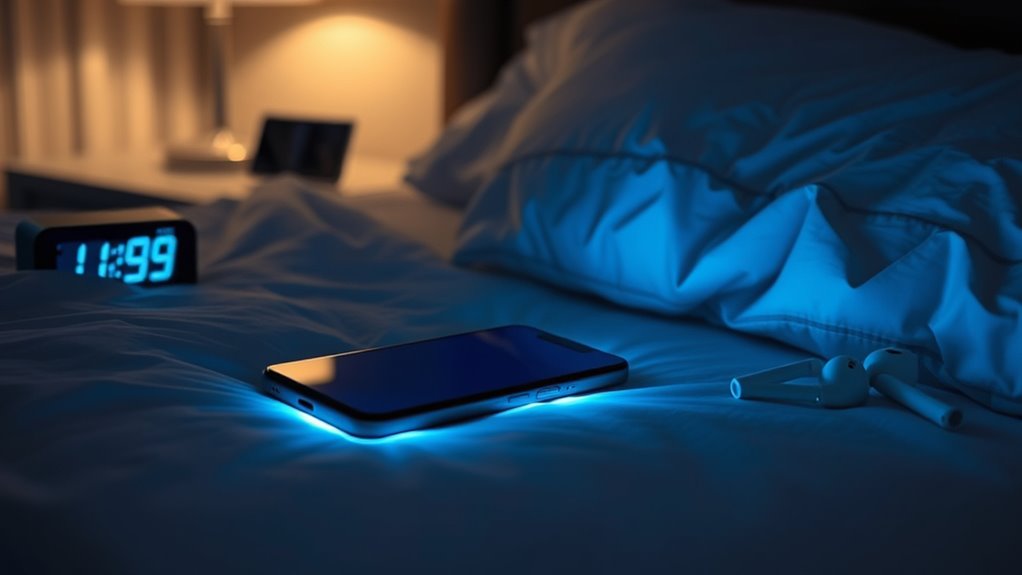
EMFs from your phone might interfere with your sleep by disrupting melatonin production, making it harder to fall asleep. They can also cause your sleep to become more fragmented, leaving you tired in the morning. Over time, these effects could increase your risk for long-term health issues, so it’s worth considering how your phone’s proximity impacts your rest. Additionally, Auditory Processing Disorder sound therapy techniques suggest that minimizing auditory distractions can further improve sleep quality.
Disrupted Melatonin Production
When you sleep with your phone nearby, electromagnetic fields (EMFs) can interfere with your body’s natural production of melatonin, the hormone responsible for regulating sleep-wake cycles. EMFs may cause melatonin suppression, making it harder for you to fall asleep and stay asleep throughout the night. This disruption can lead to circadian disruption, throwing off your internal clock and affecting overall sleep quality. Reduced melatonin levels not only impair your ability to rest deeply but also weaken your immune system and increase stress levels. The more your melatonin production is hindered, the more your sleep becomes fragmented and less restorative. Keeping your phone away from your bed can help preserve natural melatonin levels and support healthier sleep patterns.
Increased Sleep Fragmentation
Disrupted melatonin production caused by electromagnetic fields can lead to increased sleep fragmentation. When your body’s sleep cycle is disturbed, you experience more frequent awakenings throughout the night, known as sleep fragmentation. These nighttime disturbances prevent you from reaching deep, restorative sleep stages, leaving you feeling tired and less refreshed in the morning. EMFs emitted by your phone can interfere with your brain’s ability to maintain continuous sleep, causing you to wake multiple times without realizing it. Over time, this disrupted sleep pattern reduces overall sleep quality and can negatively impact your mood, concentration, and health. If your phone is near your bed, you may unknowingly contribute to these nighttime disturbances, making it harder to enjoy restful, undisturbed sleep. Understanding EMF exposure can help you make informed decisions to protect your sleep quality, especially considering how electromagnetic interference can affect your overall health. Being aware of EMF exposure helps in implementing simple strategies to minimize its impact on your sleep.
Potential Long-term Risks
Prolonged exposure to electromagnetic fields from your phone may pose long-term risks to your sleep quality. Using wireless charging or keeping your phone close overnight can increase your EMF exposure, potentially disrupting your body’s natural rhythms. Blue light emitted from screens suppresses melatonin production, making it harder to fall asleep and stay asleep long-term. Over time, these disruptions could lead to chronic sleep issues, affecting your immune function, mood, and overall health. Additionally, constant exposure to EMFs might contribute to increased stress levels and reduced sleep depth. While more research is needed, reducing your phone’s proximity and limiting blue light exposure before bed can help protect your sleep quality and mitigate potential long-term risks. Recent AI Discoveries suggest that ongoing technological developments may further influence sleep patterns and health outcomes.
Having your phone nearby can lead to constant distractions that quietly chip away at your sleep quality. Phone addiction makes it tempting to check notifications or scroll through social media, even when you should be winding down. These sleep distractions interrupt your ability to fall asleep quickly and stay asleep throughout the night. The glow from your screen can suppress melatonin production, further delaying sleep onset. Notifications, messages, and alerts create a sense of urgency that keeps your mind active, preventing deep, restorative rest. Over time, this cycle can lead to poorer sleep habits and decreased overall restfulness. Removing your phone from the bedside reduces these distractions, helping you establish a healthier sleep environment and improve your sleep quality. Additionally, creating a dedicated workspace free from electronic devices can promote better sleep hygiene and overall well-being. Reducing electronic device exposure before bed can also promote healthier sleep hygiene practices that support restful sleep. Establishing a technology-free zone in your bedroom can help reinforce healthy boundaries that encourage relaxation and better sleep habits. Incorporating digital detox routines into your nightly schedule can further enhance your ability to unwind and prepare for restful sleep.
Comparing Sleep Environments: With and Without a Phone

When you compare sleep environments with and without a phone nearby, the differences in rest quality become clear. A phone close to your bed can disrupt your sleep hygiene by increasing exposure to blue light and tempting you to check notifications, leading to fragmented sleep. Without your device nearby, you’re more likely to establish healthier habits, such as winding down without screens and avoiding device dependency at bedtime. This creates a more relaxing environment, making it easier to fall asleep and stay asleep. You’ll also reduce the temptation to stay glued to your phone, promoting better overall sleep quality. Additionally, reducing electromagnetic fields (EMFs) emitted by your device can help minimize potential sleep disturbances linked to wireless radiation. Research suggests that minimizing exposure to EMFs and blue light during sleep can support your body’s natural melatonin production and circadian rhythms. Ultimately, this simple change can considerably improve your rest, helping you wake up feeling more refreshed and alert.
Practical Tips to Minimize Risks and Improve Sleep
To reduce the negative impact of your phone on sleep, adopting practical habits can make a big difference. Start by optimizing device placement—keep your phone away from your bed or on airplane mode to reduce EMFs and distractions. Improving sleep hygiene involves establishing a calming pre-sleep routine and avoiding screens at least an hour before bed. Consider this table:
| Device Placement | Sleep Hygiene |
|---|---|
| Place phone across the room | Set a consistent sleep schedule |
| Use a traditional alarm clock | Limit caffeine and screen time |
| Keep phone out of reach at night | Create a relaxing bedroom environment |
| Turn off notifications | Avoid stimulating activities before bed |
Implementing device safety practices such as turning off devices and removing clutter can also help create a more restful environment. Being mindful of environmental factors and their effects on sleep can further support better rest. Additionally, reducing exposure to electromagnetic fields (EMFs) from electronic devices can contribute to improved sleep quality. Incorporating EMF reduction techniques like using shielding devices or turning off Wi-Fi at night can further enhance sleep health.
Making Informed Decisions About Your Nighttime Device Use

Making informed decisions about your nighttime device use is essential for protecting your sleep and overall health. Reducing radiation exposure from your phone can help limit potential health risks associated with electromagnetic fields. Consider keeping your device farther from your bed or turning it off during the night to minimize unnecessary radiation exposure. Be mindful of device dependency, which can lead to disrupted sleep patterns and increased stress. Setting boundaries, like establishing a tech-free zone or a bedtime routine without screens, helps you regain control over your sleep environment. Being aware of electromagnetic field exposure and its effects on health can guide you toward safer device habits. Understanding how your device use impacts your sleep quality and health, including the importance of sound design in creating a restful environment, can help you make smarter choices that support restful nights and reduce potential risks linked to radiation exposure and overreliance on technology.
Frequently Asked Questions
Can EMFS From Phones Cause Long-Term Health Issues?
EMF exposure from phones can potentially cause long-term health issues, especially with frequent, close contact. While research is ongoing, using radiation shielding and keeping your phone away from your bed can reduce EMF exposure. You lower your risk by limiting prolonged contact and turning off devices when not in use. Staying mindful of EMFs helps protect your overall health and minimizes possible long-term effects.
Do Different Phone Models Emit Varying Levels of EMFS?
Some phone models emit different levels of EMFs due to design and technology. For example, a recent case study showed that newer models with advanced device shielding tend to emit lower EMFs. You should check each model’s specifications, as model differences can substantially impact EMF exposure. Choosing phones with better device shielding helps reduce your EMF exposure, especially when you keep your device close while sleeping or working.
Is Using Airplane Mode at Night Safer for Sleep?
Using airplane mode at night can be safer for sleep because it reduces wireless charging emissions and blue light exposure, both of which can disrupt your rest. When you turn on airplane mode, your phone stops transmitting signals, lowering EMF exposure. Plus, it prevents notifications from lighting up your screen, helping you sleep more soundly. So, activating airplane mode can promote better, more restful sleep by minimizing distractions and electromagnetic interference.
How Does Screen Time Before Bed Affect Sleep Quality?
Screen time before bed can considerably harm your sleep quality; studies show that it delays sleep onset by up to 25 minutes. When you expose yourself to blue light, it suppresses melatonin, making it harder to fall asleep. Plus, cognitive distraction from notifications and scrolling keeps your brain active, reducing restfulness. To improve sleep, try limiting screen use at least an hour before bed and consider using blue light filters.
Are There Safe Ways to Keep My Phone Nearby Without Health Risks?
Yes, you can keep your phone nearby safely by using wireless chargers and sleep-friendly placements. Place your phone away from your head, ideally on a bedside table or a shelf, to reduce exposure to EMFs. Use wireless chargers to keep your device powered without direct contact. This way, you minimize health risks and distractions, allowing you to enjoy a better night’s sleep while still having your phone close for emergencies or convenience.
Conclusion
Sleeping with your phone nearby can disrupt your rest, especially since studies show that over 90% of people keep their phones within arm’s reach. EMFs and constant notifications can interfere with your sleep quality, leaving you tired and less refreshed. To improve your nights, consider keeping your phone away or turning off notifications. Small changes can make a big difference—your sleep and overall health will thank you for it.