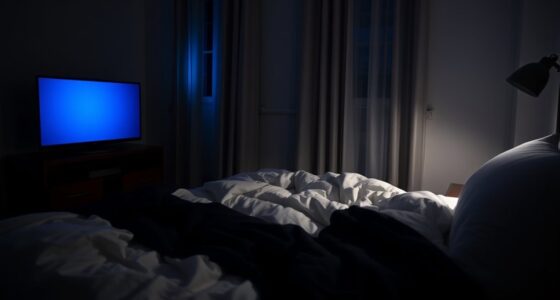

Connecting to screens before bed exposes you to blue light, which suppresses melatonin and disrupts your natural sleep cycle. This makes falling asleep harder and reduces sleep quality. Following the one-hour rule helps your body produce melatonin freely, setting the stage for better rest. Creating a tech-free routine can also boost your mood and mental clarity. Keep going to discover more ways this simple habit can transform your sleep and overall well-being.

Get health and wellness essentials delivered free — and shop member deals
- Fast, free delivery on millions of items
- Access to Prime Big Deal Days deals on October 6–7
- Prime Video, Amazon Music and more included
Key Takeaways
- Disconnecting an hour before bed reduces blue light exposure, allowing melatonin production to promote natural sleep onset.
- Limiting screen time supports circadian rhythm alignment, improving sleep quality and overall sleep patterns.
- Engaging in relaxing, offline activities before bed helps lower mental stimulation and prepare the body for restful sleep.
- Creating a tech-free routine minimizes sleep disruptions caused by notifications, alerts, and constant digital engagement.
- Practicing the one-hour rule promotes better mood, mental health, and long-term well-being by fostering healthier digital habits.
blue light blocking glasses for sleep
As an affiliate, we earn on qualifying purchases.
As an affiliate, we earn on qualifying purchases.
Understanding the Impact of Blue Light on Sleep

Blue light from screens can considerably disrupt your sleep patterns, especially if you use devices close to bedtime. When you’re exposed to blue light, it tricks your brain into thinking it’s still daytime. This suppresses the production of melatonin, the hormone that regulates your sleep-wake cycle. As a result, your circadian rhythm, your internal clock, gets thrown off, making it harder to fall asleep and stay asleep. The more you expose yourself to blue light before bed, the greater the impact on your sleep quality. It’s not just about feeling tired; it’s about how your body’s natural processes are influenced. Understanding this connection helps you realize why reducing screen time in the evening can improve your sleep health. Additionally, being aware of the sleep cycle can motivate you to implement your one-hour tech disconnect for better rest. Limiting blue light exposure in the evening allows your body’s natural rhythms to align more effectively with your environment. Recognizing the importance of circadian alignment can further encourage healthier tech habits at night. Moreover, choosing blue light filters or glasses can significantly reduce the negative effects of screen exposure before sleep. Incorporating these habits can also support overall sleep quality, leading to more restorative rest.
blue light filter screen protector
As an affiliate, we earn on qualifying purchases.
As an affiliate, we earn on qualifying purchases.
The Science Behind Screen Time and Circadian Rhythms

Your screen time affects your body’s internal clock by suppressing melatonin, the hormone that signals it’s time to sleep. Blue light from devices disrupts this process, making it harder to fall asleep and stay asleep. As a result, your sleep cycle gets thrown off, impacting your overall rest and health. Additionally, contrast ratio plays a key role in how well your screen displays images, which can influence eye strain and visual comfort during prolonged viewing.
Melatonin Suppression Mechanism
Light from screens, especially blue light, directly impacts your body’s production of melatonin, the hormone responsible for regulating sleep. When you use devices before bed, this light triggers melatonin suppression, making it harder for you to fall asleep. This interruption causes circadian disruption, throwing off your internal clock. The table below highlights how different light wavelengths affect melatonin levels:
| Light Wavelength | Effect on Melatonin | Result |
|---|---|---|
| Blue (480 nm) | Significant suppression | Delayed sleep onset |
| Red (650 nm) | Minimal impact | Better sleep quality |
| Green (530 nm) | Moderate suppression | Slight delay in sleep |
| Infrared | No suppression | No impact |
Avoiding blue light helps maintain natural melatonin production and supports healthy circadian rhythms.
Blue Light Impact
Have you ever wondered why screen time before bed makes falling asleep so difficult? It’s mainly because of blue light. When you look at screens, blue light penetrates your eyes and signals your brain that it’s daytime. This suppresses melatonin, the hormone responsible for sleep. But beyond melatonin suppression, blue light causes circadian disruption, throwing off your natural sleep-wake cycle. Your body relies on darkness to produce melatonin and prepare for sleep, but exposure to blue light tricks your brain into thinking it’s still daylight. The result? Your internal clock gets confused, making it harder to fall asleep and wake up refreshed. Reducing blue light exposure before bed helps your circadian rhythms stay aligned, promoting better sleep quality.
Sleep Cycle Disruption
Ever wondered how screen time before bed throws off your body’s natural rhythm? When you stay glued to devices, the blue light suppresses melatonin, disrupting your sleep cycle. This isn’t just about immediate tiredness—it’s about long-term circadian rhythm imbalance. Your body relies on consistent signals to regulate sleep, but device dependency and screen addiction interfere with this process. Here’s how it impacts your sleep:
| Screen Activity | Effect on Sleep Cycle |
|---|---|
| Using devices before bed | Delays melatonin release |
| Blue light exposure | Shortens REM sleep |
| Constant notifications | Fragments sleep patterns |
| Late-night scrolling | Disrupts circadian cues |
| Device dependency | Reinforces irregular sleep |
Reducing screen time before bed helps reset your rhythm, restoring natural sleep patterns. Additionally, limiting exposure to artificial light in the evening supports your body’s ability to produce melatonin naturally. Incorporating consistent bedtime routines that exclude screens can further enhance your sleep quality and overall health.
As an affiliate, we earn on qualifying purchases.
Benefits of Unplugging Before Bedtime

Unplugging before bed can considerably improve your sleep quality, helping you fall asleep faster and wake up feeling more refreshed. It also reduces digital fatigue, so your eyes and brain aren’t overstimulated. Making this small change can lead to better rest and more energy during the day. Additionally, turning off screens before bedtime can help regulate your circadian rhythm, making it easier to fall asleep naturally. Engaging in screen-free activities like reading or meditation before bed can further enhance your sleep environment and relaxation. Incorporating proper ventilation considerations and creating a calming environment can optimize your sleep space even further. Utilizing connected fitness technology to track your sleep patterns can provide insights to improve your nightly rest. Being mindful of home comfort and air quality can also contribute to a more restful sleep environment.
Enhances Sleep Quality
When you disconnect from your devices before bed, you give your mind a chance to wind down naturally. Exposure to blue light from screens suppresses melatonin, the hormone that regulates sleep. This interference makes it harder to fall asleep and diminishes sleep quality. By unplugging an hour before bed, you reduce blue light exposure, allowing melatonin levels to rise and signal your body that it’s time to rest. This promotes a smoother shift into sleep and helps you enjoy deeper, more restorative rest. Improved sleep quality means you wake up feeling more refreshed, alert, and ready for the day. Cutting out screens before bedtime supports your body’s natural rhythms, making it easier to fall asleep faster and stay asleep longer. Incorporating screen-free routines can further enhance your sleep environment and overall restfulness. Additionally, establishing a consistent bedtime routine can reinforce your body’s circadian signals and improve sleep quality over time. Creating a calming pre-sleep environment free of distractions can also help your body transition more effectively into rest, especially when you limit electronic device use during the evening hours. Utilizing smart home technology, such as automated lighting and temperature adjustments, can also help create an optimal sleep setting and reinforce your unplugging efforts.
Reduces Digital Fatigue
Since screens often demand your attention and keep your brain active, staying connected before bed can lead to digital fatigue, leaving you feeling drained and overwhelmed. A digital detox before sleep helps reduce this exhaustion by giving your mind a break from constant stimulation. When you disconnect, you allow your eyes and brain to rest, preventing overload and mental burnout. Improved sleep hygiene naturally follows, as your body shifts more easily into rest mode without the interference of blue light and notifications. This break from digital devices restores your energy levels and clears mental clutter, making you feel more refreshed in the morning. Additionally, disconnecting fosters healthy habits that can enhance your overall well-being and help you maintain a balanced lifestyle. By unplugging an hour before bed, you protect your mental well-being and promote healthier habits that combat digital fatigue.
As an affiliate, we earn on qualifying purchases.
How Technology Disrupts Melatonin Production

Technology, especially screens from smartphones, tablets, and computers, emits blue light that can interfere with your body’s natural production of melatonin. This hormone is essential for signaling to your brain that it’s time to sleep, and its disruption can throw off your sleep hygiene and circadian alignment. When blue light suppresses melatonin, falling asleep becomes harder, and sleep quality diminishes. To protect your sleep, limit screen exposure at least an hour before bed. You can also use blue light filters or glasses if you must use devices. Ensuring proper sleep hygiene helps maintain your circadian rhythm, making it easier to fall asleep and wake refreshed. At-home beauty tech devices, like LED masks, should also be used cautiously, especially close to bedtime, to avoid further disruption of your sleep cycle. Disrupting melatonin production directly impacts your sleep quality and overall health.
Creating a Tech-Free Bedtime Routine

Reducing screen time before bed can considerably improve your sleep quality by allowing your melatonin levels to rise naturally. Establishing a tech-free bedtime routine enhances your sleep hygiene and signals to your body that it’s time to wind down. Instead of scrolling or checking notifications, focus on calming activities like reading a book, gentle stretching, or practicing deep breathing. Consistency is key—creating regular bedtime rituals helps reinforce your body’s natural sleep cues. Avoid screens at least an hour before sleep to prevent disruption of your circadian rhythm. Incorporating herbal infusions or decarboxylation practices into your evening can further promote relaxation and prepare your body for rest herbal infusions. Being mindful of your environment, such as dimming lights and reducing noise, can also support this transition to sleep sleep environment. By intentionally disconnecting, you foster a peaceful shift from wakefulness to rest, making it easier to fall asleep and wake refreshed. Building this routine supports your overall sleep health and promotes better nightly rest.
Practical Tips for Reducing Screen Time in the Evening
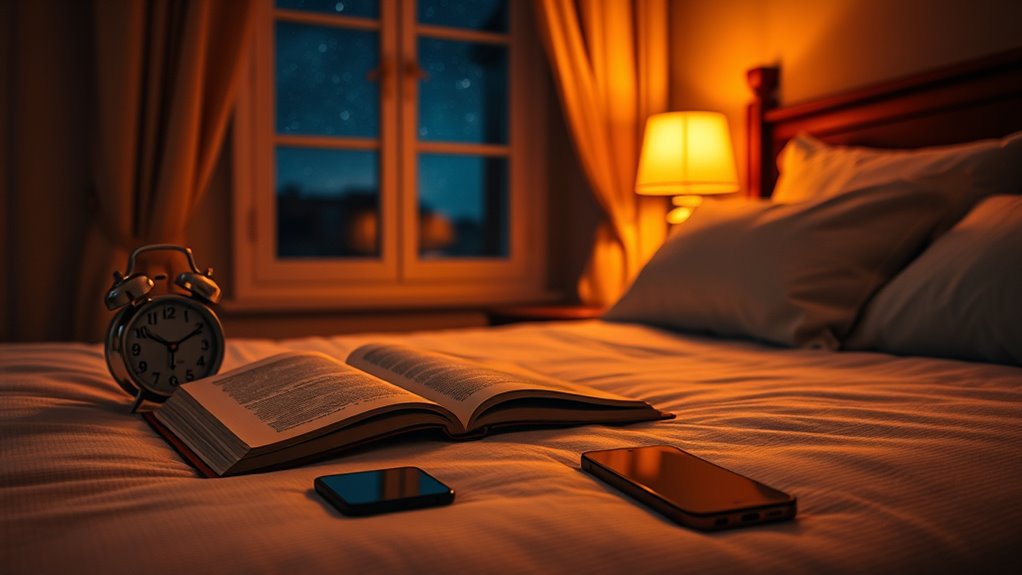
To cut down on evening screen time, start by setting clear boundaries for device use. This helps improve your sleep environment and reinforces bedtime rituals that promote relaxation. Establish a specific time when screens go off, ideally at least an hour before bed. Create tech-free zones in your bedroom to eliminate temptation. Consider replacing screen time with calming activities like reading or journaling. You can also dim your lights and keep devices out of reach to signal your mind that it’s time to wind down. These small changes support a healthier sleep environment and help your brain shift smoothly into rest, making it easier to fall asleep and stay asleep throughout the night.
Alternatives to Screen-Based Activities for Relaxation

Instead of turning to screens for relaxation, consider engaging in activities that calm your mind and body naturally. You can practice mindful breathing, focusing on slow, deep inhales and exhales to reduce tension. Alternatively, enjoy calming visuals like a flickering candle or peaceful nature scenes. These activities soothe your nervous system without digital distractions, helping you unwind effectively.
| Activity | Description |
|---|---|
| Mindful breathing | Focus on your breath to center your thoughts. |
| Calming visuals | Observe peaceful images to relax your eyes and mind. |
| Gentle stretching | Ease muscle tension with slow, deliberate movements. |
| Listening to soft music | Choose calming tunes to create a serene environment. |
The Role of Digital Detox in Mental Well-being

Engaging in activities like mindful breathing and calming visuals helps you unwind without digital distractions, but over time, constant screen exposure can still take a toll on your mental well-being. A digital detox plays a pivotal role in maintaining mental health and improving digital wellness. It allows your mind to reset, reduces stress, and fosters better sleep. Regularly disconnecting from screens helps prevent burnout and promotes emotional resilience. To enhance your digital detox, consider:
Digital detoxes reset your mind, reduce stress, and promote emotional resilience for better mental health.
- Limiting social media use before bed
- Setting specific tech-free periods
- Engaging in offline hobbies
- Practicing mindfulness and meditation
These steps support your mental health and reinforce a healthy balance between technology and well-being, making the one-hour rule even more effective.
Overcoming Challenges When Implementing the One-Hour Rule

Implementing the One-Hour Rule can be tough as you manage withdrawal symptoms and resist the urge to check your devices constantly. Establishing new routines takes time and patience, but staying consistent helps ease these challenges. Keep focused on your goals, and you’ll find it easier to adapt and stay committed.
Managing Withdrawal Symptoms
Have you ever felt overwhelmed by withdrawal symptoms when trying to stick to the One-Hour Rule? It’s common if you’re breaking free from tech addiction. Withdrawal symptoms like restlessness, irritability, or craving your device can make it tough to stay committed. To manage these challenges:
- Recognize that withdrawal is temporary and part of the healing process
- Practice deep breathing or mindfulness to ease discomfort
- Find alternative relaxing activities, like reading or journaling
- Gradually reduce screen time to lessen withdrawal intensity
Establishing New Routines
When you start establishing new routines to stick with the One-Hour Rule, challenges often arise as your habits shift away from familiar screen time. To succeed, focus on creating mindful routines that help you transition smoothly. Set clear digital boundaries, such as designated tech-free zones or specific times to disconnect, making the process easier. It’s normal to feel tempted to revert to old habits, but staying consistent builds momentum. Prepare alternative activities like reading, journaling, or stretching to fill the gap left by screens. Remember, these routines should feel purposeful and manageable. Over time, you’ll find it easier to resist the lure of devices before bed, reinforcing healthier habits and improving your overall sleep quality.
Long-Term Benefits of Disconnecting Before Sleep

Disconnecting from screens before sleep can lead to significant long-term health benefits. It helps you break free from tech addiction, reducing the compulsive urge to check your devices and fostering healthier habits. Embracing digital minimalism allows you to regain control over your time and attention, promoting mental clarity and emotional stability. Over time, this habit improves your sleep quality, boosts your mood, and enhances overall well-being. You’ll also develop a healthier relationship with technology, preventing burnout and dependency. Consistently disconnecting supports sustained focus and productivity during the day, reinforcing positive routines. By prioritizing sleep and reducing screen time, you invest in your long-term health, resilience, and happiness, making this simple change a powerful step toward a balanced lifestyle.
- Better sleep quality and duration
- Reduced anxiety and stress levels
- Increased focus and productivity
- Strengthened mental resilience
Frequently Asked Questions
How Does Screen Time Affect Overall Sleep Quality Beyond Melatonin Suppression?
Screen time impacts your sleep quality beyond melatonin suppression by causing blue light exposure, which can delay your sleep onset. Additionally, it leads to cognitive disruption, making it harder to wind down mentally. Engaging with screens close to bedtime increases alertness and reduces sleep efficiency. To improve sleep, limit screen use an hour before bed, allowing your brain to relax and shift seamlessly into restful sleep.
Can the One-Hour Rule Improve Sleep Patterns for Shift Workers?
Research shows shift workers often experience 1.5 times more sleep disturbances. The one-hour rule can help improve sleep patterns by reducing blue light exposure, which disrupts circadian rhythms even during irregular hours. Incorporate sleep hygiene strategies like limiting screen time before sleep, creating a dark, quiet environment, and sticking to consistent sleep schedules. This approach helps shift workers reset their internal clocks, leading to better rest despite challenging schedules.
What Are Some Effective Ways to Motivate Children to Disconnect Before Bed?
You can motivate your children to disconnect before bed by using family incentives, like earning points for early tech curfews, which lead to fun rewards. Incorporate storytelling techniques by creating bedtime stories that emphasize the benefits of winding down without screens, making the idea exciting and engaging. This approach encourages them to see disconnecting as a positive, shared family goal, fostering healthier sleep habits and stronger bonds.
How Does Reduced Screen Time Before Sleep Influence Daytime Alertness?
You might find it ironic that reducing screen time before sleep boosts daytime alertness, yet many rely on caffeine to stay awake. Blue light from screens hampers melatonin production, making it harder to rest. When you disconnect early, your sleep quality improves, leading to better focus and energy during the day. Less blue light means your body naturally prepares for rest, so you wake up feeling refreshed, not caffeine-dependent.
Are There Specific Apps or Devices That Support a Tech-Free Bedtime Routine?
You can use sleep-friendly apps like Calm or Headspace to guide your digital detox before bed. Devices like the Philips Hue smart lights help create a calming environment, encouraging relaxation away from screens. These tools support your tech-free bedtime routine by reducing exposure to blue light and promoting mindfulness. Incorporating these apps and devices makes it easier to disconnect, helping you wind down effectively and enjoy better sleep quality.
Conclusion
By embracing the one-hour rule, you’re opening the door to better sleep and clearer mornings. But the real question is, how will this small change transform your nights—and your life? As you start disconnecting, you might discover a peaceful, restorative routine you never knew existed. Are you ready to see what’s waiting beyond the glow of screens? The answer lies just beyond your last scroll—waiting to uncover a new chapter in your well-being.
Fall Picks
fall essentials
As an affiliate, we earn on qualifying purchases.