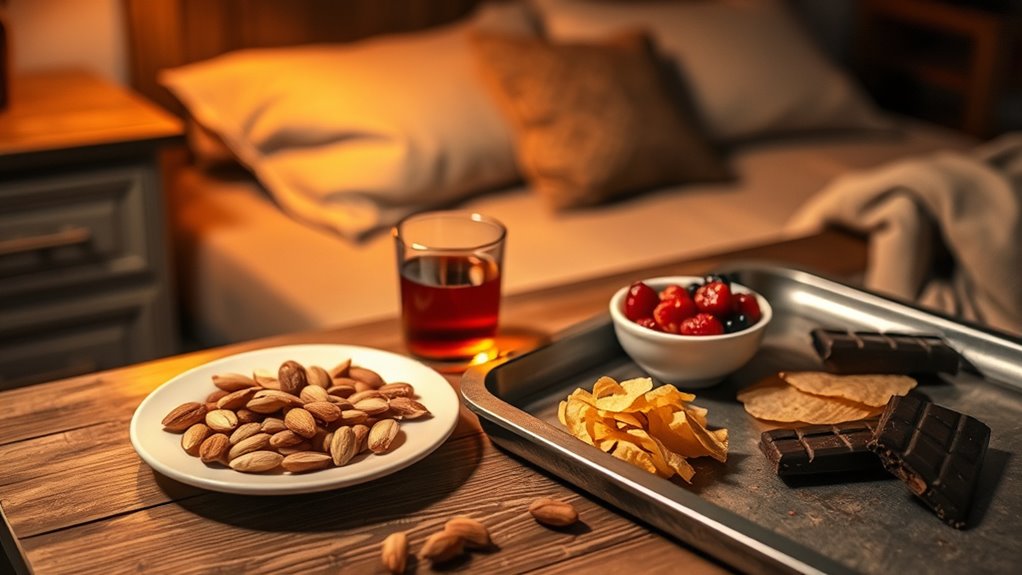

For better sleep, choose healthy late-night snacks like nuts, fruit, oatmeal, or warm milk, as they contain sleep-promoting nutrients like magnesium and tryptophan. Avoid sugary treats, greasy foods, caffeine, and alcohol, which can disrupt sleep and cause discomfort. Focus on nourishing options that support relaxation and avoid anything that spikes your blood sugar or causes indigestion. Keep exploring to discover even more tips for restful nights and peaceful sleep.

Get health and wellness essentials delivered free — and shop member deals
- Fast, free delivery on millions of items
- Access to Prime Big Deal Days deals on October 6–7
- Prime Video, Amazon Music and more included
Key Takeaways
- Choose healthy snacks like nuts, fruit, yogurt, oatmeal, or warm milk to promote relaxation and better sleep.
- Avoid sugary, refined carbs, greasy, or heavy foods that can cause indigestion or disrupt sleep quality.
- Limit or eliminate caffeine, alcohol, and foods high in sugar to prevent sleep disturbances and frequent awakenings.
- Incorporate sleep-promoting nutrients such as magnesium and tryptophan found in specific foods to enhance sleep quality.
- Be mindful of portion sizes and opt for nourishing snacks that support restful sleep without causing energy spikes.
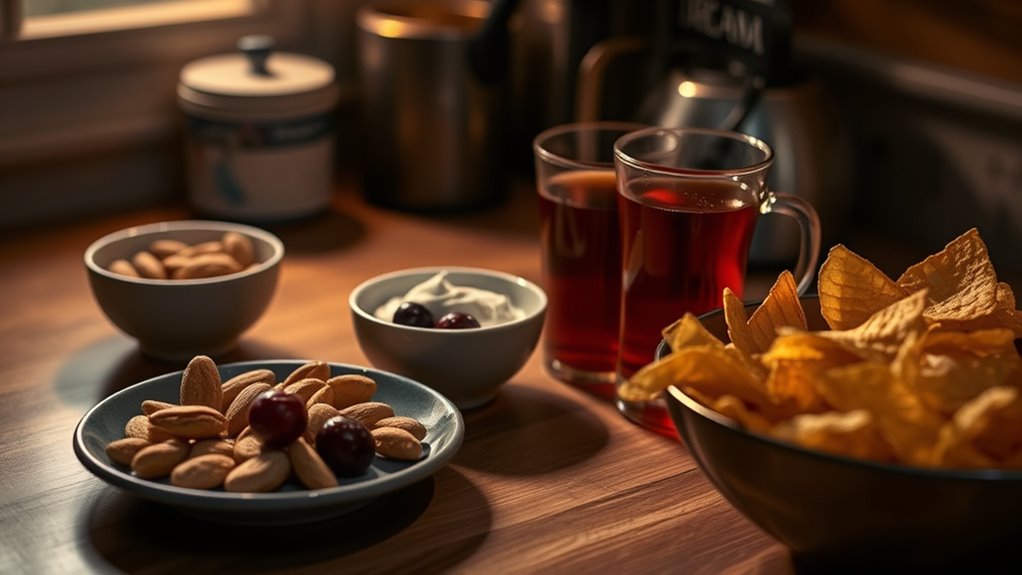
Late-night snacks are a popular way to satisfy hunger and unwind after a long day. Choosing the right foods can make a significant difference in how well you sleep and how you feel the next morning. When you’re reaching for a snack late at night, it’s best to focus on healthy options that nourish your body without disrupting your sleep cycle. For example, you might opt for a handful of nuts, a piece of fruit, or a small serving of yogurt. These healthy snack options provide nutrients that can promote relaxation and help you fall asleep more easily. Conversely, it’s equally important to be aware of foods to avoid, as some snacks can interfere with your sleep or cause discomfort.
Foods high in sugar or refined carbs might seem tempting, but they can lead to a spike in blood sugar levels followed by a crash that leaves you feeling restless or hungry again. Sweets like candy, cookies, or sugary cereals can also cause a quick energy boost, making it harder to wind down. Similarly, heavy or greasy foods such as fried snacks, pizza, or chips tend to sit heavily in your stomach, leading to indigestion or acid reflux that can disturb your sleep. Alcohol, while sometimes used as a sleep aid, actually reduces sleep quality and can cause you to wake up frequently during the night. So, it’s best to limit your intake of alcohol if you want restful sleep.
You should also be mindful of caffeinated foods or drinks, including chocolate and certain energy bars, which can keep you awake longer than you’d like. Instead, aim for snacks that contain sleep-promoting nutrients like magnesium and tryptophan. For instance, a small bowl of oatmeal topped with bananas or a glass of warm milk can help relax your muscles and calm your mind. Incorporating sleep-supporting nutrients into your late-night snacks can enhance your ability to fall asleep naturally. These choices not only satisfy your late-night hunger but also support your body’s natural sleep processes.
As an affiliate, we earn on qualifying purchases.
Frequently Asked Questions
Can Eating Late-Night Snacks Cause Weight Gain?
Yes, eating late-night snacks can cause weight gain if it increases your calorie intake beyond what your body needs. When you eat late, your metabolic rate slows down, making it harder to burn off those extra calories. To avoid gaining weight, choose nutritious, low-calorie snacks and limit late-night eating. Monitoring your intake helps keep your calorie balance in check and supports your overall health.
Are There Snacks That Improve Sleep Quality?
Yes, certain snacks can improve your sleep quality. You might want to try healthy fats like nuts or seeds, which help regulate sleep hormones. Herbal teas like chamomile or valerian root can also promote relaxation and make falling asleep easier. Keep your portion sizes small, and avoid caffeine or sugary treats, to maximize sleep benefits. Incorporate these into your nightly routine for more restful nights.
How Long Before Bed Should I Eat My Snack?
You should aim to have your snack about 30 to 60 minutes before bed. This timing considers digestion impact, helping your body settle before sleeping. Eating too close to bedtime might cause discomfort or disrupt sleep, while waiting too long could leave you hungry. By timing your snack well, you support restful sleep and avoid unnecessary digestion interruptions, making your night more peaceful and restorative.
Do Sugary Snacks Affect Sleep Patterns?
Sugary snacks can negatively affect your sleep patterns by causing sugar crashes and insulin spikes. When you indulge in them, your blood sugar levels spike, making you feel alert initially, but then plummet, leading to wakefulness or disrupted sleep. To improve your sleep, avoid high-sugar snacks close to bedtime. Opt for foods that promote relaxation, like nuts or a small banana, which help stabilize blood sugar and support restful sleep.
Are There Snacks Suitable for Different Age Groups?
You know what they say, “You are what you eat.” When choosing late-night snacks, consider age-specific nutrition and portion control. Kids benefit from small, nutrient-rich options like yogurt or fruit, while adults might opt for nuts or herbal teas. Always tailor snack choices to your age, ensuring they’re appropriate and balanced. This way, you support better sleep and overall health, no matter your age.
As an affiliate, we earn on qualifying purchases.
Conclusion
Choosing the right late-night snack can actually improve your sleep quality. While some believe a heavy meal helps you sleep better, research suggests lighter, sleep-friendly options like a banana or a small handful of nuts are more effective. Avoiding caffeine and spicy foods is key. So, next time you’re hungry before bed, opt for something that promotes relaxation—your body will thank you for it, and you might just sleep more soundly.
As an affiliate, we earn on qualifying purchases.
As an affiliate, we earn on qualifying purchases.
Fall Picks
fall essentials
As an affiliate, we earn on qualifying purchases.