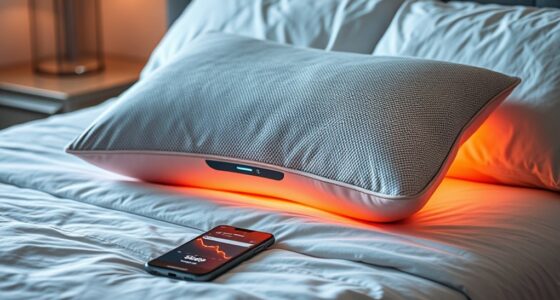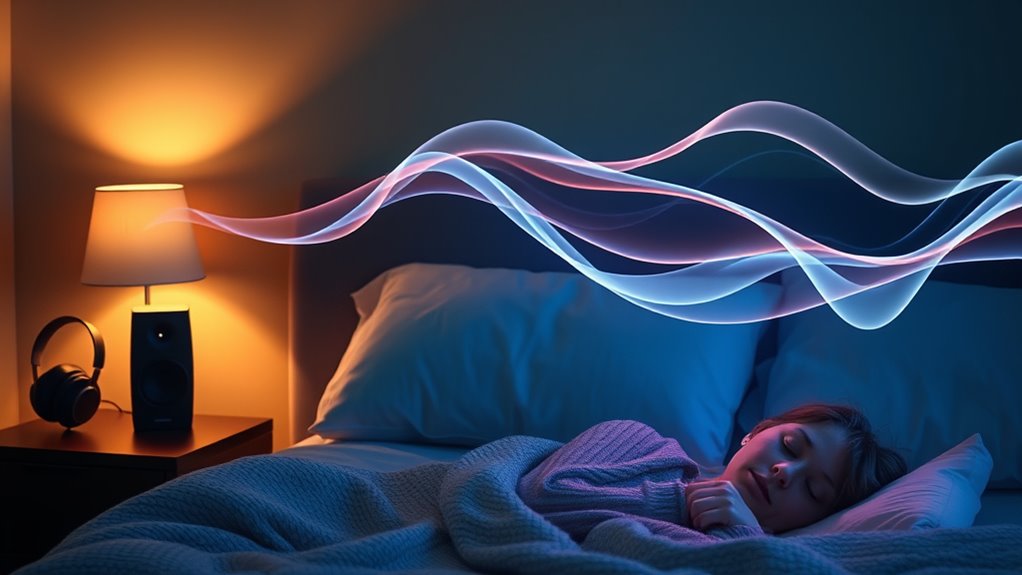

Listening to music before sleep can boost relaxation, improve mood, and help you process emotions, but it may also cause alertness or trigger stress if the melodies evoke negative feelings. White noise effectively masks disruptive sounds, creating a consistent environment that promotes deeper sleep and reduces anxiety, but it might be overwhelming if volume levels are not set properly. Exploring the pros and cons of both options can help you identify the best sleep aid suited to your needs.
Key Takeaways
- Music can promote relaxation and emotional well-being but may trigger anxiety or distract if too stimulating or emotionally charged.
- White noise effectively masks disruptive sounds, helping many fall asleep faster and achieve uninterrupted sleep cycles.
- Personal preferences influence effectiveness; enjoyment of music encourages routine, while white noise offers a neutral, less intrusive option.
- Music’s potential to evoke strong emotions might interfere with sleep, whereas white noise provides a consistent background without emotional triggers.
- Proper volume and environment adjustments are essential for both; unsuitable levels can cause discomfort or sleep disturbances.
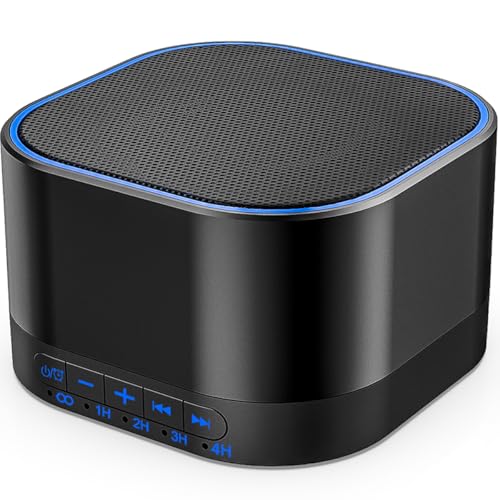
Magicteam Sound White Noise Machine with 20 Non Looping Natural Soothing Sounds and Memory Function 32 Levels of Volume Powered by AC or USB and Sleep Sound Timer Therapy for Baby Kids Adults
❤20 Non-Looping Sleep Sounds: White noise ,Brown noise, pink noise, blue noise, fan,brook, rain, ocean,bird and Bonfire,suitable for…
As an affiliate, we earn on qualifying purchases.
As an affiliate, we earn on qualifying purchases.
Understanding the Impact of Music on Sleep Quality
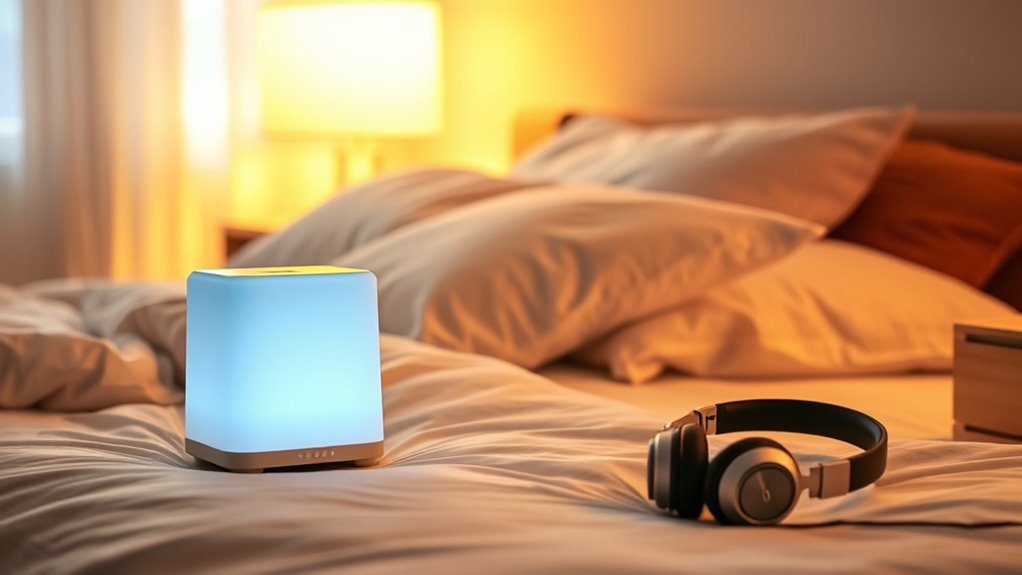
Music can markedly influence your sleep quality, either helping you fall asleep faster or disrupting your rest. Engaging in music therapy, for example, can promote relaxation and reduce stress, making it easier to drift off. The soundscapes benefits include calming melodies and gentle rhythms that soothe your mind and body. Listening to calming music before bed can lower cortisol levels and slow your heart rate, creating an ideal environment for sleep. Some studies show that specific types of music help improve sleep onset and duration. Additionally, sound quality plays a crucial role in how effectively music aids relaxation and sleep. The emotional well-being of listeners can also significantly impact how music influences sleep, as positive emotional associations enhance its calming effects. The choice of music or soundscape can also be tailored to individual preferences, which is essential for maximizing its sleep-inducing potential. Incorporating personalization of soundscapes can further enhance the effectiveness of the auditory environment for restful sleep. By selecting sounds that resonate personally, you can foster a more relaxing bedtime routine****, leading to better sleep quality. Choosing the right soundscape can transform your bedtime routine into a peaceful, restorative experience, enhancing overall sleep quality through the strategic use of music.
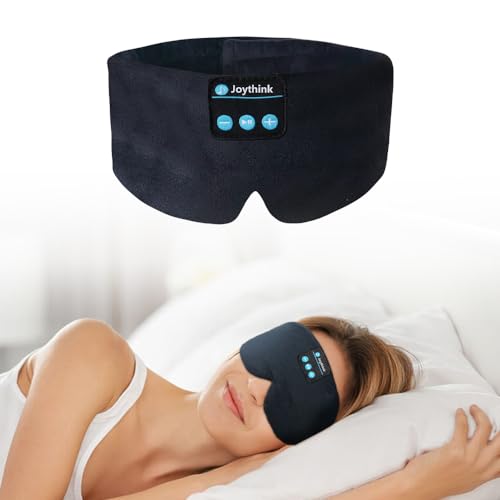
Joythink Sleep Headphones Sleep Mask Kids Children Wireless Music Eye Mask Sleeping Headphones Headband for Side Sleepers Silk Sleep Mask with Wireless Headphones Ultra-Thin Stereo Speakers
Skin-Friendly Silk Bluetooth Sleep Mask: Experience ultimate comfort with this soft Bluetooth sleep mask made from luxurious silk…
As an affiliate, we earn on qualifying purchases.
As an affiliate, we earn on qualifying purchases.
The Benefits of White Noise for Restful Sleep
White noise can be a highly effective tool for promoting restful sleep by masking disruptive sounds and creating a consistent auditory environment. This helps improve your sleep hygiene by reducing sudden noises that might wake you. Over time, exposure to white noise encourages noise habituation, making you less sensitive to background sounds in your environment. As a result, you can fall asleep faster and enjoy deeper, more uninterrupted sleep cycles. Unlike music, white noise provides a steady sound that minimizes potential distractions, allowing your brain to relax and shift into sleep more easily. Incorporating white noise into your nightly routine can foster better sleep habits, especially if you live in noisy environments or have difficulty falling asleep due to external disturbances. Additionally, white noise can support sleep quality by promoting a calm and consistent environment conducive to deep rest. Understanding the science behind sound masking can further enhance your ability to optimize your sleep environment and achieve more restorative sleep. This consistent auditory backdrop can also help reduce sleep anxiety, making it easier to unwind at the end of the day. Moreover, research shows that noise habituation can lead to long-term improvements in sleep patterns, and some studies suggest that using white noise may even influence brain wave activity during sleep to promote relaxation and recovery.
Magicteam Sound White Noise Machine with 20 Non Looping Natural Soothing Sounds and Memory Function 32 Levels of Volume Powered by AC or USB and Sleep Sound Timer Therapy for Baby Kids Adults
❤20 Non-Looping Sleep Sounds: White noise ,Brown noise, pink noise, blue noise, fan,brook, rain, ocean,bird and Bonfire,suitable for…
As an affiliate, we earn on qualifying purchases.
As an affiliate, we earn on qualifying purchases.
Potential Distractions Caused by Music During Sleep

While playing music can sometimes help you relax, it also has the potential to cause distractions that interfere with sleep. These music distractions can lead to sleep disturbances, making it harder to stay asleep throughout the night. For example, loud or sudden sounds might jolt you awake, or the music’s rhythm could cause your brain to remain active. Additionally, if the music has lyrics, it might engage your mind, preventing you from fully relaxing. Furthermore, trusted resources suggest that inconsistent sound patterns may negatively impact sleep quality. It’s also important to consider that sound consistency plays a crucial role in how well your brain can stay in a restful state during sleep. Moreover, research indicates that auditory stimulation during sleep can either disrupt or promote relaxation depending on its characteristics. Incorporating sound regularity can help minimize these disruptions and support a more restful sleep.

Housbay White Noise Machine with 31 Soothing Sounds, 5W Loud Stereo Sound, Auto-Off Timer, Adjustable Volume, Sleep Sound Machine for Baby, Kid, Adult -Wood Grain
【Sleep, Finally】- 31 real nature sounds like white noise, fan sounds, rain, thunder and ocean—recorded from real environments…
As an affiliate, we earn on qualifying purchases.
As an affiliate, we earn on qualifying purchases.
How White Noise Can Mask Disruptive Sounds
White noise effectively masks disruptive sounds by blending them into a consistent background, making sudden noises less noticeable. Its sound masking ability depends on how well it covers noise levels, so higher volumes can block more intrusive sounds. When used correctly, white noise can create a quieter sleep environment by reducing the impact of external disturbances. Additionally, some modern white noise machines incorporate sound masking technology to optimize noise coverage and improve sleep quality. Properly selecting and calibrating these devices ensures optimal sound coverage for individual sleep environments. Understanding the acoustic properties of white noise can help users tailor their setup for the most effective noise masking, especially when considering sound frequency ranges for personalized comfort. Furthermore, understanding the noise spectrum helps in choosing the right type of white noise that best suits individual preferences and environmental needs.
Sound Masking Effectiveness
White noise effectively masks disruptive sounds by creating a consistent auditory environment that drowns out sudden noises and background disturbances. This sound masking helps you stay asleep longer and enhances sleep quality. Its steady nature minimizes the impact of external interruptions, making it easier to fall asleep and remain undisturbed. Additionally, essential oils for sleep can be used in conjunction with white noise to promote relaxation and improve overall sleep quality.
Blocked Noise Levels
White noise effectively blocks out disruptive sounds by maintaining a steady, uniform level of background noise that blends unpredictable noises into a consistent soundscape. It masks noise pollution by covering sounds at various sound frequencies, making sudden or loud noises less noticeable. This consistent sound environment helps your brain filter out disruptive noises, such as traffic or conversations, reducing sleep disturbances. White noise’s broad spectrum can effectively mask high-pitched sounds and low-frequency disturbances, creating a calm sleep environment. By filling the silence with a steady background, white noise prevents disruptive sounds from piercing through your sleep, improving sleep quality. Additionally, white noise can enhance sleep quality by promoting relaxation and helping you fall asleep faster. Its ability to create an optimal sound environment makes it a popular choice for many seeking better rest in noisy settings, especially when the masking effect is optimized for your specific noise challenges. Moreover, the masking effect can be tailored to individual preferences, making white noise adaptable to various sleep environments.
Emotional and Psychological Effects of Listening to Music Before Bed
Listening to music before bed can influence your mood and help you relax, making it easier to fall asleep. However, it can also trigger anxiety or unwanted emotions if the music isn’t right for you. Understanding these psychological effects can help you choose the best nighttime listening habits.
Mood Regulation Benefits
Listening to music before bed can substantially boost your mood by reducing stress and fostering a sense of calm. This practice taps into the benefits of musical therapy, helping you process emotions and release tension. The soothing soundscapes relaxation created by calming melodies can improve your overall emotional state and promote psychological well-being. Regularly integrating music into your bedtime routine may enhance your ability to manage mood swings and negative feelings. You might find that music supports a positive mental outlook, making it easier to face the next day with resilience.
- Enhances emotional resilience
- Reduces feelings of anxiety and sadness
- Promotes mental clarity
- Boosts feelings of happiness
- Supports overall psychological health
Potential Anxiety Triggers
While music can promote relaxation, it also has the potential to trigger anxiety if the chosen melodies evoke negative memories or feelings. Certain music triggers, such as lyrics or melodies associated with stressful experiences, can heighten your noise sensitivity and make it harder to unwind. Instead of calming you, these triggers may cause your mind to race, increasing your anxiety before sleep. If you’re prone to anxious thoughts, listening to music with intense or emotionally charged content might backfire, making it difficult to relax. It’s essential to choose music carefully, focusing on calming, neutral melodies that won’t activate negative associations. Recognizing your own music triggers helps prevent unintended anxiety and creates a more soothing environment for rest.
Suitability of White Noise for Different Sleep Environments

White noise can be highly effective in certain sleep environments, but its suitability varies depending on factors like room acoustics, background noise levels, and personal preferences. If your bedroom has poor acoustics or lacks soundproofing techniques, white noise can mask disruptive sounds and promote better sleep. However, in rooms with already quiet environments, it might feel unnecessary or overwhelming. Consider how your space handles sound before using white noise regularly. Proper soundproofing and sound absorption can enhance its effectiveness, making the environment more conducive to rest. Additionally, the placement of speakers and the volume level play a role. If your bedroom has reflective surfaces or thin walls, white noise can help create a consistent auditory environment that minimizes sudden noise disturbances.
- soundproofing strategies to improve sleep comfort
- impact of bedroom acoustics on noise masking
- ideal speaker placement for white noise
- background noise levels and sleep quality
- how room design influences sound environment
Personal Preferences and Habit Formation in Sleep Aids
Personal preferences play a crucial role in determining which sleep aid works best for you, as individual tastes and comfort levels influence bedtime routines. If you enjoy the soothing melodies of music, you’re more likely to stick with it consistently. Conversely, if white noise feels more neutral or less intrusive, that may become your preferred choice. Your personal preferences shape habit formation, making it easier to establish a consistent sleep routine. When you choose a sleep aid that aligns with your tastes, you’re more likely to use it regularly, improving your sleep quality over time. Recognizing what feels comfortable helps you develop a routine that becomes automatic, reducing bedtime resistance and supporting healthier sleep habits. Ultimately, aligning your preferences with your sleep aid choice fosters lasting habit formation.
Choosing the Right Sound Environment for Better Sleep
Choosing the right sound environment can considerably impact your ability to fall asleep and stay asleep throughout the night. To optimize your sleep, consider experimenting with different ambient sounds or sound therapy options. Some sounds may help relax your mind more effectively than others.
- Select calming ambient sounds that match your preferences
- Use white noise or nature sounds for consistent background noise
- Avoid sudden or intrusive sounds that disrupt sleep
- Try volume levels that are soothing but not overpowering
- Establish a bedtime routine with your chosen sound environment
Frequently Asked Questions
Can Listening to Music Before Bed Improve Sleep Quality Long-Term?
Listening to music before bed can improve your sleep quality long-term if you choose calming soundscapes for sleep or engage in music therapy. It helps relax your mind, reduce stress, and create a consistent bedtime routine. However, avoid stimulating music. Over time, this habit may enhance sleep patterns, but guarantee the music stays soothing. Experiment with different soundscapes to find what best helps you unwind and sleep better nightly.
Are There Specific Types of White Noise That Are More Effective?
Certain white noise variations, like steady fan sounds or rain, tend to be more effective for sleep because they create a consistent, calming background. You might find that specific music genres, such as ambient or nature sounds, work better for you than other white noise options. Experiment with different white noise variations and music genres to discover which helps you relax and fall asleep faster.
How Do Individual Differences Affect Preferences for Music or White Noise?
Your personal preferences and sensory sensitivities shape whether you favor music or white noise for sleep. If you’re sensitive to sounds, white noise with consistent, non-intrusive qualities might soothe you better. If you enjoy melodies and rhythms, music could be more relaxing. Recognizing your unique sensory responses helps you choose the sound environment that promotes restful sleep, whether it’s calming tunes or steady white noise.
Is It Better to Use Headphones or Speakers for Listening at Bedtime?
You should use speakers for bedtime listening because they offer better sound quality and eliminate headphone discomfort. Speakers provide a more natural, immersive experience without putting pressure on your ears or causing discomfort from prolonged wear. Plus, you can set the volume at a comfortable level without having to wear headphones all night. However, make certain your speakers are positioned safely to avoid disturbing others and to protect your hearing.
Can Combining Music and White Noise Enhance Sleep Benefits?
Imagine revealing a secret to better sleep through sound layering—yes, combining music and white noise can boost your sleep quality. This sensory integration creates a richer, more immersive environment that drowns out disturbances and relaxes your mind. By blending these sounds, you engage your brain in a calming rhythm, making it easier to drift into restful sleep. Give it a try and discover a new, soothing sleep sanctuary tonight.
Conclusion
Ultimately, the choice between music and white noise shapes your sleep experience in ways you might not expect. Will you find harmony in melodies that soothe your mind, or embrace the steady hum that masks every disturbance? As you consider your preferences, remember that your ideal sleep environment awaits—quiet, calm, and tailored just for you. The real question is: which sound will you choose tonight to open the restful sleep you’ve been longing for?