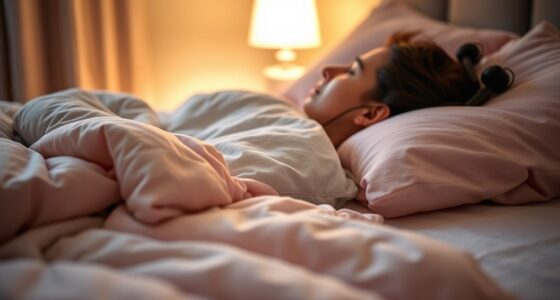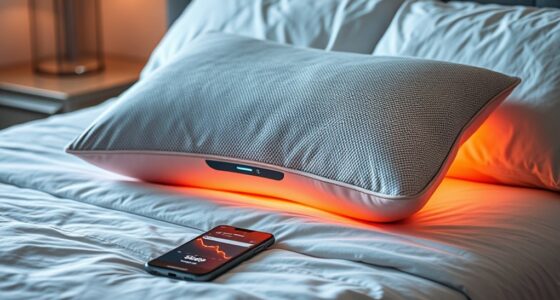
Using electronics like TVs and phones before bed can harm your sleep by exposing you to blue light. This light tricks your brain into thinking it’s daytime, suppressing melatonin, which makes falling asleep harder and disturbed sleep more likely. Keeping devices close or on during the night worsens the problem. If you want to improve your rest, there are simple steps you can take—continue to explore how you can create a better sleep environment.

Get health and wellness essentials delivered free — and shop member deals
- Fast, free delivery on millions of items
- Access to Prime Big Deal Days deals on October 6–7
- Prime Video, Amazon Music and more included
Key Takeaways
- Electronic devices emit blue light that suppresses melatonin, making it harder to fall asleep.
- Keeping TVs and phones on or glowing near the bed disrupts the sleep environment and reduces sleep quality.
- Using screens before bed can cause tossing and turning, leading to less restful sleep.
- Implementing device-free periods and using blue light filters improve sleep onset and overall rest.
- Placing devices away from the bed and adopting relaxation routines support better sleep hygiene.

Many people keep their smartphones, tablets, or laptops close at hand even as they get ready for bed. You might scroll through social media, reply to messages, or catch up on your favorite shows, but this habit can considerably affect your sleep environment. One of the biggest culprits is blue light exposure. Electronic screens emit high levels of blue light, which tricks your brain into thinking it’s daytime. This suppresses melatonin production, the hormone responsible for signaling sleepiness. As a result, your ability to fall asleep quickly and enjoy restful sleep diminishes. When your sleep environment is filled with blue light, you may find yourself tossing and turning, even after you turn off your device. Over time, this disruption can lead to poorer sleep quality, making you feel tired and less alert during the day.
It’s easy to underestimate how much your sleep environment influences your rest. Your bedroom should be a sanctuary for sleep—dark, cool, and quiet. But if your devices are constantly glowing or within reach, they can undermine that environment. Even the ambient glow from your phone or tablet on your nightstand can emit enough blue light to interfere with melatonin production. That’s why many sleep experts recommend creating a tech-free zone at least an hour before bed. Instead of scrolling, try reading a book with dim lighting or practicing relaxation techniques like deep breathing. These activities help your mind wind down and prepare your body for sleep, fostering a more natural sleep environment.
Another way to improve your sleep environment is to use features like blue light filters or night mode on your devices. These settings reduce blue light emissions and can make screens less disruptive. However, they’re not foolproof; the best approach is to limit screen time altogether before bed. If you must use electronics, consider wearing blue light blocking glasses or placing devices further away from your bed. This minimizes the direct exposure to blue light and helps maintain a sleep-friendly environment. Additionally, the increasing use of energy-efficient European cloud servers offers opportunities to manage digital devices more sustainably, reducing overall environmental impact. Remember, your sleep environment is vital for quality rest. Filling it with electronic distractions not only hampers your ability to fall asleep but also affects the overall quality of your sleep cycle. Making small adjustments can lead to better rest, improved mood, and increased daytime alertness.
blue light blocking glasses for sleep
As an affiliate, we earn on qualifying purchases.
As an affiliate, we earn on qualifying purchases.
Frequently Asked Questions
Can Using Electronics in Bed Cause Long-Term Sleep Disorders?
Yes, using electronics in bed can cause long-term sleep disorders. Your digital dependency leads to frequent sleep disruption, making it harder for your body to wind down naturally. The blue light emitted from screens suppresses melatonin production, disrupting your sleep cycle. Over time, this pattern can result in chronic sleep problems, affecting your overall health and well-being. To improve your sleep, try limiting screen time before bed.
What Are the Best Ways to Reduce Screen Time Before Sleep?
Think of it as a modern-day Code of Hammurabi—setting rules for better sleep. To reduce screen time before bed, establish a tech curfew an hour before sleep, replacing screens with relaxing activities like reading or meditation. Practice good sleep hygiene by keeping devices out of the bedroom and turning off notifications. This screen deprivation helps your mind unwind, making it easier to fall asleep and improve your overall rest quality.
Do Different Types of Screens Affect Sleep Quality Differently?
Different types of screens can affect your sleep quality differently. For instance, bright screens with high screen brightness emit blue light, which can suppress melatonin and disrupt your sleep cycle. Content engagement also matters; stimulating content keeps your brain active, making it harder to wind down. To improve your sleep, lower screen brightness and choose calming content before bed, regardless of the device type.
How Does Blue Light Impact Melatonin Production?
Imagine you’re scrolling through your phone late at night, and blue light suppression kicks in. This blue light disrupts your melatonin production, making it harder to fall asleep. When melatonin disruption occurs, your sleep quality drops, and you feel more tired the next day. You can avoid this by limiting screen time before bed or using blue light filters. Protecting your melatonin levels helps you sleep better and wake refreshed.
Are There Any Safe Alternatives for Nighttime Entertainment?
Yes, you can enjoy safe alternatives for nighttime entertainment by exploring screen-free hobbies like reading, journaling, or gentle stretching. These activities help you unwind without disrupting melatonin production. Incorporate alternative bedtime routines such as listening to calming music, practicing mindfulness, or engaging in light yoga. These methods promote relaxation, improve sleep quality, and create a peaceful progression into rest, free from screens and blue light exposure.
As an affiliate, we earn on qualifying purchases.
Conclusion
Remember, your bedroom is your sanctuary—a quiet harbor where your dreams set sail. Let go of the glowing screens that act as distant stars, distracting you from your inner night sky. By turning off electronics, you’re closing a window to the chaos and opening a door to peaceful rest. Embrace the darkness as a gentle guardian, guiding you into restful sleep. Your best dreams await beyond the glow—step into the night and let your mind drift free.
blue light filter for smartphones
As an affiliate, we earn on qualifying purchases.
As an affiliate, we earn on qualifying purchases.
device-free sleep environment products
As an affiliate, we earn on qualifying purchases.
As an affiliate, we earn on qualifying purchases.
Fall Picks
fall essentials
As an affiliate, we earn on qualifying purchases.