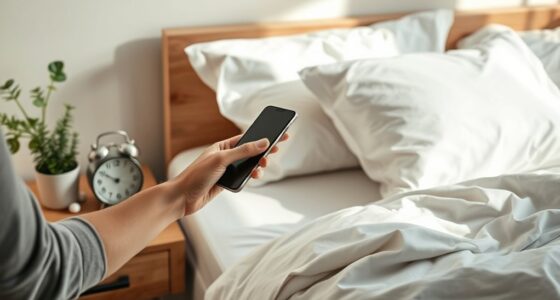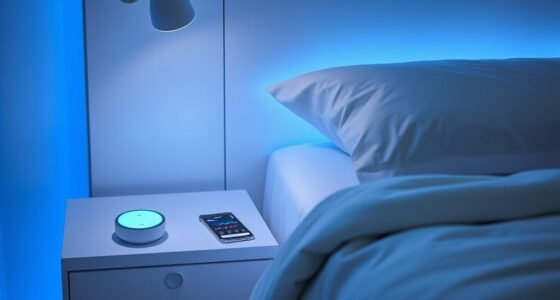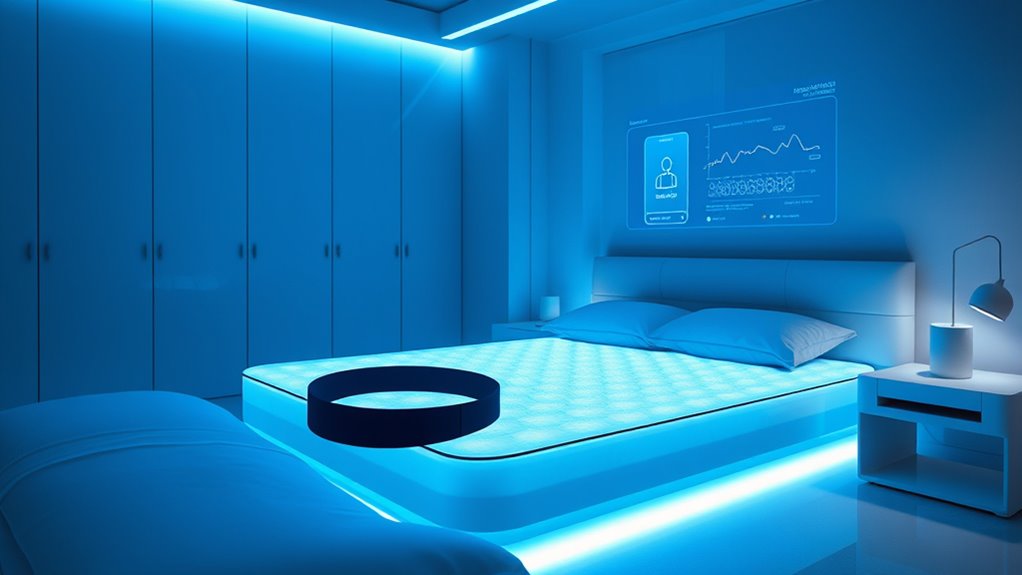

By 2025, sleep tech will become even smarter, offering personalized solutions that seamlessly integrate AI, wearable devices, and smart environments. Expect your devices to analyze your sleep patterns in detail, giving tailored advice and adjusting your bedroom climate automatically. Wearables will be sleek and provide continuous monitoring, while connected ecosystems will optimize your entire sleep experience. Staying ahead means embracing these innovations, and exploring further will reveal how these advancements can truly transform your nights.
Key Takeaways
- AI-driven sleep analysis will provide highly personalized recommendations and early detection of sleep disorders.
- Wearable devices will become more sleek, comfortable, and integrated with smart home systems for continuous monitoring.
- Environmental control systems will automatically adjust lighting, sound, and airflow based on biometric feedback.
- Connected sleep ecosystems will coordinate multiple devices for a seamless, optimized sleep experience.
- Advanced technologies will enable tailored interventions to improve sleep quality and manage disorders effectively.
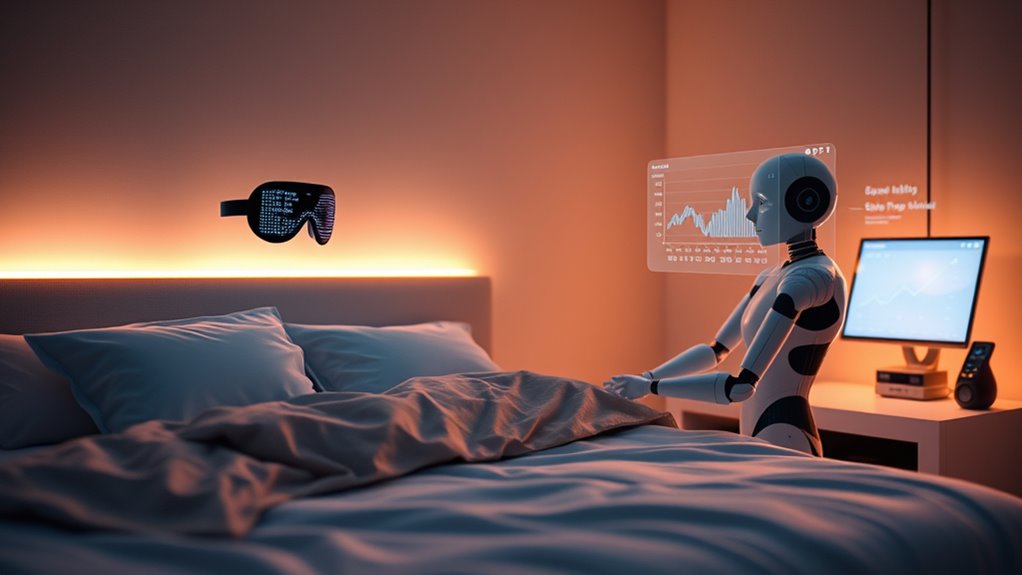
Are you curious about how sleep technology will evolve by 2025? The future of sleep solutions is set to transform your nightly rest, making it more personalized, efficient, and accessible. As advancements accelerate, you’ll notice smarter devices that directly impact your sleep quality and help manage sleep disorders more effectively. These innovations aim to go beyond simple trackers, providing real-time insights and tailored interventions that enhance your sleep patterns. By 2025, expect to see an ecosystem of interconnected tools working seamlessly to improve your overall health and well-being.
One of the key trends will be the integration of artificial intelligence into sleep technology. AI-powered systems can analyze your sleep data in unprecedented detail, identifying subtle patterns and disruptions that might escape your awareness. This means you’ll receive more precise recommendations for improving sleep quality, whether it’s adjusting your bedtime routines or customizing environmental factors like lighting and temperature. For those dealing with sleep disorders, these intelligent solutions will offer targeted management strategies. For example, devices might automatically detect signs of sleep apnea or restless leg syndrome and alert you or your healthcare provider, enabling early intervention and better treatment adherence.
AI will analyze sleep data in detail, offering precise, personalized solutions for sleep improvement and disorder management.
Wearable devices will continue to evolve, becoming less obtrusive and more accurate. Expect sleek, comfortable designs that sync effortlessly with your smartphone or smart home ecosystem. These wearables won’t just track your sleep—they’ll actively help you improve it through gentle biofeedback or personalized coaching. For individuals with chronic sleep issues, these tools will offer continuous monitoring, providing a detailed record that can be shared with sleep specialists for more effective diagnosis and treatment plans. The goal is to make managing sleep disorders less intimidating and more integrated into your daily life.
Environmental control systems will also become smarter, influencing your sleep environment in real-time based on your preferences and biometric feedback. Imagine your bedroom adjusting its lighting, sound levels, or even airflow automatically to ensure you get the deepest, most restorative sleep possible. These ambient adjustments will be guided by data from your sleep devices, creating a tailored environment that promotes ideal sleep quality night after night.
Furthermore, the development of connected sleep ecosystems will allow various devices to communicate and coordinate seamlessly, providing a cohesive and optimized sleep experience. Ultimately, by 2025, sleep tech will empower you with the tools to understand and manage your sleep more proactively. With innovations focused on enhancing sleep quality and addressing sleep disorders with precision, you’ll have greater control over your rest and, consequently, your overall health. These advancements promise not just better sleep, but a more energized, healthier life driven by smarter, more responsive technology.

EMAY Sleep Breathing Monitor for Airflow Tracking | Record Breathing Continuously On the App | Monitor Sleep Quality and Respiratory Events | Generate Professional Sleep Report with Data Analysis
- Personal Sleep Monitor: Affordable airflow recording device
- AI Data Analysis: Generates professional sleep reports
- Built-in Sensors: Measures and analyzes airflow accurately
As an affiliate, we earn on qualifying purchases.
As an affiliate, we earn on qualifying purchases.
Frequently Asked Questions
How Will Sleep Tech Impact Mental Health Treatment?
You’ll find sleep tech revolutionizes mental health treatment by enabling personalized dream therapy and cognitive enhancement. Devices will monitor your sleep patterns, helping therapists tailor interventions that improve emotional regulation and reduce anxiety. By revealing insights from your dreams and optimizing sleep quality, these technologies support mental well-being directly, making treatment more effective and accessible. Embracing these innovations can lead to better mental health outcomes and a deeper understanding of your mind.
Are There Privacy Concerns With Sleep Data Collection?
You should know that over 80% of sleep device users worry about data privacy. Privacy concerns with sleep data collection are valid, especially regarding sensitive health info. Companies must prioritize user consent, clearly explaining how data is used and protected. If you’re cautious, look for products that emphasize transparency and robust privacy policies, so you can enjoy sleep tech benefits without compromising your personal information.
Will Sleep Devices Be Affordable for All Income Levels?
Sleep devices will become more affordable for all income levels as manufacturers focus on cost reduction and accessibility improvements. You’ll likely see prices drop, making high-tech sleep solutions accessible to a broader audience. Advances in technology and increased competition will help lower costs, ensuring you can access innovative sleep tools regardless of your budget. This progress aims to democratize sleep health, helping everyone enjoy better rest without financial barriers.
How Will Sleep Tech Adapt to Different Sleep Disorders?
Ever wonder how sleep tech can truly help you? It will adapt to your unique needs through personalized diagnostics and adaptive therapies, ensuring targeted treatment for various sleep disorders. These devices will analyze your sleep patterns in real-time, adjusting interventions to optimize your rest. This tailored approach means you’ll get more effective support, whether you have insomnia, sleep apnea, or restless leg syndrome, making high-tech sleep solutions accessible and beneficial for everyone.
What Are the Environmental Impacts of Manufacturing Sleep Devices?
You might notice that manufacturers are increasingly adopting sustainable manufacturing practices to reduce environmental impacts. They use eco-friendly materials, such as biodegradable plastics and recycled components, to minimize waste and energy consumption. By focusing on these eco-conscious choices, they aim to lessen the carbon footprint of sleep devices, ensuring that high-tech solutions are both effective and environmentally responsible, helping you sleep better while caring for the planet.

Moremore Fitness Tracker with Heart Rate, Step Counter, Sleep Tracker, Calorie Tracking, Activity Tracker with 1.1" AMOLED Touch Color Screen, Waterproof Step Tracker for Android iPhones Women Men
- All-day Health Monitoring: Tracks heart rate, blood pressure, oxygen
- Sleep Analysis: Analyzes sleep quality and provides sleep score
- Smart Notifications: Alerts for calls, messages, and apps
As an affiliate, we earn on qualifying purchases.
As an affiliate, we earn on qualifying purchases.
Conclusion
By 2025, over 60% of people are expected to use smart sleep devices, transforming how you rest. As sleep tech advances, you’ll enjoy personalized insights, improved quality, and smarter solutions tailored just for you. Staying ahead means embracing these innovations now, so you can wake up refreshed and ready for the day. Don’t miss out—sleep tech is shaping your future, making better sleep more accessible than ever before.

SwitchBot Automatic Curtain Opener – Bluetooth Remote Control Smart Curtain with App, Upgraded High-Performance Motor, Add SwitchBot Hub to Work with Alexa, Google Home, HomeKit
- Easy Installation: Attach, magnet, connect via app
- Powerful Motor: Supports curtains up to 16KG
- Enhanced Accuracy: Positioning magnet for precise control
As an affiliate, we earn on qualifying purchases.
As an affiliate, we earn on qualifying purchases.
connected sleep ecosystem devices
As an affiliate, we earn on qualifying purchases.
As an affiliate, we earn on qualifying purchases.