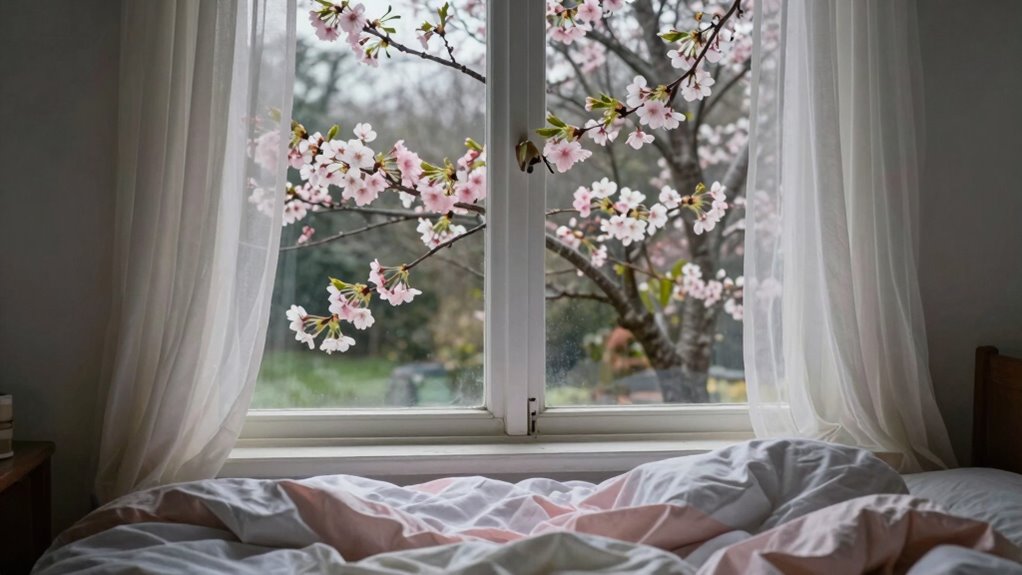

During spring, longer daylight hours can disrupt your sleep by interfering with your natural circadian rhythm and reducing melatonin production. Increased evening light and hormonal shifts make it harder to fall asleep, stay asleep, and can cause early waking. Your body needs time to adjust to these seasonal changes, which can temporarily throw off your sleep schedule. Staying mindful of these changes and adjusting your habits can help you adapt more smoothly; explore further to understand how to support your sleep during this shift.

Get health and wellness essentials delivered free with Prime
- Fast, free delivery on millions of items
- Prime Video, Amazon Music and more included
- Member-only deals all year
Key Takeaways
- Longer daylight hours suppress melatonin, delaying sleep onset and making it harder to fall asleep at night.
- Increased evening light exposure tricks the brain into thinking it’s daytime, disrupting sleep cues.
- Hormonal shifts, including fluctuations in melatonin and serotonin, affect sleep-wake cycles during spring.
- Changes in circadian rhythm cause irregular sleep patterns, early waking, and unrested feelings.
- Reduced darkness and altered routines during spring challenge the body’s natural sleep regulation.

As spring arrives and days grow longer, many people find their sleep patterns disrupted without fully understanding why. The change in daylight signals your body to adjust, but these adjustments aren’t always smooth. One of the key factors behind spring sleep disturbances is your sleep environment. As daylight extends into evening hours, your usual cues for winding down get blurred. If your bedroom isn’t dark enough, the extra light can interfere with your body’s production of melatonin—the hormone that helps you fall asleep. Even a small amount of light streaming through your windows can trick your brain into thinking it’s still daytime, making it harder to drift off or stay asleep through the night. So, you might notice yourself waking up earlier than usual or feeling less rested in the morning.
Along with changes in your sleep environment, hormonal shifts play a significant role in how spring impacts your sleep. As the seasons shift, your body responds to increased daylight by altering hormone levels, especially melatonin and serotonin. Longer daylight hours suppress melatonin production during the evening, which delays your sleep onset. This can leave you feeling more alert at night, even when you’re physically tired. Meanwhile, serotonin, which influences mood and sleep, can fluctuate as your body adapts to the new season. These hormonal shifts can lead to a cycle of disrupted sleep, making it difficult to establish a consistent bedtime. You might find yourself tossing and turning as your body struggles to find a new balance. Additionally, the natural circadian rhythm can become misaligned, further contributing to sleep difficulties during this transitional period. Recognizing these natural biological responses can help you approach the situation with more patience and understanding. Moreover, understanding the influence of seasonal biological changes can help you develop effective strategies to support your sleep health during this time.
You may also notice your sleep-wake cycle becoming irregular because of these hormonal and environmental changes. It’s common to feel more energetic during the day but less able to settle down at night. As your circadian rhythm adjusts to the longer days, your sleep schedule might shift unexpectedly. This shift can cause you to wake up too early or feel unrested despite spending enough time in bed. To manage this, you should pay close attention to your sleep environment—darkening your room with blackout curtains and reducing exposure to screens before bed can help signal your body that it’s time to sleep. Maintaining a consistent sleep schedule, even during seasonal changes, can help your body adapt more smoothly. Recognizing that hormonal shifts are natural during this time can also ease frustration, knowing that your sleep will stabilize once your body adapts to the new light patterns. Incorporating sleep hygiene practices can significantly support your body’s adjustment process. Being mindful of your light exposure during evening hours can also help your body maintain a healthy melatonin cycle.
As an affiliate, we earn on qualifying purchases.
Frequently Asked Questions
How Does Increased Daylight Affect Sleep Patterns During Spring?
Increased daylight during spring can disrupt your circadian rhythm, making it harder to fall asleep and wake up refreshed. The extra light suppresses melatonin regulation, the hormone responsible for sleepiness. You might find yourself staying awake longer or feeling less sleepy at night. To counteract this, try using blackout curtains and limiting screen time before bed, helping your body adjust and maintain a healthy sleep pattern during seasonal changes.
Can Allergy Symptoms Disrupt Sleep During Seasonal Transitions?
Yes, allergy symptoms can disrupt your sleep during seasonal shifts. When allergies flare up, you might struggle to breathe or stay comfortable, making it hard to fall asleep or stay asleep. Using allergy medications can help manage symptoms, but also focus on improving your sleep environment by reducing allergens like dust and pet dander. Keeping your bedroom clean, using air purifiers, and maintaining a cool, dark space can promote better sleep despite allergies.
Are There Specific Foods That Help Improve Sleep in Spring?
You can improve your sleep in spring by incorporating spring superfoods like cherries, almonds, and leafy greens into your diet. Snack on sleep supporting snacks such as yogurt with berries or a banana with nut butter, which boost melatonin and magnesium levels. These foods help regulate your sleep cycle and combat seasonal allergies’ effects, making it easier to rest well during this season’s shifts.
How Can Exercise Influence Sleep Quality in Springtime?
Exercise energizes your body and enhances sleep quality during spring. Timing matters—try to finish workouts at least a few hours before bedtime to prevent overstimulation. A cool, dark, and quiet sleep environment helps your body wind down after exercise. Regular movement promotes better sleep cycles, so staying active supports deep, restorative rest, making spring’s longer days and lighter nights more restful and rejuvenating for you.
What Are Natural Remedies for Spring-Related Sleep Disturbances?
You can try natural remedies like drinking herbal teas, such as chamomile or lavender, before bed to promote relaxation. Using aromatherapy diffusers with essential oils like lavender or eucalyptus can create a calming environment that helps improve sleep quality during spring. These remedies help ease spring-related sleep disturbances by reducing stress and calming your mind, making it easier to fall asleep and stay asleep despite seasonal changes.
As an affiliate, we earn on qualifying purchases.
Conclusion
As spring’s blossoms burst forth, they remind you that change is inevitable, even in your sleep. Just like the shifting seasons, your body adapts and adjusts, sometimes causing restless nights. Embrace these evolutions as a gentle breeze guiding you toward renewal. By honoring nature’s rhythm, you’ll find your sleep gradually aligning with the new season’s promise—a fresh start, a blooming horizon, and nights filled with peaceful rest, like the quiet bloom after a storm.
As an affiliate, we earn on qualifying purchases.
sleep aid with serotonin support
As an affiliate, we earn on qualifying purchases.
As an affiliate, we earn on qualifying purchases.
Halloween Picks
halloween
As an affiliate, we earn on qualifying purchases.