Yes, beauty sleep really is a thing. When you get enough restful sleep, your skin can repair itself, boost collagen production, reduce inflammation, and restore its barrier. Sleep deprivation slows these processes down, leading to dullness, fine lines, and increased signs of aging. Prioritizing quality sleep helps your skin look fresh, youthful, and resilient. If you want to uncover the full science behind how sleep transforms your skin, keep exploring more insights.
Key Takeaways
- Sleep boosts collagen production, essential for skin firmness and reducing fine lines, supporting a youthful appearance.
- Adequate rest enhances skin cell regeneration and repair, leading to healthier, more radiant skin in the morning.
- Proper sleep maintains the skin’s barrier function, preventing moisture loss and environmental damage.
- Sleep deprivation increases inflammation, causing redness, irritation, and signs of aging like dullness and uneven tone.
- Scientific evidence confirms that quality sleep, or “beauty sleep,” significantly improves skin health and overall aesthetic.
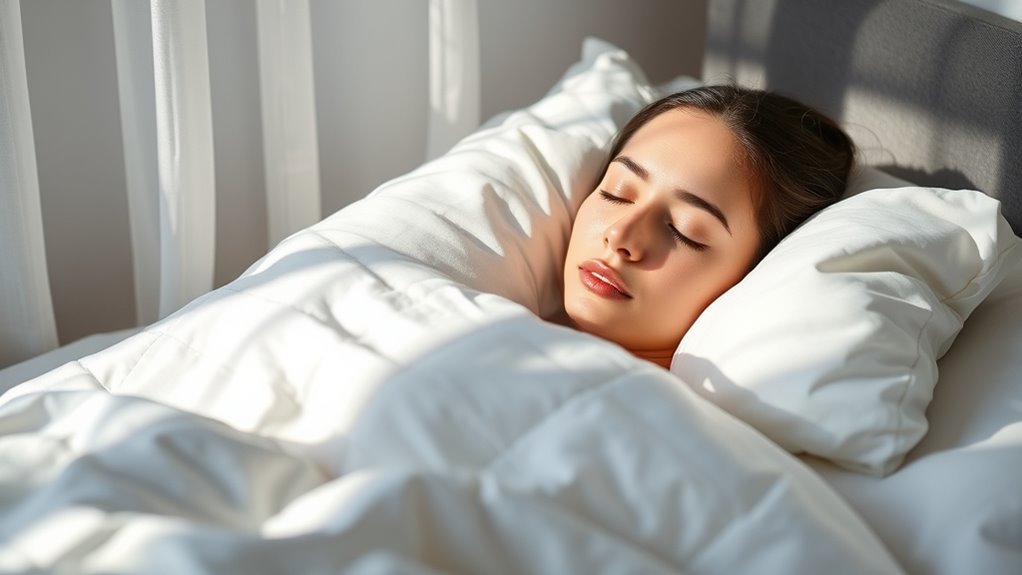
Getting enough quality sleep is essential for maintaining healthy, glowing skin. When you don’t get enough rest, your skin bears the brunt first. Sleep deprivation hampers your body’s ability to carry out vital processes, including skin regeneration. During deep sleep stages, your body ramps up the production of collagen, a protein that keeps your skin firm and elastic. Without sufficient sleep, this process slows down, leading to dullness, fine lines, and a loss of elasticity. You might notice dark circles and puffiness under your eyes, which are classic signs of sleep deprivation affecting your skin’s appearance. Sleep isn’t just about feeling rested; it’s about giving your skin the time it needs to repair and renew itself.
When you sleep poorly or skimp on sleep, your body’s natural healing process is compromised. Skin regeneration occurs mostly during the night, when your body is free from external stressors and can focus on repair. This process involves cell turnover, collagen synthesis, and the elimination of damaged cells. If you regularly deprive yourself of sleep, your skin’s ability to heal and regenerate diminishes. Over time, this can lead to a sallow complexion, uneven skin tone, and increased signs of aging. It’s as if your skin is running on a limited power supply, unable to perform its essential renewal functions effectively. That’s why a consistent sleep schedule is crucial—your skin needs those hours to bounce back from daily exposure to pollutants, UV rays, and other stressors. Additionally, research shows that proper sleep can help maintain skin’s barrier function, preventing moisture loss and environmental damage.
Getting proper sleep also helps regulate inflammation, which plays a significant role in skin health. Sleep deprivation can cause your immune system to become imbalanced, leading to increased inflammation that manifests as redness, irritation, or even acne. When you prioritize quality sleep, you support your body’s ability to control this inflammation, keeping your skin calmer and more resilient. Moreover, sleep helps balance hormones like cortisol, which, when elevated due to lack of rest, can break down collagen and accelerate skin aging. By allowing your body to rest fully each night, you give your skin the best chance to regenerate, stay hydrated, and maintain a youthful glow.
In essence, the beauty sleep you’ve heard about isn’t just a myth. It’s a real, scientifically backed phenomenon that plays a critical role in skin health. Prioritizing enough restful sleep each night ensures your skin can do its job—repair, renew, and protect—so you wake up looking fresh, vibrant, and radiant. Neglecting this vital process only shortchanges your skin’s potential for health and beauty.
Frequently Asked Questions
How Many Hours of Sleep Are Optimal for Skin Health?
You should aim for 7 to 9 hours of sleep each night to support ideal skin health. During this time, your sleep cycles allow your body to perform restorative processes that repair skin damage and boost collagen production. Skimping on sleep disrupts these cycles, leading to dullness, fine lines, and dark circles. Prioritize consistent, quality sleep to help your skin look fresh, vibrant, and healthy every day.
Does Sleep Quality Matter More Than Sleep Duration for Skin?
They say, “Quality over quantity,” and that’s true for sleep, especially for your skin. Sleep quality matters more than duration because a good sleep environment and consistent bedtime routines help you reach restorative REM sleep. When you prioritize deep, uninterrupted sleep, your skin repairs better, looking fresher and more radiant. So, focus on creating a relaxing sleep environment and sticking to routines—your skin will thank you.
Can Sleep Medications Negatively Impact Skin Appearance?
Yes, sleep medications can negatively impact your skin appearance. Sleep medication side effects, such as dryness or inflammation, may lead to dull or irritated skin. Additionally, concerns about skin absorption mean chemicals from these medications could penetrate your skin, potentially causing breakouts or allergic reactions. Always consult your doctor before using sleep aids, and consider natural methods to improve sleep, which are generally gentler on your skin.
Are Teenagers More Affected by Sleep Deprivation’s Effects on Skin?
Have you ever wondered if teenagers are more impacted by sleep deprivation‘s effects on their skin? They definitely are, especially with acne flare-ups and hormonal changes. Teenagers’ skin is more sensitive and prone to breakouts when they don’t get enough rest. Sleep deprivation disrupts hormone balance, leading to increased oil production and inflammation. Prioritizing good sleep helps teenagers manage acne and maintain healthier skin overall.
How Quickly Can Skin Recover From Poor Sleep Habits?
Your skin can start to recover from sleep deprivation within a few days of consistent good sleep. During sleep, your body activates skin regeneration processes, repairing damage and reducing inflammation. If you prioritize quality rest, you’ll notice improvements in skin tone, texture, and overall health within a week. Keep in mind, prolonged sleep deprivation can cause lasting damage, so regular, restorative sleep is essential for ideal skin regeneration.
Conclusion
Getting enough sleep truly is like giving your skin a nightly reset button. When you prioritize rest, you’re not just recharging your energy—you’re helping your skin repair, stay hydrated, and look vibrant. Skimp on sleep, and your skin might show signs of stress and fatigue. So, think of your nightly sleep as a precious gift to your skin, keeping it glowing and healthy. After all, beauty sleep isn’t just a myth—it’s your skin’s best friend.