Getting enough quality sleep is key to strengthening your immune system. When you sleep well, your body actively produces immune cells, manages inflammation, and builds immune memory to fight off illness. Poor sleep or deprivation weakens these processes, making you more vulnerable to infections and slowing recovery. To protect your health, maintaining consistent sleep habits is essential. If you want to understand how you can optimize your sleep for better immunity, keep exploring how each factor impacts your health.
Play games included with Prime
Start a Prime free trial and play with Amazon Luna on your devices.
As an affiliate, we earn on qualifying purchases.
Key Takeaways
- Quality sleep promotes the production and activation of immune cells like white blood cells, enhancing the body’s defense against infections.
- Sleep supports immune memory and antibody development, enabling faster and more effective responses to illnesses.
- During sleep, cytokine production increases, regulating inflammation and helping the immune system fight infections effectively.
- Sleep deprivation impairs immune cell function, reduces immune memory, and prolongs recovery from illnesses.
- Maintaining consistent, restful sleep strengthens immune resilience and lowers susceptibility to colds, flu, and other infections.
sleep aid supplements for immune support
As an affiliate, we earn on qualifying purchases.
As an affiliate, we earn on qualifying purchases.
The Connection Between Sleep and Immune Defense

Getting enough quality sleep is essential for a strong immune system because your body relies on rest to produce and activate immune cells. During sleep, your dream cycles play a crucial role in consolidating memory and resetting your immune defenses. Good sleep hygiene helps you fall asleep faster and stay in restorative sleep stages, ensuring your immune system gets the rest it needs. When you prioritize consistent sleep routines, you support the body’s natural rhythms, boosting immune function. Poor sleep, on the other hand, disrupts these cycles, weakening your defenses. By maintaining healthy sleep habits, you give your immune system the best chance to operate efficiently, making it easier to ward off infections and recover quickly if you do get sick. Sleep cycles are fundamental to maintaining your overall health and immune resilience. Additionally, understanding circadian rhythms can help optimize your sleep patterns for better immune support. Regular exposure to natural light helps reinforce these internal clocks, promoting healthier sleep and immune responses. Recognizing the importance of restorative sleep stages can further enhance your immune health and overall well-being. Moreover, disruptions in sleep architecture can negatively impact immune function and increase susceptibility to illness.
white noise machine for better sleep
As an affiliate, we earn on qualifying purchases.
As an affiliate, we earn on qualifying purchases.
How Sleep Affects the Production of Infection-Fighting Cells

Sleep plays a pivotal role in the production of infection-fighting cells, as your body relies on rest to generate and activate these essential components of your immune response. When you practice good sleep hygiene, you support ideal immune function, allowing your body to produce more white blood cells and antibodies. Sleep also enhances your ability to dream, which has been linked to immune regulation and memory consolidation of immune responses. Additionally, research indicates that sleep influences immune cell activity, further emphasizing its importance for a robust immune system. Adequate sleep increases the efficiency of immune responses, helping your body respond more effectively to pathogens. Studies have also shown that sleep deprivation can lead to a decrease in immune cell production, making you more susceptible to illness. Poor sleep can impair the production of these cells, weakening your defenses against pathogens. Moreover, sleep’s impact on hormonal balance can further affect immune regulation and recovery. Sleep plays a critical role in modulating cytokine production, which is vital for coordinating immune responses. By prioritizing quality sleep, you give your immune system the boost it needs to efficiently fight off infections. Remember, consistent, restorative sleep isn’t just about feeling rested; it’s a crucial part of your immune health.
sleep tracker with immune health monitoring
As an affiliate, we earn on qualifying purchases.
As an affiliate, we earn on qualifying purchases.
The Role of Sleep in Regulating Inflammatory Responses

Since inflammation is a key part of your immune response, maintaining proper sleep patterns helps regulate this process effectively. Sleep influences melatonin regulation, which plays an essential role in controlling inflammatory responses. When you get enough rest, your body balances the production of inflammatory cytokines, the signaling molecules that promote inflammation. Proper sleep reduces the overproduction of these cytokines, preventing excessive inflammation that can damage tissues. Conversely, inadequate sleep disrupts melatonin regulation, leading to heightened levels of inflammatory cytokines and increased inflammation. This balance is critical for preventing chronic inflammatory conditions and ensuring your immune system responds appropriately to threats. Additionally, research shows that pinball machines are not related to immune health but are an example of entertainment technology that has evolved significantly over the decades, reflecting cultural trends. By prioritizing quality sleep, you help your body keep inflammation in check, supporting overall immune health. Maintaining consistent sleep schedules helps reinforce this regulation and prevents disruptions in immune function, ensuring your immune system can respond effectively when needed. Sleep hygiene practices such as avoiding screens before bed and establishing a relaxing bedtime routine can further enhance this regulatory process.
melatonin supplements for immune function
As an affiliate, we earn on qualifying purchases.
As an affiliate, we earn on qualifying purchases.
Impact of Sleep Deprivation on Immune Function

When you don’t get enough sleep, your body produces fewer immune cells, making it harder to fight off illnesses. This increases your chances of catching infections and prolongs recovery times. Sleep deprivation also weakens your immune memory, reducing your ability to build lasting immunity. Utilizing proper DIY tools and creating an optimal sleep environment can help improve sleep quality and support immune health. Proper sleep hygiene practices, such as maintaining a consistent sleep schedule and avoiding stimulants before bedtime, further enhance immune function. Additionally, maintaining good piercing hygiene and avoiding irritants can prevent infections that further compromise your immune system. In fact, energy-efficient cloud servers exemplify how innovative solutions can promote overall well-being and sustainability.
Reduced Immune Cell Production
Lack of proper sleep can directly reduce the production of immune cells, weakening your body’s ability to fight off infections. Sleep deprivation hampers the creation of essential immune components, including lymphocytes and macrophages, leading to immune cell reduction. Without enough rest, your body produces fewer cells necessary for defense, making you more vulnerable to illness. The table below highlights how sleep deprivation impacts immune cell levels:
| Effect of Sleep Deprivation | Resulting Immune Impact |
|---|---|
| Reduced lymphocyte production | Lowered ability to fight pathogens |
| Decreased macrophage activity | Slower infection clearance |
| Impaired cytokine release | Weakened immune signaling |
This decline in immune cell production leaves your immune system less equipped, heightening your risk of infection.
Increased Infection Susceptibility
Reduced immune cell production from sleep deprivation directly compromises your body’s ability to fend off infections. When you don’t maintain good sleep hygiene, your immune system struggles to stay balanced, leaving you more vulnerable to illnesses. Sleep deprivation lowers the production of protective cytokines and immune cells, making it easier for pathogens to take hold. To combat this, practicing consistent sleep hygiene helps restore immune function. Additionally, engaging in dream therapy can improve sleep quality, especially for those with stress-related sleep issues. Better sleep supports your immune defenses, reducing infection susceptibility. Incorporating essential oils for immune health, such as eucalyptus or tea tree oil, into your routine may also help bolster your body’s defenses. Prioritizing restful sleep isn’t just about feeling rested; it’s a crucial step in maintaining your body’s ability to fight off colds, flu, and other infections effectively.
Impaired Immune Memory
Sleep plays a vital role in shaping your immune system’s ability to remember and respond to past infections. When you don’t get enough sleep, your immune memory weakens, making it harder for your body to recognize and fight off pathogens effectively. This impairment affects your vaccination response, reducing how well vaccines protect you over time. Sleep deprivation hampers the formation of long-lasting immune cells, which are essential for quick and efficient responses to future infections. Without adequate rest, your immune system struggles to develop strong, durable memory, leaving you more vulnerable. Prioritizing quality sleep guarantees your immune memory remains sharp, enabling your body to respond rapidly and effectively to illnesses and vaccinations alike. Additionally, understanding the importance of immune system support can motivate you to adopt healthier sleep habits that support immune function. Ensuring sufficient sleep also promotes immune cell development, which is crucial for maintaining a resilient immune response. Proper sleep hygiene can help maintain the efficacy of vaccines, ensuring your immune system responds optimally.
The Science Behind Sleep and the Release of Protective Chemicals

When you sleep, your body increases the production of cytokines, which help fight infections and inflammation. This process also boosts the activity of immune cells, making them more effective at defending your body. Understanding how sleep triggers these protective chemicals can help you prioritize rest for better immunity.
Cytokine Production Boost
Research shows that during restful sleep, your body actively increases the production of cytokines—proteins that play a crucial role in defending against infections. This boost is closely linked to melatonin signaling, which helps regulate cytokine production. When you sleep well, melatonin levels rise, supporting cytokine regulation and ensuring your immune system responds effectively. These cytokines include interleukins and interferons, which coordinate your immune response by signaling other immune cells to act against pathogens. Without adequate sleep, melatonin production drops, impairing cytokine production and weakening your immune defenses. This connection highlights how sleep not only restores your body but also fine-tunes your immune system’s ability to detect and fight off illness through proper cytokine regulation.
Enhanced Immune Cell Activity
As cytokine production ramps up during restful sleep, immune cells become more active and better equipped to defend your body. During deep sleep stages, your sleep cycle promotes dream enhancement, which supports immune function by reducing stress and inflammation. This heightened activity allows immune cells like T-cells and macrophages to target pathogens more effectively. When your sleep cycle is uninterrupted, it optimizes the release of protective chemicals, boosting immune responses. Dreaming isn’t just a byproduct of sleep; it’s linked to the quality of immune cell activity. By maintaining a consistent sleep pattern, you help assure that your immune system remains alert and efficient, ready to fight off illness. Sleep’s role in enhancing immune cell activity is crucial for overall health and resilience.
Effects of Poor Sleep on Vulnerability to Common Illnesses
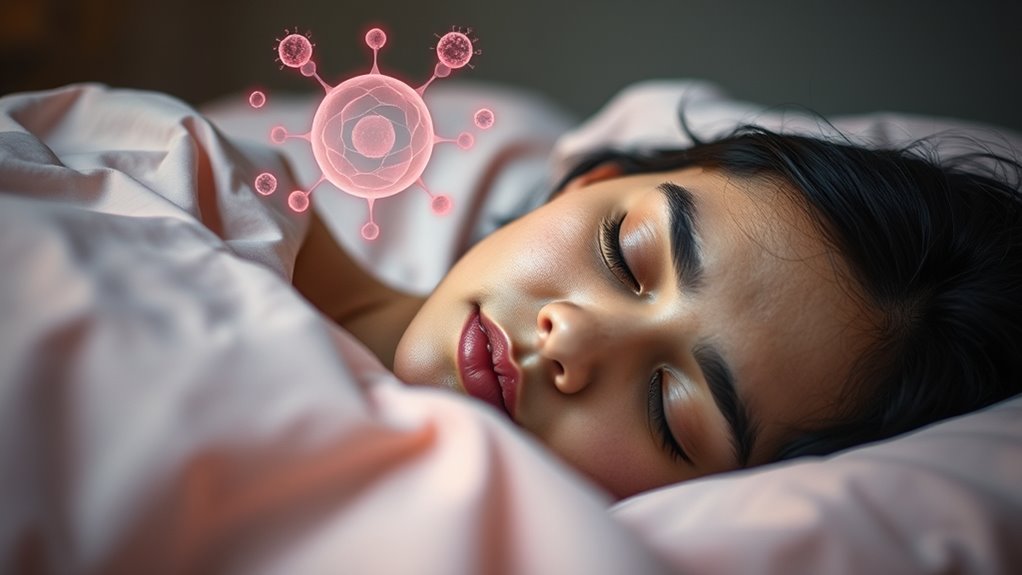
Poor sleep can markedly weaken your immune system, making you more susceptible to common illnesses like colds and the flu. When your sleep hygiene suffers, it disrupts your ability to enter restorative dream cycles, which are essential for immune regulation. Poor sleep reduces the production of protective cytokines and immune cells, impairing your body’s ability to fight off pathogens. Inadequate rest often leads to shorter, fragmented sleep, preventing deep, healing stages of sleep from occurring. As a result, your body can’t recover or defend itself effectively. Over time, chronic sleep deprivation increases your vulnerability to infections, prolongs illness duration, and intensifies symptoms. Prioritizing good sleep hygiene helps guarantee your sleep cycles support immune health, reducing your risk of falling ill.
Tips for Improving Sleep to Strengthen Your Immune System

To boost your sleep quality and strengthen your immune system, start by establishing a consistent sleep schedule. This helps regulate your body’s internal clock, making it easier to fall asleep and wake up refreshed. Enhance your sleep environment by keeping it cool, dark, and quiet. Consider dream journaling to process stress and improve sleep quality. A calming bedtime routine, like reading or gentle stretches, signals your body it’s time to rest. Avoid screens before bed, as blue light can disrupt melatonin production. Here’s a quick overview:
| Tip | Benefit |
|---|---|
| Maintain a consistent schedule | Regulates your circadian rhythm |
| Improve sleep environment | Promotes deeper, uninterrupted sleep |
| Keep a dream journal | Reduces stress and promotes relaxation |
| Limit screen time before bed | Enhances melatonin production |
| Establish calming routines | Eases transition into sleep |
The Importance of Consistent Sleep Patterns for Overall Immunity

Maintaining a consistent sleep pattern is essential for supporting your immune system’s health. When your sleep schedule is regular, your body can better regulate immune responses, reducing illness risk. Good sleep hygiene involves sticking to the same bedtime and wake time, even on weekends, which reinforces your body’s internal clock. Incorporating practices like dream journaling can help you understand your sleep quality and identify disruptions, encouraging better sleep habits. Consistent sleep patterns boost the production of infection-fighting cells and antibodies, making your immune system more effective. Skipping or irregular sleeping hours weaken this process, increasing vulnerability to illnesses. Prioritizing regular sleep not only improves your overall rest but also strengthens your body’s natural defenses against pathogens.
Frequently Asked Questions
Can Sleep Quality Influence Long-Term Immune Health?
Yes, your sleep quality impacts long-term immune health. When you focus on dream enhancement and create a sleep environment that’s dark, cool, and quiet, you support restorative sleep. Better sleep boosts your immune system, helping it defend against illnesses over time. Prioritizing good sleep habits guarantees your body stays resilient, making it easier to fight off infections and maintain overall health in the long run.
How Does Napping Affect Immune System Recovery?
Napping can boost your immune system recovery, especially if you’re experiencing sleep deprivation. Short naps help reduce immune suppression caused by lack of rest, giving your body a chance to repair and strengthen defenses. However, long or irregular naps might disrupt your sleep cycle, potentially hindering immune function. To maximize benefits, keep naps brief—around 20-30 minutes—and avoid napping late in the day.
Are There Specific Sleep Stages More Critical for Immunity?
You might wonder which sleep stages matter most for your immune response. During deep sleep, your sleep cycle hits a vital point—it’s when your body releases cytokines, essential for fighting infections. REM sleep also plays a role by regulating immune functions through brain activity. Missing out on these essential phases could weaken your immunity, so prioritize a full, uninterrupted sleep cycle to keep your defenses strong.
Does Sleep Help Fight off Specific Types of Infections?
Yes, sleep helps your body fight off specific infections, especially respiratory and viral illnesses. When you experience sleep deprivation, your infection susceptibility increases because your immune system weakens, making it harder to combat pathogens. Adequate sleep boosts your immune response, producing more infection-fighting cells and antibodies. So, prioritizing good sleep is essential to strengthen your defenses against particular infections and stay healthier overall.
Can Improving Sleep Habits Prevent Autoimmune Diseases?
Improving your sleep habits can help prevent autoimmune diseases by supporting your immune system. Focus on good sleep hygiene, like maintaining consistent sleep schedules and creating a relaxing bedtime routine. Your circadian rhythms regulate your immune responses, so aligning your sleep patterns with natural light can reduce inflammation and immune dysregulation. Prioritizing quality sleep strengthens your body’s defenses, lowering the risk of developing autoimmune conditions over time.
Conclusion
Prioritizing good sleep boosts your immune system, making you less prone to illnesses. For example, imagine someone who consistently sleeps poorly and catches colds more often; improving their sleep habits could markedly reduce their vulnerability. By establishing regular sleep routines and creating a restful environment, you empower your body’s defenses. Remember, sleep isn’t just rest—it’s a powerful tool to help you stay healthy and resilient against everyday infections.
NFL season / tailgating Picks
team gear
As an affiliate, we earn on qualifying purchases.