Using screens before bed exposes your eyes to blue light, which suppresses melatonin—the hormone that helps you fall asleep. This disruption can delay your sleep onset, shorten sleep duration, and reduce sleep quality overall. Different devices emit varying amounts of blue light, with smartphones and tablets being more disruptive than e-readers. To improve your sleep, consider reducing screen time at least 30 minutes before bed and exploring effective strategies—stay tuned to learn more.
Get ready for Prime Big Deal Days — try Prime free
Exclusive member deals on October 6–7, plus fast free delivery. Cancel anytime.
As an affiliate, we earn on qualifying purchases.
Key Takeaways
- Blue light from screens suppresses melatonin production, delaying sleep onset and reducing sleep quality.
- Using devices before bed disrupts circadian rhythms, leading to difficulty winding down and poorer sleep patterns.
- Screen exposure in the evening shortens total sleep duration and increases sleep fragmentation.
- Longer screen time at night is linked to increased risks of anxiety, depression, and overall mental health issues.
- Implementing screen-free routines and blue light filters can improve sleep quality and promote restorative rest.
blue light blocking glasses for sleep
As an affiliate, we earn on qualifying purchases.
As an affiliate, we earn on qualifying purchases.
The Science Behind Sleep and Light Exposure

Light exposure plays a essential role in regulating your sleep cycles by signaling your brain when it’s time to wake up or wind down. When you’re exposed to natural light during the day, it helps suppress melatonin production, keeping you alert. However, at night, exposure to artificial light, especially from screens, can lead to melatonin suppression when it’s time to sleep. This interference disrupts your circadian rhythm, causing circadian disruption, which can make falling asleep and staying asleep more difficult. Your body relies on a consistent light-dark cycle to maintain healthy sleep patterns. Ignoring this natural rhythm by exposing yourself to bright screens late at night hampers your ability to prepare for restful sleep, leading to poorer sleep quality and potential health issues over time. Additionally, the type of projector technology used in screens can influence the amount and type of light emission, further affecting sleep quality. Moreover, recent studies have highlighted how light wavelength emitted by screens, especially blue light, can intensify melatonin suppression, emphasizing the importance of screen type and usage timing.
blue light filter screen protector for smartphones
As an affiliate, we earn on qualifying purchases.
As an affiliate, we earn on qualifying purchases.
How Blue Light Disrupts Melatonin Production

Blue light from screens can suppress melatonin, making it harder for you to fall asleep. This disruption throws off your circadian rhythm, causing delays in sleep onset. As a result, your sleep quality and overall rest suffer. Implementing energy-efficient solutions can help mitigate some of these effects by reducing exposure to harmful blue light. Incorporating smart home automation can also enable you to schedule screen time limits or activate lighting that minimizes blue light exposure during evening hours. Additionally, choosing appropriate lighting can further support your sleep cycle by reducing blue light emissions during evening use. Employing blue light filters on devices can also significantly decrease blue light exposure and promote better sleep.
Blue Light and Melatonin
Since exposure to blue light in the evening can interfere with your body’s natural sleep signals, it’s important to understand how it impacts melatonin production. Blue light suppresses melatonin, the hormone that helps regulate sleep, making it harder for you to fall asleep and stay asleep. Poor sleep hygiene often involves prolonged screen time, which exposes you to this disruptive light. To minimize effects, consider:
- Using blue light filters on devices
- Turning off screens an hour before bed
- Adjusting device ergonomics for comfortable use
- Wearing blue light blocking glasses
- Creating a relaxing pre-sleep routine
- Being aware of online activity patterns that contribute to increased screen exposure before bedtime
In addition, understanding the impact of artificial light on circadian rhythms can help you make informed choices about your evening routines. Recognizing how light exposure influences your biological clock can further enhance your sleep quality. Incorporating suitable sleep environments that limit artificial light can also support melatonin production and improve overall sleep health.
Circadian Rhythm Disruption
Disrupting your circadian rhythm is a key way blue light negatively impacts sleep. When you use screens before bed, blue light causes melatonin suppression, the hormone responsible for signaling bedtime. Reduced melatonin levels lead to circadian misalignment, where your internal clock is out of sync with the natural day-night cycle. This disruption makes it harder for your body to know when to wind down and prepare for sleep. As a result, you may find yourself feeling alert when you should be sleepy, and your overall sleep quality declines. Over time, this persistent circadian rhythm disturbance can contribute to chronic sleep issues and health problems. To protect your sleep, reducing blue light exposure in the evening helps maintain your natural circadian timing. Incorporating natural environments into your routine can help reinforce your circadian cues and promote better sleep. Additionally, minimizing evening screen time can support the body’s melatonin production and help preserve its natural sleep signals. Being mindful of artificial light exposure in the evening is essential for maintaining a healthy sleep-wake cycle.
Sleep Onset Delays
When your circadian rhythm is thrown off by blue light exposure before bed, it doesn’t just affect your internal clock—it also directly interferes with your ability to fall asleep quickly. Blue light suppresses melatonin production, delaying sleep onset and disrupting your sleep hygiene. This makes it harder to stick to effective bedtime routines, leading to shorter, less restful sleep. To improve sleep onset, consider:
- Limiting screen time an hour before bed
- Using blue light filters or glasses
- Establishing consistent sleep schedules
- Creating a relaxing pre-sleep environment
- Avoiding stimulating activities during winding-down time
Focusing on these habits helps restore melatonin levels, reduces sleep onset delays, and enhances overall sleep quality. Proper bedtime routines are essential for aligning your internal clock and achieving restful sleep. Additionally, understanding the impact of light exposure on your biological processes can empower you to make smarter choices for better sleep health. Consistent sleep habits also play a key role in maintaining your circadian rhythm and preventing sleep disturbances. Incorporating herbal teas such as chamomile or ginger before bed may further support relaxation and improve sleep quality. Engaging in relaxing activities like meditation or gentle stretching can also help mitigate the effects of light exposure on your sleep cycle.
sleep-friendly smart lighting system
As an affiliate, we earn on qualifying purchases.
As an affiliate, we earn on qualifying purchases.
The Impact of Screen Time on Sleep Onset and Duration

Exposing yourself to screens before bed can markedly delay your sleep onset and shorten your overall sleep duration. The blue light emitted by devices suppresses melatonin, making it harder to fall asleep quickly. Screen addiction can intensify this effect, as the urge to keep scrolling keeps your brain active longer. Additionally, poor device ergonomics—like holding your phone too close or using awkward postures—can cause discomfort, further disrupting sleep patterns. The more time you spend on screens before bed, the more your sleep cycle suffers, leading to fragmented, less restorative sleep. Reducing screen time in the hour before bed helps your body prepare for restful sleep, while minimizing exposure to the stimulating content that keeps your mind alert longer than necessary. Creating calm homes and establishing simple routines can also support better sleep hygiene overall. Incorporating sleep-friendly habits such as dimming lights and avoiding stimulating content enhances your chances of a good night’s rest. Moreover, understanding website performance metrics can help you identify patterns that may impact your sleep environment, such as excessive exposure to digital devices. Being aware of digital device ergonomics can help prevent discomfort that might interfere with your sleep quality. Developing an awareness of sleep hygiene practices can further improve your overall sleep quality and help you wake refreshed.
blue light reducing night mode apps
As an affiliate, we earn on qualifying purchases.
As an affiliate, we earn on qualifying purchases.
Comparing Different Devices and Their Effects on Sleep
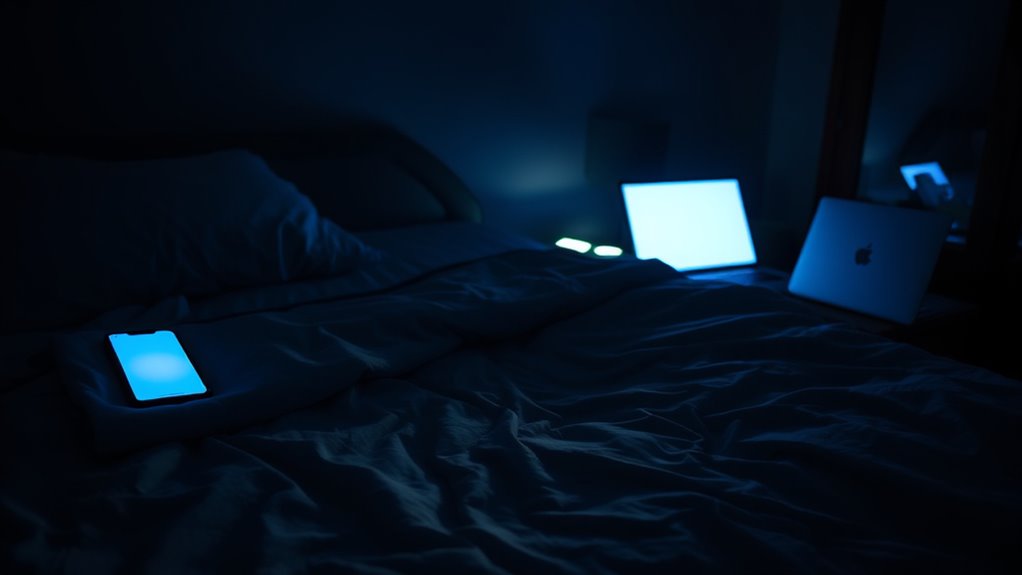
Different devices emit varying amounts of blue light, which can disrupt your sleep more than others. For example, e-readers with e-ink screens produce less blue light than tablets or smartphones. Understanding how screen type and blue light exposure affect your sleep can help you make better choices before bed.
Screen Type Variations
Not all screens affect your sleep in the same way; the type of device you use can considerably influence how your body responds before bedtime. Screen quality varies, impacting eye strain and overall comfort. Devices with better ergonomics reduce neck and hand fatigue, making it easier to relax. For example, tablets often have higher resolution screens than smartphones, which can lessen eye strain. E-readers with e-ink technology emit less light and are easier on your eyes than LED screens. The size and placement of screens also matter—larger screens may encourage closer viewing, affecting your posture and comfort. Finally, the brightness controls on your device play a key role in minimizing unnecessary stimulation, helping you wind down more effectively.
Blue Light Impact
The type of device you choose can considerably influence how blue light affects your sleep. Smartphones, tablets, laptops, and e-readers emit varying levels of blue light, impacted by screen brightness and device ergonomics. Generally, smaller screens like smartphones emit more concentrated blue light, while larger screens may be easier to view at lower brightness settings. Devices with better ergonomics allow for comfortable use, reducing eye strain and minimizing exposure duration. Adjusting screen brightness downward or using blue light filters can notably reduce sleep disruption. Here’s a quick comparison:
| Device Type | Blue Light Impact |
|---|---|
| Smartphone | High emission, compact, easy to hold |
| Tablet | Moderate emission, larger screen |
| Laptop/PC | Variable, often higher emissions, adjustable |
Choosing devices with good ergonomics and reducing screen brightness helps protect your sleep quality.
Strategies to Minimize Screen Time Before Bed
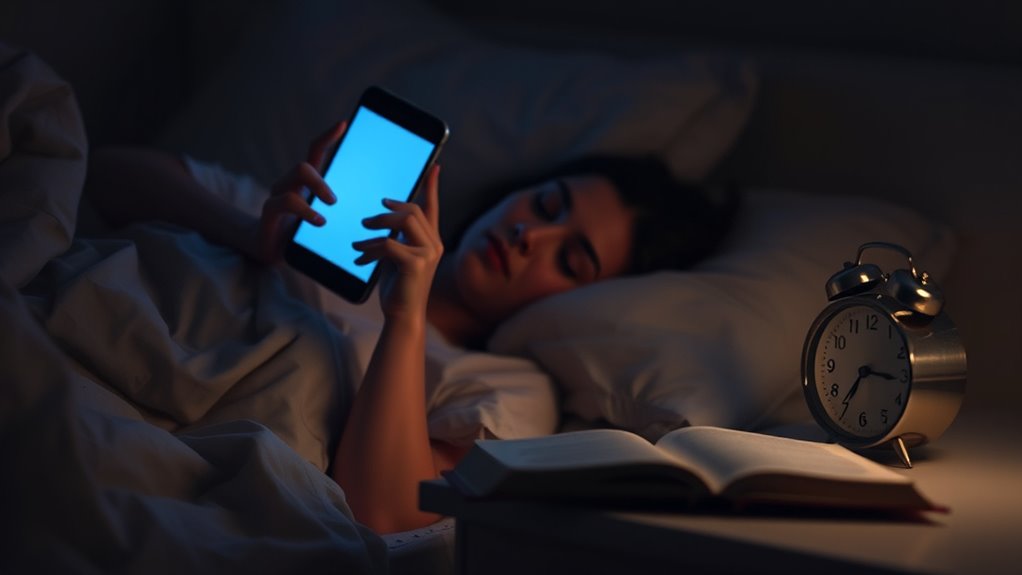
To effectively minimize screen time before bed, you need to establish clear boundaries around your device usage. Creating consistent bedtime routines that avoid screens helps signal to your brain that it’s time to wind down. Consider setting a specific cutoff time for screens at least 30 minutes before bed, and stick to it. You can also implement alternative activities to replace screen time, such as reading or gentle stretching. To strengthen your new habits, try these strategies:
Establish a screen cutoff 30 minutes before bed and replace screens with relaxing activities to improve sleep quality.
- Use an alarm or reminder to turn off devices
- Keep devices out of the bedroom
- Switch to physical books or magazines
- Establish a relaxing pre-sleep ritual
- Limit exposure to social media or work emails before bedtime
These steps help reduce screen time, improve your bedtime routines, and promote better sleep quality.
Alternative Relaxation Techniques for Better Sleep
When you want to improve your sleep quality, exploring alternative relaxation techniques can make a significant difference. Techniques like mindful breathing and aromatherapy relaxation can help calm your mind and body before bed. Practicing mindful breathing involves slow, deep breaths, reducing stress and easing your shift into sleep. Aromatherapy relaxation uses essential oils like lavender or chamomile to promote tranquility and restful sleep. To get started, consider this simple table:
| Technique | Benefits |
|---|---|
| Mindful breathing | Reduces anxiety, calms the mind |
| Aromatherapy relaxation | Enhances relaxation, improves mood |
| Gentle stretching | Releases muscle tension, relaxes body |
Incorporate these practices into your nightly routine for better sleep quality without screens.
Long-Term Consequences of Poor Sleep Due to Technology Use

Prolonged exposure to screens before bed can lead to serious long-term health issues. Over time, disrupted sleep patterns may contribute to anxiety, depression, and poorer mental health. You might notice a decline in your academic performance due to decreased focus and memory retention. Chronic sleep deprivation affects cognitive functions, making learning more difficult. Additionally, poor sleep can increase your risk for metabolic problems, cardiovascular disease, and weakened immune response.
- Increased risk of mental health disorders
- Reduced concentration and memory retention
- Lower academic achievement
- Elevated chances of chronic illnesses
- Deterioration of overall well-being
Ignoring these consequences can have lasting impacts, making it essential to prioritize healthy sleep habits and limit screen time before bed for your mental and physical health.
Frequently Asked Questions
Can Using Screens in the Morning Affect Nighttime Sleep?
Using screens in the morning can affect your nighttime sleep by disrupting your morning routines and sunlight exposure. The blue light from screens may interfere with your circadian rhythm, making it harder to feel sleepy at night. To improve sleep quality, try limiting screen time in the morning and prioritize natural sunlight exposure, which helps regulate your internal clock and promotes better sleep at night.
How Does Screen Brightness Influence Sleep Quality?
You’ll find that screen brightness considerably impacts your sleep quality. Too much brightness causes screen glare, making it harder for your eyes to relax and signaling your brain that it’s daytime. Adjusting your screen brightness downward helps reduce glare and minimizes blue light exposure, promoting melatonin production. By keeping your device’s brightness low in the evening, you can fall asleep faster and enjoy more restful sleep.
Are There Any Devices Designed to Reduce Blue Light Exposure?
You won’t believe how much better your sleep can be with devices that cut blue light! Blue light glasses block those harmful rays, and screen filter apps automatically dim your screens to protect your sleep. These tools are game-changers, making it easy to unwind without sacrificing your screen time. So, grab blue light glasses or activate a screen filter app tonight—your sleep quality will thank you!
Does Screen Content Influence Sleep Quality Differently?
Yes, screen content can influence your sleep quality differently. If you view content that causes distraction or emotional stimulation, it can make it harder to wind down and fall asleep. Engaging or intense material keeps your brain active, delaying sleep onset. To improve your sleep, opt for calming, less stimulating content before bed, and avoid anything that triggers strong emotions or distractions.
Can Using E-Readers Before Bed Impact Sleep More Than Smartphones?
Think of your sleep as a delicate garden; using e-readers before bed can be like watering it with gentle sunlight, causing less disruption than smartphones. E-reader technology usually emits less blue light, so your reading habits won’t interfere as much with melatonin production. Unlike smartphones, e-readers often lack notifications and bright screens, making them a gentler choice for winding down and preserving your sleep’s peaceful bloom.
Conclusion
If you keep scrolling before bed, you’re risking your sleep more than you realize—it’s like inviting chaos into your dreams. Cutting back on screen time and trying calming activities can transform your nights from restless battles to peaceful slumber. Prioritize your sleep, because no amount of late-night scrolling is worth sacrificing the deep, restorative rest your body desperately needs. Take control now, and give yourself the gift of truly restful nights—your health and sanity depend on it.
Fall Picks
fall essentials
As an affiliate, we earn on qualifying purchases.