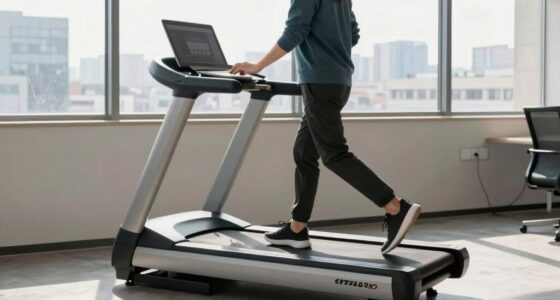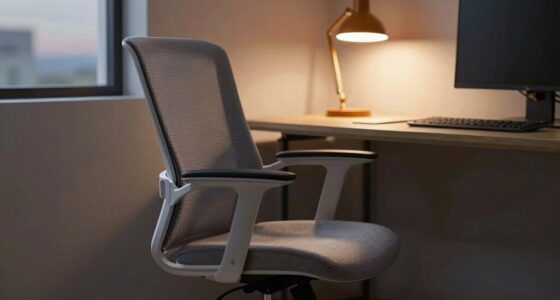
Using a standing desk helps keep your energy levels up throughout the day by encouraging movement and better circulation. Shifting from sitting to standing, incorporating stretches, and adding micro-movements prevent fatigue and boost alertness. Ergonomic accessories make standing comfortable, so you stay engaged without strain. This sustained activity helps you remain lively into the evening, supporting a smoother wind-down. Keep exploring to find out more ways to maintain your energy as the day winds down.

Get health and wellness essentials delivered free — and shop member deals
- Fast, free delivery on millions of items
- Access to Prime Big Deal Days deals on October 6–7
- Prime Video, Amazon Music and more included
Key Takeaways
- Standing desks promote movement and circulation, preventing fatigue and maintaining alertness into the evening.
- Regular stretching routines at standing desks reduce muscle tension, boosting overall vitality before bedtime.
- Ergonomic accessories support proper posture, minimizing discomfort and conserving energy throughout the day.
- Micro-movements, like shifting weight, enhance blood flow, helping sustain energy levels later in the day.
- Incorporating movement breaks with standing desks helps keep the mind alert and ready to wind down calmly.
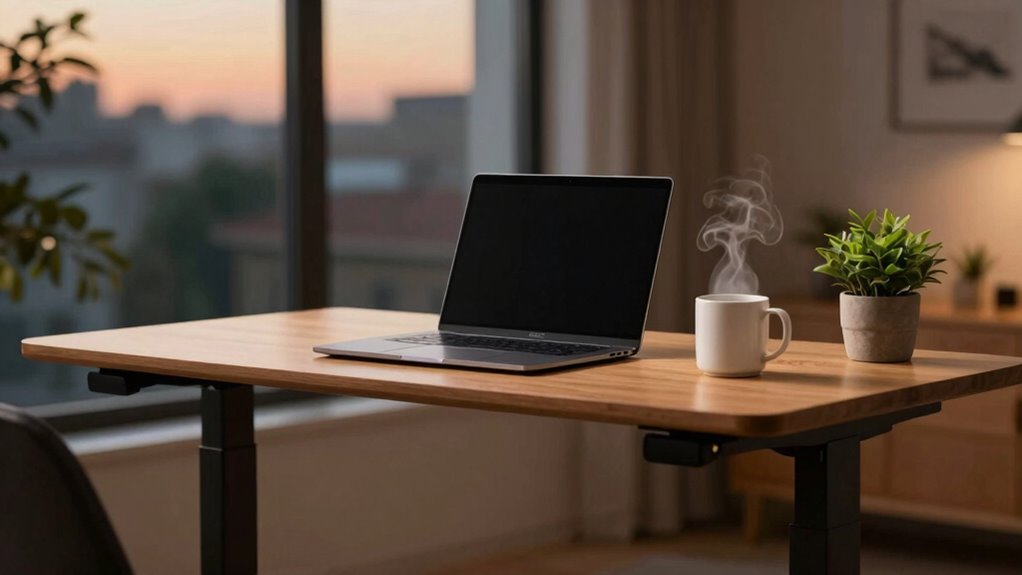
Standing desks can boost your energy levels before bedtime by encouraging movement and improving circulation. When you shift from sitting to standing, you naturally become more active, which helps prevent fatigue buildup and keeps your mind alert. Incorporating simple stretching routines at your standing desk can further enhance this effect. Each stretch targets muscles that tend to become tight after hours of sitting, like your hamstrings, calves, and lower back. By stretching regularly, you increase blood flow, release tension, and promote a feeling of vitality that persists into your evening hours. The key is to keep these routines short and intentional, so they become a natural part of your work rhythm without disrupting your productivity. Using ergonomic accessories alongside your standing desk can also make a significant difference in maintaining high energy levels. Adjustable monitor arms, anti-fatigue mats, and supportive footwear help create an environment that encourages movement and reduces strain. For example, anti-fatigue mats give your legs a slight cushion, allowing you to stand comfortably for longer periods, which boosts circulation without causing discomfort. Ergonomic accessories are designed to support your posture, preventing aches that can drain your energy and make you feel sluggish as the day winds down. When your body feels supported and properly aligned, you’re less likely to experience fatigue, and your mind stays sharper later in the evening. Additionally, standing desks naturally promote micro-movements that keep your blood flowing. Instead of remaining static, you can shift your weight from one foot to the other or do gentle knee bends. These small actions stimulate circulation, helping you stay alert and energized. Incorporating movement breaks into your daily routine can further enhance these benefits, especially since ergonomic support plays a crucial role in maintaining comfort and energy. Implementing proper posture techniques can also prevent unnecessary strain and fatigue, supporting your overall wellbeing. By intentionally integrating movement and stretching routines with ergonomic accessories, you create a workspace that actively fights off the tiredness that often creeps in before bedtime. This combination helps you wind down more smoothly, as you’re less likely to feel the exhaustion caused by prolonged sitting. Instead, you finish your day feeling more refreshed and ready to transition into your evening routines with a clear, energized mind.
As an affiliate, we earn on qualifying purchases.
Frequently Asked Questions
Can Standing Desks Improve Sleep Quality Directly?
Standing desks can indirectly improve your sleep quality through sleep enhancement and ergonomic benefits. By reducing discomfort and promoting better posture during the day, they help lower stress levels and prevent physical tension that might interfere with rest. When you feel more comfortable and less tense at night, you’re more likely to fall asleep easily and enjoy deeper sleep. So, using a standing desk supports overall wellness, positively affecting your sleep indirectly.
Are Standing Desks Suitable for All Age Groups?
Are standing desks suitable for all age groups? Absolutely, but with some caveats. The ergonomic benefits are clear—they promote better posture and reduce stiffness. However, health considerations matter: kids and seniors should use them cautiously, adjusting height and duration to prevent strain. Always consult a healthcare professional if you’re unsure, especially for those with existing health conditions, to guarantee safe and effective use across age groups.
How Long Should I Stand at My Desk Daily?
You should stand at your desk for about 2 to 4 hours daily, breaking it into intervals to avoid fatigue. Make ergonomic adjustments to guarantee proper posture, and customize your desk height for comfort and support. Listen to your body—if you feel discomfort or strain, sit down and rest. Regularly shifting positions helps maintain energy levels and prevents muscle strain, making your standing desk more effective and comfortable.
Do Standing Desks Help Reduce Stress Before Bed?
Standing desks can notably reduce stress before bed by promoting posture improvement and offering ergonomic benefits. When you stand, you activate your muscles, easing tension and boosting circulation, which helps calm your mind. This active approach diminishes discomfort and dread, leading to a more relaxed state. As a result, you’ll find it easier to unwind, making standing desks a simple, supportive solution for stress relief before bedtime.
Can Standing Desks Replace Regular Exercise Routines?
Standing desks can’t fully replace regular exercise routines, but they offer ergonomic benefits that boost your comfort and posture during work. By encouraging movement and reducing sedentary time, they enhance productivity and overall well-being. Incorporating standing desks into your daily routine can supplement exercise, helping you stay active and energized throughout the day. However, for peak health, it’s essential to maintain a balanced routine that includes dedicated physical activity.
ergonomic monitor arm for standing desk
As an affiliate, we earn on qualifying purchases.
As an affiliate, we earn on qualifying purchases.
Conclusion
So, who knew that standing at your desk could actually boost your energy before bed? It’s ironic how something so simple might be the secret to winding down without feeling drained. Instead of reaching for caffeine or struggling to relax, you can stand tall and keep your energy flowing. Maybe the real trick isn’t just about sleep but staying energized enough to enjoy your evening — even if it’s a bit unexpected. Who says standing up can’t help you wind down?
supportive standing desk footwear
As an affiliate, we earn on qualifying purchases.
As an affiliate, we earn on qualifying purchases.
As an affiliate, we earn on qualifying purchases.
Fall Picks
fall essentials
As an affiliate, we earn on qualifying purchases.