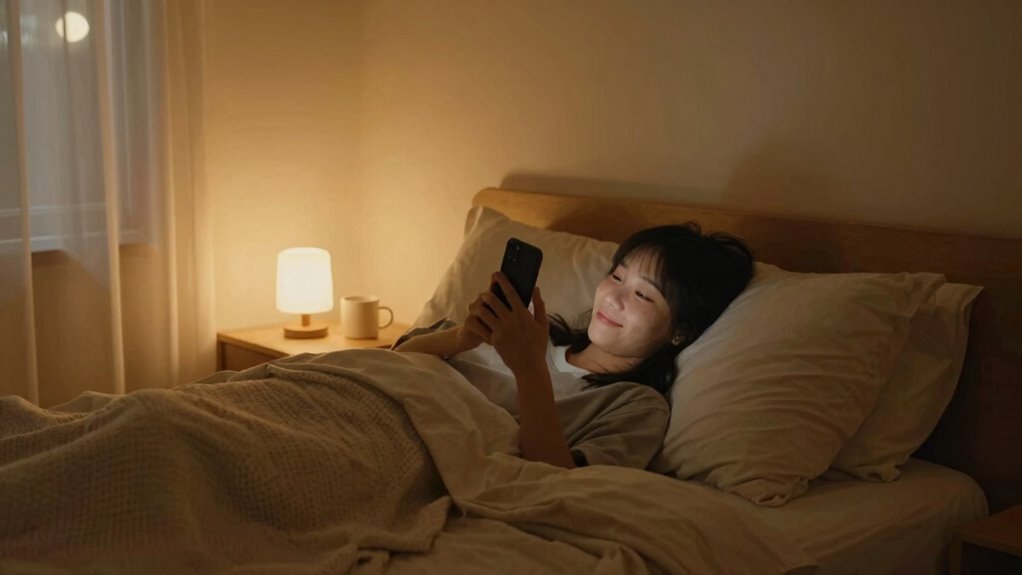

Scrolling your phone or watching TV before bed may feel relaxing, but it actually harms your sleep quality. The blue light from screens suppresses melatonin, which helps regulate your sleep-wake cycle. This makes it harder to fall asleep and stay asleep, leaving you tired the next day. To improve your sleep, try relaxing activities instead. Keep exploring for tips on creating a better bedtime routine and environment that promote restful sleep.

Get health and wellness essentials delivered free with Prime
- Fast, free delivery on millions of items
- Prime Video, Amazon Music and more included
- Member-only deals all year
Key Takeaways
- Using screens before bed relaxes you but suppresses melatonin, delaying sleep onset and reducing sleep quality.
- Blue light from screens interferes with your body’s natural sleep-wake cycle, making it harder to fall asleep.
- Screen time before bed increases alertness, leading to tossing and turning throughout the night.
- Relying on screens as a relaxation method can create an environment that hampers restful sleep.
- Replacing screen use with calming activities like reading or listening to music enhances sleep quality.

Many people don’t realize that a common bedtime habit can profoundly disrupt their sleep quality. That habit is scrolling through your phone or watching TV right before bed. While it might feel relaxing in the moment, it actually interferes with your ability to fall asleep and stay asleep. Your sleep environment becomes compromised because the blue light emitted from screens suppresses melatonin, the hormone responsible for regulating your sleep-wake cycle. As a result, your body stays alert longer, making it harder to drift into restful sleep. Even if you think you’re unwinding, this habit can create a cycle of tossing and turning that leaves you feeling exhausted the next day. Incorporating sleep hygiene practices can help reinforce healthy bedtime habits and improve overall sleep quality.
Instead of relying on screens for relaxation, you should focus on creating a sleep environment that promotes calmness. Dim the lights, keep your room cool, and eliminate noise disruptions to signal to your body that it’s time to wind down. Incorporating relaxation techniques into your bedtime routine can also make a significant difference. Deep breathing exercises, progressive muscle relaxation, or gentle stretching help calm your nervous system and prepare your body for sleep. These techniques not only ease tension but also help shift your mind away from stressors that may keep you awake. Developing a consistent pre-sleep routine can further strengthen your body’s association with restful sleep and support your overall sleep quality. Establishing a calm environment is essential for signaling to your brain that it’s time to rest, which can substantially improve sleep onset.
The key is to replace screen time with activities that foster a peaceful sleep environment. Reading a physical book, listening to soothing music, or practicing meditation can be incredibly effective. These habits not only improve your sleep environment but also encourage your body to produce more melatonin naturally. Over time, establishing a consistent pre-sleep routine that emphasizes relaxation techniques allows your body to associate these activities with sleep, making it easier to fall asleep quickly and stay asleep longer.
blue light blocking glasses for sleep
As an affiliate, we earn on qualifying purchases.
As an affiliate, we earn on qualifying purchases.
Frequently Asked Questions
Can This Bedtime Habit Cause Long-Term Sleep Issues?
Yes, this bedtime habit can cause long-term sleep issues. It may lead to ongoing sleep disruption, making it harder for you to fall asleep or stay asleep. Over time, poor sleep quality can negatively impact your mental health, increasing stress and anxiety. Consistently engaging in this habit might create a cycle of disrupted sleep and worsened mental well-being, so adjusting your routine is essential for better long-term health.
Are There Any Safe Alternatives to Improve Relaxation Before Bed?
A calm mind is a healthy mind. You can try meditation techniques, which help clear your thoughts and lower stress levels. Aromatherapy benefits, like lavender or chamomile, promote relaxation without disrupting sleep. These safe alternatives create a soothing bedtime routine that prepares your body for rest. Avoid screens and caffeine close to bedtime, and instead, focus on gentle breathing and calming scents to wind down effectively and naturally.
Does This Habit Affect Sleep Quality Differently for Men and Women?
Yes, this habit can affect sleep quality differently for men and women due to gender differences and hormonal impact. Women often experience more hormonal fluctuations, which may make them more sensitive to disruptions caused by this habit, leading to poorer sleep quality. Men, with more stable hormone levels, might not be as affected. Recognizing these differences helps you tailor your bedtime routines for better sleep health.
How Quickly Can Sleep Be Affected After Adopting This Habit?
You might notice sleep disruption within just a few nights of adopting this habit, as it creates a relaxation paradox—feeling calming initially but harming your sleep later. This quick shift happens because your body’s natural rhythms are sensitive to bedtime routines. The sooner you recognize this pattern, the faster you can make changes to protect your sleep quality. Don’t wait too long, or it’ll be a long road to recovery.
Is This Bedtime Habit Common Among Specific Age Groups?
You might find this bedtime habit more common among teenagers and the elderly. Teens often stay up late, using devices or relaxing with screens, which can interfere with their sleep patterns. Similarly, elderly individuals may adopt earlier or irregular bedtimes, sometimes influenced by health or routines. Both groups could be unaware that this habit, though relaxing, might actually disrupt their sleep quality later in the night.
reading light for bedtime reading
As an affiliate, we earn on qualifying purchases.
As an affiliate, we earn on qualifying purchases.
Conclusion
If you want restful nights and energized mornings, it’s time to rethink your bedtime habits. Recognize what relaxes you, but also be aware of what hinders your sleep. Avoid habits that soothe temporarily but sabotage later rest. Prioritize calming routines that promote quality sleep, not just immediate comfort. Because true relaxation isn’t just about feeling good in the moment; it’s about setting yourself up for restorative sleep, for refreshed mornings, and for healthier, happier days ahead.
As an affiliate, we earn on qualifying purchases.
As an affiliate, we earn on qualifying purchases.
Fall Picks
fall essentials
As an affiliate, we earn on qualifying purchases.