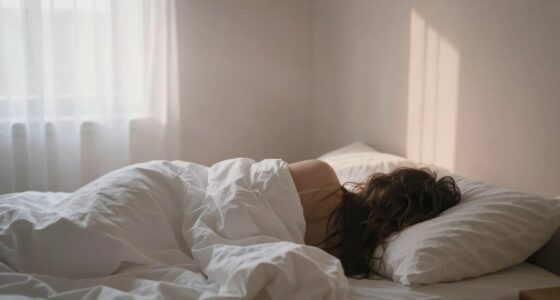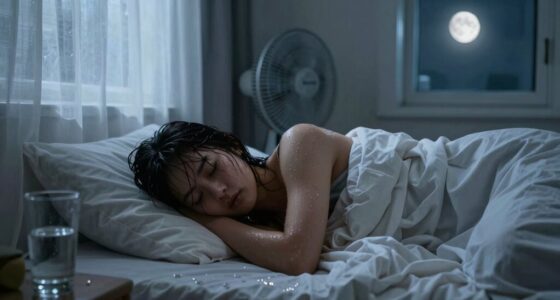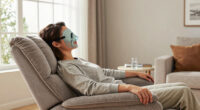
As a day sleeper, you need a different darkness strategy because exposure to natural and artificial light during daylight hours can disrupt your circadian rhythms and lower sleep quality. Using blackout curtains, sleep masks, and controlling indoor and outdoor lighting helps create a dark environment. Managing light sources and simulating night conditions support your melatonin production and overall rest. Keep going to discover effective tips to optimize your sleep during the day.
Key Takeaways
- Day sleepers require enhanced darkness measures to counteract natural light cues that disrupt their circadian rhythms.
- Bright outdoor lighting and light pollution more significantly interfere with daytime sleep quality.
- Managing internal and external light sources is crucial to mimic nighttime conditions during daylight hours.
- Blackout solutions and light shielding are more essential for day sleepers to achieve restorative sleep.
- Proper light control supports melatonin production, vital for daytime sleep health.
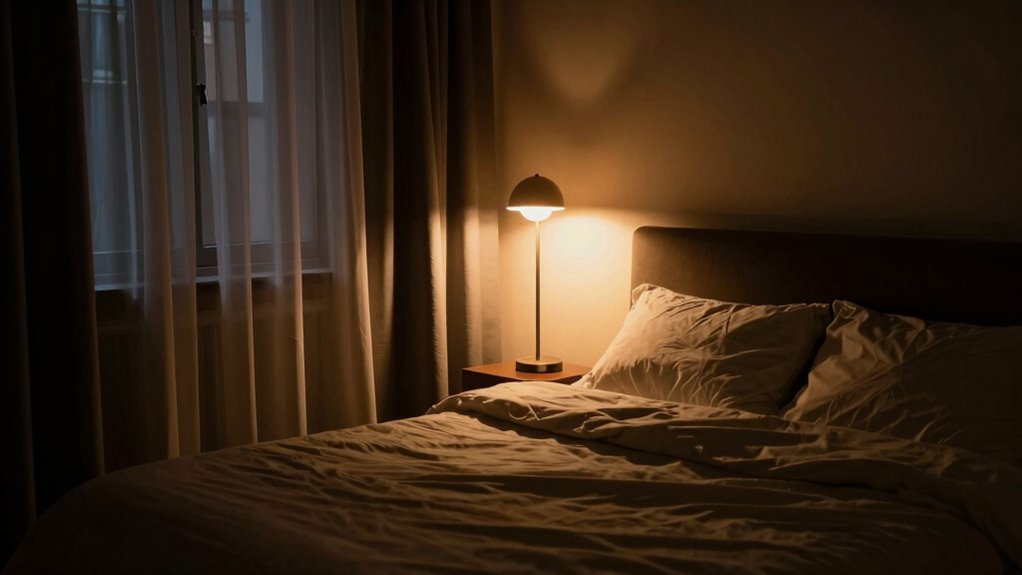
For those who sleep during the day, darkness isn’t just a comfort—it’s essential for quality rest. Your body’s internal clock, known as circadian rhythms, relies heavily on light cues to regulate sleep-wake cycles. When you sleep during daylight hours, these rhythms can become misaligned, making restful sleep more elusive. Light pollution, especially from streetlights, neon signs, and nearby buildings, often spills into your sleeping space, disrupting these natural cues. Without a proper darkness strategy, you might find yourself battling fatigue, grogginess, or difficulty falling asleep.
To protect your circadian rhythms, you need to create a sleep environment that minimizes light exposure. Blackout curtains or heavy window coverings are your first line of defense. They block out the sun and streetlights, helping your body recognize it’s time to rest. If your windows are exposed to bright outdoor lighting, consider layering with blackout shades or using window film to reduce intrusion. You can also invest in a sleep mask, which can be surprisingly effective in blocking residual light that sneaks through gaps or cracks. Remember, even small amounts of light can send signals to your brain that it’s daytime, interfering with melatonin production—the hormone responsible for sleep.
Create a dark sleep space with blackout curtains, window film, and masks to support melatonin and improve rest during the day.
In addition to physical barriers, controlling light sources inside your room is crucial. Turn off or cover electronic devices that emit bright screens, such as computers, phones, and TVs, at least an hour before you plan to sleep. Use dim, warm-colored lights if you need illumination, since they’re less likely to interfere with your sleep cycle. Creating a consistent nightly routine signals your brain that it’s time to wind down, helping reinforce your circadian rhythms despite the unconventional sleep hours. Managing external light sources, like outdoor lighting, is also vital, as light pollution can significantly disrupt your sleep environment. Implementing light pollution reduction strategies can further enhance your ability to create a dark sleeping space. Additionally, understanding the impact of artificial light on melatonin production can help you better time your light exposure and optimize your sleep quality. Controlling ambient light is especially important because even minimal light exposure can have a disruptive effect on sleep hormones, so being proactive about light management can make a noticeable difference.
Understanding and managing light pollution around your sleeping environment is key. You can install outdoor lighting shields or motion-activated lights to avoid unnecessary illumination that seeps into your space. If you live in an area with persistent outdoor light, consider adding additional blackout measures and adjusting your sleep schedule as much as possible. Incorporating light management techniques can help you better control your light environment and support your circadian health. The goal is to simulate nighttime conditions, even during the day, so your body can produce melatonin naturally and achieve restorative sleep.
Ultimately, your sleep quality depends on how well you shield yourself from disruptive light. By actively managing your environment—minimizing light pollution and supporting your circadian rhythms—you set the stage for deep, restful sleep during the day. It’s a tailored approach, but one that pays off by helping you feel more alert and energized when you’re awake.

Sumobaby 50"x60" Portable Blackout Curtains Blinds for Windows No Drill
- Blackout Effect: 100% blackout with reflective coating
- UV and Sunlight Blocking: Blocks harmful UV rays and sunlight
- Privacy and Heat Reduction: Enhances privacy and reduces heat
As an affiliate, we earn on qualifying purchases.
As an affiliate, we earn on qualifying purchases.
Frequently Asked Questions
How Does Light Exposure Affect Daytime Sleep Quality?
Light exposure can substantially impact your daytime sleep quality. High light intensity disrupts your circadian rhythm, making it harder to fall asleep and stay asleep during the day. Bright light triggers alertness and hampers melatonin production, leading to circadian disruption. To improve sleep, you should minimize exposure to intense light before rest, using blackout curtains or eye masks, and limit screen time to help your body stay in sync with your sleep schedule.
Can Blackout Curtains Interfere With Natural Circadian Rhythms?
Ironically, blackout curtains might seem like a perfect solution, but they can interfere with your natural circadian rhythms, especially if you’re exposed to light pollution outside. By blocking out natural cues, your sleep environment becomes disconnected from the day-night cycle. This disruption can make it harder for your body to regulate sleep and wakefulness properly. So, while they improve sleep quality, they might also mask essential signals your body needs.
Are Sleep Aids Effective for Daytime Sleepers?
Sleep aids can be effective for daytime sleepers, but you should be aware of sleep aid myths that might lead to misuse or dependency. While options like melatonin, white noise machines, or blackout curtains help create a suitable environment, they aren’t cure-alls. Use sleep aid options responsibly, and consult a healthcare professional if sleep issues persist. Tailoring your darkness strategy can improve your sleep quality markedly.
What Are the Best Sleep Environments for Shift Workers?
Did you know shift workers often report 30% poorer sleep quality? To create the best environment, focus on your sleep posture—keep your head and neck aligned for comfort. Use blackout curtains or eye masks to block light, and select bedding that’s both soft and supportive. Maintaining a cool, quiet room also helps. These strategies make certain you get restful sleep, even during unconventional hours.
How Does Caffeine Consumption Impact Daytime Sleep?
Caffeine consumption can markedly impact your daytime sleep by causing sleep disruption and increasing caffeine dependence. When you drink coffee or energy drinks before sleeping, the caffeine blocks sleep-inducing chemicals, making it harder to fall asleep and stay asleep. Over time, reliance on caffeine grows, worsening sleep quality. To improve your daytime rest, limit caffeine intake a few hours before sleep and establish a consistent sleep routine.

MZOO Luxury Sleep Mask for Women Men Patented Light Blocking Design
- Zero Eye Pressure: Deep 13mm arc-shaped eye cups
- Ideal for Side Sleepers: 15° curved thin sides for comfort
- Complete Light Blocking: Contoured cups and 22mm nose padding
As an affiliate, we earn on qualifying purchases.
As an affiliate, we earn on qualifying purchases.
Conclusion
As a day sleeper, tailoring your darkness strategy is essential for quality rest. Did you know that exposure to light during sleep can reduce melatonin levels by up to 50%? This disrupts your sleep cycle and leaves you feeling tired and groggy. By creating a dark environment, you help your body produce the sleep hormone naturally. Embrace blackout curtains, sleep masks, and other darkness tools—you’ll wake up feeling refreshed and ready to take on your day.
As an affiliate, we earn on qualifying purchases.

YUNLEX 2 Pack Amber Night Light Plug into Wall, Eye-Care Glow for Kids
- Adjustable 3-Level Brightness: Select Low, Medium, or High
- Diffused Amber Glow: Evenly reflects light for a cozy atmosphere
- Dusk-to-Dawn Sensor: Automatically turns on/off with ambient light
As an affiliate, we earn on qualifying purchases.
As an affiliate, we earn on qualifying purchases.