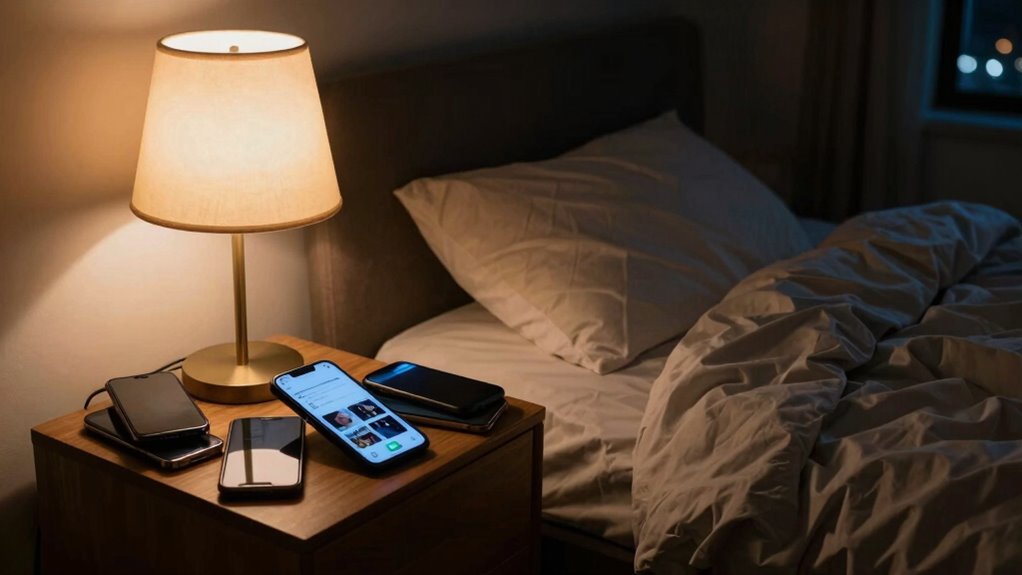

Staying up late to finish shows, scroll on screens, or work quietly pushes your bedtime later each week. These stimulating activities suppress melatonin and extend your wakefulness, gradually shifting your sleep schedule. Small delays might seem harmless, but over time, they cause your sleep routine to drift later and make mornings tougher. If you keep these habits, your sleep cycle won’t stay regular — stay tuned to discover how to regain control.

Get health and wellness essentials delivered free with Prime
- Fast, free delivery on millions of items
- Prime Video, Amazon Music and more included
- Member-only deals all year
Key Takeaways
- Lingering on screens close to bedtime suppresses melatonin, delaying sleep onset gradually.
- Engaging in stimulating activities late at night prevents proper wind-down, pushing bedtime later.
- Small nightly delays in bedtime accumulate over time, shifting your sleep schedule gradually.
- Inconsistent evening routines confuse your internal clock, making it harder to fall asleep at a regular time.
- Failing to establish a relaxing pre-sleep routine prolongs wakefulness and delays your natural sleep cycle.

You might not notice it at first, but there’s a quiet habit that can gradually push your bedtime later each week without you realizing it. That habit is often linked to your evening routines and how they influence your sleep hygiene. The way you wind down—or fail to—can subtly shift your internal clock, making it harder to stick to a consistent sleep schedule. Over time, small deviations, like staying up a little longer on weeknights or mindlessly scrolling through your phone, accumulate into markedly later bedtimes.
Your evening routines play a vital role in setting the stage for restful sleep. When you linger on screens, especially close to bedtime, the blue light emitted suppresses melatonin, the hormone that signals your body it’s time to sleep. This delay can turn a 10-minute scroll into a 30-minute extension, nudging your bedtime later and disrupting your sleep hygiene. If you’re not mindful of these habits, you start unwittingly shifting your schedule. Even minor delays, like finishing a show after your usual bedtime or working on a project late into the night, extend your wakefulness and make it harder to fall asleep promptly.
The problem is that your body thrives on consistency. When your evening routines are irregular or overly stimulating, your internal clock becomes confused. Without a set wind-down period, your sleep-wake cycle can drift, causing your bedtime to inch forward week after week. To combat this, you need to establish a solid, relaxing pre-sleep routine that signals to your brain it’s time to relax. This can include dimming the lights, reading a book, or practicing calming activities that don’t involve screens. These actions improve your sleep hygiene by helping your body prepare naturally for sleep. Being aware of how external factors, like sleep hygiene, influence your sleep can make a significant difference in maintaining a healthy schedule. Additionally, understanding your internal clock and its sensitivities can help you create more effective routines. Recognizing the role of circadian rhythms in sleep regulation can guide you in aligning your habits with your natural biological signals. Furthermore, fostering awareness of these rhythms can help you develop habits that support your overall biological clock.
It’s easy to underestimate the impact of these small nightly choices, but they add up. Each night that you stay up a little later, even by a few minutes, shifts your rhythm ever so slightly. Over weeks, this can lead to a considerable delay in your bedtime, making mornings more difficult and your sleep less restorative. The key is to be intentional about your evening routines, sticking to a consistent schedule, and creating a calming environment. By doing so, you’ll reinforce healthy sleep habits, prevent your bedtime from creeping later, and ensure you get the restful sleep your body needs. Small changes now can preserve your sleep hygiene and keep your sleep schedule aligned, helping you feel more refreshed and energized each day.
blue light blocking glasses for sleep
As an affiliate, we earn on qualifying purchases.
As an affiliate, we earn on qualifying purchases.
Frequently Asked Questions
How Does Screen Time Affect My Bedtime Delay?
Screen time affects your bedtime delay because the blue light from screens messes with your sleep environment by suppressing melatonin production. When you use devices before bed, it disrupts your natural bedtime rituals, making it harder to feel sleepy. As a result, you stay awake longer, pushing your bedtime later each week. To improve your sleep, try limiting screen time before bed and creating calming bedtime rituals.
Can Caffeine Consumption Influence My Sleep Schedule?
Yes, caffeine consumption can influence your sleep schedule. If you develop caffeine dependence, you might find yourself needing more to stay alert, which increases the risk of sleep disruption. Drinking caffeine late in the day can delay your bedtime and reduce sleep quality, making it harder to fall asleep. To maintain a consistent sleep schedule, limit caffeine intake, especially in the afternoon and evening.
What Role Does Stress Play in Shifting Sleep Habits?
Stress acts like a mischievous conductor, triggering cortisol effects that keep your mind alert and delay sleep. When stress triggers your body’s alarm system, it causes your sleep schedule to shift later each night. You might find yourself tossing and turning, unable to switch off. Managing stress reduces cortisol effects, helping you settle earlier and restore your natural sleep rhythm. Think of calming activities as your personal lullabies against this chaos.
How Do Weekend Routines Impact Weekly Sleep Patterns?
Weekend routines can disrupt your sleep consistency by allowing more flexibility, which often leads you to stay up later. This shift makes it harder to wake up refreshed and maintains a regular sleep schedule during the week. To keep your sleep patterns stable, try to limit weekend variability and stick to consistent bedtimes, even on days off. This way, your body maintains a steady rhythm and improves overall sleep quality.
Are There Specific Foods That Promote Earlier Bedtimes?
You can set the stage for a cozy night’s sleep by choosing sleep-inducing foods and thoughtful bedtime snack options. Foods rich in tryptophan, magnesium, and melatonin, like bananas, almonds, or warm milk, help signal your body it’s time to wind down. Incorporate these into your evening routine, and you’ll find it easier to drift off earlier, creating a more consistent sleep schedule and waking up refreshed.
As an affiliate, we earn on qualifying purchases.
Conclusion
By understanding how small habits can delay your bedtime, you stay in control of your sleep schedule. Did you know that just 10 extra minutes of screen time each night can push your bedtime back by over an hour after a week? Recognizing these quiet pushes helps you make smarter choices. Take charge now—set boundaries and reclaim your nights before your bedtime slips away completely. Your better sleep starts with one conscious decision today.
As an affiliate, we earn on qualifying purchases.
As an affiliate, we earn on qualifying purchases.
Halloween Picks
halloween
As an affiliate, we earn on qualifying purchases.