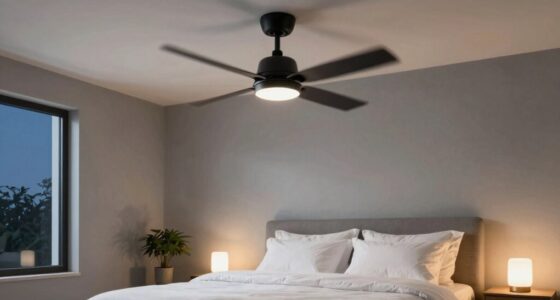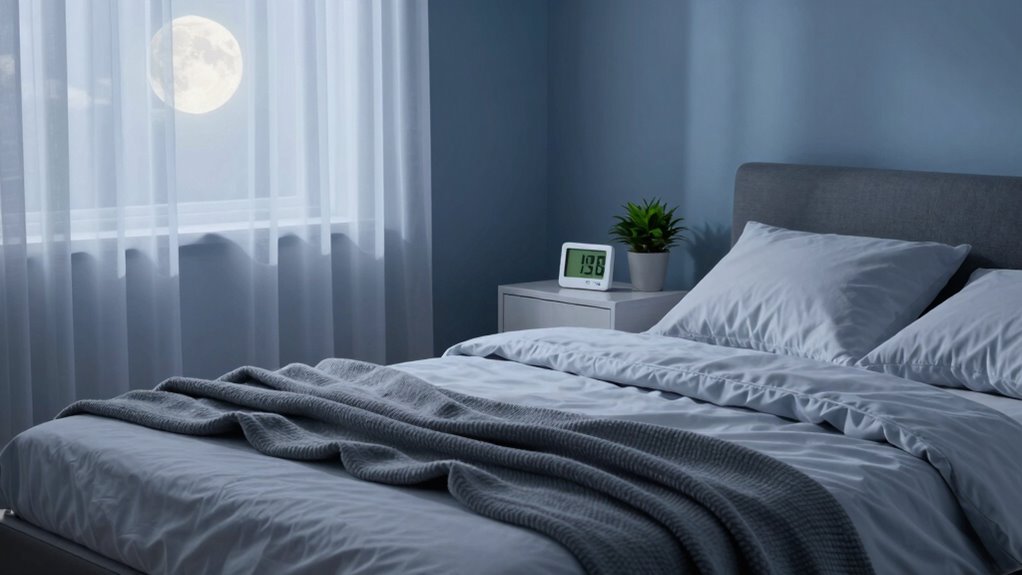

Cool rooms help you sleep better because your body naturally drops its core temperature in the evening, signaling it’s time to rest. A cool environment makes it easier for your body to regulate this temperature and promotes deeper, more restorative sleep. Good air circulation and balanced humidity further enhance comfort and breatheability. By creating the right conditions, you support your body’s natural sleep cycle. Keep going to discover how to optimize your sleep environment even more.

Get health and wellness essentials delivered free — and shop member deals
- Fast, free delivery on millions of items
- Access to Prime Big Deal Days deals on October 6–7
- Prime Video, Amazon Music and more included
Key Takeaways
- Cooler rooms help lower the body’s core temperature, signaling the brain to initiate sleep faster.
- Reduced ambient temperature supports the body’s natural circadian rhythm, enhancing sleep quality.
- Proper air circulation prevents stale air buildup, making the environment more comfortable and breathable.
- Maintaining optimal humidity levels prevents discomfort from dryness or excess moisture, promoting better rest.
- The combined effect of cool temperatures, good airflow, and balanced humidity creates a restful sleep environment.
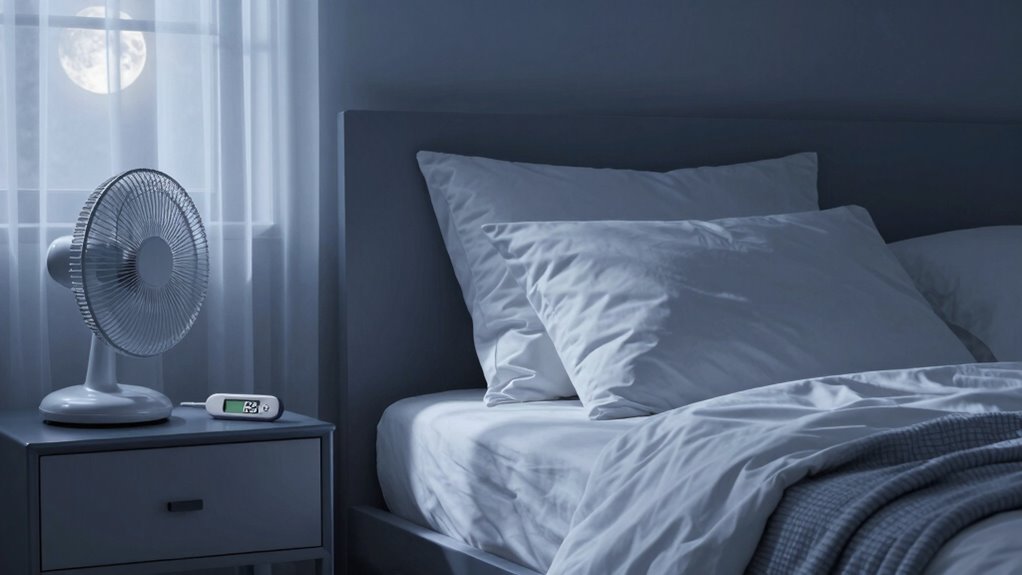
Have you ever noticed how a cooler room can make falling asleep easier and sleep feel more restful? There’s real science behind that feeling, rooted in how your body responds to temperature, air circulation, and humidity levels. When the room is cooler, your body doesn’t have to work as hard to regulate its core temperature. Your core temperature naturally drops in the evening, signaling your body that it’s time to sleep. If the environment is too warm, this process is hindered, making it harder to fall asleep and stay asleep. Cooler temperatures support your body’s natural circadian rhythm, helping you drift off faster and enjoy more restorative sleep. Proper air circulation also plays a vital role in maintaining a comfortable sleeping environment by preventing the buildup of stale air and reducing discomfort. Additionally, good air circulation can help reduce allergens in your bedroom, which might otherwise interfere with restful sleep. Ensuring your room is well-ventilated can also help mitigate air pollutants that accumulate indoors, further enhancing sleep quality.
A cooler room helps your body relax, fall asleep faster, and enjoy deeper, more restorative rest.
Air circulation plays an essential role in creating that ideal sleeping environment. Good air circulation ensures fresh, oxygen-rich air reaches your lungs, which can improve sleep quality. When air moves around your room, it prevents the buildup of stale air and reduces the likelihood of stuffiness, which can cause discomfort or waking up in the night. Proper circulation also helps dissipate excess heat generated by your body, keeping the environment consistently cool. Fans and open windows are simple but effective ways to promote this circulation, helping you maintain a comfortable sleep temperature throughout the night.
Humidity levels are equally important in how a room feels at night. When humidity is too high, the air can feel heavy and damp, making it harder to breathe comfortably and causing you to sweat more. Excess moisture can also foster mold growth and dust mites, which may trigger allergies or respiratory issues, disrupting your sleep. On the other hand, overly dry air can cause dry skin, irritated sinuses, and throat discomfort. Maintaining ideal humidity—usually between 40% and 50%—creates a balanced environment that feels cool and comfortable. This balance helps your respiratory system stay relaxed and reduces the likelihood of waking up due to discomfort caused by dryness or dampness.
In essence, a cooler room with good air circulation and balanced humidity levels creates an environment that aligns perfectly with your body’s natural sleep processes. It allows your core temperature to decrease smoothly, keeps the air fresh and breathable, and prevents discomfort from humidity extremes. All these factors work together to help you fall asleep faster, stay asleep longer, and wake up feeling refreshed. So next time you’re setting up your sleep space, pay attention to these details—they’re key to revealing a more restful night’s sleep.
As an affiliate, we earn on qualifying purchases.
Frequently Asked Questions
How Does Room Temperature Affect Sleep Quality?
You sleep better in cooler rooms because lower temperatures help regulate your body’s core temperature, essential for quality sleep. Proper bedroom insulation keeps the room cool and stable, preventing sudden temperature changes, while ambient humidity levels influence how comfortable you feel. When humidity is just right, your body can cool efficiently without feeling damp or dry. Together, these factors create an ideal environment that promotes deeper, more restful sleep.
Do Cool Rooms Improve Mental Alertness Overnight?
Yes, sleeping in a cool room can improve your mental alertness overnight. Cooler temperatures help you achieve better sleep duration and promote healthier dream patterns, leading to more restorative rest. When you sleep in a comfortable, cool environment, your brain processes information more efficiently, so you wake up feeling more alert and focused. Maintaining a cooler room temperature supports overall sleep quality, directly benefiting your mental clarity the next day.
Are There Health Risks to Sleeping in Cool Environments?
Sleeping in cool environments generally doesn’t pose health risks; in fact, it can improve sleep quality. However, if your room’s air quality is poor or noise disturbances are frequent, your sleep might suffer, leading to potential health issues. A cool room can help regulate body temperature, but guarantee good ventilation and minimize noise for ideal rest. About 30% of people find cooler rooms more comfortable for sleep, boosting overall well-being.
How Does Body Temperature Regulation Influence Sleep Comfort?
Your body temperature regulation directly impacts sleep comfort by promoting thermal comfort, which is essential for restful sleep. When your room is cool, your body can naturally lower its temperature, making it easier to fall asleep and stay asleep. Good sleep hygiene includes maintaining a ideal sleep environment, and a cool room helps regulate your body temperature, reducing tossing and turning, and supporting deeper, more restorative sleep.
What Are the Best Thermostat Settings for Optimal Sleep?
Set your thermostat to around 65°F (18°C) for the perfect sleep zone—any warmer or cooler, and you risk tossing and turning all night. Use smart thermostats to automatically adjust the temperature, ensuring consistent comfort. Don’t forget humidity control; keeping it between 40-60% prevents stuffiness and dryness, making your sleep environment feel just right. These tweaks create a sleep haven that feels as cool and cozy as a mountain retreat.
adjustable room temperature sleep device
As an affiliate, we earn on qualifying purchases.
As an affiliate, we earn on qualifying purchases.
Conclusion
So, next time you find yourself drifting into restful sleep in a cool room, remember it’s not just comfort—it’s science whispering sweet lullabies. Cooler temperatures help lower your core body temperature, signaling your brain to release sleep hormones. It’s as if the night itself conspires with your biology, turning a simple room into a sanctuary of rest. Embrace the chill, and let nature’s gentle nudge guide you into a peaceful, restorative slumber.
As an affiliate, we earn on qualifying purchases.
As an affiliate, we earn on qualifying purchases.
Fall Picks
fall essentials
As an affiliate, we earn on qualifying purchases.