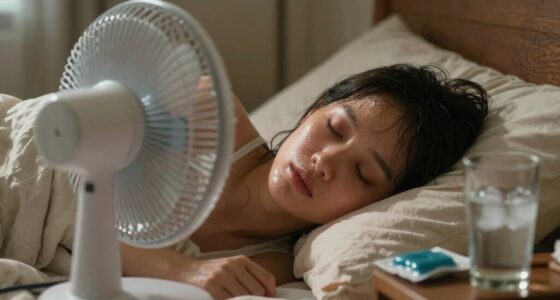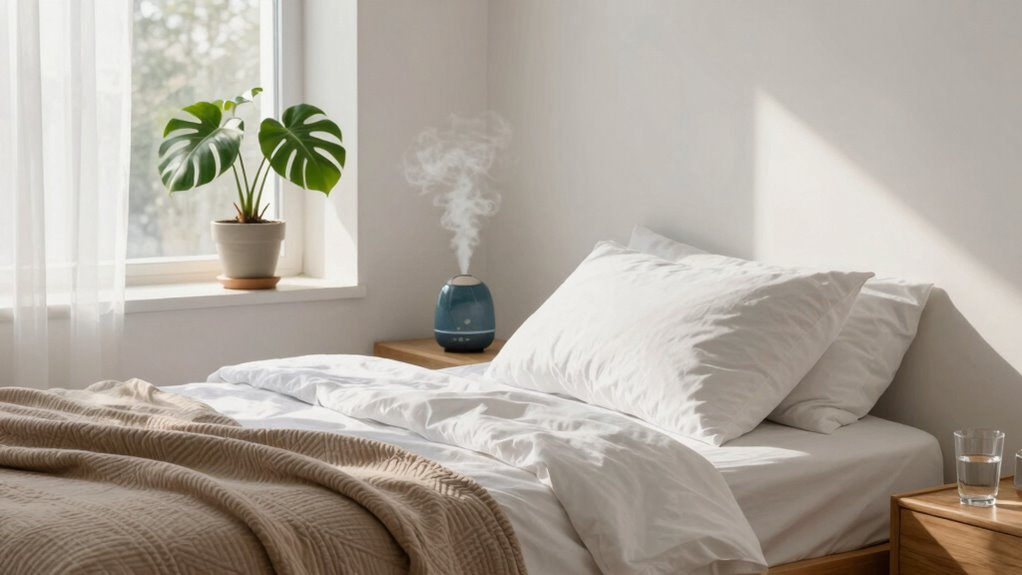

Environmental fixes often beat fancy sleep hacks because they address the root causes of sleep issues, providing long-term benefits. Simple adjustments like soundproofing, blackout curtains, and improving air quality create a stable sleep environment you can rely on every night. In contrast, sleep hacks such as white noise or screen timers are temporary and less effective long-term. Keep exploring to discover how making these environmental changes can transform your sleep for good.
Key Takeaways
- Environmental fixes address root causes like noise, light, and air quality, offering more lasting sleep improvements.
- They create a stable sleep environment, reducing reliance on temporary hacks.
- Long-term solutions prevent ongoing disruptions caused by environmental factors.
- Sleep hacks are often quick fixes that do not resolve underlying issues.
- Implementing environmental adjustments promotes healthier, more consistent sleep patterns over time.
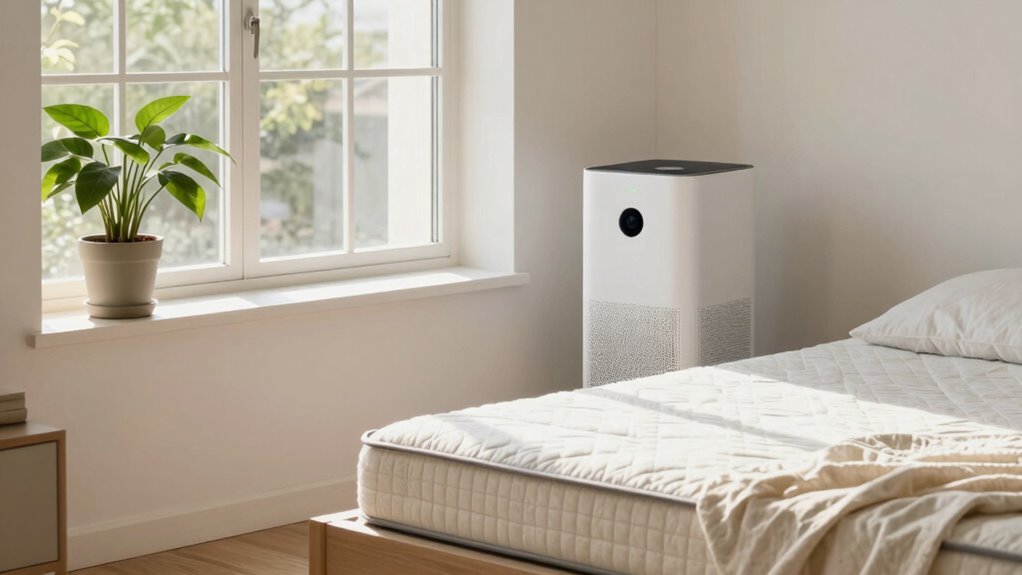
When it comes to improving your sleep, you might wonder whether tweaking your environment or trying out sleep hacks is more effective. Many people turn to quick fixes—like taking supplements or trying relaxation techniques—hoping these hacks will make a noticeable difference. But often, the real game-changers are the environmental fixes you set up around your bedroom. These adjustments target the root causes of sleep disruption, providing a more consistent and restful night.
One of the biggest culprits of poor sleep is noise pollution. Even if you’re tired, a sudden loud noise or constant background noise can wake you up or prevent you from reaching deep sleep stages. Sleep hacks, like listening to white noise or using calming sounds, can help sometimes, but they’re often a band-aid solution. Environmental fixes, on the other hand, involve addressing the source of the noise. Installing soundproofing, sealing gaps in windows, or using heavier curtains can dramatically reduce noise pollution. When you create a quiet environment, you lay a solid foundation for uninterrupted sleep. This approach doesn’t rely on temporary fixes; instead, it tackles the problem at its origin, ensuring more consistent rest over time. Understanding the impact of indoor air quality on sleep can further enhance these environmental strategies, as pollutants and poor ventilation can also interfere with restful sleep. Additionally, creating a balanced sleep environment can influence your overall sleep quality beyond just noise and light control. Recognizing the importance of environmental factors helps underline how crucial these adjustments are for fostering healthy sleep habits.
Similarly, bedroom lighting plays a crucial role in sleep quality. Bright lights or artificial screens before bed can interfere with your circadian rhythm, making it harder to fall asleep. Sleep hacks might suggest wearing blue light blocking glasses or setting a sleep timer on devices, but these are short-term solutions. Environmental fixes involve controlling your bedroom’s lighting to mimic natural darkness. Using blackout curtains or installing dimmable lights helps signal to your body that it’s time to wind down. When your room is dark and cozy, your body produces melatonin naturally, making it easier to fall asleep and stay asleep. These changes don’t just help you get to sleep faster; they improve the overall quality of your rest. Additionally, understanding how sleep environments impact your sleep can help you make more effective adjustments. Recognizing the importance of a comfortable and consistent sleep setting can make a significant difference in your sleep health. By addressing these environmental elements, you set the stage for healthier, more restorative sleep every night.
soundproof bedroom windows
As an affiliate, we earn on qualifying purchases.
As an affiliate, we earn on qualifying purchases.
Frequently Asked Questions
Can Environmental Changes Improve Sleep Quality Immediately?
Yes, environmental changes can improve your sleep quality immediately. By adjusting your light exposure—dimming lights before bed and getting natural sunlight during the day—you help regulate your internal clock. Additionally, maintaining a comfortable temperature, around 65-70°F, promotes better sleep. These simple tweaks signal to your body that it’s time to wind down, leading to quicker sleep onset and more restful nights without needing complex hacks.
Are Environmental Fixes Cost-Effective Long-Term Solutions?
Environmental fixes are usually cost-effective long-term solutions, especially when you consider the cost analysis over time. While there might be initial implementation challenges, such as setting up blackout curtains or adjusting room temperature, these changes often pay off with better sleep quality. Think of it as putting money in the bank—you’re investing in your health and well-being, which can save you money on health issues down the line.
How Do Environmental Factors Affect Sleep Hormones?
Environmental factors like light exposure and temperature regulation directly influence your sleep hormones. Exposure to natural light during the day helps regulate melatonin, making it easier to fall asleep at night. Conversely, dim lighting signals your body to produce melatonin. Maintaining a cool, consistent temperature in your bedroom also supports hormone balance, preventing disruptions. These environmental tweaks optimize your sleep hormones naturally, often proving more effective than complex sleep hacks.
Do Environmental Fixes Work Equally for Everyone?
Studies show that about 65% of people report improved sleep with environmental fixes, but they don’t work equally for everyone. Your personal preferences and cultural influences shape how effective these changes are. For instance, some prefer complete darkness, while others find a bit of light comforting. So, customizing your environment based on what feels right for you boosts your chances of better sleep, regardless of general advice.
What Are Common Environmental Mistakes That Disrupt Sleep?
You often disrupt your sleep by neglecting good sleep hygiene and bedroom optimization. Common mistakes include keeping your room too bright or noisy, using screens before bed, or having an uncomfortable mattress. Also, irregular sleep schedules and consuming caffeine late in the day interfere with rest. Improving your sleep hygiene—like maintaining a cool, dark, and quiet environment—and optimizing your bedroom setup can notably enhance your sleep quality.
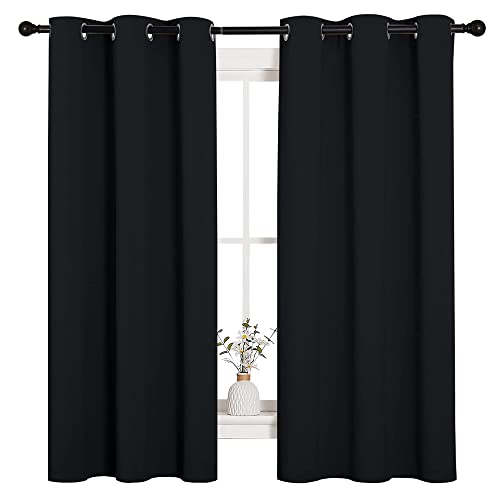
NICETOWN Halloween Pitch Black Solid Thermal Insulated Grommet Blackout Curtains/Drapes for Bedroom Window (2 Panels, 42 inches Wide by 63 inches Long, Black)
READY MADE: Set includes 2 BLACKOUT CURTAINS PANELS of 42" wide x 63" length with 6 grommets top…
As an affiliate, we earn on qualifying purchases.
As an affiliate, we earn on qualifying purchases.
Conclusion
Sometimes, tweaking your environment is like planting a sturdy tree in your backyard—steadier and more reliable than chasing fleeting tricks. You don’t need the latest sleep hack to transform your nights; simple fixes like blackout curtains or a cooler room can turn your bedroom into a peaceful haven. Think of environmental adjustments as the roots that support healthy sleep, anchoring you in consistency. With these steady foundations, restful nights become a natural part of your everyday landscape.
air purifier for better sleep
As an affiliate, we earn on qualifying purchases.
As an affiliate, we earn on qualifying purchases.
dimmable bedroom lighting
As an affiliate, we earn on qualifying purchases.
As an affiliate, we earn on qualifying purchases.