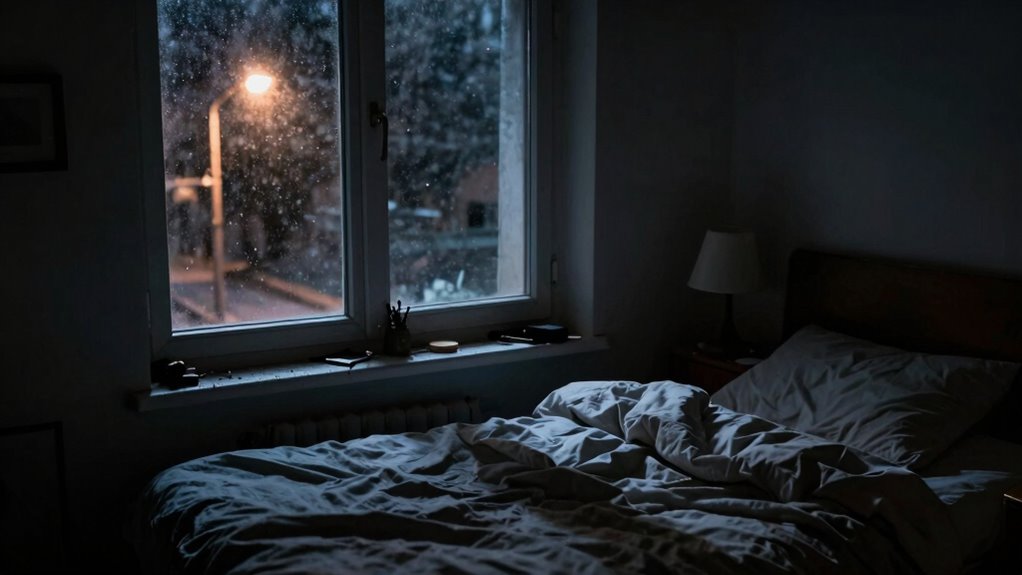

If your sleep problems persist despite good sleep habits, environmental factors might be the cause. Pay attention to noise, light, and air quality in your bedroom—they can disrupt your sleep cycles, cause frequent awakenings, or delay falling asleep. Notice if bright lights or sounds bother you, or if stale air makes breathing harder. Tracking these issues can help you determine if your environment is influencing your rest, and you’ll find more tips to improve your sleep by exploring further.

Get health and wellness essentials delivered free with Prime
- Fast, free delivery on millions of items
- Prime Video, Amazon Music and more included
- Member-only deals all year
Key Takeaways
- Notice if your sleep worsens in noisy, brightly lit, or poorly ventilated environments.
- Check for frequent awakenings or difficulty falling asleep when environmental conditions change.
- Observe if reducing noise, light, or improving air quality improves your sleep quality.
- Identify if screen time or artificial lighting before bed correlates with sleep difficulties.
- Recognize if environmental factors mimic or worsen symptoms of medical sleep disorders.

Have you ever wondered if your sleep troubles might stem from your environment rather than a medical issue? Sometimes, what keeps you awake isn’t a health condition but the surroundings you sleep in. Noise pollution is a common culprit that can severely disrupt your sleep cycles. If your bedroom is next to a busy street, or if your house gets noisy during the night, you might find yourself waking up multiple times or struggling to fall asleep in the first place. Even subtle sounds like traffic, sirens, or loud neighbors can fragment your sleep, leaving you tired and groggy during the day. You may not realize it, but constant noise can increase stress hormones and prevent your body from reaching the deeper, restorative sleep stages. Recognizing these environmental factors can help you take targeted steps to improve your sleep quality.
Light exposure is another environmental factor that can sabotage your sleep quality. If your bedroom isn’t dark enough, or if light sneaks in through curtains or gaps in blinds, your body’s internal clock—the circadian rhythm—gets thrown off. Exposure to even small amounts of light during the night can suppress melatonin production, the hormone responsible for signaling your body that it’s time to sleep. This suppression delays your sleep onset, causes you to wake more often, and reduces the overall quality of your rest. If you tend to use screens before bed or leave a nightlight on, you’re adding to the problem. Even ambient light from electronic devices can interfere with your sleep cycle, making it harder to fall asleep and stay asleep through the night. Recognizing how light pollution impacts your sleep can help you make targeted adjustments for better rest. Being aware of sleep environment factors is essential for understanding and managing sleep disruptions. Taking steps to reduce light exposure can significantly improve your sleep quality and overall well-being. Additionally, ensuring proper ventilation can help maintain a comfortable and healthy sleep space, reducing disturbances caused by stale or humid air. Poor air quality can also lead to breathing issues that disrupt sleep, so maintaining good airflow is crucial for restful nights.
As an affiliate, we earn on qualifying purchases.
Frequently Asked Questions
Can Sleep Issues Be Caused by External Lighting or Noise?
Yes, external lighting and noise can cause sleep issues. Light pollution from streetlights or electronic devices can interfere with your circadian rhythm, making it hard to fall asleep. Noise disturbances, like traffic or loud neighbors, disrupt your sleep cycles, leading to fragmented rest. To improve sleep quality, consider blackout curtains and earplugs. Creating a quieter, darker environment helps your body relax and signals that it’s time to sleep.
How Quickly Can Environmental Changes Improve Sleep Quality?
You can often notice improvements in sleep quality within just a few nights of making environmental modifications, especially if poor sleep stems from external factors. Studies show that practicing good sleep hygiene and reducing noise, light, or temperature disruptions can lead to faster sleep onset and deeper rest. By focusing on environmental changes, you actively create a more conducive sleep environment, enabling your body to adjust quickly and improve overall sleep quality.
Are There Specific Environmental Factors That Disrupt REM Sleep?
Yes, environmental factors like poor air quality and improper temperature control can disrupt REM sleep. You might notice restless nights or difficulty staying asleep if your bedroom’s air is stuffy or polluted. Similarly, if the room is too hot or cold, your body struggles to reach the ideal conditions for REM sleep. Improving air quality and maintaining a consistent, comfortable temperature can help you achieve more restorative REM sleep.
What Tools Can Measure Environmental Impacts on Sleep?
You can measure environmental impacts on sleep with simple tools like air quality monitors and temperature control devices. These gadgets are so precise, they can detect even tiny changes that might disrupt your rest. An air quality monitor tracks pollutants and allergens, while a smart thermostat helps maintain the perfect temperature. Using these tools, you can optimize your environment, ensuring it’s as sleep-friendly as a cozy cloud.
Can Environmentally Caused Sleep Problems Be Permanent?
Environmental sleep problems caused by indoor allergens or poor air quality can become permanent if you don’t address them. Continuous exposure to dust, mold, or chemicals can lead to long-term issues like allergies or respiratory problems, disrupting your sleep over time. To prevent permanency, improve your indoor air quality, reduce allergens, and create a healthier sleep environment. Immediate action helps guarantee these issues don’t become a lasting part of your sleep health.
As an affiliate, we earn on qualifying purchases.
Conclusion
If your sleep struggles feel like a restless night’s wind, whispering secrets of the environment, it’s time to listen closely. Your bedroom is a garden; if weeds of noise, light, or temperature creep in, they choke your peace. By tending to these hidden intruders, you clear the way for restful nights. Remember, a serene space blooms into a restful mind—your sanctuary where dreams can flourish, free from the shadows of environmental disruption.
As an affiliate, we earn on qualifying purchases.
As an affiliate, we earn on qualifying purchases.
Halloween Picks
halloween
As an affiliate, we earn on qualifying purchases.