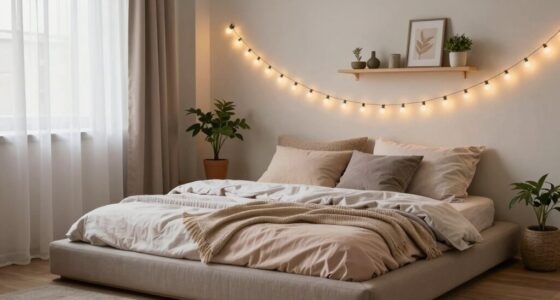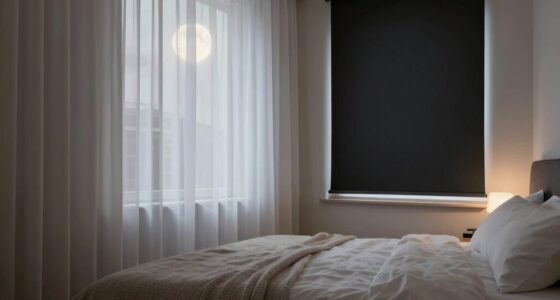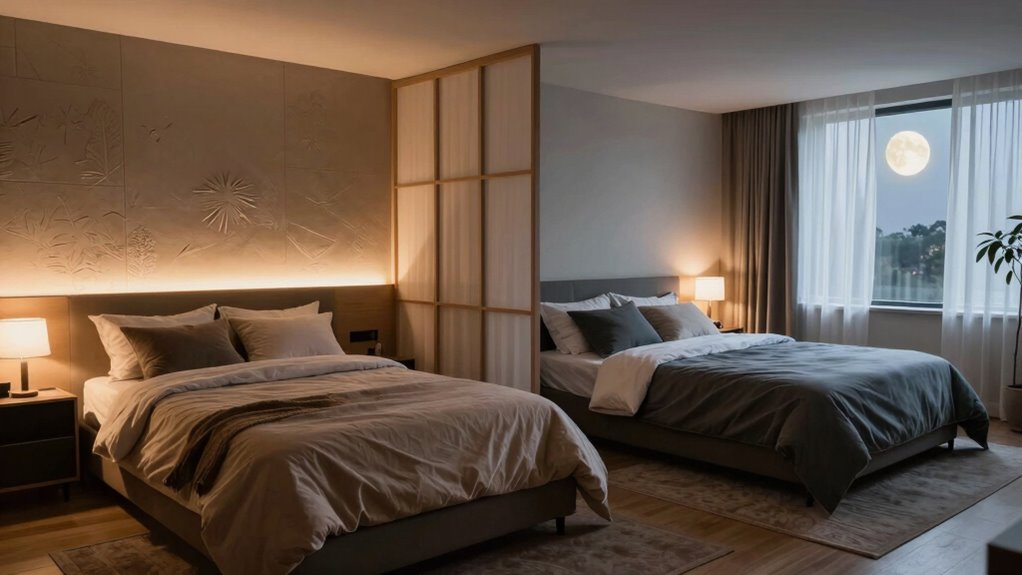

Your bedroom design is key when you and your partner have different sleep needs because it helps create a personalized, disturbance-free space. Thoughtful layouts, adjustable lighting, and smart storage options allow each of you to customize your side without disrupting the other. Incorporating wellness features and noise-reducing elements can also improve sleep quality for both. If you want to discover how thoughtful design can truly enhance your shared sleep environment, there’s more to explore.

Get health and wellness essentials delivered free with Prime
- Fast, free delivery on millions of items
- Prime Video, Amazon Music and more included
- Member-only deals all year
Key Takeaways
- Customized lighting ensures each partner can adjust their environment without disturbing the other’s sleep.
- Strategic layout and soundproofing minimize noise and disruptions for differing sleep schedules.
- Dedicated wellness zones and exercise spaces support individual health routines and improve overall sleep quality.
- Smart storage solutions reduce clutter, creating a calm, restful space tailored to both partners’ needs.
- Flexible design elements, like adjustable lighting and privacy zones, accommodate diverse sleep preferences and routines.
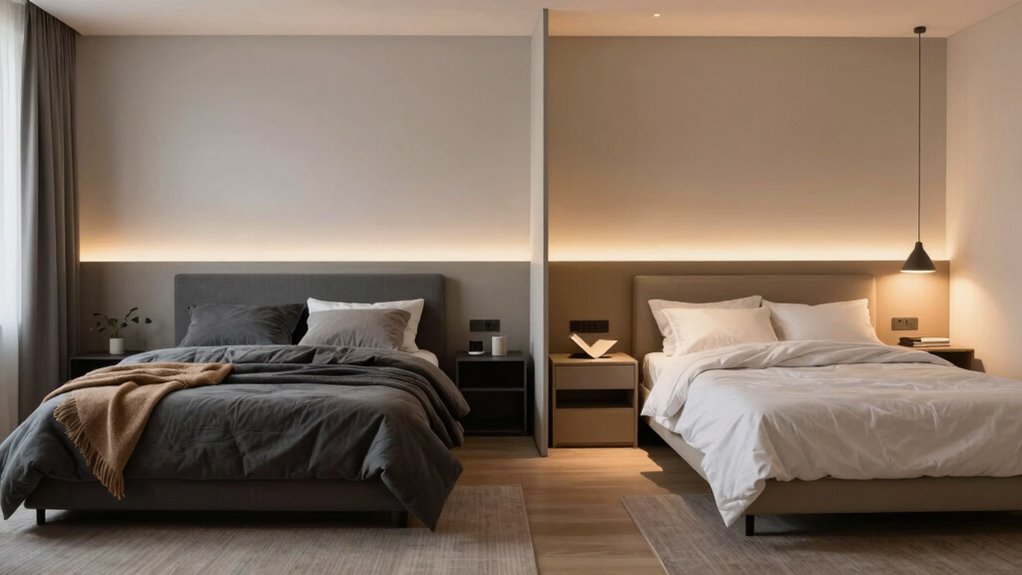
When couples have different sleep needs, creating a bedroom that accommodates both can seem challenging, but it’s entirely achievable. The key lies in thoughtful design choices that prioritize comfort for both partners. Lighting ambiance plays a vital role here. One partner might prefer a dim, calming environment to wind down, while the other may need brighter light for reading or waking up. To address this, consider installing layered lighting—dimmable overhead lights combined with bedside lamps or adjustable sconces. This way, each of you can customize the lighting to suit your sleep routines without disturbing the other. Smart lighting solutions, such as voice-activated or app-controlled fixtures, offer even more flexibility, allowing you to set different lighting scenes for various times of the day. Additionally, incorporating home exercise equipment into your space thoughtfully can help promote overall wellness and reduce stress, contributing to better sleep quality for both partners. Creating designated zones within the bedroom can also help manage different sleep preferences more effectively. Including sleep-friendly design elements like sound-absorbing fabrics or textures can further enhance the sleep environment for both individuals.
Layered, adjustable lighting creates personalized, peaceful sleep environments for both partners.
Storage solutions are equally important when designing a bedroom for couples with differing sleep needs. Clutter can disrupt sleep and create tension, so investing in smart storage keeps the space organized and peaceful. Incorporate under-bed drawers or storage ottomans to hide away items that might otherwise clutter your room. For items that need to be within reach but shouldn’t disturb sleep, consider installing wall-mounted shelves or bedside caddies. These options help you keep essentials like glasses, medications, or books accessible without sacrificing visual serenity. When one partner prefers a darker environment, blackout curtains or layered window treatments become essential to block out external light and noise. The use of layered window treatments can provide both privacy and light control, enhancing sleep comfort. Additionally, choosing noise-reducing materials for walls or floors can further improve the bedroom’s soundproofing and help both partners sleep more soundly. Strategically placing storage units to reduce visual clutter can also create a more calming environment that supports restful sleep.
The overall bedroom layout should promote separation where needed, especially if sleep schedules vary considerably. A well-thought-out arrangement of furniture enhances privacy and reduces disturbances. For example, placing beds on opposite sides of the room or using room dividers can help each person feel more secure and relaxed. When it comes to decor, choose calming colors and textures that promote tranquility. Soft bedding, plush rugs, and muted tones contribute to a restful atmosphere, regardless of individual sleep preferences. Incorporating soundproofing techniques can further minimize noise disturbances, making it easier for each partner to rest peacefully. Thoughtful placement of furniture and accessories can also help optimize airflow and temperature, further supporting restful sleep environments.
In the end, designing a bedroom for couples with different sleep needs isn’t just about aesthetics; it’s about creating a space that adapts to your unique routines. By focusing on lighting ambiance and smart storage solutions, you can craft a room that’s both functional and peaceful. With some thoughtful planning, you’ll find ways to sleep better together, respecting each other’s needs without sacrificing comfort or style.
As an affiliate, we earn on qualifying purchases.
Frequently Asked Questions
How Can Lighting Be Adjusted for Different Sleep Schedules?
You can adjust lighting for different sleep schedules by choosing layered lighting options that suit each person’s needs. Use dimmable lights or smart bulbs to control brightness, and select warm color schemes for relaxing evenings. Incorporate different decor styles with cozy lamps or bedside sconces that can be turned on or off independently. This way, you create a personalized environment, helping each of you rest better without disturbing the other’s sleep.
What Are the Best Mattress Types for Couples With Varying Sleep Preferences?
You should choose a mattress with customizable firmness options or dual comfort layers to suit both partners. Consider sleep material choices like memory foam, latex, or hybrid designs that offer pressure relief and support. Opt for a medium firmness as a versatile choice, or split mattresses to match individual preferences. This approach guarantees both of you sleep comfortably, reducing disturbances and improving overall rest quality.
How Do Temperature Controls Impact Sleep Quality for Different Sleepers?
Temperature controls greatly impact sleep quality by enhancing temperature regulation and sleep comfort. When you adjust your bedroom’s temperature settings, you create an environment that suits both hot and cold sleepers. This prevents overheating or feeling too cold, which can disrupt sleep cycles. Proper temperature regulation helps you fall asleep faster, stay asleep longer, and wake up feeling refreshed. Prioritizing this aspect of bedroom design ensures better rest for couples with different sleep needs.
Can Soundproofing Improve Sleep for Couples With Different Noise Sensitivities?
Yes, soundproofing can markedly improve sleep for couples with different noise sensitivities. The soundproofing benefits include reducing external noises and preventing disturbances from your partner’s activities. Using noise reduction techniques like installing acoustic panels, sealing gaps, and adding thick curtains helps create a quieter, more peaceful environment. These adjustments can lead to better sleep quality for both of you, ensuring restful nights despite differing noise preferences.
What Storage Solutions Help Reduce Bedroom Clutter and Promote Better Sleep?
To reduce bedroom clutter and promote better sleep, focus on clutter organization and smart storage furniture. Use under-bed storage, nightstands with drawers, or wall-mounted shelves to keep essentials tidy and out of sight. Incorporate multi-functional storage furniture that doubles as seating or decor, helping you maximize space. Regularly declutter, so your bedroom remains calm and relaxing, supporting restful sleep for both of you.
As an affiliate, we earn on qualifying purchases.
Conclusion
Think of your bedroom as a peaceful harbor, where each of you can dock your sleep journey comfortably. When you design it with your different needs in mind, you create a sanctuary that respects each other’s rhythms, allowing both ships to rest undisturbed. By blending your individual preferences into this shared space, you guarantee smooth sailing every night. In the end, a thoughtful bedroom becomes the lighthouse guiding you both to restful, harmonious sleep.
As an affiliate, we earn on qualifying purchases.
As an affiliate, we earn on qualifying purchases.
Halloween Picks
halloween
As an affiliate, we earn on qualifying purchases.